Best Insoles for Standing All Day (Reduce Foot Pain)
If you spend 6 to 12 hours on your feet, the wrong insoles leave you with sore heels, tired arches and aching knees by the end of the shift. Soft foam feels great in the first hour, then flattens. What lasts all day is a combination of firm arch support and cushioning that doesn’t collapse.
Below are five insoles for standing all day, from the strongest all-round choice to lighter options for shorter or easier shifts.
Quick picks
PowerStep Pinnacle MaxxBest overall for long shifts
Check price on AmazonSuperfeet GreenMost support
Check price on AmazonSuperfeet WorkBest for work boots and concrete
Check price on AmazonDr. Scholl’s GelBest for shock absorption
Check price on AmazonDr. Scholl’s Memory FoamBest for lighter standing
Check price on AmazonComparison at a glance
| Insole | Best for | Support | Cushioning |
|---|---|---|---|
| PowerStep Pinnacle Maxx | 8 to 12 hour shifts, nurses, retail, flat feet | High | Medium |
| Superfeet Green | Medium to high arches, maximum structure | Very high | Low to medium |
| Superfeet Work | Work boots, warehouses, concrete floors | High | Medium |
| Dr. Scholl’s Gel | Jobs with a lot of walking, heel pressure | Low to medium | High |
| Dr. Scholl’s Memory Foam | Shorter shifts, office and light standing | Low | High |
1. PowerStep Pinnacle Maxx: best overall for long shifts
Best for: nurses, retail and warehouse staff, and anyone standing 8 hours or more
PowerStep combines what long shifts need most: a firm arch shell that keeps its shape all day, a deep heel cradle for stability, and a cushioned top layer so it doesn’t feel hard underfoot. It’s especially good if your feet roll inward or your arches get tired by mid-shift.
Why it works:
- Firm arch that doesn’t flatten after a few hours
- Deep heel cradle keeps the heel stable
- Cushioned top layer for comfort on hard floors
- Durable enough for daily use
Keep in mind: it feels firm at first, so wear it for a few hours a day for the first week before doing full shifts.
2. Superfeet Green: most support
Best for: people with medium to high arches who want maximum structure
Superfeet Green is one of the firmest insoles you can buy without a prescription. A rigid stabiliser cap under the heel and arch keeps the foot in a steady position hour after hour. It’s less cushioned than the others here, but it holds its shape for a very long time.
Why it works:
- High, structured arch
- Rigid stabiliser cap for strong control
- Deep heel cup
- Long lifespan
Keep in mind: it needs shoes with some depth and a removable insole. If you have very flat feet or want a soft feel, PowerStep is the better choice.
3. Superfeet Work: best for work boots and concrete
Best for: warehouse, factory and construction workers in boots
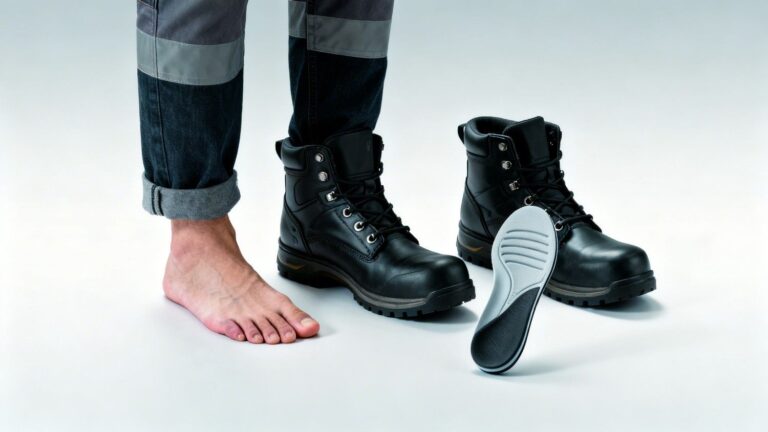
Superfeet’s work insole is made for heavy footwear and long days on concrete. It keeps the supportive heel cup and arch shape Superfeet is known for, with a design aimed at work boots rather than running shoes.
Why it works:
- Supportive arch and heel cup inside heavy boots
- Built for long days on hard industrial floors
- Trim-to-fit sizing
Keep in mind: remove your boot’s original insole first, otherwise the boot will feel tight. For boots specifically, see memory foam insoles for work boots.
4. Dr. Scholl’s Gel: best for shock absorption
Best for: jobs with a lot of walking, and heel pressure on hard floors
Gel insoles soften the impact of every step, which helps if your heels and the balls of your feet take a beating during the day. They’re a good choice for jobs where you walk constantly rather than stand still.
Why it works:
- Good shock absorption on hard surfaces
- Comfortable, springy feel
- Easy to find and affordable
Keep in mind: gel gives less arch support than the picks above. If your arches ache or your feet roll inward, choose PowerStep instead.
5. Dr. Scholl’s Memory Foam: best for lighter standing
Best for: shorter shifts, office work with some standing, casual shoes
Memory foam feels the softest of all and moulds to your foot. For a few hours of standing it’s very comfortable. For full shifts on concrete it flattens too quickly, which is why it’s last on this list.
Why it works:
- Very soft, moulds to your foot
- Spreads pressure away from the heel
- Low price
Keep in mind: expect to replace it every few months with daily use. See best memory foam insoles for more on memory foam.
What standing all day does to your feet
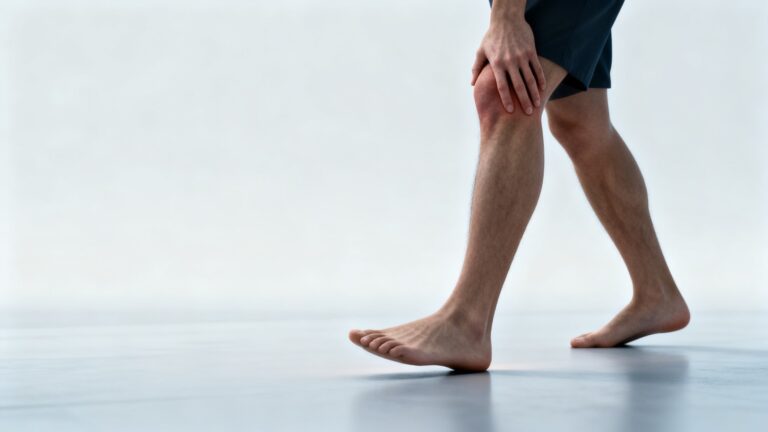
Standing still is often harder on the feet than walking. Your weight presses on the same spots for hours, the heel pad compresses, and the arch slowly sinks. By the end of the shift that shows up as:
- sore heels, especially in the first steps after a break
- tired, aching arches
- swollen feet
- knee and lower back discomfort
Hard floors like concrete and tile make it worse, because they don’t absorb any of the impact. See tile vs concrete floors for how different surfaces affect your feet.
What to look for in insoles for long shifts
- Firm arch support. It keeps the arch from sinking as the day goes on.
- A deep heel cup. It keeps the heel centred and stable.
- Cushioning that doesn’t collapse. Some softness on top, but not so much that the foot sinks.
- Durability. Dense foam and firm shells last months longer than soft foam.
- Breathability. A fabric or moisture-wicking top layer helps during long, warm shifts.
Not sure whether you need soft or firm? Soft vs firm insoles explains the difference, and gel vs foam for standing compares the two main cushioning materials.
Best insoles by job
- Nurses and healthcare workers: PowerStep Pinnacle Maxx, for support through long shifts on hospital floors. See insoles for nurses.
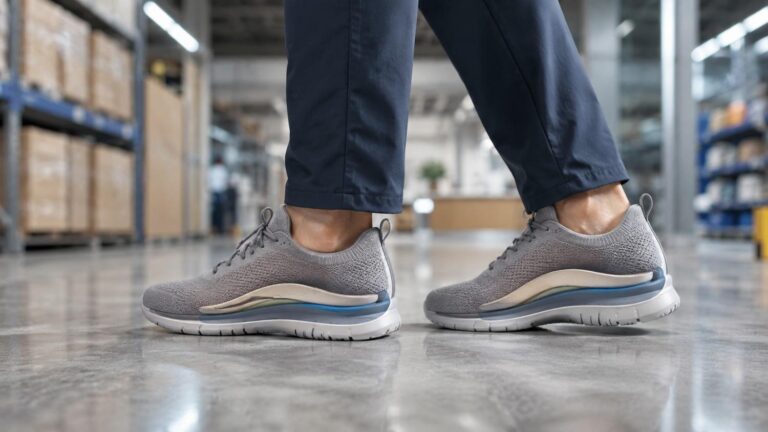
- Warehouse and factory workers: Superfeet Work, in boots on concrete. See insoles for warehouse workers.
- Retail and restaurant staff: PowerStep, or Dr. Scholl’s Gel if you walk more than you stand. See insoles for retail workers.
- Teachers: PowerStep or Dr. Scholl’s Gel. See insoles for teachers.
- Heavier body weight: PowerStep or Superfeet, because soft foam flattens faster. See insoles for heavy people.
Common mistakes
- Choosing the softest insole. It feels great for an hour, then flattens.
- Keeping the original insole in. Two insoles crowd the shoe. See should you remove original insoles.
- Expecting insoles to fix worn-out shoes. If the shoe itself has collapsed, replace the shoe too.
- Wearing insoles too long. See signs you need new insoles.
How long do standing insoles last?
- Soft foam and memory foam: about 2 to 4 months of daily shifts
- Gel and hybrid insoles: about 4 to 6 months
- Firm structured insoles like PowerStep and Superfeet: about 6 to 12 months
Replace them when the cushioning stays flat or your feet start aching again at the same time of day as before.
Frequently asked questions
Do insoles really help if you stand all day?
Yes, for most people. Supportive insoles spread pressure more evenly and keep the arch from sinking, which reduces end-of-shift foot fatigue. Results also depend on your shoes and how well the insole fits.
Are soft or firm insoles better for standing all day?
For full shifts, firm or hybrid insoles usually work better because they keep their shape. Soft insoles feel nicer at first but compress over the day.
Can insoles help back pain from standing?
They can help if poor foot support is changing your posture. Back pain has many causes, so see a doctor if it continues.
What are the best insoles for standing on concrete?
Firm, durable insoles with some cushioning, such as PowerStep Pinnacle Maxx or Superfeet Work. Pure soft foam flattens too quickly on concrete.
Should I wear insoles in work boots?
Yes, most work boots come with thin, flat insoles. Replace the original with a supportive one rather than adding a second layer.
Final verdict
For most people who stand all day, PowerStep Pinnacle Maxx is the best starting point: firm where it matters, cushioned where you feel it. Choose Superfeet Green if you want the most structure, and Superfeet Work for boots on concrete. If your job is more walking than standing, Dr. Scholl’s Gel softens every step, and for shorter or lighter shifts, Dr. Scholl’s Memory Foam is a comfortable, low-cost option.
Whatever you choose, match the insole to your job and your floors, not just to how soft it feels in the first five minutes.
Related guides
- Best insoles for overpronation
- Best insoles for flat feet
- Best insoles for hard floors at work
- Memory foam insoles for plantar fasciitis
- Best Insoles for Delivery Workers
- Best Insoles for Security Guards
- Best Insoles for Factory Workers
- Best Insoles for Food Service Workers
- Best Insoles for Hospital Workers for Long Shifts
- Best Insoles for Cashiers on Hard Floors
- Why Hard Floors Cause Foot Fatigue
- Why Standing on Concrete Causes Foot Fatigue
- Why Heel Pain Gets Worse After Long Standing
- Standing vs Walking at Work: What’s Harder on Feet?
- Best Insoles for Walking (2026 Comfort Guide)