Standing in One Place vs Walking at Work
If your feet feel tired at work, it can be hard to tell whether standing still or walking all day is actually harder on them. The answer depends on how the load is distributed. Standing keeps your feet supporting your body with relatively little movement, while walking repeatedly shifts pressure through the heel, arch, and forefoot. Your shoes, flooring, activity level, and how many hours you spend on your feet can change which one feels worse.
Standing and walking stress the feet differently. Standing mainly creates sustained load and pressure, while walking creates repeated impact, movement, and changing pressure. Neither is automatically worse for everyone. The more useful comparison is which pattern matches your workday and where your feet start to fatigue.
How Standing and Walking Load the Feet Differently
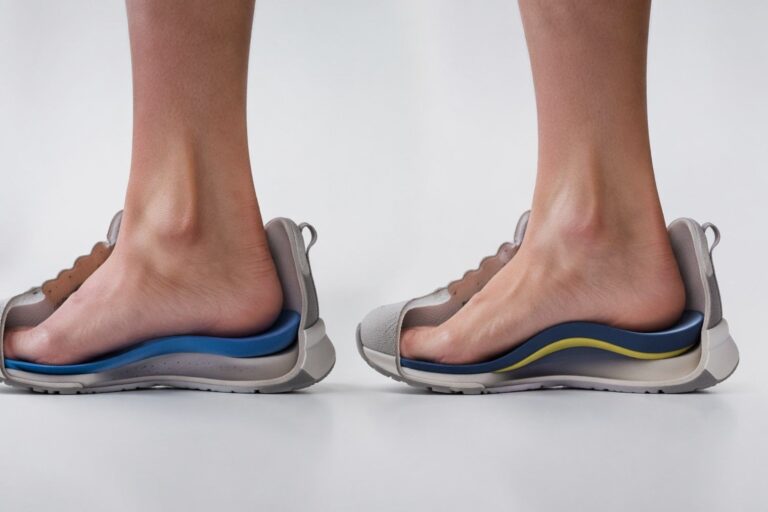
When you stand in one place, your feet are constantly supporting your body weight. There is very little time when the load disappears completely, particularly if you remain in the same position for a long period. Small adjustments in posture help with balance, but the overall demand stays fairly consistent.
If your job is mostly standing, our best insoles for standing all day guide is the place to start.
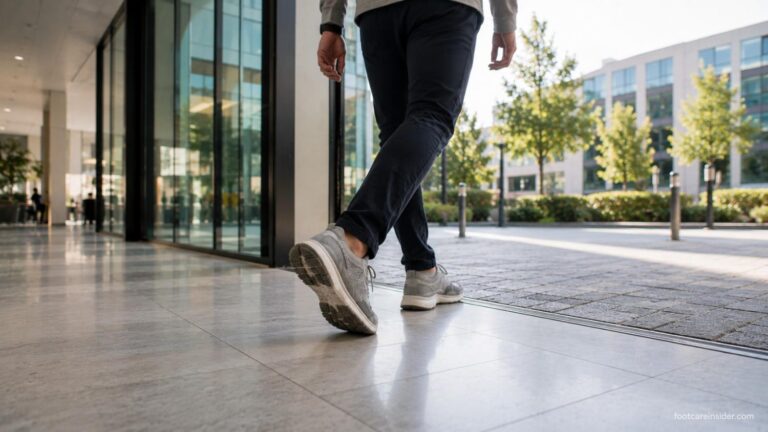
Walking is different because the load moves from one part of the foot to another with every step. The heel accepts the initial contact, pressure moves forward through the foot, and the forefoot helps you push away from the ground. That repeated sequence can create more noticeable impact than simply standing.
This is why a person can finish a long standing shift with heavy, tired feet while someone who walks several miles may notice more soreness from repeated steps. The total workload matters just as much as whether the person was technically “standing” or “walking.”
Which Is Harder on Your Feet?
There is no universal winner in the standing-versus-walking comparison.
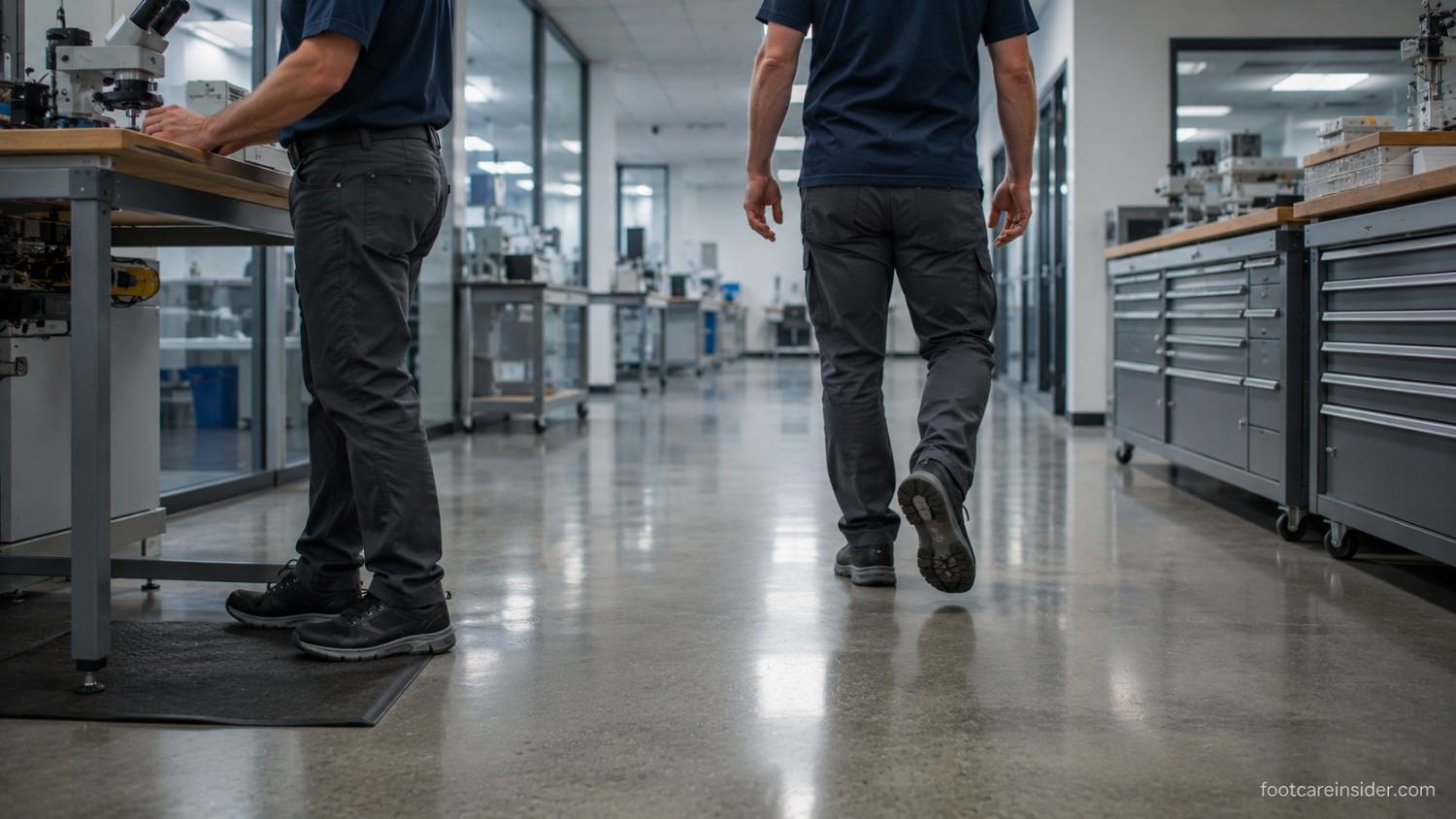
For a worker who stays at one counter, desk, reception point, or workstation, prolonged standing may create a stronger feeling of pressure and general fatigue. For someone who spends the day walking between rooms, deliveries, job sites, or different areas of a facility, repeated steps can create more cumulative impact.
The surface changes the equation too. A hard concrete or commercial floor can make either activity feel more demanding, although standing on it for hours creates a different sensation from repeatedly walking across it.
Footwear also matters. A supportive walking shoe may feel comfortable during movement but unnecessary or restrictive for someone who spends nearly an entire shift standing. In the same way, a very soft shoe may feel pleasant during a short walk but lack the structure someone prefers when walking for several hours.
For more on why firm surfaces can contribute to fatigue, Why Hard Floors Cause Foot Fatigue is a useful related guide.
What Changes When You Stand in One Place?
Standing tends to create a more continuous loading pattern.
Your heels, arches, and forefoot remain involved throughout the period, even though the amount of pressure changes slightly as you shift your stance. Over time, that can make the feet feel heavy or tired, especially when there are few opportunities to sit down or walk around.
Posture can matter as well. Someone who regularly shifts weight onto one leg may experience a different feel from someone who distributes weight more evenly. The type of footwear can amplify the difference. A firm work shoe may feel stable but become tiring during a long stationary shift, while a highly cushioned shoe may feel comfortable but less controlled.
That does not mean standing requires maximum cushioning. It means the balance between cushioning, support, and stability should match the job.
What Changes When You Walk Most of the Day?
Walking creates a repeated cycle rather than one sustained position. Every step changes the pressure under the foot, and a high step count means the same basic movement occurs again and again.
For people who walk continuously at work, comfort can therefore depend on how well the shoe and insole manage repeated impact while maintaining their shape. The heel may take repeated loading, while the arch and forefoot repeatedly help stabilize and propel the body.
Walking also introduces more variation. You may turn corners, climb stairs, speed up, slow down, carry equipment, or move between different floor surfaces. That makes stability and support more relevant for some workers than they would be for someone standing in one place.
The result is that a walking-heavy job can make durability more important too. An insole that feels excellent during the first few hours may not be as useful if its cushioning or support compresses quickly under repeated daily use.
How Insole Structure Changes the Comparison
The insole can influence how each work pattern feels, but there is no single structure that automatically suits both.
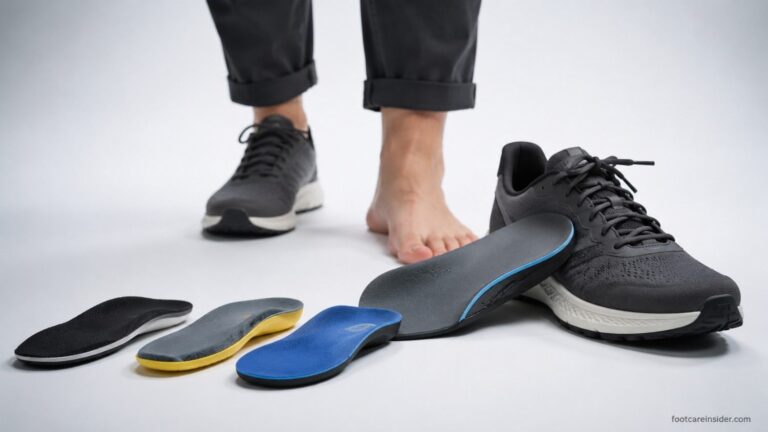
A softer, cushioned insole generally focuses more on reducing the feel of repeated pressure under the foot. That can be useful for standing jobs where general fatigue is the main complaint. A firmer or more structured insole places more emphasis on support and stability, which may be useful when walking involves frequent movement and the feet feel less controlled.
Material also affects feel. EVA foam is commonly used for lightweight cushioning and can provide a responsive feel, while polyurethane-based materials can be used when a denser, more durable feel is preferred. Gel cushioning may be incorporated to change how impact feels, but the material alone does not tell you whether an insole is right for your job.
For a more direct look at how different support levels compare, Cushioning vs Stability Insoles can help clarify the distinction.
Which Work Pattern Needs More Support?
A standing-heavy job often makes pressure distribution and steady comfort the main concerns. If your feet feel tired simply from being planted on the floor for hours, excessive structure may not add much value.
A walking-heavy job can put more emphasis on support, stability, and repeated impact management. Someone covering several miles during work may care more about how the insole behaves step after step than how soft it feels during the first hour.
There is overlap, of course. Many jobs involve both standing and walking, and the best choice may be somewhere between the two. A cashier who repeatedly walks to stock shelves, a warehouse worker moving between stations, or a teacher moving around a classroom may need a balance rather than a pure standing or walking solution.
That is why the best buying decision starts with the actual activity level rather than the job title alone.
Cost and Long-Term Value
Price alone does not tell you whether an insole is a better value.
A lower-cost insole can make sense for someone with lighter activity or a job that does not put much repeated load through the footwear. A more durable option can be reasonable for someone who wears the same pair for long shifts and high daily mileage, especially when frequent replacement would otherwise become frustrating.
The important comparison is initial cost versus how well the insole holds its cushioning, shape, and support over time. A very inexpensive option that compresses quickly may not offer the same practical value as a sturdier one that stays consistent through repeated use.
The same principle applies to standing and walking: choose according to the workload your feet actually experience, not simply the cheapest or softest option.
The Advantages and Limits of Standing-Focused Support
For people who spend most of a shift in one place, a cushioning-focused setup can reduce the harsh feel of firm flooring and make prolonged standing more comfortable. The main advantage is sustained underfoot comfort rather than helping with repeated movement. The limitation is that too much softness may feel less stable when you start walking frequently, especially if your job switches between a workstation and short trips around the workplace.
When a Standing-Heavy Job Calls for More Cushioning
If you spend most of your day at a counter, reception desk, production station, or fixed workstation, prioritize pressure distribution and cushioning. Your feet are carrying body weight continuously, so a comfortable surface under the heel and forefoot may matter more than highly structured support. This approach is less compelling when your job involves several miles of walking, where stability and repeated-impact management become more important.
When a Walking-Heavy Job Calls for More Support
If your work keeps you moving between rooms, buildings, delivery points, or job sites, a more supportive and stable insole may make more sense. Walking repeatedly shifts pressure through the heel, arch, and forefoot, so consistency over many steps becomes important. The tradeoff is that firmer structure can feel less cushioned than a standing-focused option, particularly when you spend part of the day sitting or standing still.
Which Holds Up Better Over Repeated Use?
For both standing and walking jobs, durability depends on how much load the insole receives and how quickly its materials compress. A walking-heavy worker may put more repeated impact through the same areas, while a standing worker may place sustained pressure on the heel and forefoot for long periods.
The useful long-term test is whether the insole still feels consistent after weeks of normal work. If cushioning becomes noticeably flatter or support changes, the original price matters less than the replacement cycle.
For a closer look at how thickness affects both comfort and available shoe space, Thick vs Thin Insoles is useful when comparing long-term fit.
A Simple Way to Match the Insole to Your Workday
Think about what your feet are doing for most of the shift.
If you are standing in one place, cushioning and pressure distribution generally deserve more attention. If you are walking most of the day, repeated impact, support, and stability become more important.
If your job is split fairly evenly, look for a middle ground rather than trying to choose between two extremes. A balanced insole can provide some cushioning without becoming excessively soft or bulky.
Your footwear should influence the decision too. A roomy work shoe gives you more freedom to choose a thicker design, while a snug walking shoe may favor a slimmer profile. The floor matters as well: hard concrete or tile can make cushioning more noticeable in either work pattern.
Standing and Walking Are Different Problems, Not Opposites
Standing tends to create sustained load and pressure. Walking creates repeated impact and changing pressure. Neither automatically requires more support, more cushioning, or a specific type of insole.
The better choice depends on what your feet experience most often and how they feel by the end of the day. If your main complaint is heavy, tired feet after hours at one station, start by considering cushioning. If your feet become fatigued after repeated walking, look more closely at support, stability, and durability.
FAQs
Is standing or walking worse for your feet at work?
Neither is universally worse. Standing creates sustained loading, while walking creates repeated impact, so the more demanding activity depends on the person’s workload, footwear, surface, and total time on their feet.
Should I use cushioned insoles if I stand all day?
Cushioning can be useful when prolonged standing and firm flooring cause general foot fatigue. However, a very soft insole is not automatically better if you also walk frequently or prefer more structure.
Are supportive insoles better for walking jobs?
They may be useful when a job involves substantial walking, repeated turns, or a feeling of reduced support later in the day. The right balance depends on whether support or cushioning is the bigger concern.
Does hard flooring change the standing versus walking comparison?
Yes. Concrete, tile, and other firm surfaces provide little natural cushioning, so both prolonged standing and repeated walking can feel more demanding. The difference is mainly in whether the feet experience sustained pressure or repeated loading.
The Practical Verdict
Choose based on the activity that dominates your workday. Standing-heavy work generally favors cushioning and pressure distribution, while walking-heavy work places more emphasis on support, stability, and repeated-load durability. If your job combines both, a balanced insole that fits your shoes well is usually the more sensible starting point.