Best Insoles for Flat Feet (Reduce Pain Fast)
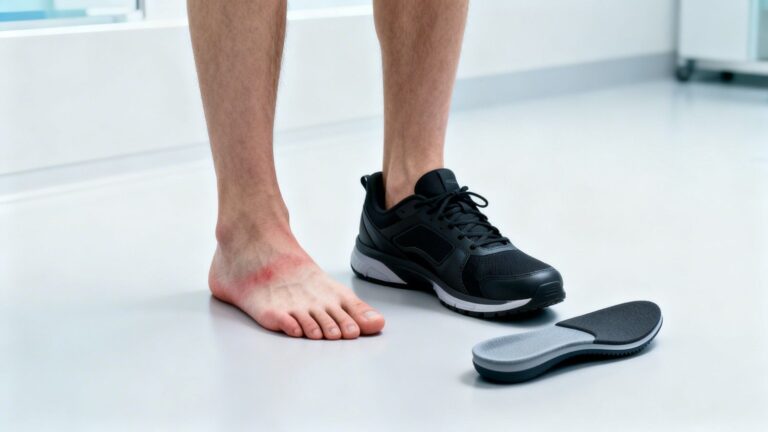
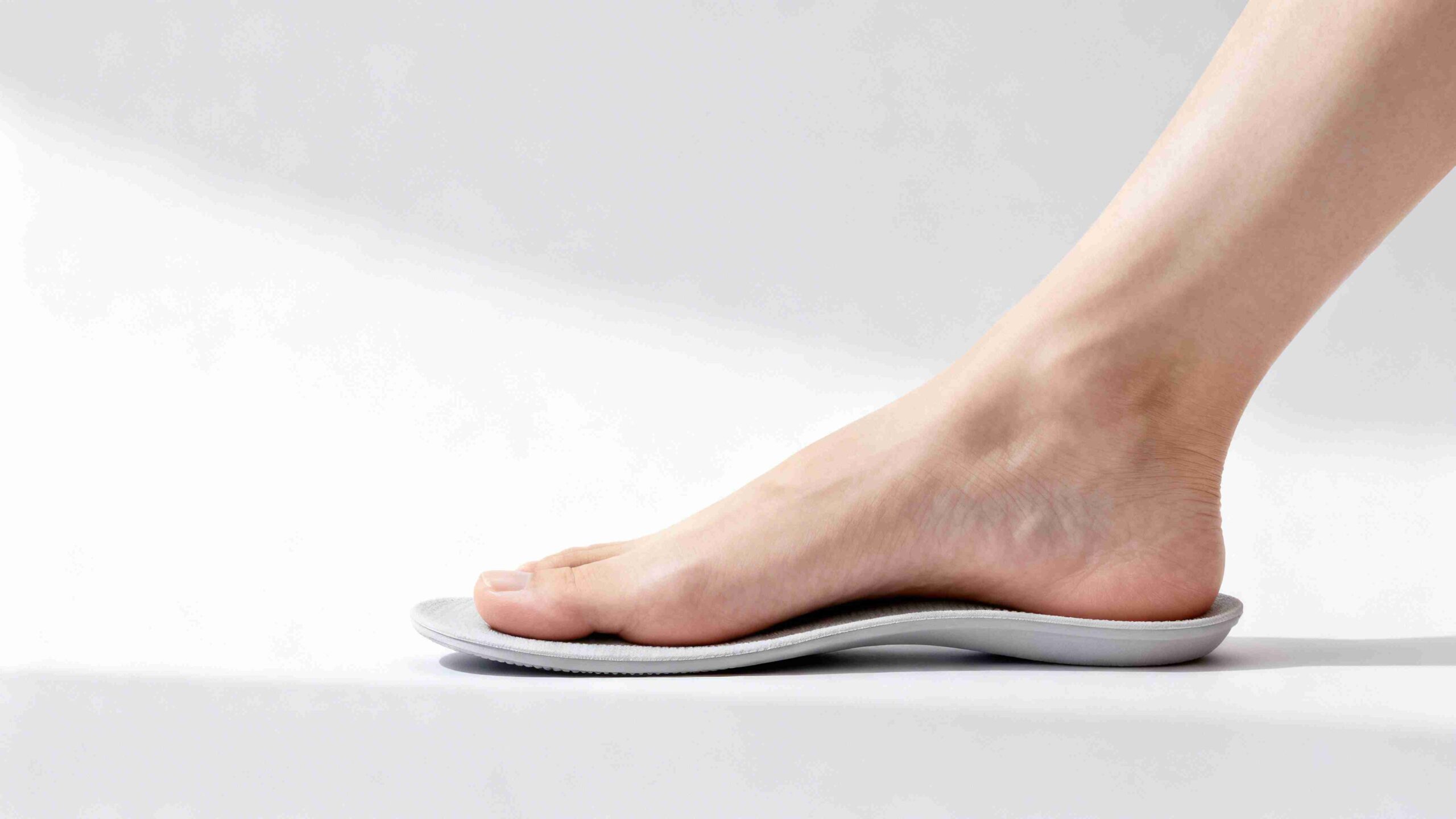
If you have flat feet, the insole that feels softest in the shop is rarely the one that helps. A low arch needs something to hold it up, a heel that stays centred, and cushioning that doesn’t collapse under your weight. Structure first, softness second.
Below are four insoles for flat feet, from the best all-round choice to a budget option for mild flat feet, followed by a simple guide to choosing the right support for your arch, shoes and daily routine.
Quick picks
PowerStep Pinnacle MaxxBest overall for flat feet
Check price on AmazonSuperfeet WorkBest for work boots and long shifts
Check price on AmazonSuperfeet GreenMost rigid control, for flexible flat feet
Check price on AmazonDr. Scholl’s Memory FoamBudget comfort for mild flat feet
Check price on AmazonComparison at a glance
| Insole | Best for | Arch support | Feel |
|---|---|---|---|
| PowerStep Pinnacle Maxx | Most flat feet, feet that roll inward, daily wear | High | Firm with a cushioned top |
| Superfeet Work | Work boots, standing on concrete | High | Firm and supportive |
| Superfeet Green | Flexible flat feet that need strong control | High, tall arch | Very firm |
| Dr. Scholl’s Memory Foam | Mild flat feet, casual shoes, first-time buyers | Light | Soft |
1. PowerStep Pinnacle Maxx: best overall for flat feet
Best for: most people with flat feet, especially if your feet also roll inward
PowerStep is the insole we’d suggest most people with flat feet try first. The firm arch shell holds up a low arch instead of flattening with it, and the slightly angled heel platform helps stop the foot rolling inward, which is common with flat feet. A cushioned top layer keeps it comfortable for all-day wear.
Why it works:
- Firm arch that supports a low or collapsing arch
- Angled heel platform that limits inward rolling
- Deep heel cradle for stability
- Cushioned top layer, so it isn’t hard underfoot
Keep in mind: it feels firm at first. Wear it for a few hours a day in the first week, then build up.
2. Superfeet Work: best for work boots and long shifts
Best for: flat feet in work boots, and long days on concrete
Flat feet get tired fastest when you stand for hours on hard floors. Superfeet’s work insole is designed for heavy footwear and long shifts, with the supportive arch shape and heel cup Superfeet is known for.
Why it works:
- Supportive arch and heel cup inside boots
- Built for long days on hard floors
- Trim-to-fit sizing
Keep in mind: remove the boot’s original insole first. For more job-specific advice, see insoles for flat feet at work and work boot insoles for flat feet.
3. Superfeet Green: most rigid control
Best for: flexible flat feet (an arch appears when you sit, but flattens when you stand) that need strong control
Superfeet Green is one of the most structured insoles you can buy without a prescription. Its rigid stabiliser cap keeps the heel and arch in a steady position all day.
Why it works:
- Rigid stabiliser cap for strong control
- Deep heel cup
- Holds its shape for a long time
Keep in mind: Green has a tall arch shape. If your feet are very flat or rigid, it can feel like too much under the arch. In that case, choose PowerStep instead. It also needs shoes with some depth.
4. Dr. Scholl’s Memory Foam: budget comfort for mild flat feet
Best for: mild flat feet, casual shoes, and trying insoles for the first time
If your flat feet don’t cause much pain and you mainly want more comfort in everyday shoes, a soft memory foam insole is a low-cost place to start. It spreads pressure and makes thin shoes feel softer.
Why it works:
- Soft cushioning that moulds to your foot
- Low price
- Trim-to-fit sizing
Keep in mind: memory foam gives very little arch support. If your arches ache or your ankles roll inward, it won’t be enough. Move up to PowerStep.
Why flat feet need support, not just cushioning
With flat feet, the arch sits low or collapses when you stand. Often the foot also rolls inward as you walk. That changes how weight travels up the leg:
- the ankles tilt inward
- the knees rotate slightly
- the hips and lower back compensate
Soft insoles cushion the bottom of the foot but don’t stop the arch from sinking. A supportive insole holds the arch up and keeps the heel centred, which reduces the strain that builds up during the day. Flat feet and overpronation often go together, but they aren’t the same thing. See flat feet vs overpronation.
What to look for in insoles for flat feet
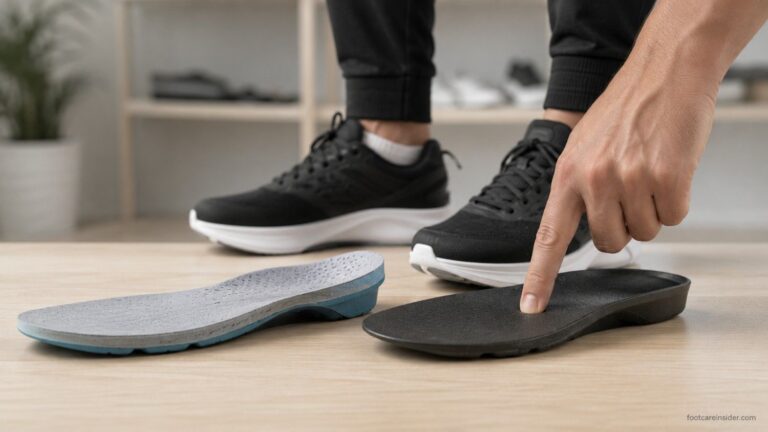
- A firm arch. Press on it with your thumb. If it collapses easily, it won’t support a flat foot.
- The right arch height. It should feel supportive, not like a lump. Very flat or rigid feet usually do better with a lower arch.
- A deep heel cup. It keeps the heel centred and reduces inward rolling.
- Moderate cushioning. Enough to absorb impact, not so much that the foot sinks.
- Durable materials. Flat feet press on a larger area of the insole, so cheap foam flattens fast.
Still unsure between soft and firm? See soft vs firm insoles for flat feet.
How to choose the right support
By how flat your feet are:
- Mild flat feet (little or no pain, tired feet after long days): start with moderate support or a cushioned insole.
- Moderate flat feet (arch pain, feet rolling inward): PowerStep Pinnacle Maxx.
- Flexible flat feet that need strong control: Superfeet Green, if the tall arch feels comfortable.
- Severe or painful flat feet: see a podiatrist. Custom orthotics may be the better route. See custom orthotics vs insoles.
By what you do all day:
- Standing all day: PowerStep or Superfeet Work. See insoles for standing all day.
- Running: see running insoles for flat feet.
- Hiking: see hiking insoles for flat feet.
- Dress shoes: see dress shoe insoles for flat feet.
- Sneakers: see sneaker insoles for flat feet.
By foot shape and body:
- Wide and flat: see insoles for flat and wide feet.
- Heavier body weight: see insoles for flat feet if you’re heavy.
- Seniors: see insoles for seniors with flat feet.
- Children: see insoles for kids with flat feet.
Signs you’re using the wrong insoles
- your arch pain gets worse instead of better after two weeks
- the insole flattens within a few weeks
- you feel a hard lump under the arch rather than support
- your feet feel unstable or slide inside the shoe
Some arch pressure in the first week is normal. Sharp or growing pain is not. See does arch support hurt at first.
How long do insoles for flat feet last?
- Soft and budget foam: about 2 to 3 months of daily wear
- Mid-range support insoles: about 4 to 6 months
- Firm structured insoles like PowerStep and Superfeet: about 6 to 12 months
See how long do insoles last for when to replace them.
Frequently asked questions
Do insoles fix flat feet?
No. They don’t change the shape of your foot, but they support the arch while you wear them, which reduces strain and fatigue. See do insoles fix flat feet.
Should insoles for flat feet be soft or firm?
Firm, with some cushioning on top. Soft-only insoles feel nice at first but let the arch keep collapsing.
Are flat feet always painful?
No. Many people with flexible flat feet have no symptoms. Insoles help most when you feel arch, heel, knee or back strain, or tire quickly on your feet.
Can flat feet cause knee pain?
They can. When the arch collapses and the foot rolls inward, the lower leg rotates, which can strain the knee. See why flat feet cause knee pain.
Are custom orthotics better than insoles?
For severe or painful flat feet, sometimes. For most people, a good over-the-counter insole works well. See orthotics vs insoles for flat feet.
What else helps flat feet at home?
Supportive shoes, calf stretches and simple foot-strengthening exercises. See the flat feet treatment guide.
Final verdict
For most people with flat feet, PowerStep Pinnacle Maxx is the best place to start: firm arch support, a stable heel and enough cushioning for all-day wear. If you work in boots on hard floors, choose Superfeet Work. If you have flexible flat feet and want the strongest control, try Superfeet Green, as long as the tall arch feels right. And if your flat feet are mild and you mainly want comfort, Dr. Scholl’s Memory Foam is an affordable first step.
Whatever you choose, remember: for flat feet, structure first, softness second.