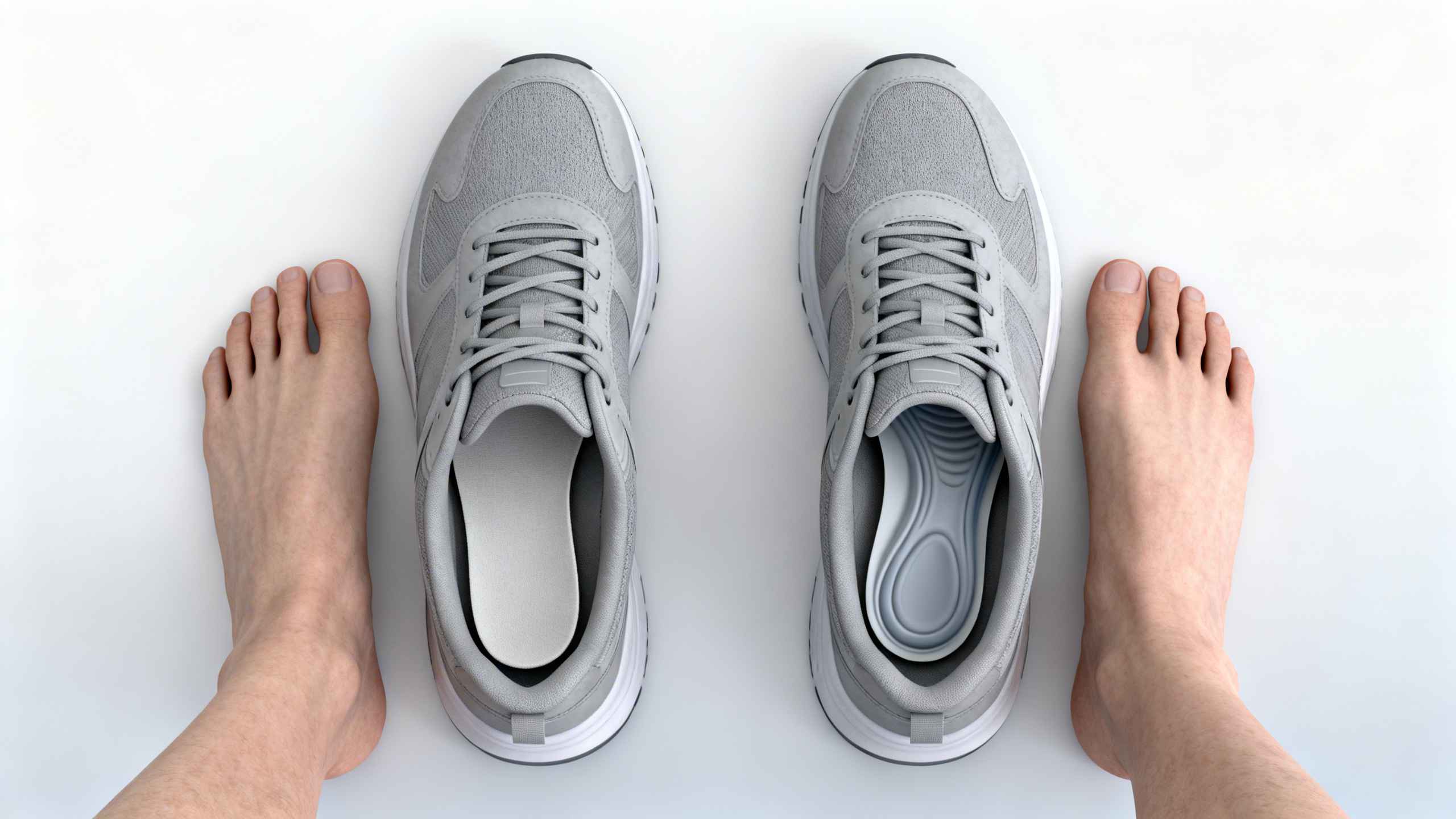
Custom Orthotics vs Insoles
Foot discomfort affects millions of people, especially those who spend long hours standing, walking, or exercising. The feet absorb impact with every step and must support the entire body’s weight. When the arches do not distribute pressure properly, it can lead to fatigue, pain, and biomechanical imbalance.
To address these issues, many people look for additional support inside their shoes. Two common solutions are custom orthotics and insoles. While these terms are often used interchangeably, they are not the same. Understanding the difference between custom orthotics vs insoles is important for choosing the right type of support for your specific needs.
Both options are designed to improve comfort and reduce strain on the feet, but they differ significantly in structure, materials, cost, and intended use. Some people benefit from simple cushioning inserts, while others require medically designed orthotic devices.
This guide explains how custom orthotics compare with standard insoles, how they function differently, and when each option may be appropriate.
Many people first try solutions like insoles for arch pain relief before considering custom options
What Are Insoles?
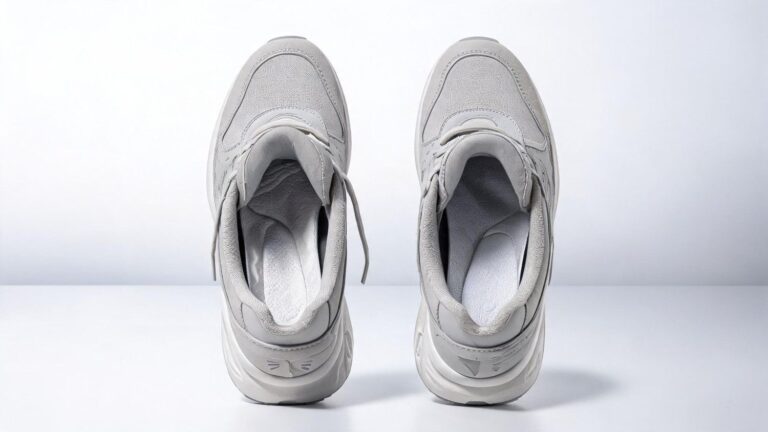
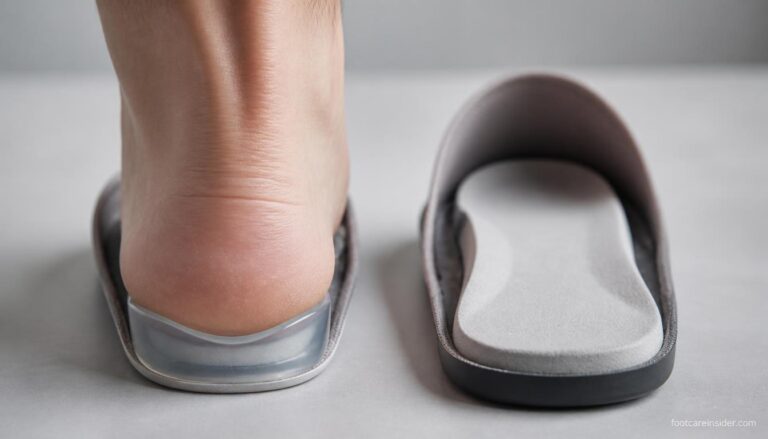
Insoles are removable inserts placed inside shoes to improve comfort, cushioning, or basic support. Many shoes come with a thin insole by default, but these can be replaced with aftermarket options designed for specific foot types or activities.
Most insoles are prefabricated, meaning they are produced in standard sizes rather than tailored to an individual foot.
Common materials include:
- Memory foam
- Gel cushioning
- EVA foam
- Polyurethane support layers
- Cork or composite materials
These materials help distribute pressure more evenly across the foot, reducing discomfort caused by prolonged standing or walking.
Insoles are commonly used for:
- Improving everyday shoe comfort
- Reducing fatigue during long periods of standing
- Adding extra cushioning during sports or exercise
- Supporting mild arch discomfort
Because they are mass-produced, insoles are generally affordable and widely available. Many people start with insoles before considering more specialized solutions.
You can learn more about supportive inserts in Best Insoles for Standing All Day , which explains how cushioning and arch support help reduce foot fatigue.
What Are Custom Orthotics?
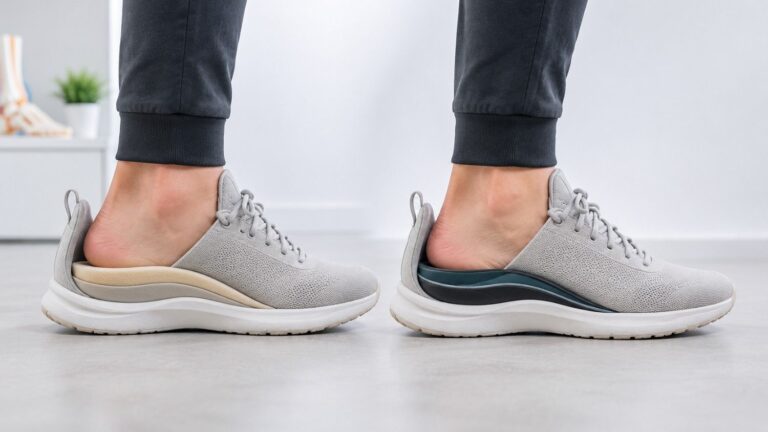
Custom orthotics are medical-grade shoe inserts designed specifically for an individual’s feet. Unlike standard insoles, they are typically prescribed by a podiatrist or foot specialist after a clinical assessment.
The process often involves:
- Examining foot alignment and gait
- Taking a mold or 3D scan of the foot
- Designing a device tailored to the person’s biomechanics
The goal of custom orthotics is not only comfort but biomechanical correction. They help control abnormal foot motion and improve alignment throughout the lower body.
Over-the-counter inserts can be effective for conditions like overpronation and foot imbalance.
Custom orthotics are commonly recommended for conditions such as:
- Severe flat feet
- Overpronation
- Plantar fasciitis
- Chronic heel pain
- Structural foot deformities
Because they are made specifically for an individual, orthotics often use more rigid or structured materials than standard insoles.
Common orthotic materials include:
- Carbon fiber
- Medical-grade plastics
- Semi-rigid composites
- Layered foam cushioning
These materials allow the device to maintain its shape while guiding foot movement more precisely.
For example, individuals with arch collapse may require structured support similar to what is discussed in Best Insoles for Flat Feet , though custom orthotics provide a more tailored solution.
Structural Differences
One of the most important distinctions in the custom orthotics vs insoles comparison is structural design.
Insoles
Standard insoles are typically designed to add cushioning and moderate support. They follow general foot shapes but do not correct alignment issues.
Most insoles:
- Sit flat inside the shoe
- Provide mild arch support
- Compress slightly under body weight
- Focus on pressure distribution rather than structural correction
Because of their flexibility, insoles adapt to many shoe types and activities.
For daily use, especially during long shifts, options like insoles for standing all day can be sufficient
Custom Orthotics
Custom orthotics are built to control foot mechanics.
They are designed with:
- Precisely measured arch height
- Specific heel cup depth
- Targeted pressure relief zones
- Corrective angles for foot alignment
These features help stabilize the foot during movement. When the foot is properly aligned, the ankles, knees, hips, and lower back may also experience less strain.
Custom orthotics are typically more rigid than standard insoles because they must maintain their shape during walking or running.
In many cases, improving alignment through insoles improve posture and alignment reduces the need for custom solutions
Functional Differences
The functional goal also differs between the two options.
Insoles primarily focus on comfort, while custom orthotics focus on biomechanical correction.
Insoles Improve Comfort
Many people experience foot fatigue simply because their shoes lack adequate cushioning or arch support. Insoles help address this by:
- Increasing shock absorption
- Reducing pressure points
- Improving shoe fit
For people with mild discomfort, insoles can often provide noticeable relief.
Custom Orthotics Correct Mechanics
Orthotics are intended to address structural problems in foot movement.
For example, individuals with severe overpronation may place excessive stress on the plantar fascia ligament. In these cases, a corrective orthotic may help reduce abnormal motion.
If you’re exploring whether supportive inserts help specific conditions, you may find useful context in Do Insoles Help Plantar Fasciitis , which explains how support affects the plantar fascia.
Intended Use Cases
Another important aspect of the custom orthotics vs insoles comparison is when each solution is typically recommended.
Insoles Are Often Used For
- Everyday comfort improvement
- Mild arch support needs
- Athletic shock absorption
- Reducing fatigue during standing jobs
They are widely used by people who simply want more cushioning inside their shoes.
Custom Orthotics Are Often Used For
- Persistent or chronic foot pain
- Structural alignment issues
- Medical foot conditions
- Long-term biomechanical correction
Because orthotics address deeper mechanical problems, they are usually recommended after professional evaluation.
“If you struggle with foot alignment, our best insoles for overpronation guide can help.”
Cost Differences
Cost is one of the biggest differences between these two options.
Insoles
Most prefabricated insoles cost between:
$20 – $70
Higher-end performance insoles may reach around $100, depending on materials and design.
Because they are mass-produced, insoles are generally accessible and easy to replace.
Custom Orthotics
Custom orthotics are significantly more expensive due to their personalized design and medical consultation process.
Typical costs range from:
$200 – $800 or more
Prices vary depending on the provider, materials used, and whether insurance coverage is available.
While custom orthotics may last longer, the higher upfront cost is an important consideration when comparing custom orthotics vs insoles.
Custom Orthotics vs Insoles
Pros and Cons Comparison
When comparing custom orthotics vs insoles, it helps to look at the advantages and limitations of each option. Both aim to improve foot comfort and support, but they serve different purposes depending on the underlying issue.
Pros of Insoles
Standard insoles are widely used because they are accessible, simple to use, and suitable for many everyday situations.
Key advantages include:
- Affordable compared to medical devices
- Easy to replace or upgrade
- Available for many foot types and activities
- Provide additional cushioning and shock absorption
- Can improve comfort in many types of footwear
Many people who stand or walk for long hours benefit from supportive inserts designed for pressure relief and arch support. For example, people who work on hard floors often look for solutions similar to those discussed in Best Insoles for Standing All Day .
Cons of Insoles
Despite their convenience, insoles also have limitations.
Possible drawbacks include:
- Limited ability to correct structural foot problems
- Standard sizing may not match individual foot anatomy
- Support may compress over time
- Effectiveness varies depending on shoe fit
For individuals with more complex biomechanical issues, basic insoles may not provide enough structural support.
Pros of Custom Orthotics
Custom orthotics are designed to address deeper biomechanical issues rather than simply improving comfort.
Key advantages include:
- Personalized fit based on foot shape and gait analysis
- Greater control over foot alignment
- May reduce strain on joints and soft tissues
- Designed for specific medical conditions
- Often more durable than standard inserts
Because they are tailored to the individual, custom orthotics can help stabilize abnormal foot motion. This may reduce stress on structures such as the plantar fascia ligament, which plays a key role in arch support.
Cons of Custom Orthotics
However, custom orthotics are not always necessary for every person experiencing foot discomfort.
Potential disadvantages include:
- Higher cost compared to insoles
- Requires medical consultation or specialist fitting
- May feel rigid or uncomfortable during the adjustment period
- Not always suitable for every type of shoe
For individuals with mild foot fatigue rather than structural problems, simpler inserts may provide sufficient support without the need for a medical device.
Who Should Choose Insoles?
In many cases, insoles are an effective first step when addressing foot discomfort.
People who may benefit from insoles include those who:
- Experience mild arch discomfort or fatigue
- Spend long hours standing or walking
- Want additional cushioning during sports or exercise
- Need improved shock absorption in everyday footwear
For example, people with flexible arches or mild flattening may benefit from supportive inserts designed for arch stability, similar to the types discussed in Best Insoles for Flat Feet .
In these situations, prefabricated insoles can often provide noticeable improvements in comfort without the complexity of a custom device.
Who Should Choose Custom Orthotics?
Custom orthotics may be more appropriate for individuals with persistent or medically diagnosed foot conditions.
A specialist may recommend orthotics for people who:
- Experience chronic heel or arch pain
- Have severe flat feet or structural arch collapse
- Show abnormal gait patterns such as significant overpronation
- Have recurring injuries related to foot alignment
In these cases, the goal of orthotics is to improve the way the foot moves and distributes pressure during walking or running.
People dealing with chronic plantar fascia strain often explore supportive options, which are discussed in more detail in Do Insoles Help Plantar Fasciitis .
Long-Term Durability Comparison
Another key consideration when comparing custom orthotics vs insoles is durability.
Insoles Lifespan
Most standard insoles last between:
6 to 12 months
The exact lifespan depends on factors such as:
- Body weight
- Daily activity level
- Material quality
- Shoe fit
Soft materials like memory foam compress over time, gradually losing their ability to support the arch and distribute pressure effectively.
Custom Orthotics Lifespan
Custom orthotics typically last longer because they use more rigid and durable materials.
Many orthotics remain functional for:
2 to 5 years
However, the cushioning layers may still require replacement over time, and some people eventually need adjustments if their biomechanics change.
Because of their longer lifespan, custom orthotics may provide better long-term value for individuals who require consistent structural support.
Not sure whether you need cushioning or correction? Compare gel vs orthotic insoles.
Frequently Asked Questions
Are custom orthotics better than insoles?
Not necessarily. The choice depends on the underlying issue. Insoles are often sufficient for mild discomfort or added cushioning, while custom orthotics are designed for structural foot problems and medical conditions.
Can insoles replace custom orthotics?
In some cases, supportive insoles may provide enough relief for mild symptoms. However, individuals with severe biomechanical problems or chronic pain may still require custom orthotics prescribed by a specialist.
Do custom orthotics weaken the feet?
Research generally suggests that orthotics support the foot rather than weaken it. However, they are typically recommended for people who need biomechanical correction rather than as a universal solution.
Can insoles help with plantar fasciitis?
Supportive insoles may help reduce strain on the plantar fascia by improving arch support and distributing pressure more evenly across the foot.
Should insoles be replaced regularly?
Yes. Because insoles compress and wear down with use, replacing them periodically helps maintain their cushioning and support.
Our picks: If you want to try an insole before looking at custom orthotics, these are the two we would start with.
Moderate support insoles – A supportive everyday insole for mild foot fatigue.
Superfeet Green – A firm, structured arch for stronger support.
Final Verdict
When evaluating custom orthotics vs insoles, the best choice depends on the severity of the problem and the level of support required.
Insoles are often the most practical option for improving everyday comfort. They are affordable, widely available, and effective for people experiencing mild foot fatigue or occasional discomfort.
Custom orthotics, on the other hand, are designed for individuals with structural foot problems or persistent pain. Because they are tailored to the individual’s biomechanics, they can provide more precise support and correction when needed.
For many people, trying a well-designed insole first may be a reasonable step. If symptoms persist or worsen, consulting a healthcare professional can help determine whether custom orthotics may be more appropriate.
Understanding the differences between custom orthotics vs insoles allows individuals to choose the level of support that best fits their needs and long-term foot health.
Struggling with uneven foot movement? These insoles for overpronation can help correct alignment and reduce strain.