Best Insoles for Overpronation (Improve Stability & Pain)
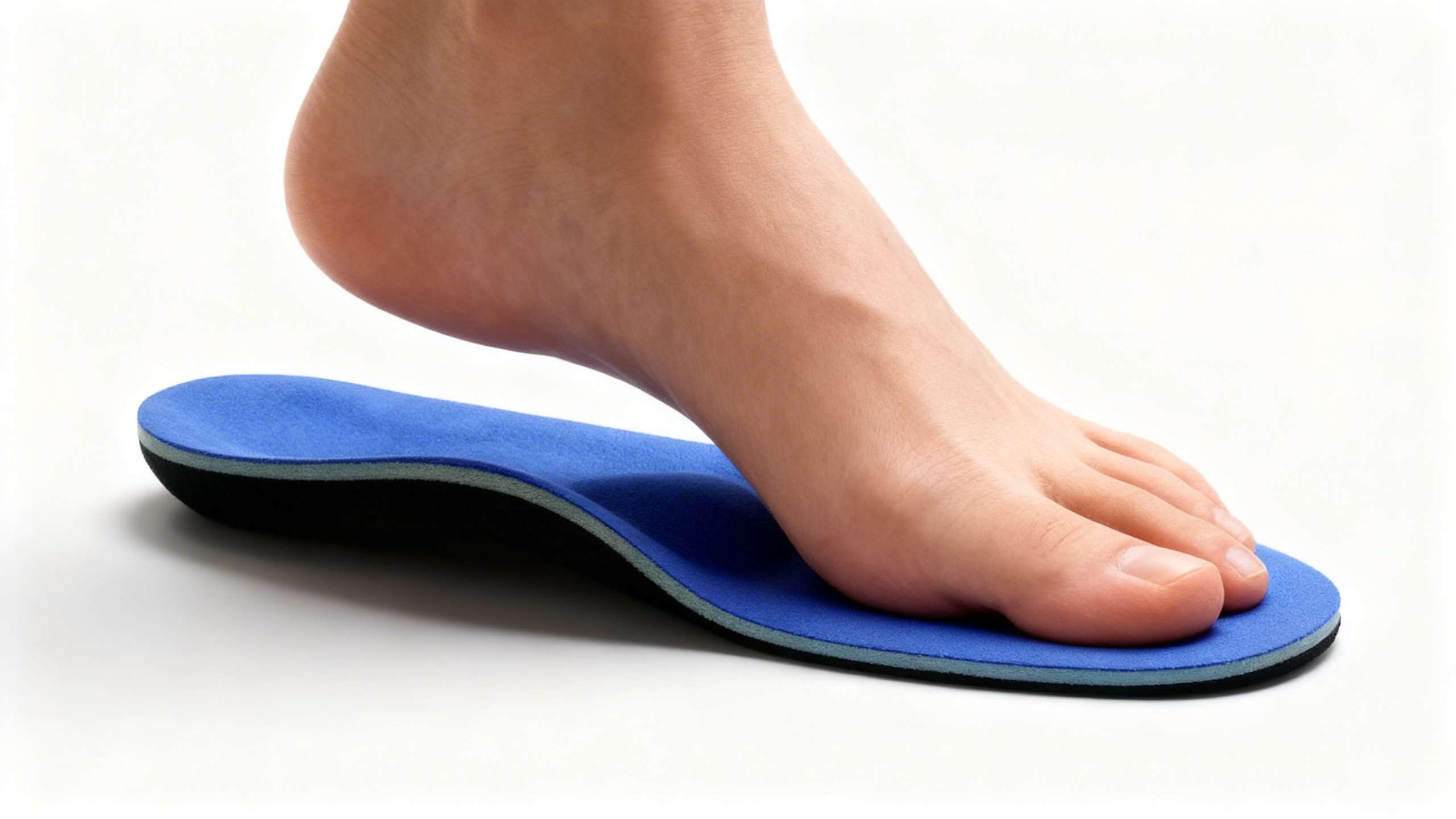
If your feet roll inward when you walk, soft cushioning alone won’t fix it. You need an insole with a firm arch, a deep heel cup and support along the inner side of the foot, so the arch stops collapsing with every step.
Below are three insoles for overpronation, from strongest control to budget option, followed by a simple guide to choosing the right one for your feet and shoes.
Quick picks
Best overall: PowerStep Pinnacle Maxx
Best for medium to high arches: Superfeet Green
Best budget option: Dr. Scholl’s Gel Comfort Insoles
Comparison at a glance
| Insole | Best for | Support level | Feel |
|---|---|---|---|
| PowerStep Pinnacle Maxx | Moderate to severe overpronation, walking and daily wear | High | Firm with a cushioned top layer |
| Superfeet Green | Medium to high arches, running and long days on your feet | High | Firm and structured |
| Dr. Scholl’s Gel Comfort | Mild overpronation, casual shoes, trying insoles for the first time | Light | Soft and cushioned |
1. PowerStep Pinnacle Maxx: best overall
Best for: moderate to severe overpronation, walking shoes and everyday wear
The Pinnacle Maxx is built specifically for feet that roll inward. Its heel platform is angled slightly to stop the foot tipping in before the arch collapses, and the firm arch shell holds its shape under body weight instead of flattening like soft foam.
Why it works:
- Firm, supportive arch that resists collapsing
- Angled heel platform that controls inward rolling
- Deep heel cradle to keep the heel centred
- Cushioned top layer, so it feels firm but not hard
Keep in mind: it feels noticeably firm for the first few days, so break it in gradually. It’s full length, so remove your shoe’s original insole first.
Skip it if: your shoes are very slim or tight, or you only want extra softness.
2. Superfeet Green: best for medium to high arches
Best for: medium to high arches that still roll inward, running shoes and long days on your feet
Superfeet Green is one of the most structured insoles you can buy without a prescription. A rigid stabiliser cap under the heel and arch keeps the foot in a more neutral position, and the deep heel cup stops the heel from sliding. Cushioning is moderate, because the focus is control, not softness.
Why it works:
- High-profile arch shape
- Rigid stabiliser cap for strong control
- Deep heel cup
- Holds its shape for a long time
Keep in mind: it takes up more room than a thin insole, so it works best in shoes with a removable insole and some depth, like running shoes, hiking shoes and work shoes.
Skip it if: your arches are very low and flat, or you want a soft, cushioned feel.
3. Dr. Scholl’s Gel Comfort: best budget option
Best for: mild overpronation, casual shoes, and trying insoles for the first time
If your inward rolling is mild and you mainly feel tired or sore feet at the end of the day, a cushioned Dr. Scholl’s insole is an affordable place to start. It adds comfort and shock absorption and is easy to find and trim to size.
Why it works:
- Cushioning that reduces pressure on hard floors
- Trim-to-fit sizing
- Lower price than firm orthotic-style insoles
- Widely available in US sizes
Keep in mind: it gives far less control than the two picks above. If your ankles clearly roll inward, or you have heel, shin or knee pain, choose PowerStep or Superfeet instead.
How to tell if you overpronate
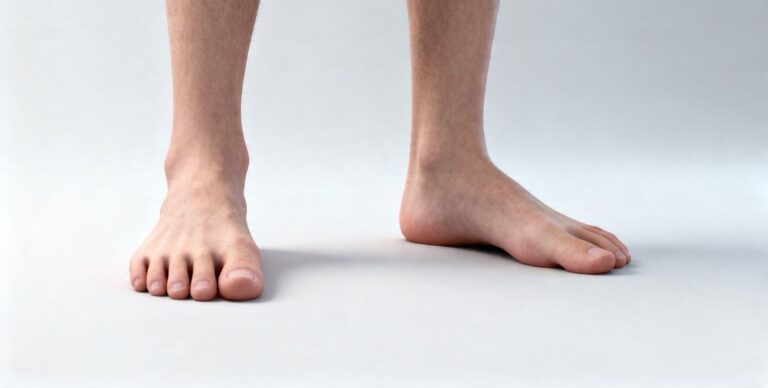
Overpronation means your foot rolls inward more than it should with each step. A little inward roll is normal, because that’s how the foot absorbs shock. The problem starts when it goes too far. Common signs:
- Shoe wear: the soles of your shoes wear down faster on the inner edge.
- Ankle position: seen from behind, your ankles tilt inward when you stand.
- Wet footprint: a wet footprint shows almost the full width of your foot, with little or no curve on the inside.
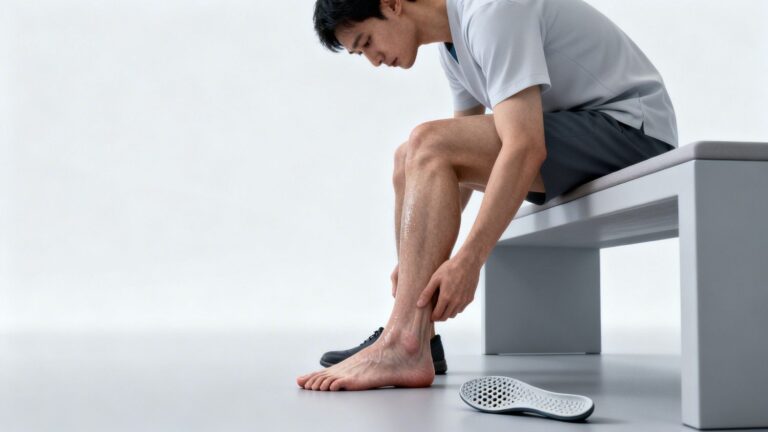
- Where it hurts: arch fatigue, heel pain, shin splints or knee strain after walking or standing.
Overpronation and flat feet often appear together, but they are not the same thing. One is about how your foot moves, the other about its shape. See flat feet vs overpronation for the full difference, and mild vs severe overpronation to judge how strong your support needs to be.
What to look for in insoles for overpronation
- A firm arch. It should press back when you push on it. Soft arches collapse along with your foot.
- Inner-side support. Reinforcement along the inside of the foot is what actually limits inward rolling.
- A deep heel cup. It keeps the heel centred so the rest of the foot follows.
- Controlled cushioning. Some cushioning on top is good, but not so much that the foot sinks.
- Durable materials. Dense foam or a firm shell keeps its shape. Cheap foam flattens within weeks.
Not sure whether you need softness or structure? Soft vs firm insoles explains the difference.
How to choose the right one
By how strong your overpronation is:
- Mild (slight inward roll, occasional tired feet): start with a cushioned option like Dr. Scholl’s.
- Moderate (visible arch collapse, regular heel or knee discomfort): choose PowerStep Pinnacle Maxx.
- Strong, with medium or high arches: choose Superfeet Green.
By shoe type:
- Running and walking shoes: PowerStep or Superfeet, with the original insole removed.
- Work shoes and boots: PowerStep for all-day support. For long shifts, see insoles for overpronation on long work shifts.
- Slim casual shoes: a thinner, cushioned insole fits better than a full orthotic.
Runners have extra needs around weight and flexibility. See best running insoles for overpronation.
How to break in new insoles
- Days 1 and 2: wear them for 1 to 2 hours.
- Days 3 and 4: increase to half a day.
- From day 5: wear them all day if they feel comfortable.
Mild pressure under the arch at first is normal. Sharp pain is not. If discomfort continues after 7 to 10 days, the arch may be too high for your foot.
Common mistakes to avoid
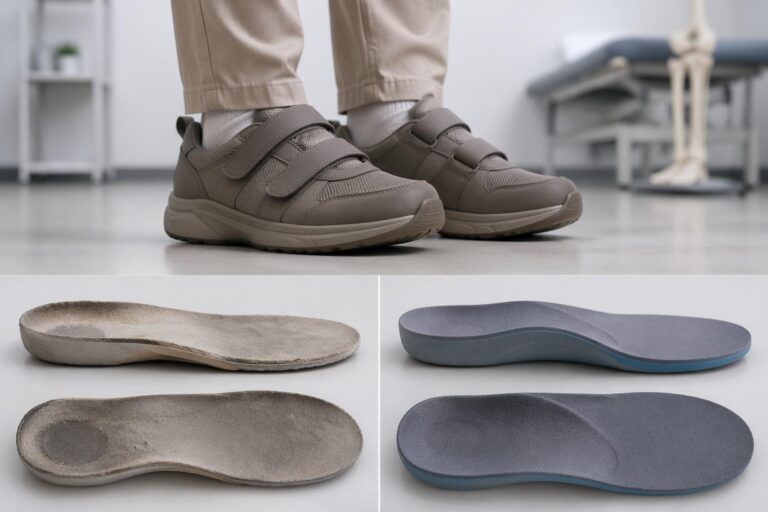
- Choosing the softest insole. Softness feels nice in the shop, but it lets the arch keep collapsing.
- Keeping the original insole in. Stacking two insoles crowds the shoe and makes the support sit in the wrong place. See should you remove original insoles.
- Ignoring arch height. A very high arch under a flat foot feels painful rather than supportive.
- Wearing them too long. Most supportive insoles last 6 to 12 months. See signs you need new insoles.
When to see a podiatrist
Over-the-counter insoles work well for many people, but see a podiatrist if:
- pain continues after 2 to 3 weeks of wearing supportive insoles
- knee or hip pain keeps getting worse
- you feel numbness or tingling
- you have diabetes or a foot deformity
Hiking with overpronation or flat feet? Read our guide to the best hiking insoles for flat feet.
Frequently asked questions
Do insoles fix overpronation?
They don’t change the structure of your foot, but they control the inward roll while you wear them. That reduces the strain that causes arch, heel, shin and knee pain.
What type of insole is best for overpronation?
A structured insole with a firm arch, a deep heel cup and support along the inner side of the foot. Cushion-only insoles feel comfortable but give little control.
Do cheap insoles work for overpronation?
For mild cases they can improve comfort. For moderate or strong inward rolling, a firmer insole like PowerStep or Superfeet does a much better job.
Can overpronation cause knee pain?
It can. When the foot rolls inward, the lower leg rotates too, which can put extra strain on the knee. See why flat feet cause knee pain.
How long do insoles for overpronation last?
Usually 6 to 12 months, depending on your body weight and how many hours a day you wear them.
Can I move one pair between shoes?
Yes, as long as each shoe has room for the insole once its original insole is removed.
Our picks: Insoles work best inside a shoe that holds its shape. If your current pair is worn out, a supportive shoe is worth a look.
Brooks Addiction Walker 2 (women) – A supportive Brooks walking shoe.
Final verdict
For most people who overpronate, PowerStep Pinnacle Maxx is the best place to start. It gives firm control while still feeling comfortable for everyday wear. If your arches are medium to high and you want even more structure, choose Superfeet Green. If your overpronation is mild and you mostly want comfort on a budget, a cushioned Dr. Scholl’s insole is a reasonable first step.
Whatever you choose, remember the rule for overpronation: structure first, softness second.
Related guides
- Best insoles for flat feet
- Best insoles for standing all day
- Memory foam insoles for plantar fasciitis
- Insoles for shin splints
- Insoles for knee pain
- What Causes Overpronation? Signs, Risks & Solutions
- Mild vs Severe Overpronation: Key Differences Explained
- Overpronation vs Supination: Key Differences
- Can You Fix Overpronation Without Insoles?
- Overpronation and Knee Pain: Causes & Relief
- Overpronation and Hip Alignment Explained