Mild vs Severe Overpronation: How to Tell the Difference
If you’ve ever been told you “overpronate” or noticed your feet roll inward when you walk, you might wonder how serious it actually is. Is it just a minor alignment issue, or something that could lead to long-term discomfort?
The challenge is that overpronation exists on a spectrum. Some people experience it mildly with little impact, while others deal with more pronounced movement that can affect stability, comfort, and even joint health over time.
Understanding the difference between mild and severe overpronation isn’t just about labels—it helps you decide whether simple adjustments are enough or if more structured support is needed.
Short answer: overpronation runs on a scale from mild to moderate to severe. Mild: the foot rolls in a little, you rarely feel it, and supportive shoes are usually enough. Moderate: the arch visibly lowers under load and tired or aching feet show up regularly, so a stability shoe and a structured insole usually help. Severe: the arch collapses and the ankle tilts in clearly, often with pain in the feet, knees or lower legs, and a professional assessment is worth getting.
Mild vs Severe Overpronation: What’s the Difference?
Mild overpronation typically involves a slight inward roll of the foot during movement and often causes minimal or occasional discomfort. Severe overpronation, on the other hand, involves a more pronounced collapse of the arch, leading to greater instability and a higher likelihood of pain or strain over time.
When you’re ready to choose a pair, our insoles for overpronation comparison covers the best options.
Understanding Mild vs Severe Overpronation
Mild Overpronation
Mild overpronation occurs when the foot rolls inward slightly during walking or standing. This is actually a normal part of movement to some extent, as pronation helps absorb shock. The issue arises when that inward motion becomes slightly exaggerated.
In most cases, people with mild overpronation:
- may notice subtle arch flattening under weight
- experience occasional fatigue after long periods of standing
- have minimal impact on daily movement
Severe Overpronation
Severe overpronation involves a much more noticeable inward roll, often accompanied by a visible collapse of the arch. The foot may appear significantly flatter when standing, and alignment changes can extend beyond the foot.
Common signs include:
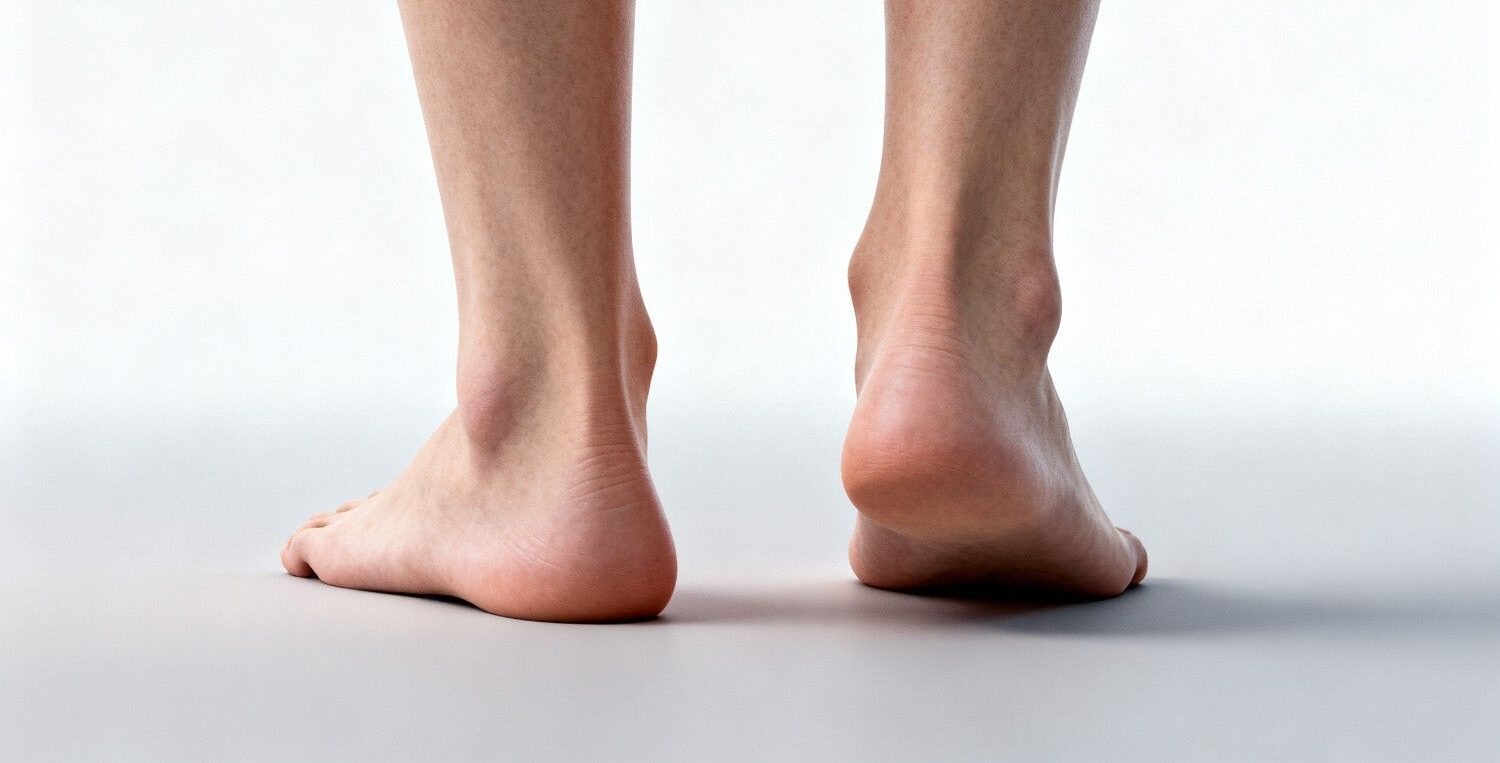
- the ankle rolling inward more visibly
- uneven wear on the inner edge of shoes
- discomfort in feet, ankles, or even knees
For a deeper understanding of how overpronation affects foot alignment and movement, see flat feet vs overpronation.
How Bad Is Yours? A Quick Self-Check
Four things you can check at home. Together they give you a rough idea of where you sit. They are not a diagnosis.
| Level | Shoes and insoles | Also consider |
|---|---|---|
| Mild | Supportive, flexible everyday shoes with a moderate-support insole | Foot strengthening. See insoles for mild flat feet |
| Moderate | Stability or motion-control shoes with a structured arch and deep heel cup. See running shoes vs stability shoes | A gradual wear-in. See how long arch support takes to feel normal |
| Severe | Firm, stable shoes with a wide base and firm, structured insoles | A podiatrist visit. See custom orthotics vs insoles |
Not sure why your feet roll in at all? See the causes of overpronation.
Structural Differences
The main difference between mild and severe overpronation lies in how the foot structure behaves under load.
With mild overpronation, the arch lowers slightly but still retains some functional support. The foot can still distribute weight relatively evenly, and the alignment of the ankle and leg remains mostly stable.
With severe overpronation, the arch collapses more significantly. This affects the entire kinetic chain:
- the ankle tilts inward
- the lower leg may rotate
- pressure shifts unevenly across the foot
This structural difference is what often separates a manageable condition from one that may require more attention.
Functional Differences
From a functional standpoint, the distinction becomes clearer when looking at how the foot handles movement and pressure.
Mild Overpronation
- better natural shock absorption
- more balanced pressure distribution
- less strain on supporting muscles
Severe Overpronation
- reduced stability during movement
- increased pressure on inner foot
- greater reliance on muscles and tendons to compensate
In daily life, this means someone with mild overpronation might feel fine during regular activity, while someone with severe overpronation may notice discomfort building throughout the day.
What About Moderate Overpronation?
Most people sit somewhere in the middle. With moderate overpronation the arch lowers clearly when you put weight on it but still keeps some shape. You may notice aching arches or shins after a long day, a run, or a stretch of walking, and your shoes wear more on the inside. This is the group that usually gets the most out of a stability shoe, a structured insole and some strengthening work.
Real-Life Impact: Work, Walking, and Activity
The impact of overpronation becomes most noticeable in real-world situations.
Standing Jobs
For someone working long hours on their feet, mild overpronation may only cause fatigue by the end of the day. Severe overpronation, however, can lead to ongoing discomfort or a feeling of instability.
In these situations, some people explore added support options like insoles for standing all day to help manage daily load.
Walking and Daily Movement
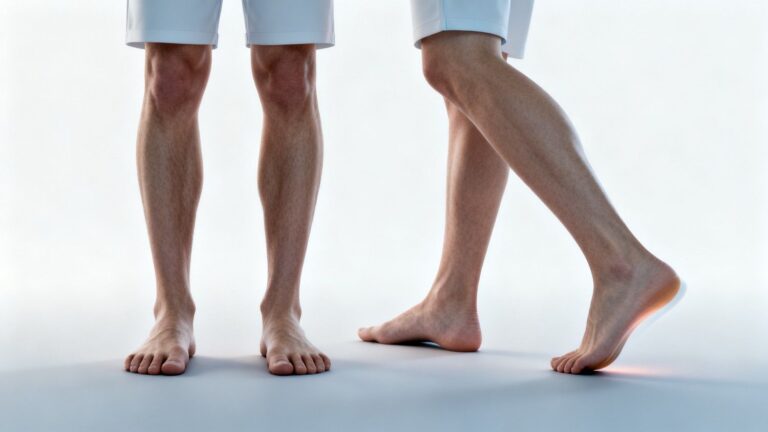
During regular walking, mild overpronation often goes unnoticed. Severe overpronation may result in a heavier inward step, making movement feel less efficient.
Athletic Activity
Higher-impact activities like running or sports can amplify the differences. Mild cases may handle impact reasonably well, while severe cases often struggle with repeated stress and alignment issues.
Long-Term Effort and Support Needs
While overpronation itself isn’t something you “buy,” the way you manage it can differ in terms of cost and long-term value.
Mild Overpronation
- often manageable with small adjustments
- may not require ongoing support
- lower long-term cost
Severe Overpronation
- may benefit from structured support or better footwear
- higher likelihood of needing consistent management
- potential for higher long-term cost if left unaddressed
For those exploring supportive options, resources like best insoles for flat feet can provide additional context on how support levels vary.
Pros and Limitations
Mild Overpronation
Pros
One advantage of mild overpronation is that it often doesn’t interfere significantly with daily life. The foot still retains enough structure to manage load and movement without major compensation. This means many people can walk, stand, and stay active without noticeable limitations.
Another benefit is flexibility. The foot can still adapt to different surfaces and movements, which supports natural shock absorption.
Limitations
The downside is that mild overpronation can still lead to gradual fatigue, especially during long periods of standing or repetitive movement. While not severe, this can build up over time if not addressed with good footwear or basic strengthening.
Severe Overpronation
Pros
Severe overpronation doesn’t offer many functional “advantages,” but it can be easier to identify. Because the symptoms are more noticeable, people are more likely to recognize the issue and take corrective steps earlier.
Limitations
The main limitation is reduced stability. The foot struggles to maintain alignment, which can lead to inefficient movement patterns. Over time, this increases stress on surrounding structures like the ankles, knees, and hips.
There is also a higher chance of discomfort during everyday activities, particularly in weight-bearing situations.
When Mild Overpronation Needs Attention
If your overpronation is mild, your approach should focus on supporting natural function rather than correcting structure.
This applies if:
- you experience occasional fatigue but not consistent pain
- your movement feels stable during walking or light activity
- discomfort only appears after long periods of standing
In these cases, simple adjustments can often make a noticeable difference:
- choosing supportive but flexible footwear
- improving foot strength and awareness
- managing daily load
You’re not trying to “fix” your foot—you’re helping it perform better.
When Severe Overpronation Needs Support
If your overpronation is more pronounced, the goal shifts toward improving stability and reducing strain.
This applies if:
- you notice visible arch collapse when standing
- your ankles roll inward significantly
- you experience ongoing discomfort in feet, knees, or lower legs
In these situations, more structured support may be helpful. The focus is not on forcing the foot into a perfect shape, but on reducing excessive movement that leads to strain.
Supportive strategies may include:
- more stable footwear
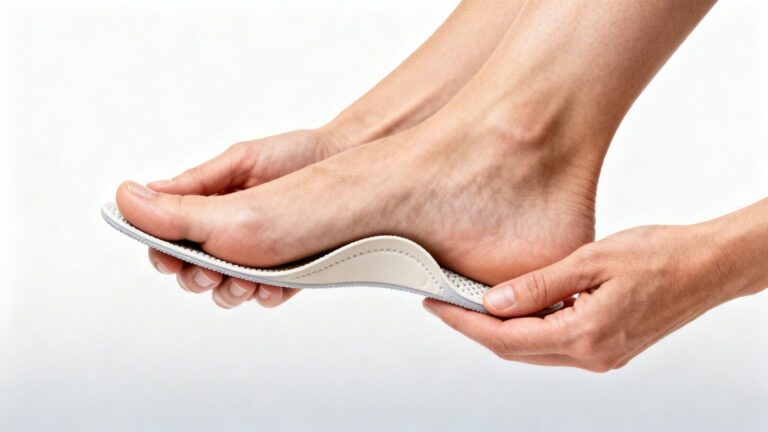
- structured insoles
- reducing high-impact stress when needed
Which Support Fits Each Level
| Level | Shoes | Insoles | Also consider |
|---|---|---|---|
| Mild | Supportive, flexible everyday shoes | Moderate support, often enough | Foot strengthening. See insoles for mild flat feet |
| Moderate | Stability or motion-control shoes. See running shoes vs stability shoes | Structured arch and a deep heel cup | Gradual wear-in. See how long arch support takes to feel normal |
| Severe | Firm, stable shoes with a wide base | Firm, structured support | A podiatrist visit. See custom orthotics vs insoles |
If you want examples, these three match the levels above.
Mild: Moderate Support Insoles – balanced cushioning with a moderate arch.
Moderate: Powerstep Maxx Support – more structure with cushioning on top.
Severe: Superfeet Green – a firm, structured insole for strong support.
Long-Term Differences
Over time, the difference between mild and severe overpronation becomes more noticeable.
Mild Overpronation (Long-Term)
- generally stable if managed well
- lower risk of widespread discomfort
- adapts well to lifestyle changes
Severe Overpronation (Long-Term)
- higher chance of ongoing strain if unmanaged
- may affect movement efficiency
- can contribute to discomfort beyond the foot
The key difference is not just how the foot looks—but how consistently it handles load over time.
When to See a Podiatrist or Get a Gait Analysis
- Pain that lasts more than a few weeks despite supportive shoes and insoles
- Swelling, or pain on the inner ankle
- Knee, hip or back pain that seems to follow your foot problems. See overpronation and knee pain
- One foot much flatter than the other, or an arch that has dropped recently
A podiatrist or physical therapist can watch how you walk or run, and a gait analysis can show how far each foot rolls in. Running shops offer a basic version, but it is not a medical assessment. If you also wonder how pronation differs from the opposite pattern, read overpronation vs supination.
Quick Comparison
- Mild overpronation → better for natural movement with minimal intervention
- Severe overpronation → requires more structured support to maintain stability
Common Questions
How can I tell if my overpronation is severe?
Severe overpronation often involves visible arch collapse and noticeable inward ankle movement during standing or walking.
Does mild overpronation need treatment?
Not always. Many cases can be managed with simple adjustments and supportive footwear.
Can mild overpronation get worse?
It can progress over time, especially with repeated strain or lack of support.
Is mild overpronation normal?
Yes. A small degree of pronation is a natural part of walking and helps absorb impact. It only becomes a concern when it leads to discomfort or imbalance.
Can mild overpronation turn into severe overpronation?
It can progress over time, especially with repeated strain, poor footwear, or lack of support. However, this varies depending on lifestyle and individual factors.
Does severe overpronation always cause pain?
Not always, but it significantly increases the likelihood. Some people may not feel pain immediately, but strain can build gradually over time.
Can shoes alone fix overpronation?
Shoes can help improve comfort and stability, but they don’t change foot structure. They work best as part of a broader approach.
Is overpronation the same as flat feet?
They are related but not identical. Flat feet refer to arch structure, while overpronation refers to movement patterns.
What is moderate overpronation?
The middle of the scale: the arch lowers noticeably under weight but still keeps some shape. Regular aching in the arches or shins, and wear on the inside of the shoes, are typical. A stability shoe and a structured insole usually help.
Can severe overpronation be corrected?
It can usually be managed rather than reversed. Supportive shoes, structured insoles, strengthening and, in some cases, custom orthotics from a podiatrist reduce the strain. A professional can tell you what is realistic for your feet.
How do I measure my overpronation at home?
Check the wear pattern on your shoes, film your heels from behind as you walk, and do a wet footprint test. The self-check above puts those together. Only a gait analysis or a clinician can measure it properly.
Final Thoughts
Mild and severe overpronation are not separate conditions—they are different points along the same spectrum.
For some, it’s a small variation in movement that requires minimal attention. For others, it becomes a more noticeable factor affecting comfort and stability.
The most important takeaway is this:
👉 It’s not about labeling your feet
👉 It’s about understanding how they function under daily load
When you match your approach to your level of overpronation, it becomes much easier to stay comfortable, stable, and active over time.