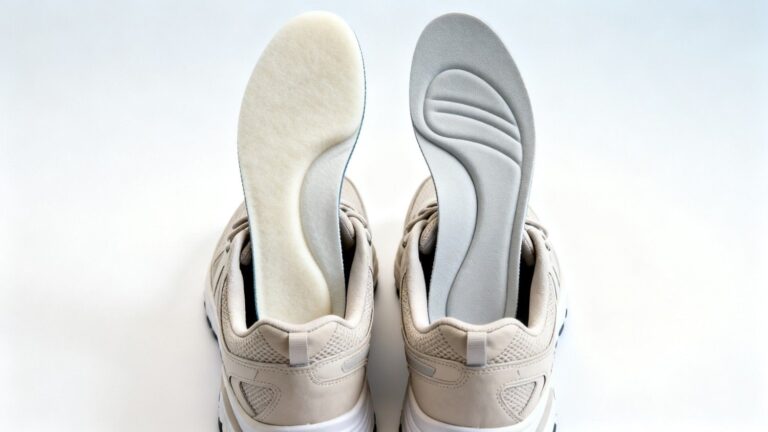
Best Insoles for Overpronation for Long Work Shifts
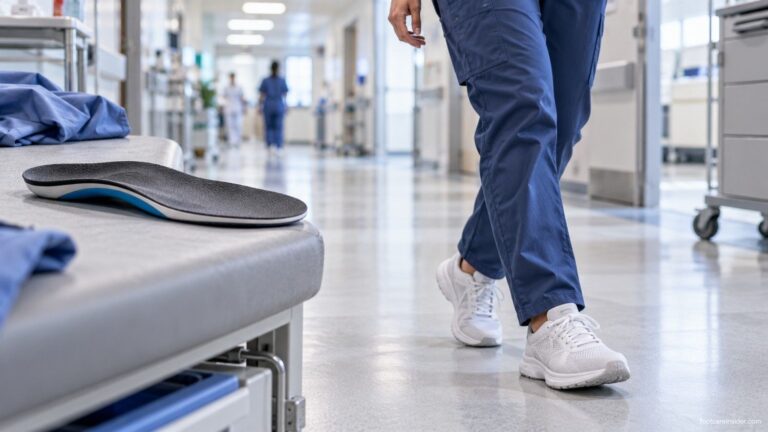
If your feet feel heavy, tired, or unstable halfway through a long shift, you’re not alone. Jobs that keep you standing or walking for hours—whether in warehouses, hospitals, retail, or construction—can quickly expose how much your feet are struggling to stay supported. And if you overpronate, that inward roll can make the strain even worse, affecting not just your feet but your ankles and knees too.
Many people try basic insoles hoping for relief, only to find that the comfort fades within a few days. That’s usually because not all insoles are built to handle long hours under load—especially when movement control is part of the problem.
The right insole should do more than feel soft at first step. It should support your arch, guide your movement, and stay stable even after hours on your feet. In this guide, you’ll learn how to choose insoles that actually work for long work shifts—and what separates a temporary fix from real support.
What Overpronation Means During Long Shifts
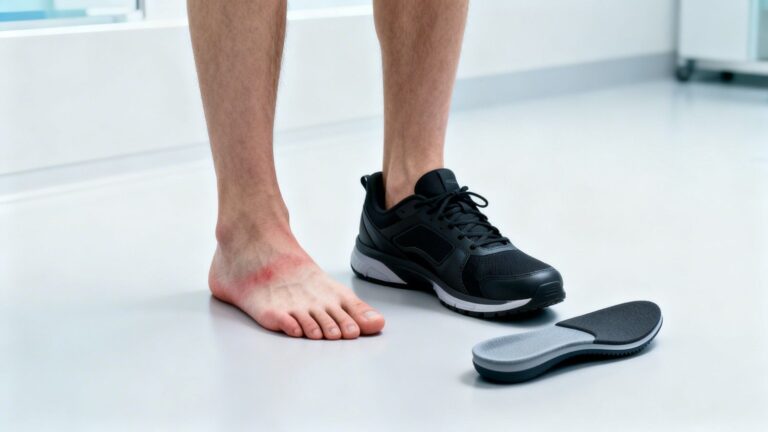
Overpronation happens when your foot rolls inward more than it should during walking or standing. A small amount of this motion is normal, but when it becomes excessive, your arch collapses more than it should under pressure.
Overpronation vs Supination: Key Differences Explained
During long work shifts, this becomes more noticeable. The longer you stay on your feet, the more your muscles fatigue. As that happens, the foot loses stability, and the inward roll becomes more pronounced.
This can lead to:
- faster foot fatigue
- pressure building along the inner foot
- reduced stability during movement
- discomfort that spreads beyond the foot
If you’re not fully clear on how this movement differs from foot structure, this guide on best insoles for flat feet can help you understand how arch support plays a role in both cases.
Why Standard Insoles Often Don’t Work
A lot of insoles are designed for short-term comfort—not long-term support. They may feel soft when you first put them on, but that softness can be misleading.
Soft insoles tend to compress quickly under body weight. Once they flatten, they stop supporting the arch and allow the foot to continue rolling inward.
Some common issues with standard insoles:
- too much cushioning, not enough structure
- lack of arch support
- materials that break down quickly
- no control over foot movement
This is why many people feel relief for a few hours, only for discomfort to return by the end of the day.
What Actually Matters in Insoles for Long Shifts
When you’re dealing with overpronation during long work hours, the goal isn’t just comfort—it’s controlled support that lasts.
Arch Support
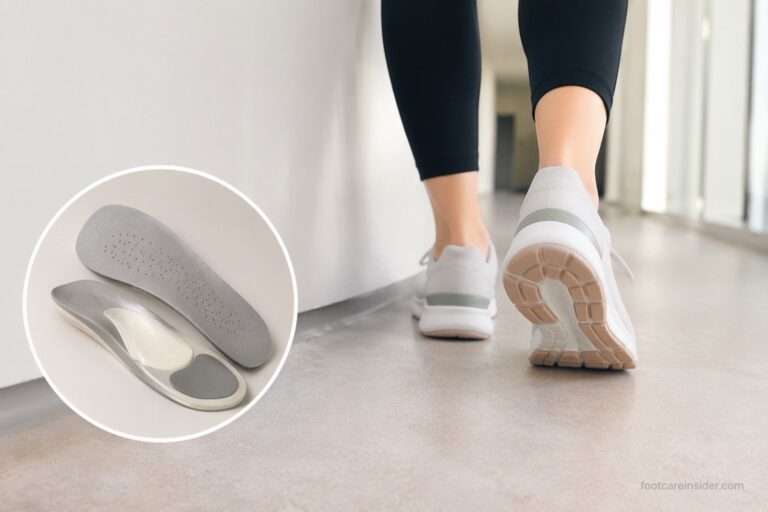
The most important feature is proper arch support. It helps limit excessive inward movement and keeps your foot in a more stable position throughout the day.
A well-designed arch doesn’t feel aggressive—it feels supportive without forcing your foot into an unnatural shape.
Cushioning vs Control
Cushioning is still important, especially on hard surfaces. But too much softness without structure can make things worse.
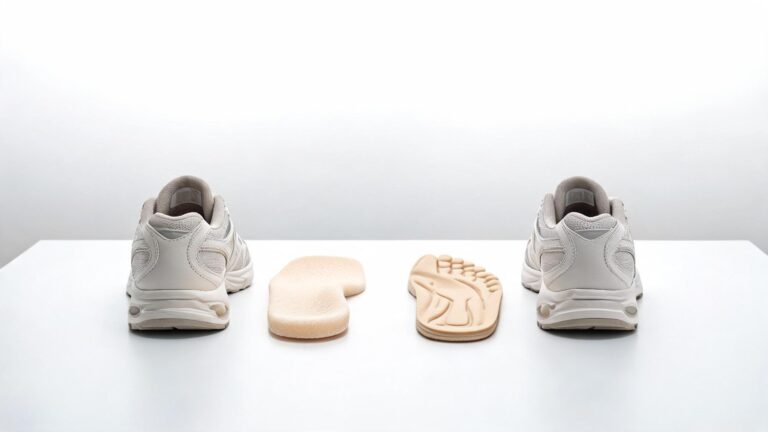
Soft foam may feel comfortable at first, while firmer materials provide better long-term stability. The balance between cushioning and control is what makes an insole effective over long hours.
Material Type
Different materials behave differently under pressure:
- EVA foam → lightweight, moderate support, compresses over time
- gel → good shock absorption, less control
- PU (polyurethane) → more durable, better for long-term support
For long shifts, durability matters just as much as comfort.
Firmness Balance
Firm insoles tend to control movement better, while softer ones focus on pressure relief. For overpronation, a slightly firmer structure is usually more effective.
Durability
An insole that feels great for one week but collapses after two isn’t solving the problem. Long shifts require materials that maintain their shape under repeated load.
How to Choose the Right Insole for Your Situation
Not every insole works for every person. Choosing the right one depends on how you use your feet daily.
Severity of Overpronation
If your inward roll is mild, you may only need moderate support. If it’s more noticeable, a firmer and more structured insole is usually more effective.
Type of Work
Standing in one place creates different pressure compared to walking all day. Jobs that involve constant movement often require a balance between flexibility and support.
If your job involves extended standing, you can explore options designed specifically for that use in insoles for standing all day.
Shoe Type
Work boots, sneakers, and safety shoes all have different space and structure. Some insoles are bulkier and may not fit well in tighter footwear.
Pain Location
Where you feel discomfort can guide your choice:
- arch pain → focus on support
- heel pain → add cushioning
- general fatigue → balance both
Daily Load
The longer your shifts and the harder your surfaces, the more important durability and structure become.
Choosing the right insole isn’t about picking the “best” product—it’s about matching support to your daily reality.
Firm Support Insoles for Stability
These are designed for people who feel their feet collapsing inward as the day goes on. Firm support insoles focus on controlling movement rather than just adding comfort.
They usually include a structured arch and a more rigid base layer that helps keep the foot aligned during long hours of standing or walking.
Best for:
- moderate to severe overpronation
- long shifts on hard surfaces
- people who feel instability or inward ankle rolling
Why they work:
They limit excessive inward motion and help maintain alignment, which can reduce strain building up through the foot and lower body.
Pros:
- strong movement control
- durable over long hours
- consistent support throughout the day
Limitations:
- may feel stiff at first
- requires short adjustment period
Firm support is often the better choice when stability matters more than softness.
Cushioned Support Insoles for Pressure Relief
These combine moderate arch support with softer cushioning materials to reduce pressure during long shifts.
They don’t control movement as aggressively as firm insoles, but they can improve comfort for people who mainly experience fatigue rather than instability.
Best for:
- mild overpronation
- foot fatigue without sharp pain
- mixed standing and walking
Why they work:
They absorb impact while still offering some level of support, making them more comfortable for extended wear.
Pros:
- more comfortable initially
- better shock absorption
- easier transition
Limitations:
- less control over foot movement
- may compress over time
This type sits between comfort and support but may not be enough for more pronounced overpronation.
Work-Specific Insoles for Long Standing Hours
These are built specifically for environments where you’re on your feet all day, such as warehouses, hospitals, or retail.
They typically combine structured support with durable cushioning to handle constant load.
Best for:
- long standing shifts
- hard floors (concrete, tile)
- repetitive daily use
Why they work:
They’re designed to maintain their shape under continuous pressure, which helps reduce fatigue buildup over time.
Pros:
- balanced support and cushioning
- designed for long wear
- better durability
Limitations:
- less specialized for severe cases
- may feel bulky in tighter shoes
These are often a practical choice for everyday work use.
Low-Profile Insoles for Tight Work Shoes
Some work shoes don’t have enough space for thick insoles. Low-profile options are designed to fit into tighter footwear while still providing some support.
Best for:
- slim work shoes or safety footwear
- light to moderate overpronation
- situations where fit is limited
Why they work:
They provide support without taking up too much space, allowing you to improve comfort without changing shoes.
Pros:
- better fit in tight shoes
- lightweight
- easy to use
Limitations:
- reduced cushioning
- less structural support
These are a compromise between fit and function.
Heavy-Duty Insoles for Maximum Support
These are built for people who need the highest level of support and durability. They’re typically thicker, more structured, and designed for demanding environments.
Best for:
- severe overpronation
- physically demanding jobs
- extended shifts with high load
Why they work:
They provide strong structural support and resist breakdown under repeated pressure.
Pros:
- maximum stability
- long-lasting materials
- effective for high load
Limitations:
- may feel bulky
- requires proper shoe fit
For demanding conditions, these provide the most consistent support.
How These Options Compare
Firm insoles focus on control, while cushioned ones focus on comfort. Work-specific designs try to balance both, and heavy-duty options lean toward maximum support.
The right choice depends less on preference and more on how your feet behave during long shifts.
Common Questions
Do insoles really help with overpronation during long shifts?
They can help reduce strain by supporting the arch and guiding movement. However, their effectiveness depends on choosing the right type for your level of support needs.
Should I choose soft or firm insoles?
Soft insoles feel comfortable at first, but firmer ones usually provide better long-term support for overpronation. The best option is often a balance between the two.
How long do work insoles last?
It depends on material and usage. High-quality insoles can last several months, while softer ones may compress more quickly under daily load.
Can insoles replace proper footwear?
No. Insoles work best when paired with supportive shoes. They enhance support but don’t fully compensate for poor footwear.
Are expensive insoles always better?
Not necessarily. The key is matching the insole’s structure and support level to your needs, not just its price.
Final Thoughts
Long work shifts put consistent stress on your feet, and overpronation can make that stress build faster. The right insole doesn’t just add comfort—it helps manage how your foot moves under load.
Some people need firm control, others benefit from a balance of cushioning and support. The key is choosing based on your daily demands, not just what feels soft at first step.
When you match the right type of support to your work environment, it becomes much easier to stay comfortable, stable, and consistent throughout the day.