Best Insoles for Knee Pain (Support & Reduce Strain)
When Knee Pain Starts With Your Feet
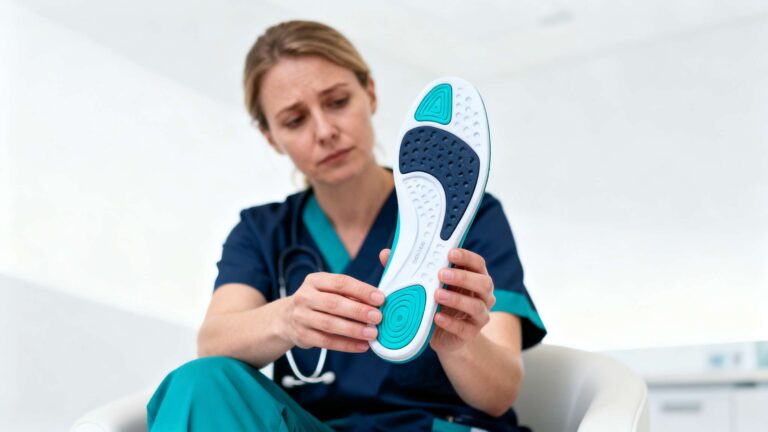
Knee pain rarely feels small. It affects how you walk, stand, exercise, climb stairs, and even sleep. For many people, the discomfort builds gradually — a dull ache after long shifts, stiffness after workouts, or sharp irritation when bending the knee. You can read more in our insoles vs arch support for knee pain.
What many don’t realize is this: knee pain often begins at the ground level.
Your feet are the foundation of your alignment. When they roll inward excessively (overpronation) or fail to absorb shock properly, that force travels upward into the knees. Over time, this repeated stress can irritate cartilage, strain ligaments, and worsen joint inflammation.
This is where insoles for knee pain can make a meaningful difference. By correcting alignment and redistributing pressure, the right support can reduce mechanical strain on the knee joint.
But not all insoles are designed for this purpose.
Knee pain is often linked to poor foot alignment, especially in cases involving overpronation and foot imbalance .
Understanding the Root Problem
The knee is a hinge joint that depends heavily on proper alignment from the ankle and hip. When your foot collapses inward:
- The tibia rotates internally
- The knee tracks improperly
- The joint experiences uneven loading
Similarly, high arches that lack shock absorption can increase impact forces that travel directly into the knee.
Common causes of knee pain linked to foot mechanics include:
- Overpronation
- Flat feet
- High arches
- Poor footwear support
- Prolonged standing on hard surfaces
If your discomfort worsens after long walks or standing, foot support may be a key factor.
For a deeper understanding of alignment issues, see flat feet vs overpronation explained.
Why Standard Insoles Fail
Factory shoe inserts are usually thin foam liners designed for basic comfort. They compress quickly and offer little structural guidance.
Common limitations include:
- Minimal arch contour
- No heel stabilization
- Soft foam that collapses
- Short lifespan
- Poor shock distribution
Soft does not equal supportive.
In fact, overly soft inserts can increase instability, which may worsen knee tracking issues. If you’re searching for effective insoles for knee pain, structural stability matters more than plush cushioning alone.
What Features Actually Matter
Choosing correctly means understanding what influences knee alignment.
1. Structured Arch Support
The arch controls how your foot rolls. Proper contouring reduces excessive inward movement, which can improve knee tracking.
- Low arches benefit from moderate to firm support
- Neutral arches need balanced contour
- High arches need support plus shock absorption
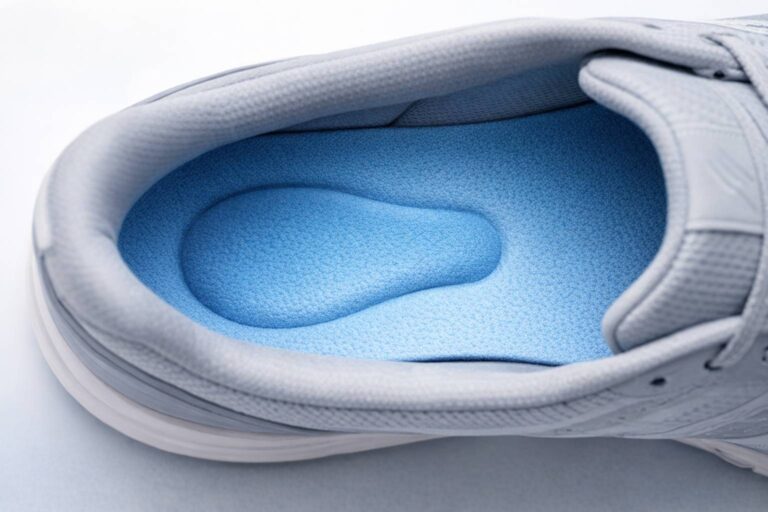
Quality insoles for knee pain typically include a defined arch platform that stabilizes movement rather than simply cushioning it.
In some cases, improper arch support can lead to strain — similar to issues seen in arch pain support solutions .
2. Heel Cup Stability
A deep heel cup improves rearfoot control. This helps limit tibial rotation — one of the main contributors to knee stress.
Without heel stability, arch support loses effectiveness.
Alignment doesn’t stop at the feet — it affects your entire body. Learn how insoles improve posture and alignment .
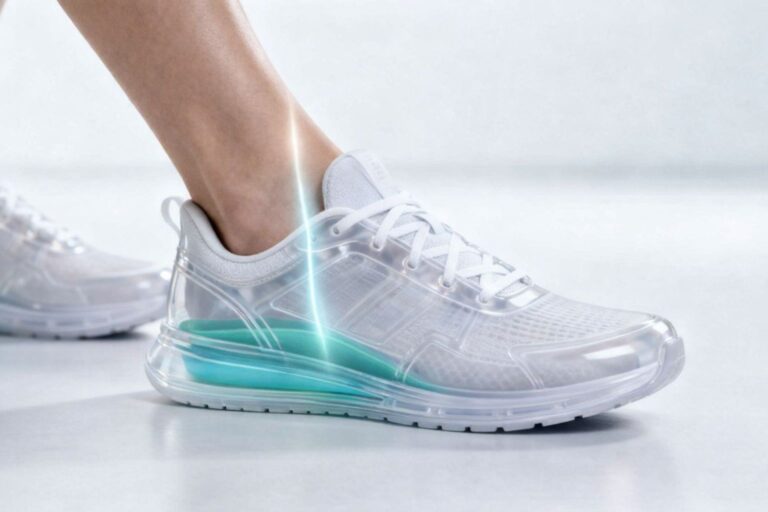
3. Shock Absorption
If your knee pain worsens during running or high-impact activities, impact reduction becomes critical.
Materials to look for:
- PU foam (durable and responsive)
- EVA blends (lightweight cushioning)
- Gel pads (targeted shock zones)
The goal is controlled absorption — not excessive softness.
4. Firmness Balance
Too firm may feel uncomfortable. Too soft may collapse.
Semi-rigid support often works best for long-term knee stability. Insoles designed specifically for knee pain usually balance structure and cushioning to reduce joint load.
If you spend long hours standing, added stress on the joints makes support even more important — see insoles for standing all day .
5. Durability
Alignment correction only works if it remains consistent. Insoles that flatten within weeks will not provide sustained relief.
Look for dense materials with reinforced arch zones and high rebound resilience.
How to Choose the Right Insoles for Knee Pain
Use this practical framework:
- Identify your arch type (low, neutral, high)
- Determine pain trigger (walking, running, standing)
- Assess severity (mild ache vs persistent discomfort)
- Match firmness to activity level
- Ensure compatibility with your shoes
If your knee discomfort is tied to inward ankle rolling, you may also benefit from stability footwear for overpronation.
For individuals with flat arches contributing to knee strain, insoles for flat feet may offer additional guidance.
Key Takeaway
The best insoles for knee pain are those that improve lower-body alignment, reduce internal rotation stress, and absorb impact appropriately. They do not “cure” knee conditions — but they can significantly reduce mechanical strain when chosen correctly.
Now that you understand how foot mechanics influence knee alignment, let’s break down the most effective categories of insoles for knee pain. Each serves a different purpose depending on arch type, activity level, and severity of discomfort.
There isn’t one universal solution — but there is a right match for your specific situation.
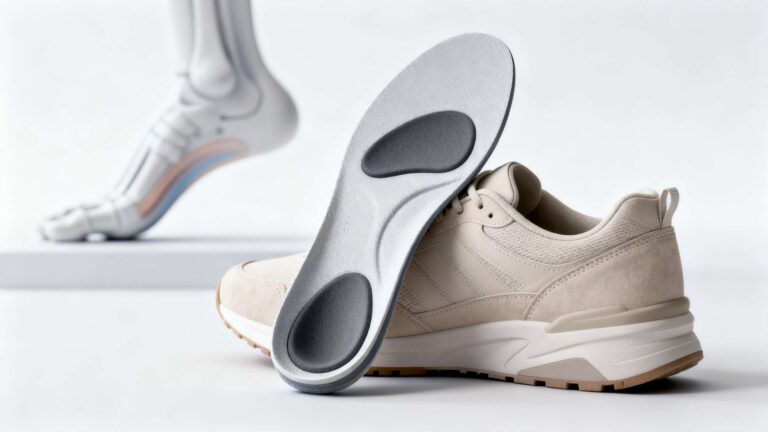
1. Firm Orthotic Arch Support Insoles
Best for: Flat feet, overpronation, medial knee pain, long hours standing.
These insoles prioritize structural correction. They typically feature:
- Semi-rigid or rigid arch shell
- Deep heel cup for rearfoot control
- Reinforced midfoot platform
- Dense foam top layer
By stabilizing the arch, they reduce internal tibial rotation — one of the most common contributors to knee strain.
Pros
- Strong alignment correction
- Durable construction
- Effective for chronic mechanical knee pain
- Helps reduce inward knee collapse
Limitations
- Requires break-in period
- May feel firm at first
- Not ideal for narrow or dress shoes
For individuals with flat arches or noticeable ankle rolling, this category often provides the most consistent relief among insoles for knee pain.
2. Semi-Rigid Everyday Support Insoles
Best for: Mild to moderate knee discomfort, daily walking, office work.
These offer balanced support without aggressive correction. They combine moderate arch contouring with responsive cushioning.
Typical features include:
- Medium-density EVA or PU foam
- Moderate heel stabilization
- Flexible but supportive base
Pros
- Comfortable for extended wear
- Fits most casual and athletic shoes
- Good entry-level support
Limitations
- May not fully control severe pronation
- Can compress over time with heavy use
For many people, this type represents a practical starting point when exploring insoles for knee pain caused by everyday stress.
3. Shock-Absorbing Sport Insoles
Best for: Runners, gym training, high-impact activities.
If your knee pain worsens during exercise, impact reduction becomes essential. These insoles focus on:
- Targeted heel cushioning
- Reinforced arch platform
- Breathable top cover
By reducing repetitive ground reaction forces, they help minimize joint loading during activity.
Pros
- Designed for athletic movement
- Reduces fatigue during workouts
- Improves foot stability under dynamic stress
Limitations
- May prioritize impact absorption over strong correction
- Less suitable for formal footwear
For active individuals, sport-specific insoles for knee pain can reduce repetitive strain without sacrificing performance.
4. Cushioned Insoles for High Arches
Best for: High arches, lateral knee discomfort, impact sensitivity.
High arches do not absorb shock efficiently. This increases stress transmitted to the knees.
These insoles emphasize:
- Enhanced forefoot and heel padding
- Moderate arch contour
- Flexible base with stability reinforcement
Pros
- Better pressure distribution
- Reduces hard-impact sensation
- Comfortable for long walks
Limitations
- Less corrective for pronation
- Overly soft versions may lack control
If your knee discomfort feels like impact stress rather than instability, cushioned support may be the right type of insoles for knee pain in your case.
5. Custom or Heat-Moldable Insoles
Best for: Persistent knee pain, complex biomechanics, previous injuries.
Custom options conform more precisely to your foot shape. Some are heat-moldable at home, while others require professional fitting.
Pros
- Personalized arch contour
- Improved pressure distribution
- Can address asymmetrical alignment
Limitations
- Higher cost
- May require professional assessment
- Not necessary for mild discomfort
For individuals who haven’t found relief with standard options, custom-designed insoles for knee pain can provide more targeted support.
Comparison Insights
- Flat feet or overpronation: Firm orthotic support performs best.
- Mild everyday strain: Semi-rigid daily support works well.
- Athletic impact pain: Sport-specific insoles reduce stress.
- High arches: Cushion-focused designs distribute pressure.
- Chronic or complex pain: Custom support may be appropriate.
Choosing based on biomechanics rather than marketing claims leads to better long-term outcomes.
Frequently Asked Questions
1. Can insoles really reduce knee pain?
Yes, when knee pain is linked to alignment or impact stress, properly designed insoles can reduce mechanical strain.
2. How long does it take to notice improvement?
Most people feel changes within 1–3 weeks, especially after consistent daily wear.
3. Should insoles feel uncomfortable at first?
Mild adjustment pressure is normal. Sharp pain or numbness is not.
4. Do I need different insoles for sports and daily use?
Often yes. Athletic demands differ from casual walking or standing.
5. When should I see a doctor?
If pain persists beyond 4–6 weeks, worsens, or includes swelling or instability, consult a healthcare professional.
plantar fasciitis insole guide
Final Verdict
The right insoles for knee pain improve lower-body alignment, reduce rotational stress, and absorb impact appropriately. Relief depends on matching support to your arch type and activity level.
Firm orthotic designs work best for structural instability, while cushioned or sport-focused models address impact-related discomfort. For complex or long-standing issues, professional guidance may be necessary.
Thoughtful selection leads to better knee stability — and more comfortable movement throughout the day.
If your feet roll inward while walking or running, using insoles that correct overpronation can make a big difference.