Insoles for Back Pain
Back pain rarely starts in the back.
For many people, it begins at ground level — with poor foot alignment, collapsing arches, or constant impact on hard surfaces. If your feet are unstable, your knees rotate inward, your hips shift, and your lower spine compensates. Over time, that compensation turns into stiffness, muscle fatigue, and chronic discomfort.
That’s why many people searching for insoles for back pain blog solutions are surprised to learn the real issue isn’t always the spine — it’s the support system beneath it.
If you stand for long hours, walk on concrete, wear unsupportive shoes, or have flat feet or high arches, the wrong insoles can quietly aggravate lower back strain. The right ones can significantly reduce it.
This guide breaks down exactly what matters — and how to choose correctly.
Back pain often starts lower than expected, especially when issues like overpronation and foot imbalance affect alignment.
The Real Problem Behind Back Pain
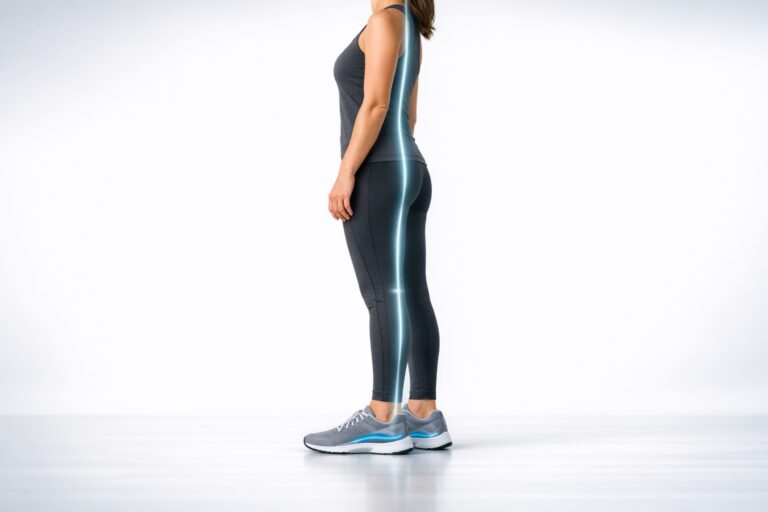
When your foot rolls inward (overpronation) or lacks arch support, your lower body alignment shifts. That shift changes how force travels through:
- Ankles
- Knees
- Hips
- Lumbar spine
Without proper support, your lower back absorbs repetitive stress with every step.
Many people experiencing back pain also have:
- Flat feet
- High arches
- Tight calves
- Long hours standing
- Hard-surface work environments
The connection is biomechanical — not just comfort-based.
If you haven’t already, it’s worth reviewing how arch mechanics influence posture in Best Insoles for Flat Feet Insoles for Overpronation.
Why Standard Insoles Fail
Most factory shoe inserts are:
- Thin foam
- Flat in design
- Lacking structural support
- Made for cost, not correction
They compress quickly and provide no real arch reinforcement. For someone with back discomfort, this creates two problems:
- No shock absorption
- No alignment control
Soft foam alone isn’t enough. Cushioning without structure allows the foot to collapse further, worsening instability.
That’s why choosing proper insoles for back pain blog-level advice requires understanding both support and impact control — not just softness.
Lack of proper support can create stress that travels upward, similar to problems seen in arch pain support solutions.
What Actually Matters in Insoles for Back Pain
Here’s what separates effective insoles from generic inserts:
1. Proper Arch Support
Arch height must match your foot type:
- Flat feet → Firm structured support
- High arches → Contoured but cushioned support
- Neutral arches → Moderate stability
Arch support helps stabilize the kinetic chain and reduce lower back strain.
Proper alignment plays a major role in reducing strain — here’s how insoles improve posture and alignment .
2. Shock Absorption
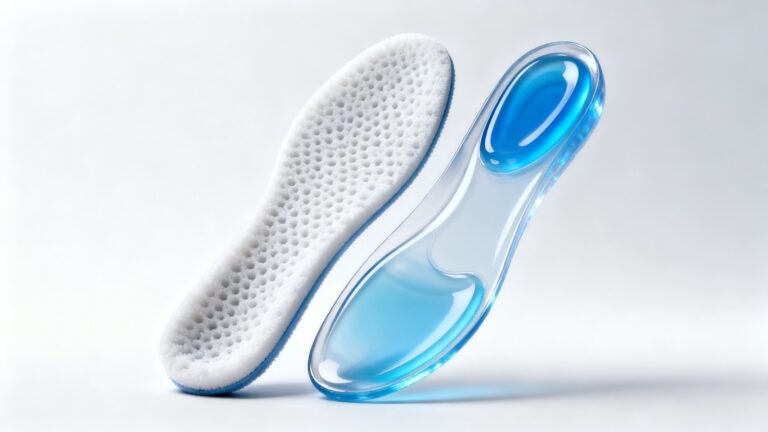
Impact from walking travels upward. Materials like:
- EVA foam
- PU (polyurethane)
- Gel inserts
- Memory foam (in specific cases)
help reduce vertical shock — especially on concrete floors.
But shock absorption must work alongside structure.
When foot mechanics are off, the impact often reaches the knees before the back — explore insoles for knee pain relief .
3. Firmness Level
Too soft → instability
Too rigid → discomfort
A medium-firm support base with top-layer cushioning works best for most buyers.
If you’re unsure, reviewing Best Memory Foam Insoles can help you understand softness vs support tradeoffs.
4. Heel Stabilization
Deep heel cups improve alignment by:
- Centering the heel
- Reducing inward rolling
- Supporting posture
This is especially important for lower back relief.
5. Durability
Back pain solutions need consistency. Cheap inserts flatten within weeks.
Look for:
- High-density foam base
- Reinforced arch core
- Moisture-resistant top layer
Durability ensures alignment correction doesn’t fade quickly.
How to Choose the Right Insoles (Buying Framework)
Instead of guessing, use this 5-step framework:
Step 1: Identify Your Arch Type
Wet your foot and step on paper:
- Full footprint → Flat feet
- Thin midsection → High arch
- Moderate curve → Neutral
Arch type determines support structure.
Step 2: Identify Your Primary Trigger
Is your back pain worse:
- After standing all day?
- After walking long distances?
- First thing in the morning?
- During workouts?
Different use cases require different insole construction.
For long standing, explore Best Insoles for Standing All Day.
Step 3: Match Firmness to Activity
Work boots → Firmer base
Athletic shoes → Balanced cushioning
Casual shoes → Moderate support
Step 4: Consider Shoe Fit
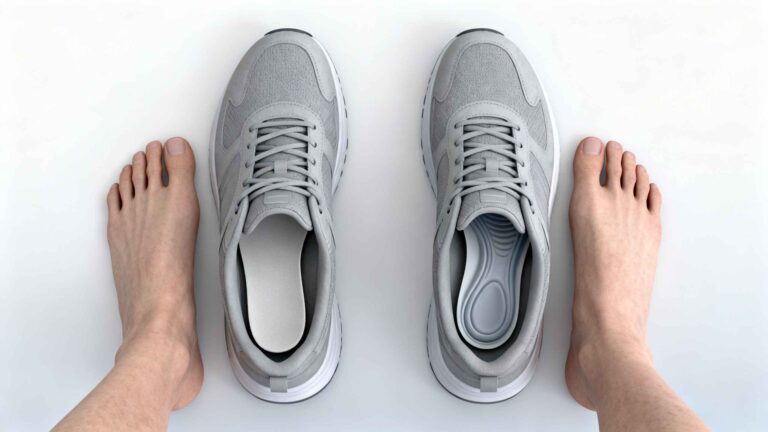
Some supportive insoles are thick and may require removing the factory insert.
Always check shoe depth before buying.
Step 5: Avoid Overcorrecting
More support isn’t always better.
If your arches are neutral, ultra-rigid orthotics may create new strain.
The goal is improved alignment — not forced rigidity.
Who Should Consider Insoles for Back Pain?
You may benefit if you:
- Work 8+ hours on hard floors
- Experience lower back tightness after walking
- Have flat feet or overpronation
- Wear unsupportive footwear
- Notice uneven shoe wear patterns
Insoles won’t “cure” structural spine issues — but they often reduce mechanical stress significantly.
Insoles for Back Pain
Now that you understand what causes lower back strain from poor foot mechanics, let’s break down the five most effective types of insoles for back pain — who they’re best for, and where they may fall short.
Not every insole works the same way. Matching the right structure to your body and daily activity is what makes the difference.
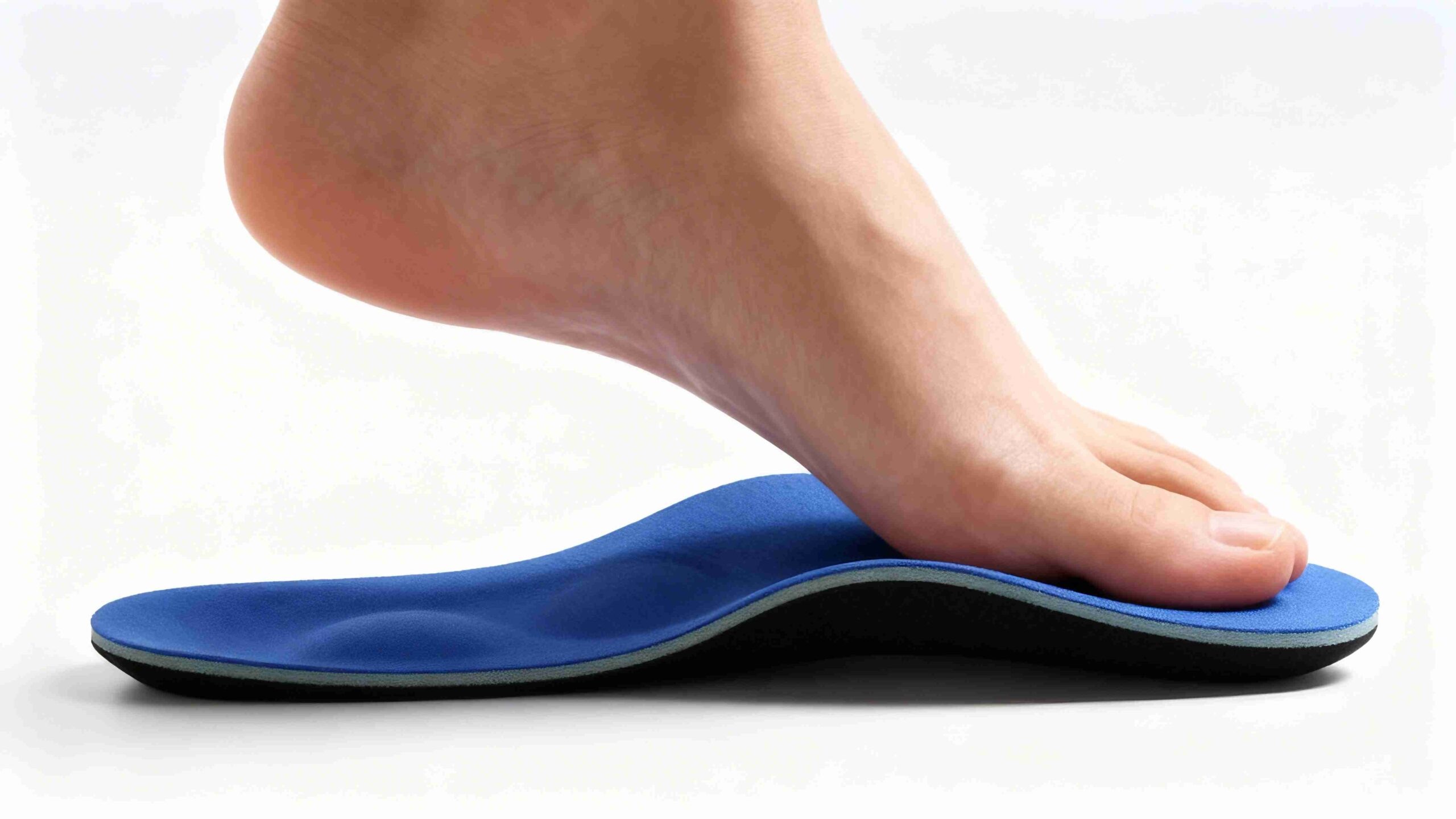
1. Structured Orthotic Insoles (Firm Arch Support)
These are semi-rigid or rigid insoles designed to stabilize foot alignment and reduce overpronation.
Best for:
- Flat feet
- Moderate to severe overpronation
- Chronic lower back strain
- Knee and hip alignment issues
Why they help:
By preventing the arch from collapsing, structured orthotics reduce inward ankle rolling. That stabilizes knee tracking and reduces rotational stress that travels up to the lumbar spine.
Pros
- Strong alignment correction
- Durable materials
- Long-lasting support
- Excellent for biomechanical issues
Limitations
- May feel firm at first
- Requires adjustment period
- Can be too rigid for high arches
Comparison Insight:
If your back pain feels linked to instability rather than impact, this category typically performs better than soft cushioning inserts.
2. Cushioned Support Insoles (Balanced Stability + Shock Absorption)
These combine moderate arch support with impact-reducing materials like EVA or polyurethane foam.
Best for:
- Long hours standing
- Retail or warehouse workers
- Mild to moderate back discomfort
- Hard flooring environments
Why they help:
They reduce vertical shock while still offering alignment assistance. This balance is ideal for people whose back pain worsens after extended standing.
If standing is your main trigger, you may also benefit from Best Insoles for Standing All Day.
Pros
- Comfortable for all-day wear
- Good balance of support and softness
- Works in most shoe types
Limitations
- Not corrective enough for severe overpronation
- May compress faster than rigid orthotics
Comparison Insight:
This is often the safest starting point for first-time buyers looking for insoles for back pain blog recommendations.
3. Memory Foam Insoles (Pressure Relief Focused)
Memory foam adapts to foot shape and improves pressure distribution.
Best for:
- Mild lower back discomfort
- Casual daily wear
- Individuals prioritizing comfort
- High arches needing cushioning
Why they help:
They improve comfort and reduce localized pressure points, which can indirectly reduce muscular tension.
For deeper material comparison, see Best Memory Foam Insoles.
Pros
- Soft and comfortable
- Affordable
- Easy transition from standard inserts
Limitations
- Limited structural correction
- Not ideal for severe alignment issues
- Can flatten over time
Comparison Insight:
Memory foam works best when impact is the main issue — not structural instability.
4. High Arch Support Insoles (Elevated Contour Design)
These are specifically built for people with rigid, high arches that don’t absorb shock effectively.
Best for:
- High arch foot type
- Sharp lower back fatigue after walking
- Runners with rigid foot structure
Why they help:
High arches create excessive pressure on the heel and forefoot. Proper contouring improves shock absorption and redistributes force.
You can explore this further in Best Insoles for High Arches.
Pros
- Targeted support for cavus feet
- Reduces heel strike intensity
- Improves posture balance
Limitations
- Uncomfortable for flat feet
- Requires accurate arch identification
Comparison Insight:
If you have high arches, generic insoles for back pain blog advice won’t be enough — you need contour-specific support.
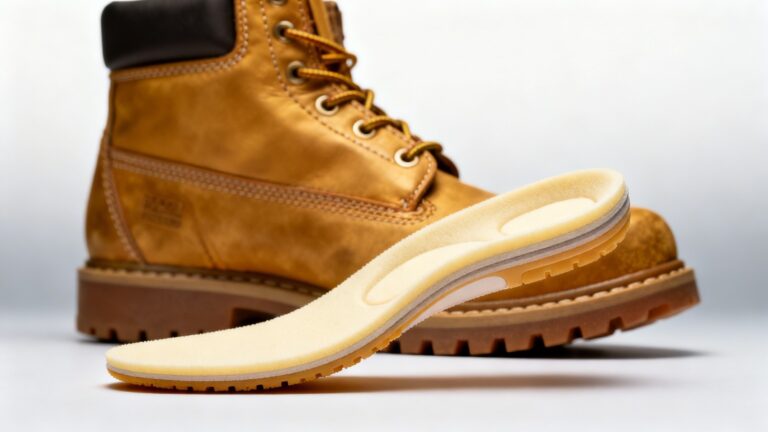
5. Heavy-Duty Work Boot Insoles
These are reinforced insoles designed for boots and physically demanding environments.
Best for:
- Construction workers
- Warehouse staff
- Industrial environments
- Long shifts on concrete
Why they help:
They combine firm arch support with high-impact heel cushioning, which reduces fatigue accumulation through the spine.
For more work-specific options, see Best Memory Foam Insoles for Work Boots.
Pros
- Built for durability
- Strong heel cup stability
- Designed for heavy body weight load
Limitations
- Thicker design may not fit casual shoes
- Slight break-in period
Comparison Insight:
For physically demanding jobs, general comfort insoles often fail — heavy-duty construction matters.
Frequently Asked Questions
1. Can insoles actually relieve back pain?
They can reduce biomechanical stress that contributes to lower back discomfort, especially when caused by poor alignment or prolonged standing.
2. How long does it take to notice improvement?
Many people feel changes within 1–2 weeks as the body adapts to improved alignment.
3. Should insoles be worn all day?
Yes — consistency matters. However, start gradually if switching from flat inserts.
4. Do I need custom orthotics?
Not always. Many high-quality over-the-counter insoles provide sufficient correction for mild to moderate issues.
5. Are softer insoles better for back pain?
Not necessarily. Soft without support can worsen instability. Balanced structure is more important.
Final Verdict
The best insoles for back pain blog recommendations all share one thing: structural support combined with shock absorption.
If your pain stems from instability → choose structured orthotics.
If it’s impact-related from standing → choose cushioned support insoles.
If comfort is your priority → memory foam may be enough.
The key is matching foot type and activity level — not just choosing the softest option.
When selected properly, insoles become a simple yet powerful upgrade that supports your entire kinetic chain from the ground up.
You can also benefit from arch support for overpronation, especially if you experience foot fatigue or instability.