Best Insoles for Bunions (Reduce Pressure & Pain Fast)
That sharp pressure on the side of your big toe… the way certain shoes suddenly feel too tight… the constant awareness of a sore, irritated joint—it’s not just uncomfortable, it’s limiting.
If you’re dealing with bunions, even simple things like walking, standing, or choosing shoes can become frustrating. And at some point, most people start searching for a solution that doesn’t involve surgery.
That’s where insoles for bunions come in.
But here’s the truth: not all insoles help—and some can actually make things worse if they’re not designed for the problem.
What Are Bunions (and Why They Hurt So Much)
A bunion isn’t just a bump. It’s a structural issue.
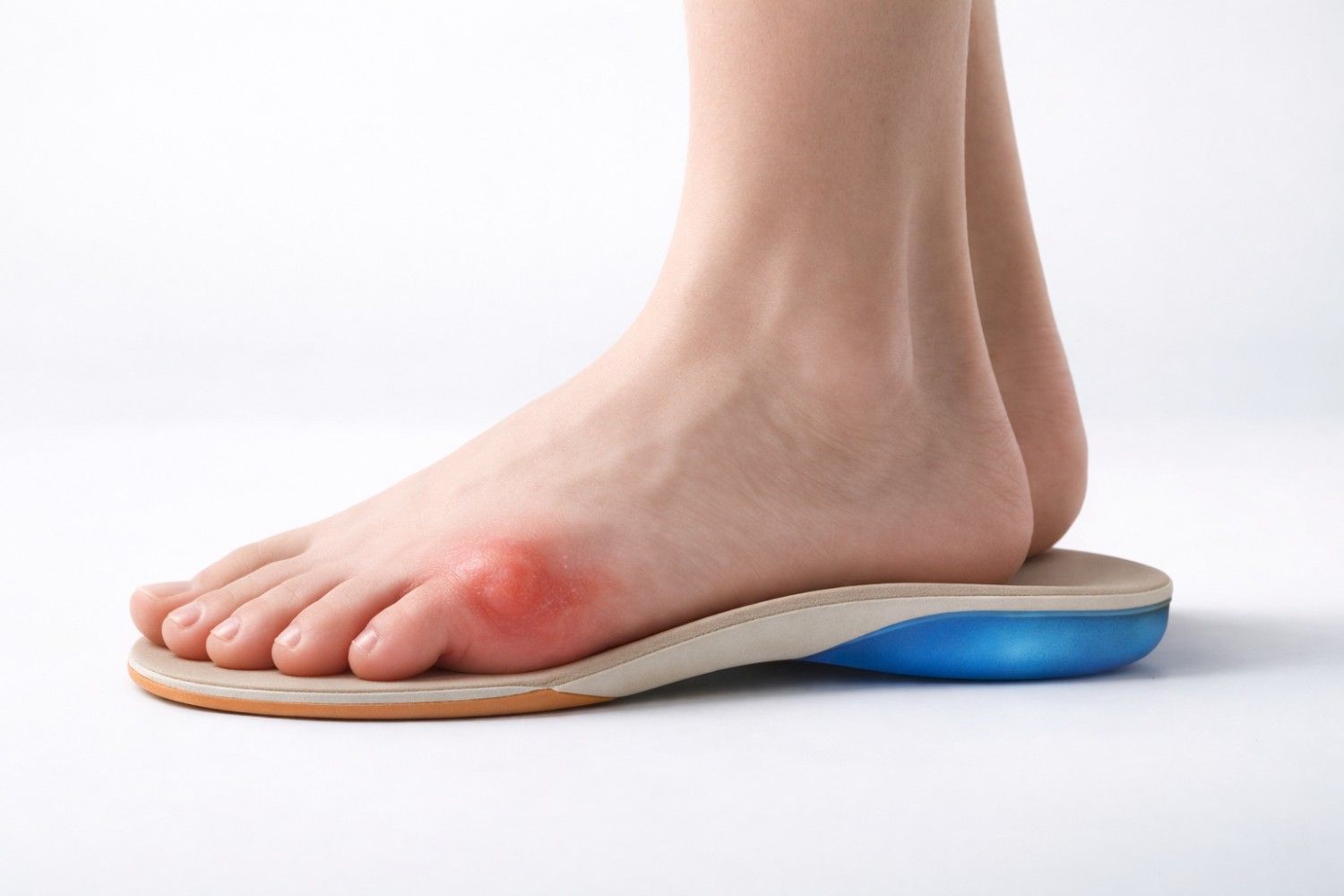
It develops when the big toe joint shifts out of alignment, causing the bone to push outward while the toe angles inward. Over time, this creates pressure, inflammation, and friction—especially inside shoes.
This misalignment changes how your foot distributes weight.
Instead of spreading pressure evenly, more stress gets pushed onto:
- The big toe joint
- The forefoot
- Surrounding soft tissue
That’s why bunions often come with:
- Pain during walking
- Redness or swelling
- Increased sensitivity in tight shoes
- Difficulty finding comfortable footwear
And because your gait changes, that stress can travel further up the chain—affecting your knees, hips, and posture.
Morning pain doesn’t always point to the same problem, especially if you also have low arches, which is why Why do flat feet hurt more in the morning? is worth reading.
Why Standard Insoles Don’t Help Bunions
A common mistake is assuming any insole will reduce pain.
Most basic inserts are:
- Flat
- Soft
- Designed for general comfort
They don’t address the root issue.
Bunions are not just about cushioning—they’re about pressure distribution and alignment.
Here’s where standard insoles fall short:
1. No forefoot pressure relief
They don’t reduce stress on the big toe joint.
2. Lack of structural support
Without proper arch support, the foot continues collapsing inward, increasing pressure on the bunion.
3. Poor weight distribution
Instead of spreading load, they allow the same pressure points to persist.
4. Quick compression
Soft materials flatten quickly, losing effectiveness.
That’s why many people try insoles and feel no difference—or temporary relief at best.
What Actually Helps: The Right Features
Effective insoles for bunions focus on reducing pressure, stabilizing the foot, and improving how weight is distributed.
Here’s what matters most:
1. Proper Arch Support
This is more important than most people think.
When the arch collapses, the foot rolls inward, increasing pressure on the big toe joint. Supporting the arch helps shift weight away from the bunion.
Look for:
- Medium to firm arch support
- A shape that matches your foot type
- Materials that don’t compress easily
If your foot tends to roll inward, support becomes even more critical—see insoles for overpronation for deeper guidance.
2. Forefoot Pressure Relief
Bunions are located in the forefoot, so reducing pressure in that area is essential.
Good insoles help:
- Redistribute weight across the entire foot
- Reduce direct stress on the big toe joint
- Improve walking comfort over time
Some designs include subtle padding or shaping that offloads pressure from the bunion area.
3. Cushioning That Doesn’t Collapse
Soft cushioning can feel great at first—but if it’s too soft, it allows instability.
What you want is:
- Moderate-density cushioning
- Shock absorption without sinking
- A balance between comfort and structure
Too soft = no support
Too firm = discomfort
The goal is controlled comfort.
4. Stable Heel Support
It might seem unrelated, but heel stability affects the entire foot.
A deep heel cup helps:
- Align the foot during movement
- Reduce shifting inside the shoe
- Improve overall balance
Better alignment means less pressure shifting forward into the bunion.
Bunions don’t just affect the toe—they can influence how your entire lower body moves and distributes pressure. How Flat Feet Lead to Back Pain
5. Durable Materials
If the insole loses shape, it loses function.
Look for:
- High-density EVA
- Polyurethane (PU)
- Reinforced arch structures
Cheap materials compress quickly and bring the problem right back.
How to Choose Insoles for Bunions (Step-by-Step)
Choosing the right pair isn’t about picking the most popular option—it’s about matching your needs.
Step 1: Identify Your Foot Type
- Flat feet → need stronger arch support
- Neutral arches → moderate support
- High arches → more cushioning + support balance
Understanding your structure prevents choosing the wrong design.
Step 2: Consider Your Daily Activity
Ask yourself:
- Are you standing all day?
- Walking long distances?
- Wearing tight or narrow shoes?
For long hours on your feet, support becomes even more important—see insoles for standing all day
Step 3: Check Your Shoe Fit
Bunions and tight shoes are a bad combination.
Make sure:
- There’s enough toe box space
- The insole doesn’t overcrowd the shoe
- You can remove the original insole if needed
Even the best insole won’t work if your shoe compresses the bunion.
Step 4: Match Support to Pain Level
- Mild discomfort → moderate support + cushioning
- Ongoing pain → structured support with pressure relief
- Severe irritation → focus on stability + offloading pressure
The Key Takeaway
Bunions don’t just need cushioning—they need redistribution of pressure and better alignment.
The right insoles for bunions:
- Reduce stress on the big toe joint
- Improve how your foot moves
- Help you stay comfortable longer
But the wrong ones? They’ll just mask the problem for a few hours.
Insoles for Bunions
Now that you understand what actually causes bunion pain—and why most inserts fail—it’s time to look at what does work in real-world use.
Not every insole is built the same. The best insoles for bunions fall into specific categories, each designed for different needs, foot types, and daily demands.
Choosing the right type is what makes the difference between temporary comfort and consistent relief.
1. Structured Orthotic Insoles (Best Overall Support)
These are the most effective all-around option for managing bunion-related discomfort.
They focus on alignment and pressure redistribution, not just cushioning.
Best for:
- Moderate to severe bunion pain
- Overpronation or flat feet
- Long hours standing or walking
Why they work:
- Firm arch support stabilizes the foot
- Reduces inward collapse that worsens bunions
- Distributes pressure away from the big toe joint
Pros:
- Strong support and durability
- Improves full-foot mechanics
- Long-term relief potential
Limitations:
- Can feel firm at first
- Requires short break-in period
If your bunion is linked to foot mechanics, this is usually the best starting point.
2. Cushioning Insoles with Forefoot Relief
These prioritize comfort while still addressing pressure at the front of the foot.
They’re not as corrective—but they can be very helpful for daily comfort.
Best for:
- Mild bunion discomfort
- Sensitive feet
- Casual walking or daily wear
Why they work:
- Absorb shock during walking
- Reduce direct pressure on the bunion area
- Improve comfort inside tighter shoes
Pros:
- Soft, comfortable feel
- Easy to adapt to
- Good for short-term relief
Limitations:
- Less structural support
- May compress over time
If you’ve tried hard insoles and couldn’t tolerate them, this is a softer alternative.
3. Slim Profile Insoles (Best for Tight Shoes)
Bunions and tight shoes are a bad combination—but sometimes you can’t avoid certain footwear.
Slim insoles are designed to fit without overcrowding.
Best for:
- Dress shoes
- Narrow sneakers
- Work environments with strict footwear
Why they work:
- Provide light support without reducing space
- Help stabilize the foot in limited room
- Reduce friction against the bunion
Pros:
- Thin and discreet
- Better fit in tight shoes
- Reduces rubbing and irritation
Limitations:
- Limited cushioning
- Less correction compared to full orthotics
They won’t fix alignment completely—but they can make tight shoes more manageable.
4. Gel-Based Insoles (Best for Shock Absorption)
These are focused primarily on impact reduction, which can ease discomfort during walking.
Best for:
- People walking on hard surfaces
- Mild bunion irritation
- Occasional use
Why they work:
- Absorb repetitive impact
- Reduce pressure spikes on the forefoot
- Improve step comfort
Pros:
- Very comfortable underfoot
- Good for hard flooring
- Easy to use
Limitations:
- Minimal structural support
- Doesn’t correct alignment
Gel insoles are helpful for comfort—but not ideal if your bunion is worsening due to poor foot mechanics.
5. Hybrid Support Insoles (Balanced Option)
These combine moderate support with cushioning, offering a middle ground.
Best for:
- Early-stage bunions
- People unsure between soft vs firm
- Everyday use across different shoes
Why they work:
- Provide enough structure to guide movement
- Maintain comfort for longer wear
- Adapt well to different activity levels
Pros:
- Balanced feel
- Versatile across use cases
- Easier transition from basic insoles
Limitations:
- Not as corrective as rigid orthotics
- Not as soft as pure cushioning options
If you’re unsure where to start, this is often the safest choice.
How These Compare (Quick Insight)
- Best correction: Structured orthotic insoles
- Best comfort: Cushioning or gel insoles
- Best for tight shoes: Slim profile designs
- Best balance: Hybrid insoles
Your choice should reflect your pain level, foot type, and daily use.
Frequently Asked Questions
Do insoles for bunions actually work?
Yes—when they reduce pressure and improve alignment. They won’t remove the bunion but can significantly reduce discomfort.
Can insoles shrink a bunion?
No. Bunions are structural. Insoles help manage symptoms, not reverse the condition.
Are soft insoles better for bunions?
Not always. Soft insoles improve comfort, but without support, they may not reduce long-term stress.
Can I wear insoles with bunions in all shoes?
Most of the time, yes—but shoe fit matters. Tight toe boxes can still cause irritation.
How long do insoles for bunions last?
Typically 6–12 months depending on usage and material quality.
Should I combine insoles with other treatments?
Yes. Proper footwear, toe spacing, and foot strengthening all help improve results.
Final Verdict: Choosing the Right Insoles for Bunions
Bunions change how your foot handles pressure. That’s why the solution isn’t just about comfort—it’s about control and distribution.
The best insoles for bunions:
- Support your arch
- Reduce stress on the big toe joint
- Improve overall alignment
If your pain is more advanced, go for structured orthotic support.
If you need comfort for daily wear, consider cushioning or hybrid options.
If space is limited, slim designs are the practical choice.
The key isn’t just buying an insole—it’s choosing one that actually matches your situation.