Best Memory Foam Insoles for Work Boots (2026 Guide)
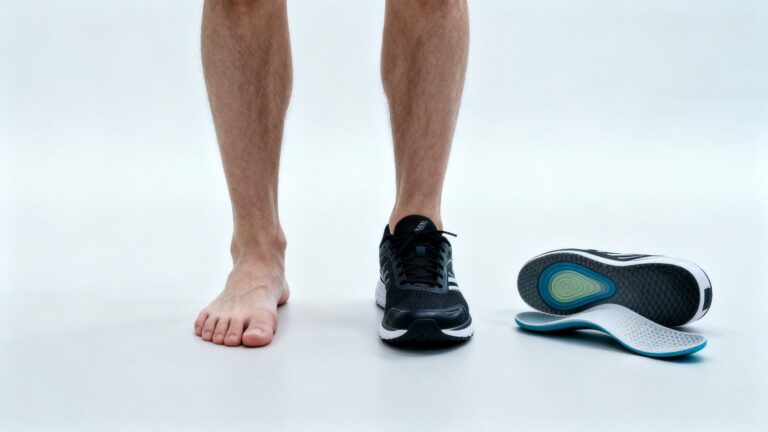
If your shoes feel flat, thin, or uncomfortable after a few If you wear work boots for 8–10 hours a day, the factory insoles inside them are usually thin and flat. Over time, that lack of cushioning can lead to heel pressure, foot fatigue, and overall discomfort.
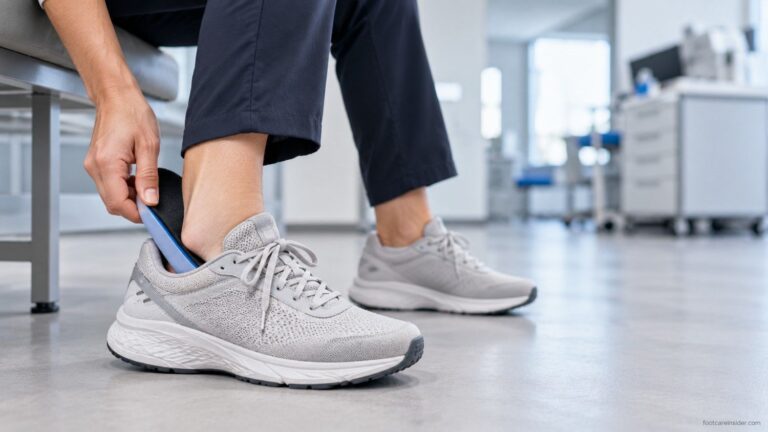
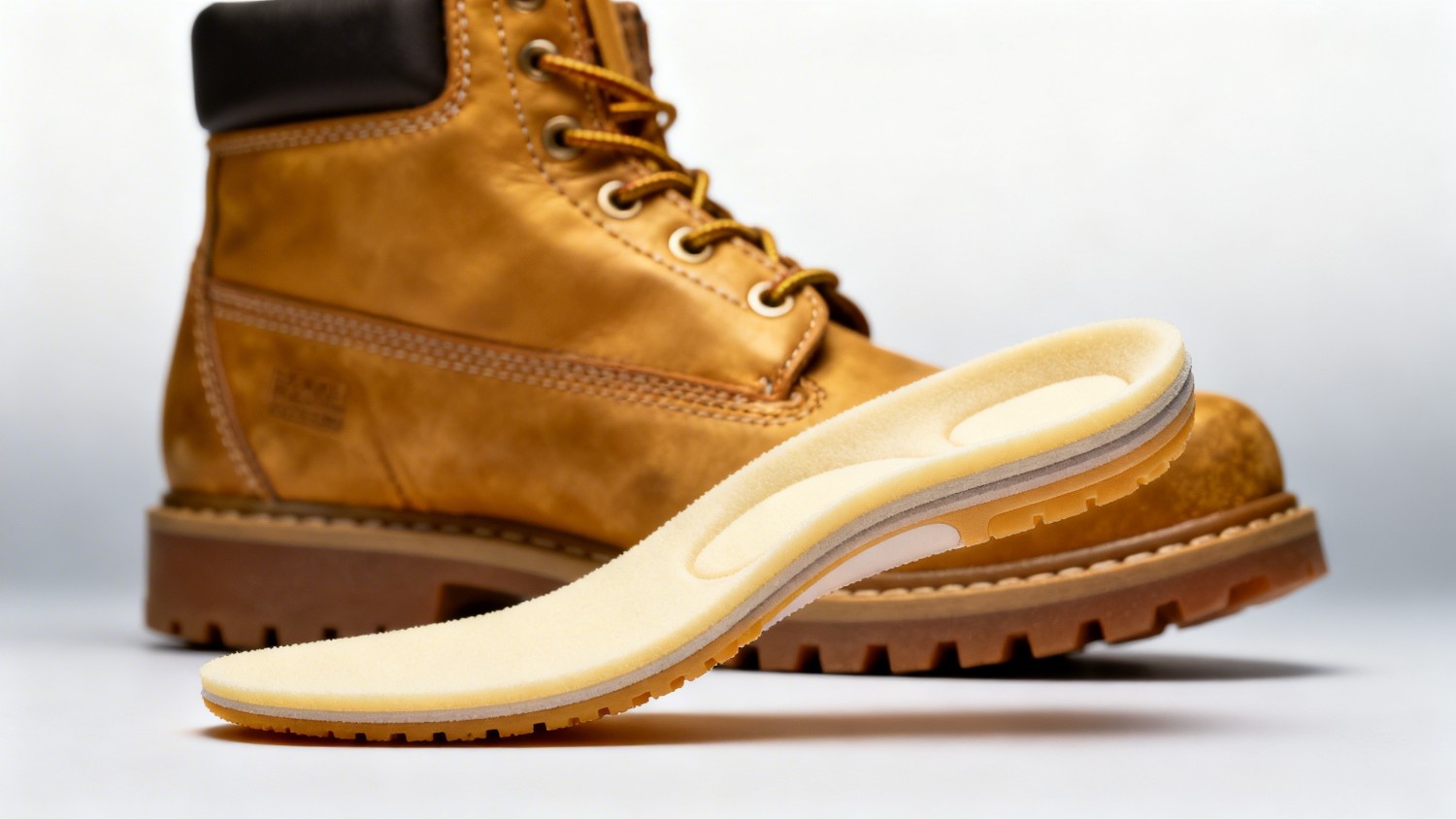
Upgrading to memory foam inserts designed for work boots can dramatically improve comfort during long shifts—especially if you stand on concrete or hard surfaces.
Below are three strong options built specifically for heavier footwear and extended wear.
For top-rated options, check out our best memory foam insoles guide.
Quick Picks
Best Overall: Dr. Scholl’s Memory Foam Insoles
Best for Long Shifts: PowerStep Pinnacle Maxx
Best Budget Option: TEOYETTSF Cushion Insoles
1. Dr. Scholl’s Memory Foam Insoles – Best Overall
Best for: Warehouse work, construction, manufacturing, retail
Why they stand out:
• Thick cushioning for long hours
• Designed for high-impact environments
• Durable construction
• Built for heavy boots
These inserts are made for people who stand all day. The deeper foam layer helps absorb repeated impact from walking on concrete and steel surfaces.
They fit best in work boots with removable factory insoles..
2. PowerStep Pinnacle Maxx – Best for Long Shifts
Best for: Retail, healthcare, restaurant jobs
Why they stand out:
• Targeted heel cushioning
• Designed for tired, achy feet
• Good balance of softness and support
• Trim-to-fit sizing
This option blends shock absorption with moderate structure. If your feet feel sore at the end of long shifts, added heel padding can help reduce that pressure
3. TEOYETTSF Cushion Insoles – Best Budget Pick
Best for: Extra softness at a lower price
Why they stand out:
- Soft, cushioned feel underfoot
- Breathable design
- Easy to trim to size
- Budget-friendly option
If your boots feel hard underfoot and you want to try added cushioning without spending much, this is a low-cost place to start.
They’re not as structured as work-specific support insoles, so for full 10-hour shifts on concrete, the PowerStep pick above is the stronger choice.
Why Work Boots Need Specialized Insoles
Work boots are:
• Heavier
• Less flexible
• Built for durability over comfort
• Often worn for long shifts
That combination increases pressure on the heel and ball of the foot.
Standard thin inserts compress quickly and lose effectiveness. A thicker, denser foam layer handles repeated impact better.
What to Look for in Work Boot Inserts
When choosing memory foam inserts for boots, focus on:
✔ Thickness (at least medium to high density)
✔ Heel cushioning
✔ Durability under weight
✔ Removable original insoles
✔ Proper fit after trimming
If the insert is too thin, it will flatten quickly.
If it’s too thick, it may reduce toe room.
For a full breakdown of all top options, you can also check my guide to the best memory foam insoles.
Memory Foam vs Gel for Work Boots
Memory Foam:
• Softer feel
• Better pressure distribution
• Good for steady standing
Gel:
• Slightly firmer
• More rebound
• Better for constant walking
Many people prefer foam for concrete environments where shock absorption matters most.
If you’re torn between softness and structure, it helps to compare memory foam vs EVA insoles first.
Do They Help With Foot Fatigue?
Added cushioning may:
• Reduce pressure on heels
• Improve comfort during long shifts
• Decrease soreness at the end of the day
However, inserts don’t fix structural foot conditions. If you need strong arch correction, orthotic-style designs may be more appropriate.
Memory Foam Insoles for Plantar Fasciitis
Frequently Asked Questions
Can I use memory foam insoles in steel-toe boots?
Yes, as long as there is enough space after removing the original insert.
How often should I replace work boot insoles?
Most need replacement every 3–6 months depending on use and body weight.
Are thicker insoles better for concrete floors?
In many cases, yes. Thicker cushioning helps absorb repeated impact.
Should I remove factory insoles?
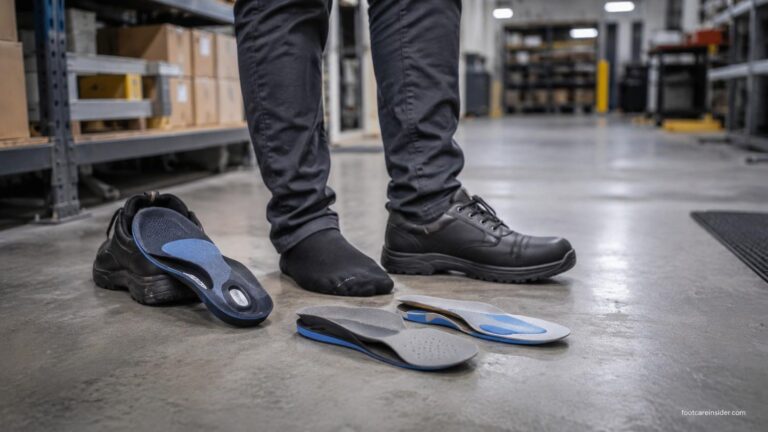
Yes. Layering inserts can reduce stability and comfort.
Final Verdict
If you work long shifts on hard floors, upgrading your boot insoles is one of the easiest comfort improvements you can make.
Dr. Scholl’s Memory Foam is a comfortable all-round choice for everyday boots.
PowerStep Pinnacle Maxx adds firmer support for long shifts on hard floors.
TEOYETTSF Cushion Insoles are a low-cost way to add extra softness.
Choosing the right insert depends on how long you stand and how much cushioning your boots currently provide.
Struggling with uneven foot movement? These insoles for overpronation can help correct alignment and reduce strain.