Best Insoles for Walking Long Distances
You might start a walk feeling comfortable, only to notice tired arches, aching heels, or sore feet several miles later. Whether you’re walking for exercise, commuting daily, traveling, or spending hours exploring on foot, the wrong insoles can make long-distance walking far more exhausting than it needs to be.
Many people focus only on shoe selection, but insoles play a major role in how pressure is distributed throughout the foot. A supportive insole can help reduce fatigue, improve comfort, and maintain stability as walking distance increases.
The right insole should support your arch, manage pressure efficiently, and match your walking style—not simply feel soft during the first few minutes. This guide explains what matters most when choosing insoles for long distance walking and how to identify the best option for your needs.
Why Long Distance Walking Causes Foot Fatigue
Walking places repeated stress on the feet.
For everyday walking rather than long distances, see best insoles for walking.
Unlike standing, where pressure remains relatively constant, walking creates thousands of loading cycles throughout the day. Each step transfers force through the heel, arch, forefoot, and toes.
Over longer distances, this repeated loading may contribute to:
- heel soreness
- arch fatigue
- forefoot pressure
- ankle strain
- general foot tiredness
The farther you walk, the more important support and pressure distribution become.
Even minor biomechanical issues may become more noticeable after several miles.
People with flat feet, high arches, or overpronation often experience fatigue earlier because the foot may work harder to maintain stability.
Readers researching best insoles for flat feet often discover that long-distance walking amplifies support issues that may go unnoticed during shorter activities.
Why Standard Shoe Insoles Often Fall Short
Many walking shoes include removable insoles, but these are typically designed for general comfort rather than extended mileage.
Common problems include:
- excessive softness
- limited arch support
- poor durability
- inadequate pressure distribution
- reduced motion control
At first, soft factory insoles may feel comfortable.
However, repeated loading can cause them to compress quickly, reducing support throughout a long walk.
As fatigue develops, the foot often receives less assistance from the shoe, forcing muscles and connective tissues to work harder.
This is one reason foot discomfort frequently becomes more noticeable later in the day rather than during the first few minutes of activity.
What Features Matter Most for Long Distance Walking?
Arch Support
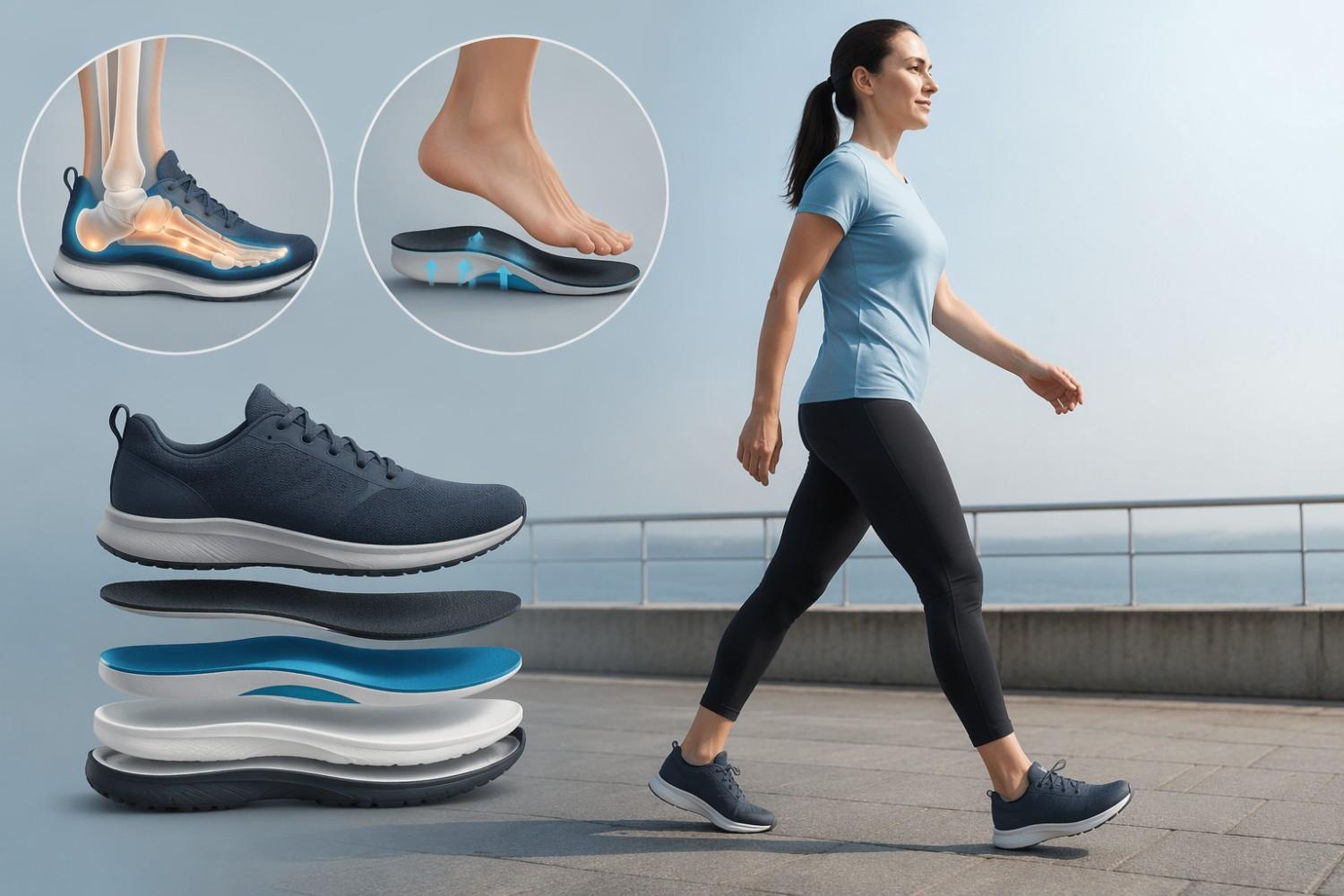
Arch support helps distribute force more evenly across the foot.
Without adequate support, the arch may fatigue sooner during longer walks.
The appropriate level of support depends on foot type.
People with flat feet often benefit from more structured support, while those with neutral arches may prefer moderate support combined with cushioning.
Cushioning vs Control
Many shoppers focus entirely on cushioning.
While cushioning is important, too much softness can sometimes reduce stability.
A useful way to think about it:
- Soft cushioning improves comfort.
- Structural support improves efficiency.
The most effective walking insoles typically balance both.
Similar to soft vs firm insoles, the goal is not maximum softness or maximum firmness. Instead, the best option provides enough cushioning while maintaining support throughout the walk.
Materials
Different materials affect comfort and durability.
Common options include:
EVA Foam
- lightweight
- comfortable
- responsive
- may compress faster
PU Foam
- more durable
- maintains shape longer
- often used in support-focused insoles
Gel Components
- effective shock absorption
- pressure relief
- useful for heel comfort
Compared with traditional foam, gel often prioritizes impact reduction while foam tends to provide broader cushioning coverage.
Durability
Walking several miles per day places significant stress on an insole.
Materials that flatten quickly may initially feel comfortable but lose effectiveness over time.
Durability becomes especially important for:
- daily walkers
- travelers
- fitness walkers
- active workers
Long-term support often provides greater value than short-term softness.
How Walking Patterns Influence Insole Choice
Not everyone walks the same way.
Walking style influences which features matter most.
Mild Fatigue Walkers
If you experience only occasional tired feet after longer walks, moderate cushioning and light arch support may be sufficient.
Comfort tends to be the primary goal.
Moderate Walking Discomfort
If you regularly notice heel soreness or arch fatigue, a more supportive design may help improve pressure distribution throughout the stride cycle.
Support becomes increasingly important as walking duration increases.
Significant Walking Fatigue
People experiencing frequent discomfort after long distances often benefit from structured support, durability, and stronger arch stabilization.
The objective shifts from simple comfort toward fatigue reduction and improved efficiency.
Choosing Based on Footwear
The shoe itself affects which insole works best.
Walking Shoes
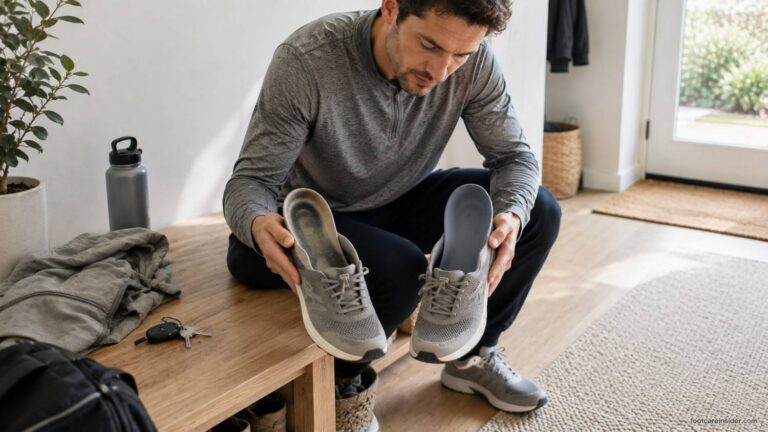
Most walking shoes can accommodate full-length supportive insoles without difficulty.
These shoes often work well with structured arch support and moderate cushioning.
Many walkers discover that cushioning vs stability insoles is one of the most important comparisons when deciding between comfort-focused support and motion control.
Athletic Sneakers
Athletic shoes typically provide enough depth for a variety of insole designs.
Supportive walking insoles often integrate well into this type of footwear.
Casual Shoes
Some casual shoes have less internal space.
In these situations, lower-profile insoles may provide a better fit without crowding the foot.
Matching Insoles to Pain Location
The location of discomfort often provides useful clues.
Heel Pain
Look for:
- heel cushioning
- shock absorption
- pressure management
Arch Fatigue
Look for:
- structured arch support
- stability features
- shape retention
Full Foot Fatigue
Look for:
- balanced cushioning
- full-length support
- durable materials
People experiencing discomfort during both standing and walking frequently explore insoles for standing all day because many of the same support principles apply to prolonged loading.
A Simple Buying Framework
When choosing insoles for long distance walking, consider four factors:
Severity
- Mild discomfort → moderate support
- Moderate fatigue → increased structure
- Significant symptoms → stronger support systems
Activity Level
- Occasional walks
- Daily walking
- High-mileage walking
Shoe Type
- Walking shoes
- Sneakers
- Casual footwear
Pain Location
- Heel
- Arch
- Entire foot
Matching these factors often leads to a better result than focusing solely on cushioning or price.
Full-Length Support Insoles
Who is this for?
This option is often best for people who walk several miles regularly and want support across the entire foot.
Full-length insoles provide cushioning and stability from heel to toe, helping distribute pressure more evenly during long walks.
Key benefits include:
- full-foot support
- improved pressure distribution
- better comfort during extended walking
- reduced localized fatigue
The limitation is that they require sufficient room inside the shoe. In tighter footwear, fit can become an issue.
Compared with minimalist inserts, full-length designs typically offer more overall comfort but occupy more space.
Structured Arch Support Insoles
Who is this for?
This is often suitable for walkers who experience arch fatigue, flat feet, or excessive inward foot rolling during long distances.
These insoles prioritize support rather than simply adding cushioning.
Benefits include:
- better arch stability
- improved walking efficiency
- reduced strain on supporting tissues
- more consistent support throughout the day
The tradeoff is that they may feel firmer initially than softer comfort-focused alternatives.
Compared with heavily cushioned designs, structured insoles often sacrifice some softness in exchange for greater support.
Cushioned Walking Insoles
Who is this for?
People whose primary complaint is general foot soreness rather than instability often prefer cushioned walking insoles.
These designs focus on reducing repetitive impact during thousands of steps.
Benefits include:
- softer underfoot feel
- improved comfort on hard surfaces
- reduced heel pressure
- enhanced shock absorption
The downside is that some heavily cushioned models may lose support as mileage increases.
Compared with support-oriented insoles, they often prioritize comfort over control.
Durable PU-Based Insoles
Who is this for?
Walkers covering long distances several times per week often benefit from more durable materials.
PU-based insoles are designed to maintain their shape longer than many softer foam alternatives.
Benefits include:
- improved longevity
- support consistency
- resistance to compression
- better performance under heavy use
They may feel slightly firmer during initial use compared with EVA-based models.
Compared with soft comfort inserts, durability becomes their primary advantage.
Hybrid Cushioning and Support Insoles
Who is this for?
This option works well for people seeking a balance between comfort and structure.
Hybrid designs combine cushioning materials with support components to address multiple needs simultaneously.
Benefits include:
- balanced comfort
- moderate arch support
- versatile performance
- suitability for mixed activities
The limitation is that they may not excel in any one area as much as specialized designs.
Compared with highly structured insoles, they feel more forgiving. Compared with soft comfort insoles, they offer better stability.
Comparing the Main Options
When comparing these categories, a few patterns emerge.
- Structured support often outperforms soft cushioning for stability.
- Cushioned designs frequently feel better initially but may compress sooner.
- Durable materials generally sacrifice a little softness for longer lifespan.
- Hybrid models often provide the best balance for mixed daily use.
The right choice depends on how far you walk, how often you walk, and what type of discomfort you experience.
Frequently Asked Questions
Are insoles really helpful for long distance walking?
Many walkers find that supportive insoles improve comfort and reduce fatigue during longer distances. The greatest benefit usually comes from improved pressure distribution and arch support rather than cushioning alone.
What type of insole is best for walking several miles a day?
A combination of support, cushioning, and durability is usually most effective. Walkers covering significant mileage often benefit from structured support that maintains its shape over time.
Are soft insoles better for walking?
Not always. Very soft insoles can feel comfortable initially but may compress during longer walks. A balance of cushioning and support generally works better for extended use.
How often should walking insoles be replaced?
Replacement depends on mileage, body weight, material quality, and usage patterns. Signs of wear include flattening, reduced support, and increasing foot fatigue.
Can insoles help with heel pain during walking?
Supportive insoles may help reduce pressure on the heel and improve force distribution throughout the foot. The effectiveness depends on the underlying cause of the discomfort.
Should I remove the original shoe insole?
Many replacement insoles perform best when the factory insole is removed first. However, this depends on shoe fit and the thickness of the replacement insert.
Verdict: Which Type Makes the Most Sense?
For most long-distance walkers, the best choice is not necessarily the softest or most expensive option.
If support is your biggest concern, structured arch support insoles often make the most sense.
If comfort is the priority, cushioned walking insoles may provide the relief you’re looking for.
If you walk frequently throughout the week, durability becomes increasingly important, making PU-based or hybrid designs worth considering.
The easiest way to decide is to identify where fatigue occurs—heel, arch, or entire foot—and then choose an insole designed to address that specific need.