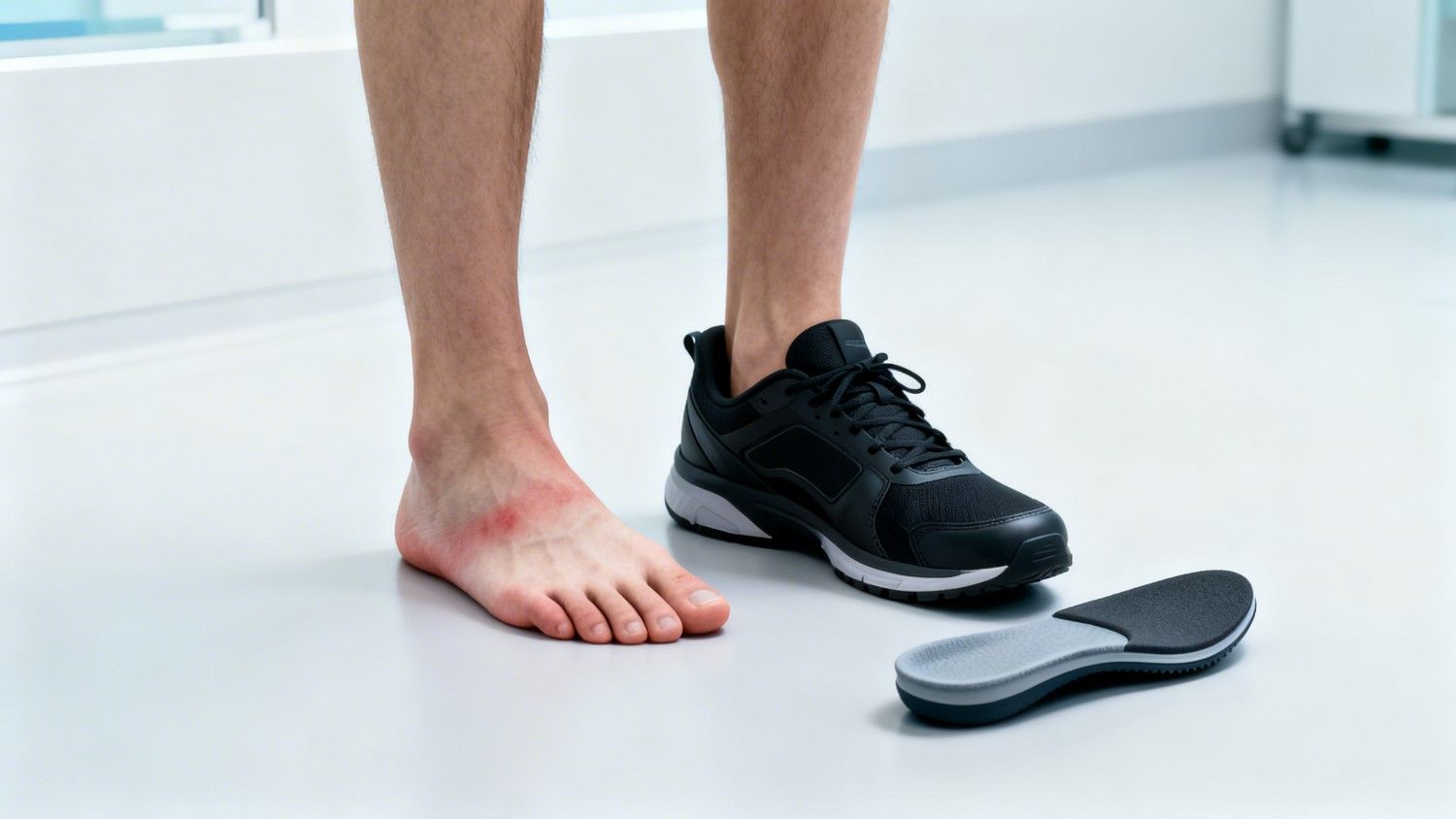
Best Insoles for Flat Feet if You Stand All Day
Standing all day with flat feet isn’t just uncomfortable—it’s exhausting. What starts as mild foot fatigue often turns into aching arches, sore heels, tight calves, and even knee or lower back pain by the end of the day.
If you’ve ever taken your shoes off after a long shift and felt immediate relief, you already know the problem isn’t just your feet—it’s the lack of support.
That’s where finding the right flat feet standing all day insoles becomes essential.
If you’re looking for more targeted support options, explore our guide on best insoles for flat feet to find the right fit for your needs.
Why Standing All Day With Flat Feet Hurts More
Flat feet mean your arches don’t properly support your body weight. When you stand for long periods:
- Your arches collapse under constant pressure
- Your feet roll inward (overpronation)
- Your muscles work harder to stabilize you
This leads to:
- Foot fatigue
- Heel pain
- Knee strain
- Lower back discomfort
Unlike walking or running, standing doesn’t give your feet a break. The pressure is constant—and without proper support, it builds throughout the day.
If your feet roll inward while standing, it’s worth understanding how insoles for overpronation help control alignment.
Why Standard Insoles Don’t Work
Most shoes come with thin, soft inserts designed for general comfort—not long-term support.
Here’s why they fail:
- They compress quickly under body weight
- They lack real arch structure
- They don’t stabilize the foot
At first, they may feel comfortable. But after hours of standing, they flatten out—leaving your feet unsupported.
For flat feet, softness alone isn’t enough. You need structure.
What Features Actually Matter
Choosing the right insoles for flat feet standing all day isn’t about picking the softest option—it’s about finding the right balance between support and comfort.
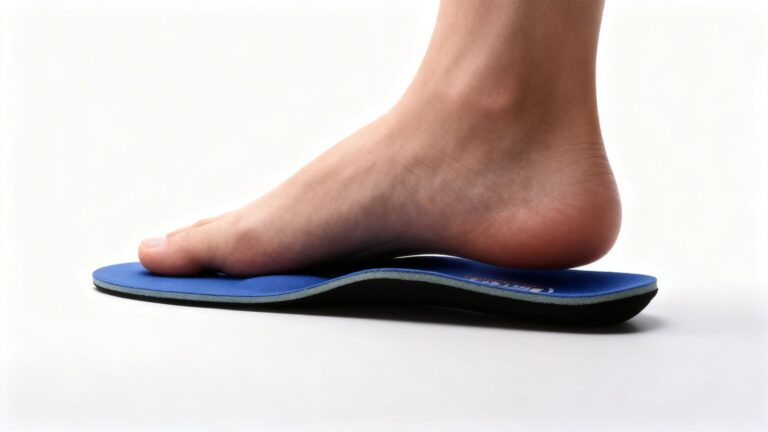
1. Structured Arch Support
This is non-negotiable.
Good arch support:
- Prevents collapse
- Reduces strain
- Improves alignment
Look for:
- Medium to firm arch structure
- Materials that hold shape over time
Too soft = no support
Too rigid = discomfort
2. Stability and Motion Control
Standing for long hours often reveals hidden overpronation.
Effective insoles:
- Reinforce the inner foot
- Keep your ankle stable
- Reduce inward rolling
This helps distribute weight more evenly.
3. Shock Absorption (All-Day Comfort)
Even when standing, your body experiences micro-impact and pressure shifts.
The best insoles:
- Combine cushioning with support
- Reduce pressure on heels and forefoot
If you’re unsure how cushioning affects support, check soft vs firm insoles for a deeper comparison.
4. Deep Heel Cup
A proper heel cup:
- Keeps your heel centered
- Reduces foot movement
- Improves balance
This is especially important on hard surfaces like concrete.
5. Durable Materials
Standing all day compresses insoles faster than walking.
Look for:
- High-density foam (EVA or PU)
- Reinforced arch base
- Long-lasting structure
Cheap insoles won’t last—and you’ll feel it quickly.
How to Choose the Right Insoles (Simple Framework)
Instead of guessing, follow this:
Step 1: Identify Your Daily Environment
- Office → moderate support
- Retail / warehouse → strong support
- Hard floors → cushioning + stability
Step 2: Match Support Level
- Mild flat feet → flexible support
- Moderate → structured support
- Severe → firm, stability-focused insoles
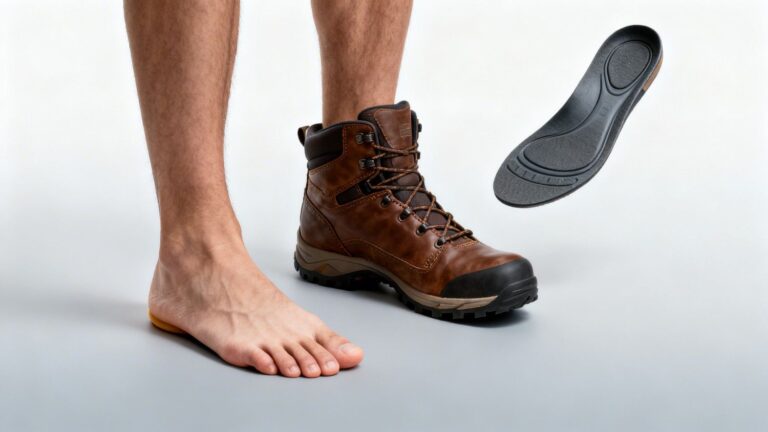
Step 3: Check Shoe Type
- Work boots → thicker, durable insoles
- Sneakers → moderate profile
- Tight shoes → low-profile options
Step 4: Match to Symptoms
- Heel pain → focus on heel cushioning
- Arch fatigue → stronger support
- Knee discomfort → stability + alignment
If your discomfort comes from long shifts, insoles for standing all day can give you a broader comparison of support options.
Step 5: Think Long-Term
The goal isn’t just short-term comfort—it’s reducing daily strain.
The right insoles:
- Improve posture
- Reduce fatigue
- Prevent worsening alignment
Poor foot alignment can increase joint stress, which is why using the right support like insoles for knee pain can help improve stability and reduce discomfort.
Why the Right Choice Matters
The right flat feet standing all day insoles can completely change how your body feels after a long day.
Instead of:
- Constant fatigue
- Sore feet
- Joint discomfort
You get:
- Better weight distribution
- Improved stability
- More energy throughout the day
If your shoes also trap heat during long shifts, Do insoles help with sweaty feet? is worth a look
Best Types of Insoles for Flat Feet if You Stand All Day
Now that you know what features matter, the next step is choosing the right type of insole based on how long you stand and how much support your feet actually need.
Standing all day is different from walking or running. The pressure is constant, and your feet don’t get relief between steps. That’s why choosing the right category of flat feet standing all day insoles makes a real difference.
Below are the most effective types, broken down so you can quickly figure out what fits your situation.
1. Firm Support Insoles (Maximum Stability)
These are designed to control arch collapse and provide strong structural support throughout the day.
Best for:
- Moderate to severe flat feet
- Long work shifts (6–12+ hours)
- Chronic foot, knee, or back pain
Pros:
- Strong arch support
- Excellent alignment correction
- Reduces long-term fatigue
Limitations:
- Feels firm at first
- Needs short break-in period
Insight:
If your feet feel tired halfway through the day, this type of support usually provides the biggest improvement.
2. Stability Insoles (Best All-Day Balance)
These combine support and cushioning, making them ideal for daily use.
Best for:
- Standing + walking combination
- Retail, warehouse, or active jobs
- People needing both comfort and structure
Pros:
- Balanced support and cushioning
- Comfortable for long hours
- Helps maintain natural foot movement
Limitations:
- Slightly more expensive
- Needs correct sizing
Insight:
For most people, this is the “go-to” option for standing all day without sacrificing comfort.
3. Moderate Support Insoles (Light Daily Use)
These provide a softer level of support with added flexibility.
Best for:
- Mild flat feet
- Shorter standing periods
- Casual everyday use
Pros:
- Comfortable immediately
- Flexible and lightweight
- Easy to fit in most shoes
Limitations:
- Not strong enough for long shifts
- Less corrective support
Insight:
Good entry-level option, but may not hold up under heavy daily use.
4. Cushion-Focused Insoles (Comfort Priority)
These prioritize softness and pressure relief.
Best for:
- Hard surfaces (concrete floors)
- Sensitive feet
- Light standing with occasional walking
Pros:
- Immediate comfort
- Reduces pressure points
- Helps with surface impact
Limitations:
- Minimal arch support
- Does not correct alignment
Insight:
If used alone, these won’t fix flat feet—but they can improve comfort when combined with good footwear.
5. Heavy-Duty Work Insoles (Maximum Durability)
Built for demanding environments, these focus on durability and long-term performance.
Best for:
- Warehouse workers
- Construction jobs
- Heavy body weight or high pressure
Pros:
- Extremely durable
- Strong support structure
- Designed for long hours on hard surfaces
Limitations:
- Heavier and thicker
- May feel bulky in smaller shoes
Insight:
If your insoles wear out quickly, this category is worth considering.
How These Types Compare
Quick breakdown:
- Need strong correction → Firm support
- Need daily balance → Stability insoles
- Need flexibility → Moderate support
- Need comfort → Cushion-focused
- Need durability → Heavy-duty
Choosing the Right One for You
Simple decision guide:
- Constant fatigue → Firm support
- Long work shifts → Stability insoles
- Light daily use → Moderate support
- Sensitive feet → Cushion-focused
- Heavy work conditions → Heavy-duty
If your flat feet also cause inward ankle movement, structured support like best insoles for overpronation can significantly improve stability.
Frequently Asked Questions
Do I need insoles if I stand all day with flat feet?
If you experience fatigue or discomfort, insoles can significantly improve support and reduce strain.
Can insoles reduce foot fatigue?
Yes. Proper support helps distribute pressure evenly, reducing stress on muscles and joints.
How long do insoles last for daily standing?
Typically 6–12 months, depending on usage and body weight.
Should insoles be worn in all shoes?
Ideally, yes—especially in work shoes or anything worn for long hours.
Can insoles help with knee or back pain?
Yes. Improving foot alignment often reduces strain on the knees and lower back.
Final Verdict: What Actually Works
The best flat feet standing all day insoles are not just about comfort—they’re about support that lasts.
If you:
- Stand for long hours → choose stability
- Experience pain → go for firm support
- Need comfort → moderate support works
The goal is simple: reduce fatigue, improve alignment, and make long days on your feet manageable.