Best Insoles for Arch Pain
Why Arch Pain Can Disrupt Your Entire Day
Arch pain often starts subtly — a mild ache after standing too long, a tight pulling sensation when you first step out of bed, or discomfort that builds during long walks. Over time, it can progress into persistent soreness that affects how you move, exercise, and even sleep. Not sure where it hurts? Try our interactive foot pain chart.
For many people in the U.S., arch pain is linked to flat feet, overpronation, high arches, or plantar fascia strain. When the arch lacks proper structural support, the foot’s natural shock-absorbing system becomes inefficient. This increases strain on ligaments, tendons, and the plantar fascia — the thick connective tissue running from heel to toes.
Finding the best insoles for arch pain is often one of the first practical steps toward relief. However, not all insoles are created equal, and choosing the wrong type can actually worsen symptoms.
Arch pain often develops due to poor support or foot structure issues, especially in cases involving high arches and pressure imbalance .
Let’s break this down properly.
What Causes Arch Pain?
Arch pain typically develops from mechanical stress. The most common causes include:
- Collapsed or low arches (flat feet)
- Overpronation (excess inward rolling)
- High arches with poor shock absorption
- Tight calf muscles
- Long hours on hard surfaces
- Unsupportive footwear
Proper support doesn’t just reduce pain — it improves alignment. Here’s how insoles improve posture and alignment .
When the foot rolls excessively inward, the posterior tibial tendon and plantar fascia experience repetitive strain. Conversely, high arches can create concentrated pressure points, leading to fatigue and inflammation.
Without proper structural support, the arch must absorb forces it wasn’t designed to handle continuously.
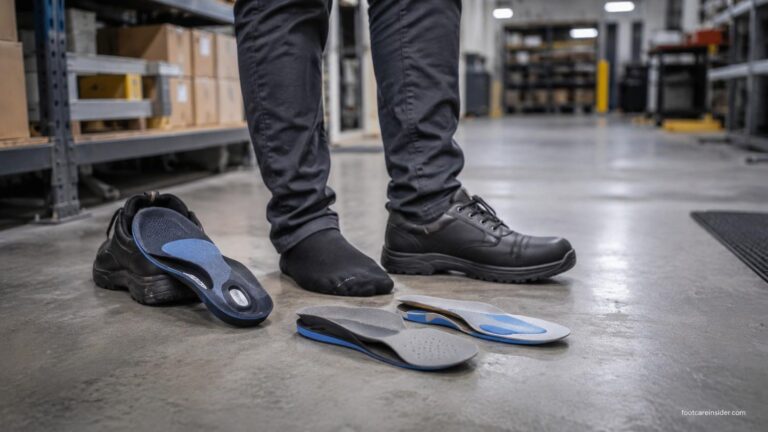
If you spend long hours standing, choosing the right support like insoles for standing all day can significantly reduce pressure.
Why Standard Insoles Often Fail
Most factory shoe inserts are thin foam liners designed for basic comfort — not structural correction.
Common issues with standard insoles:
- Minimal arch contour
- Soft foam that compresses quickly
- No heel stabilization
- Poor durability
- Lack of biomechanical support
These inserts may feel soft at first but typically flatten within weeks. When that happens, they stop providing meaningful support.
If you’re searching for the best insoles for arch pain, structural support matters more than initial softness.
Understanding the difference between foot types can help — see flat feet vs overpronation explained .
Poor arch support can also affect your joints over time — explore options for insoles for knee pain relief .
What Features Matter Most
Choosing correctly requires understanding the mechanics behind relief.
1. Arch Support Height & Shape
The arch support must match your foot type:
- Low arch: moderate, structured support
- Neutral arch: balanced contour
- High arch: cushioned yet stable support
Too high feels intrusive. Too low provides no correction.
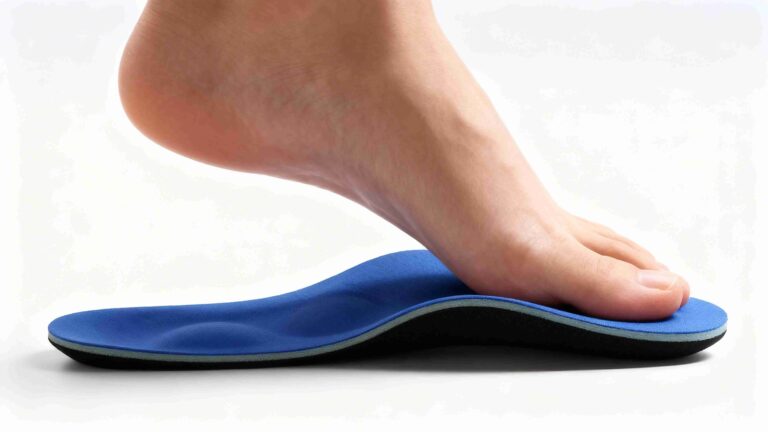
The best insoles for arch pain provide firm but comfortable contouring that stabilizes without forcing unnatural alignment.
When the arches collapse slightly during movement, the foot may rotate inward more than it should. Many people explore supportive inserts like shoe inserts for overpronation to help reduce strain and support proper alignment.
2. Cushioning Type
Cushioning absorbs impact. However, excessive softness can allow instability.
Common materials:
- EVA foam (lightweight, moderate firmness)
- PU foam (durable, responsive)
- Gel inserts (shock absorption, sometimes unstable)
- Cork blends (firm, supportive)
Balance is key. For arch pain, structure should come before plushness.
3. Heel Cup Stability
A deep heel cup improves alignment and reduces pronation. It also helps distribute pressure evenly across the foot.
Without heel stabilization, arch support becomes less effective.
4. Firmness Level
Firm insoles often provide better long-term arch support. Extremely soft inserts may feel comfortable initially but collapse under body weight.
Many people mistake softness for support. They are not the same.
5. Durability
Arch pain relief requires consistency. If an insole compresses within 30–60 days, relief disappears.
Look for dense foam, reinforced arch zones, and high rebound materials.
Certain professions experience more strain, especially those in demanding roles — see insoles for nurses working long shifts .
Buying Framework: How to Choose Correctly
To find the best insoles for arch pain, use this simple decision framework:
- Identify your arch type
- Determine activity level (daily standing, running, casual walking)
- Assess pain severity
- Choose firmness based on support needs
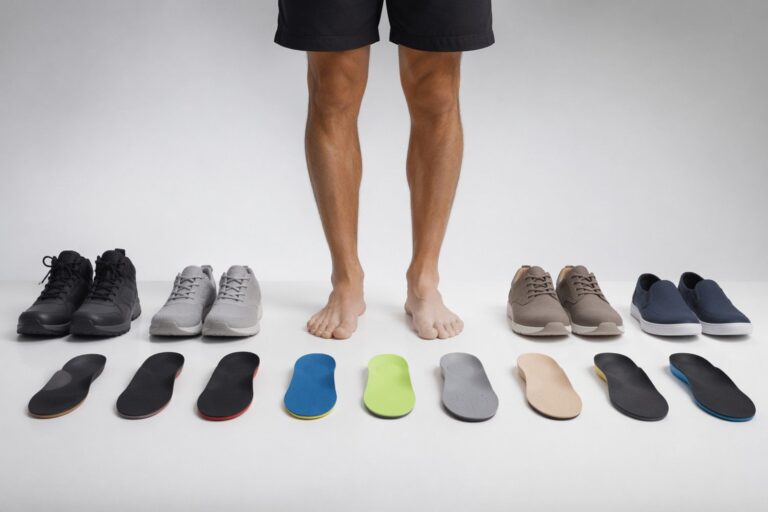
- Ensure shoe compatibility
If you’re unsure whether your arch is low or high, it helps to first understand the difference between flat feet and overpronation before purchasing support.
“difference between flat feet and overpronation”
Arch pain relief isn’t about buying the most expensive insert. It’s about matching structure to your biomechanics.
Now that you understand what causes arch pain and what features actually matter, let’s break down the most effective insole categories. There isn’t one universal “best” option — the right choice depends on foot structure, activity level, and pain severity.
Below are five structured categories that consistently perform well for arch support and long-term comfort.
If you’re unsure which type to choose, understanding soft vs firm insoles can help you make a better decision.
1. Firm Orthotic Arch Support Insoles
Best for: Moderate to severe arch pain, flat feet, overpronation, long hours standing.
These are the most structurally supportive category. They typically feature:
- Rigid or semi-rigid arch shell
- Deep heel cup
- Reinforced midfoot control
- Dense foam top layer
The goal is alignment, not softness. By stabilizing the foot, these insoles reduce strain on the plantar fascia and posterior tibial tendon.
Pros
- Strong biomechanical correction
- Long-lasting durability
- Helps reduce inward ankle rolling
- Effective for chronic arch strain
Limitations
- May feel firm during break-in period
- Not ideal for very tight shoes
If your arch pain is persistent or linked to flat feet, this category often represents the best insoles for arch pain because it prioritizes structure over cushioning.
2. Semi-Rigid Everyday Support Insoles
Best for: Mild to moderate arch pain, daily walking, office work.
These provide a balance between structure and comfort. They usually combine moderate arch contouring with responsive cushioning.
Features often include:
- EVA or PU foam base
- Medium arch height
- Moderate heel stabilization
This category works well for people who need daily support without aggressive correction.
Pros
- Comfortable for all-day wear
- Fits most casual and athletic shoes
- Good balance of support and cushioning
Limitations
- May not correct severe pronation
- Can compress faster than rigid orthotics
For many people, this is the most practical starting point when searching for the best insoles for arch pain.
3. Cushioned Insoles for High Arches
Best for: High arches, impact sensitivity, runners.
High arches create concentrated pressure under the heel and forefoot. Unlike flat feet, the issue here is shock absorption — not collapse.
These insoles emphasize:
- Extra forefoot padding
- Shock-absorbing foam or gel
- Moderate arch contour
Pros
- Reduces impact stress
- Improves comfort during running
- Helps distribute pressure evenly
Limitations
- Less corrective for pronation
- Overly soft versions may lack stability
If your arch pain feels like pressure or fatigue rather than collapse, cushioned designs may be the best insoles for arch pain in your case.
4. Sport-Specific Performance Insoles
Best for: Athletes, runners, gym training.
Sports insoles are engineered for repetitive motion. They typically include:
- Reinforced arch platform
- Breathable moisture-wicking top layer
- Targeted heel impact absorption
These help maintain alignment during high-impact activities.
Pros
- Improves foot stability under load
- Reduces fatigue during workouts
- Designed for athletic shoes
Limitations
- Not always ideal for dress shoes
- May prioritize performance over softness
If your arch pain worsens during exercise, a sport-focused option may be the best insoles for arch pain tailored to activity demands.
5. Custom or Heat-Moldable Insoles
Best for: Persistent or biomechanically complex arch pain.
These insoles conform more precisely to foot shape. Some are heat-moldable at home; others require professional fitting.
Pros
- Personalized arch contour
- Better pressure distribution
- Suitable for unusual arch structures
Limitations
- Higher cost
- May require professional guidance
- Not always necessary for mild pain
If standard options haven’t helped, custom solutions can provide more targeted relief. For severe cases, consulting a podiatrist before investing in premium support is wise.
Comparison Insights
- Severe flat feet or overpronation: Firm orthotic support performs best.
- Mild daily discomfort: Semi-rigid everyday support works well.
- High arches: Prioritize cushioning and shock absorption.
- Athletes: Choose sport-specific stability.
- Complex or chronic pain: Consider custom options.
The best insoles for arch pain are not necessarily the most cushioned — they’re the ones that correct mechanical imbalance appropriately.
Conditions like plantar fasciitis are one of the most common causes of arch pain — learn more in plantar fasciitis vs heel spurs .
Frequently Asked Questions
1. How long do insoles take to relieve arch pain?
Most people notice improvement within 1–2 weeks. A short break-in period is common.
2. Should arch support feel uncomfortable at first?
Mild pressure is normal during adjustment. Sharp pain is not. Proper arch height should feel supportive, not intrusive.
3. Can insoles cure arch pain permanently?
Insoles manage mechanical stress. They do not “cure” structural foot types, but they can significantly reduce symptoms.
4. Do I need different insoles for running and daily wear?
Often yes. Athletic demands require more reinforcement than casual walking.
5. When should I see a doctor?
If arch pain lasts longer than 4–6 weeks despite support, or if swelling and sharp pain develop, medical evaluation is recommended.
Final Verdict
The best insoles for arch pain depend on your foot structure and activity level. Firm structural support works best for flat feet and overpronation, while cushioned designs suit high arches and impact-related discomfort.
Relief comes from alignment and proper load distribution — not simply softness.
Choosing correctly means understanding your foot mechanics first, then matching the insole to your specific need.
For better balance and foot control, explore our guide to overpronation support insoles designed for daily comfort.