Best Insoles for Hospital Workers
Why Hospital Work Is So Hard on Your Feet
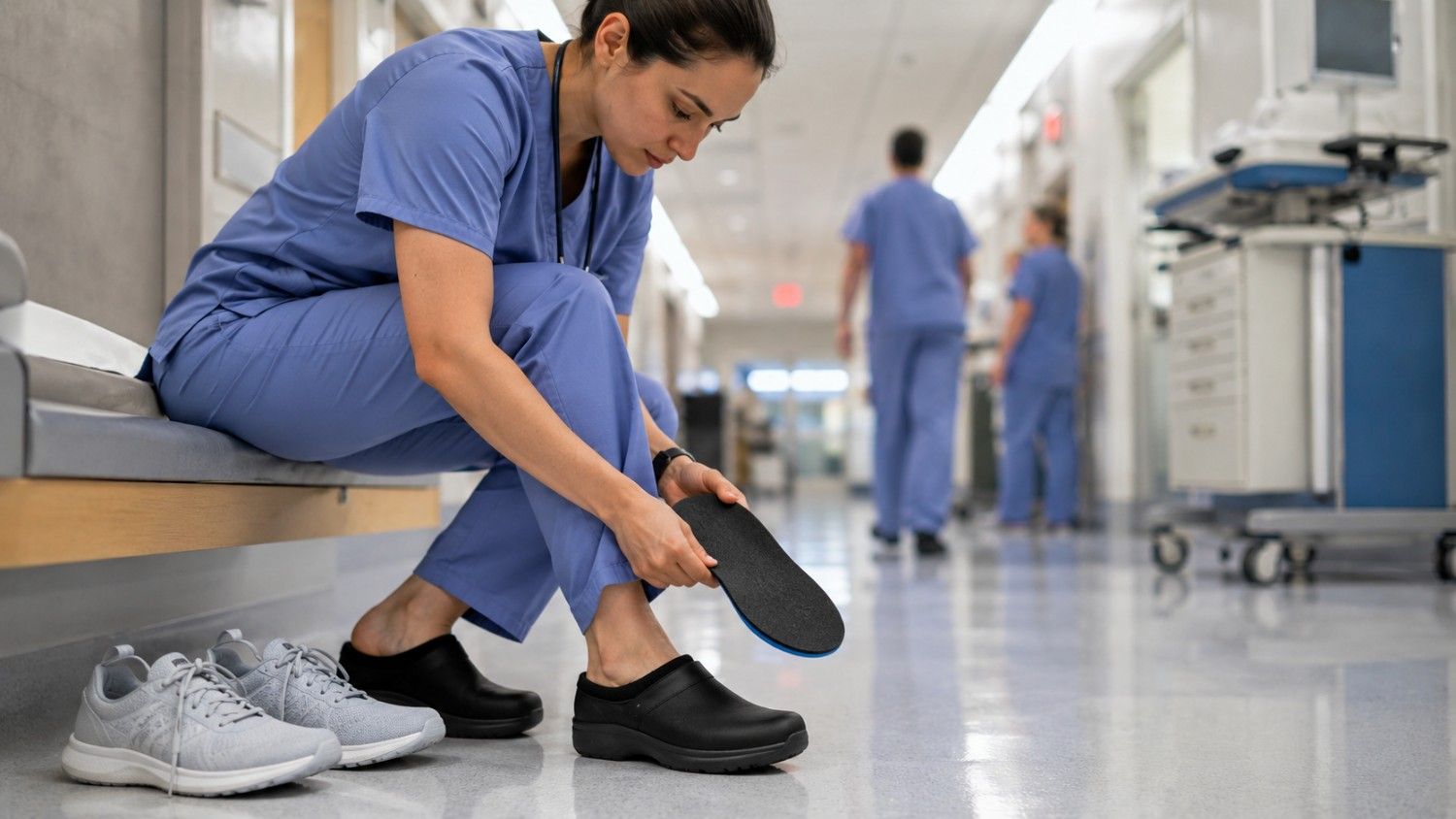
Hospital shifts are rough on feet in a very specific way. It’s not just the hours — it’s the mix of hard flooring, constant stop-start walking, standing at bedsides or stations, and shoes that need to stay practical for long days. By the end of a shift, that can turn into burning forefeet, aching heels, tired arches, or that heavy “my feet are done” feeling that doesn’t really lift until you’re off them for hours.
That’s why choosing insoles for hospital workers isn’t just about adding softness. The right pair needs to match how your feet actually get stressed at work: whether your problem is hard-floor impact, collapsing support halfway through a shift, pressure in tighter nursing shoes, or fatigue that builds mile by mile. If you’re already dealing with long standing shifts in general, Best Insoles for Standing All Day can also help frame the bigger picture.
How to Narrow the Right Insole for Hospital Work
The goal here isn’t to throw random comfort insoles into your work shoes and hope for the best. It’s to narrow the type of insole that fits your actual hospital routine.
For some workers, the biggest issue is heel soreness from hard floors. For others, it’s arch fatigue after a shift full of walking, or a work shoe that doesn’t have much room for a bulky insert. The best choice usually comes down to four things: where your feet hurt, how much walking versus standing you do, how structured your support needs are, and how much space your hospital shoes actually have.
Why Hospital Shifts Create So Much Foot Fatigue
Hospital work tends to combine several kinds of foot stress at once. You may spend part of the day standing in one spot, then suddenly switch into repeated walking between rooms, departments, or stations. That matters because feet handle static standing fatigue differently than they handle constant low-level mileage.
Hard floors also keep the impact cycle going. Even if you’re not running around, every hour of walking and standing on vinyl, tile, or concrete-backed hospital flooring adds pressure through the heel and forefoot. On top of that, many hospital workers wear clogs, slip-resistant shoes, or snug work sneakers that don’t leave much room for thick aftermarket insoles. If you also notice that your arches tire out faster than the rest of your foot, Best Insoles for Arch Support is one of the more relevant related guides to compare later.
Why Basic Insoles Usually Fall Short
The stock insole that comes inside a nursing shoe or hospital sneaker is often fine for a short casual day, but it usually isn’t built for 10–12 hour hospital shifts. The biggest problem is that many basic insoles feel comfortable at first because they’re soft, but they flatten too quickly under repeated load. That means the support and shock absorption you felt in the morning may be mostly gone by the end of the shift.
Basic comfort insoles can also miss the mark in hospital shoes because they’re often too generic in shape. They may not offer enough structure for tired arches, enough heel protection for hard-floor standing, or a slim enough fit for tighter work footwear. In other words, they can be too soft where you need support, too thick where you need space, or too flimsy for repeated weekly use.
Many of the same features that benefit healthcare professionals also matter in restaurants and commercial kitchens. If you work in food service, check out our guide to Best Insoles for Food Service Workers.
What to Look for Before You Buy
Most hospital workers don’t need the same kind of insole — and that’s the key to getting this right. If your main issue is hard-floor heel soreness or general underfoot pounding, a cushioning-focused insole with decent shock absorption usually makes the most sense. If your feet feel more tired, unstable, or “collapsed” through the arch after long walking-heavy shifts, you’ll usually do better with a more supportive or stability-focused insole rather than a plush comfort one.
If your hospital shoes or clogs already fit snugly, a slim low-volume insole matters more than extra padding, because a bulky insert can create toe crowding and forefoot pressure. On the other hand, if you regularly burn through soft insoles or feel like your feet get worse halfway through the week, it’s worth leaning toward a heavier-duty option with better support retention instead of chasing maximum softness.
Pressure location matters too. Heel-dominant soreness points you in a different direction than forefoot burning, and general fatigue is different again from mild instability. If you also deal with inward rolling or uneven wear patterns, Best Insoles for Overpronation can be a useful comparison before you buy.
Once you know whether your shift is beating up your heels, draining your arches, crowding your shoes, or flattening softer inserts too fast, the decision gets much easier. From there, the best insole type is usually the one that matches your work pattern first — not the one with the most padding on the box.
Best for Heel Soreness From Hard Hospital Floors
If your heels feel bruised or tender by the end of a shift, start with a cushioning-focused insole that has solid heel padding but still keeps a stable base under the arch. This works best for workers who spend a lot of time standing in one area or moving across hard floors in standard work sneakers. The tradeoff is that very soft cushioning can flatten faster than firmer support models.
Best for Tired Arches on Walking-Heavy Shifts
For hospital workers who rack up a lot of steps and feel arch fatigue more than sharp heel pain, a structured arch-support insole usually makes more sense than a plush comfort insert. It helps keep the foot from feeling “done” halfway through a long shift and tends to hold up better under repeated walking. The drawback is that firmer support can feel too noticeable at first if you’re used to soft stock insoles.
Best if Your Nursing Shoes or Clogs Feel Tight
If your hospital shoes already fit close, a slim low-volume insole is often the safer buy. These are useful when you want a bit more support or pressure relief without crowding the toe box or lifting your heel too much inside clogs or slip-resistant shoes. They’re easier to fit than bulkier heavy-duty models, but they usually won’t give the same long-shift cushioning as a thicker insole in a roomier shoe.
Best for Long Shifts That Flatten Soft Insoles Fast
If you’ve tried softer insoles and they feel great for two days, then useless by the end of the week, look at heavy-duty support-focused insoles with better structure retention. These make more sense for longer shifts, heavier daily load, or workers who need support to stay consistent from Monday to Friday. The tradeoff is fit: they can feel stiffer and sometimes need a roomier work shoe than a light comfort insole.
Best for Forefoot Pressure or General Foot Burn
If the front of your foot burns after hours of walking hospital corridors, look for an insole with forefoot cushioning and balanced support rather than heel-only padding. This type works well for workers who push off a lot during walking-heavy shifts and feel soreness under the ball of the foot. The limitation is that forefoot-friendly insoles don’t always give enough structure if your bigger issue is arch collapse or instability.
FAQs
Should hospital workers choose soft or firm insoles?
Soft insoles can feel great for heel impact, but firmer support usually works better if your arches collapse or your feet feel unstable late in a shift.
Can insoles help with leg and back fatigue from hospital work?
They can help reduce some of the foot fatigue that travels upward, especially if hard floors and poor support are part of the problem, but they won’t fix every cause of knee or back pain.
Do I need to remove the original insole from my work shoes?
Usually yes, especially if the new insole is full-length. Leaving the old liner in place often makes the shoe too tight.
How often should hospital workers replace insoles?
For frequent hospital use, many insoles need checking every 4–6 months. If the cushioning feels dead or the support feels flatter by mid-shift, it’s probably time.
Final Verdict
If your main problem is hard-floor heel pain, start with cushioning. If your arches feel tired or unstable during walking-heavy shifts, lean toward structured support. Tight nursing shoes usually call for a slim low-volume insole, while workers who crush softer inserts quickly are better off with a heavier-duty option that holds its shape through long hospital weeks.