Arch Support vs Shock Absorption
If you’re shopping for insoles or trying to improve foot comfort, you’ve probably come across two common features: arch support and shock absorption. They often appear together in product descriptions, which can make it difficult to understand what each one actually does—and whether you need one more than the other.
The truth is that these features serve different purposes. Arch support is designed to stabilize the foot and help control movement, while shock absorption focuses on reducing the impact forces created with every step. Depending on your foot type, daily routine, and activity level, one may play a larger role than the other.
Choosing between them isn’t about finding a universally better option. It’s about understanding how each works and which one better matches your individual needs.
Arch Support vs Shock Absorption at a Glance
Arch support focuses on improving foot alignment, distributing pressure more evenly, and helping control excessive movement.
Shock absorption, on the other hand, is designed to soften impact when your foot strikes the ground. It helps reduce the force that travels through your feet, especially during repetitive walking, standing, or running.
Many quality insoles combine both features, but the balance between stability and cushioning varies considerably from one design to another.
People researching foot comfort often compare soft vs firm insoles because the amount of cushioning can directly influence how supportive an insole feels during daily use.
What Is Arch Support?
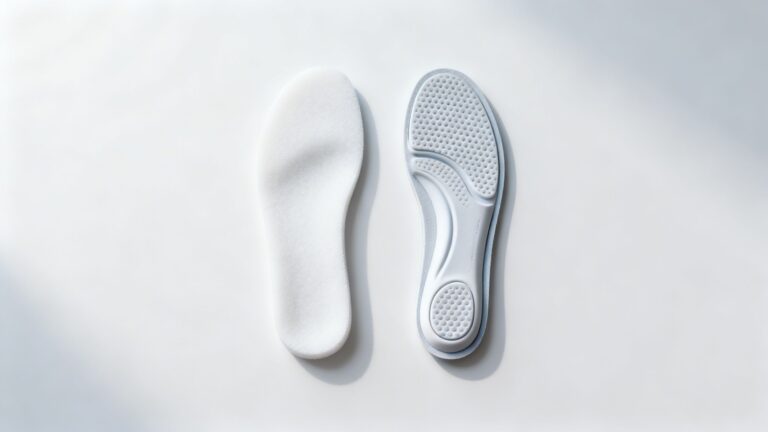
Arch support refers to the structured portion of an insole that follows the natural shape of your foot’s arch.
Its primary purpose is not to cushion the foot but to provide stability throughout the walking cycle. Proper arch support helps maintain a more consistent foot position, reducing excessive inward rolling and improving weight distribution.
Supportive insoles are commonly recommended for people who experience:
- Flat feet
- Overpronation
- Arch fatigue
- Long periods of standing
- Foot instability during walking
Rather than making every step feel softer, arch support often makes movement feel more controlled.
What Is Shock Absorption?
Shock absorption refers to materials that reduce the impact created when your foot contacts the ground.
These materials may include:
- EVA foam
- PU foam
- Gel inserts
- Specialized cushioning foams
- Air-based cushioning systems
Instead of controlling foot alignment, these materials compress slightly under load to reduce repetitive impact forces.
This can improve comfort during activities involving frequent walking, standing on hard surfaces, or running.
People who spend long shifts on concrete floors often appreciate additional cushioning because every step generates repeated impact throughout the day.
Structural Differences
Although both features contribute to comfort, they work very differently.
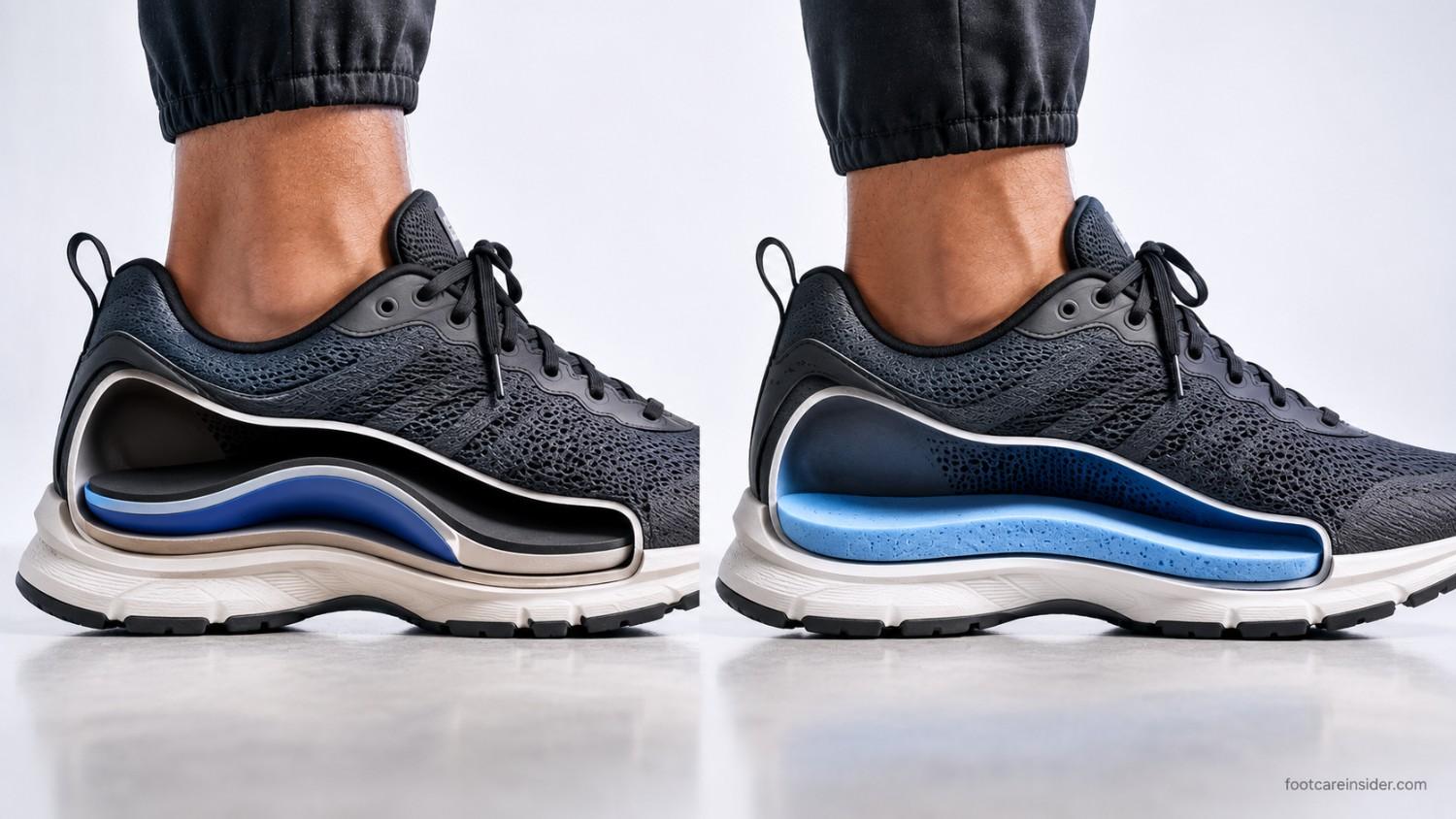
Arch support relies on structured contours that maintain their shape while supporting the arch. The goal is stability rather than softness.
Shock absorption depends on compressible materials that deform slightly under pressure before returning to their original shape.
One practical way to think about the difference is this:
- Arch support manages how your foot moves.
- Shock absorption manages how hard each step feels.
Many premium insoles combine both features, although one usually receives greater emphasis depending on the intended use.
Material and Functional Differences
The materials used in supportive insoles often determine whether they emphasize structure or cushioning.
Arch-support-focused insoles frequently use firmer EVA, reinforced shells, or semi-rigid support structures that resist excessive compression.
Shock-absorbing insoles usually contain softer foams, gel inserts, or layered cushioning that compress under impact.
This creates noticeable differences during daily wear.
A supportive insole often feels more stable when standing for extended periods, while a highly cushioned insole may initially feel softer underfoot.
However, softer does not always mean better support. Excessively soft materials may compress more quickly under heavier loads, whereas structured support generally maintains its shape longer.
Readers looking for maximum support often compare best insoles for flat feet when evaluating different support levels for low arches.
Which Everyday Activities Benefit Most?
The right balance between support and cushioning often depends on how your feet are used.
Someone working behind a retail counter or hospital station for ten hours may benefit from both stable arch support and moderate shock absorption.
A warehouse employee walking several miles each shift may appreciate cushioning that reduces repeated impact while still maintaining enough structure for stability.
Walkers covering several miles each day often prefer insoles that combine responsive cushioning with consistent arch support.
Meanwhile, runners frequently look for designs that balance impact reduction with movement control, since repetitive foot strikes place higher demands on both features.
People who remain stationary for long periods may notice stability more than softness, while individuals who walk continuously often appreciate a combination of both.
Cost and Long-Term Value
Price differences between supportive and highly cushioned insoles vary depending on the materials and construction.
Simple foam insoles that prioritize cushioning are often less expensive, but they may compress more quickly with heavy daily use.
More structured insoles designed around arch support typically cost more because they use denser materials and reinforced construction.
That doesn’t automatically make them the better value.
An insole that maintains its shape for many months may provide better long-term performance than a softer product requiring frequent replacement.
Similarly, someone standing all day on concrete floors may benefit from the added durability of supportive designs, while occasional users may be perfectly satisfied with moderately cushioned options.
People whose jobs involve prolonged standing frequently explore insoles for standing all day to better understand which combination of support and cushioning suits their work environment.
Pros and Cons
Both arch support and shock absorption improve comfort, but they do so in different ways.
Arch support helps stabilize the foot, improve weight distribution, and reduce excessive movement. This can be especially beneficial for people with flat feet, overpronation, or those who spend long hours standing. The trade-off is that firmer support may initially feel less soft underfoot, particularly if you’re used to heavily cushioned shoes.
Shock absorption focuses on reducing impact with every step. Softer materials can make walking feel more comfortable on hard surfaces and may lessen end-of-day fatigue. However, very soft cushioning may compress more quickly over time and usually provides less structural support than a dedicated arch-support design.
Neither feature is inherently better. The right choice depends on your foot mechanics and daily routine.
Who Should Choose Arch Support?
Arch support may be the better option if:
- You have flat feet or low arches.
- Your feet roll inward excessively while walking.
- You experience arch fatigue after standing.
- Your feet feel unstable during long work shifts.
- You want improved alignment rather than maximum softness.
This is for you if your goal is to improve foot stability and reduce excessive movement throughout the day.
For many people with structural foot concerns, supportive insoles provide more consistent long-term comfort than cushioning alone.
Who Should Choose Shock Absorption?
Shock absorption may be the better choice if:
- You frequently walk on concrete or tile floors.
- You prefer a softer underfoot feel.
- Your feet become tired from repeated impact.
- You spend much of the day walking rather than standing still.
- You have healthy foot mechanics but want greater everyday comfort.
This is for you if your primary concern is reducing repetitive impact instead of correcting foot alignment.
People without significant biomechanical issues often find that quality cushioning alone improves overall comfort during everyday activities.
Long-Term Comparison
Over months of regular use, the differences become more noticeable.
Supportive insoles built around structured arch support generally maintain their shape longer because firmer materials resist compression.
Highly cushioned insoles often feel exceptionally comfortable when new but may gradually lose some of their shock-absorbing properties as softer materials compress with repeated use.
That doesn’t mean one lasts longer in every situation. Material quality, body weight, daily activity, and the number of hours worn each day all influence durability.
For heavy daily use, many people prefer insoles that balance moderate cushioning with reliable structural support rather than focusing exclusively on one feature.
Quick Comparison Summary
Arch Support
- Better for stability and alignment.
- Helps manage excessive foot motion.
- Often preferred for flat feet and overpronation.
- Usually maintains structure longer.
Shock Absorption
- Better for reducing impact.
- Provides a softer walking experience.
- Often preferred for repetitive walking and hard floors.
- Comfort depends more heavily on cushioning materials.
Frequently Asked Questions
Is arch support the same as cushioning?
No. Arch support is designed to improve stability and foot alignment, while cushioning absorbs impact. Many premium insoles include both features, but they serve different purposes.
Can an insole provide both arch support and shock absorption?
Yes. Many modern insoles combine structured arch support with cushioning materials such as EVA or PU foam. The balance between the two varies depending on the intended use.
Which is better for standing all day?
People standing for extended periods often benefit from both features working together. Stable arch support helps reduce fatigue, while moderate shock absorption improves comfort on hard flooring.
Is softer cushioning always more comfortable?
Not necessarily. Very soft insoles can initially feel pleasant but may compress under prolonged use. A slightly firmer insole often provides more consistent support throughout the day.
Which option is better for flat feet?
People with flat feet usually benefit more from structured arch support because it helps improve stability and pressure distribution. Cushioning alone may not adequately address excessive foot movement.
Can runners benefit from both?
Yes. Running places repeated impact on the feet while also requiring stability. Many running insoles combine supportive arch contours with responsive cushioning to address both needs.
Final Verdict
Arch support and shock absorption solve different problems rather than competing with one another.
If your priority is improving foot stability, supporting low arches, or reducing excessive movement, arch support is often the better choice.
If your main concern is reducing repetitive impact during walking or standing on hard surfaces, shock absorption may provide greater immediate comfort.
For many people, the most practical solution is an insole that combines supportive structure with moderate cushioning, providing both stability and everyday comfort without emphasizing one feature at the expense of the other.