Best Insoles for Concrete Floors and Hard Surfaces
If you spend most of your day standing or walking on concrete, you already know the feeling. The first few hours may seem manageable, but by the end of the day your heels ache, your arches feel tired, and even simple walking can feel heavier than it should. Warehouse workers, retail employees, factory staff, healthcare professionals, and anyone working on hard floors often experience this gradual buildup of fatigue.
The problem is that concrete barely absorbs impact. Every step sends force back through the feet, ankles, knees, and lower body. Without proper support, that repetitive stress can accumulate day after day.
The right insole should do more than simply feel soft. It should help distribute pressure, support the arch, reduce fatigue, and maintain its structure under long hours of standing and walking. This guide explains what actually matters when choosing insoles for concrete floors and how to identify the right type for your needs.
Why Hard Floors Cause So Much Foot Fatigue
Concrete is one of the least forgiving surfaces people stand on regularly.
Heavier wearers should also read our guide to insoles for heavy people.
Unlike grass, carpet, or athletic flooring, concrete provides almost no natural shock absorption. As a result, the feet absorb much of the repetitive impact generated throughout the day.
Over time this can contribute to:
- heel soreness
- arch fatigue
- burning feet
- calf tightness
- knee discomfort
- lower back fatigue
The longer the standing duration, the more noticeable these effects become.
For people with existing foot mechanics issues, such as flat arches or excessive inward rolling, the problem may become even more pronounced. Readers researching best insoles for flat feet often discover that supportive footwear can influence comfort throughout the entire lower body, not just the feet themselves.
Why Standard Shoe Insoles Often Fail
Most factory-installed insoles are designed to fit a broad range of users rather than provide long-term support.
They commonly suffer from several limitations:
They Compress Too Quickly
Many stock insoles use inexpensive foam that feels comfortable initially but loses thickness rapidly under daily load.
After weeks or months of use, the cushioning may flatten significantly, reducing pressure relief.
They Lack Structural Support
Soft cushioning alone does not necessarily stabilize the foot.
Without sufficient arch support or heel structure, the foot may continue collapsing inward during walking, increasing fatigue over time.
They Wear Unevenly
People standing on concrete often create repetitive pressure in the same areas every day. Low-quality insoles frequently develop uneven compression, reducing comfort and consistency.
They Don’t Control Motion Well
Walking on hard surfaces for hours places stress on the entire movement chain. Insoles that provide no guidance or support may allow excessive foot movement, which can increase strain throughout the ankles and knees.
What Features Actually Matter in Insoles for Concrete Floors
Not every feature advertised on an insole package contributes equally to long-term comfort.
A few factors consistently matter more than others.
Arch Support
Arch support helps distribute pressure more evenly across the foot.
This becomes particularly important during long shifts because unsupported arches often experience increasing fatigue as the day progresses.
Support does not necessarily mean aggressive correction. The goal is helping the foot maintain a more stable position throughout repetitive standing and walking.
Cushioning That Maintains Its Shape
Soft cushioning can feel excellent initially, but durability matters too.
A useful balance often exists between comfort and structure.
Very soft foam may feel comfortable during the first week but flatten quickly under constant pressure. Slightly firmer materials often maintain support longer.
People comparing comfort-focused designs frequently explore cushioning vs stability insoles when trying to understand how softness differs from long-term support.
Not every hard floor stresses your feet in exactly the same way. If you’re trying to work out whether your pain is being driven more by retail-style tile flooring or harsher industrial concrete, Standing on Tile Floors vs Concrete Floors explains the difference in feel, fatigue buildup, and underfoot pressure.
Material Type
Different materials behave differently under load.
EVA Foam
Common in many supportive insoles.
Advantages:
- lightweight
- supportive
- durable
Limitations:
- lower-end versions may compress over time
Gel
Gel inserts help absorb impact effectively.
Advantages:
- good shock absorption
- comfortable under heels
Limitations:
- may provide less structural support on their own
Polyurethane (PU)
Frequently used in work-focused insoles.
Advantages:
- durable
- resistant to compression
- supportive under long standing periods
Limitations:
- may feel firmer initially
Firmness Balance
A common mistake is assuming softer always means better.
For long hours on concrete, excessive softness sometimes leads to faster fatigue because the foot sinks too deeply into the material.
Likewise, overly rigid support can create pressure points for some users.
The best balance usually combines:
- moderate cushioning
- stable arch support
- durable materials
People comparing material behavior often research gel vs foam insoles when evaluating comfort versus durability on hard surfaces.
How to Choose Based on Your Daily Routine
The best insole depends heavily on how the feet are used throughout the day.
Mild Fatigue and General Standing
If discomfort is occasional and mostly limited to tired feet after work, moderate cushioning with light arch support is often sufficient.
Look for:
- moderate foam density
- light arch contour
- flexible design
Moderate Daily Fatigue
If soreness appears consistently after most shifts, more structured support may help.
Look for:
- supportive arch design
- reinforced heel area
- durable cushioning materials
Heavy Standing or Walking Jobs
Warehouse workers, factory employees, and healthcare professionals often benefit from stronger support systems.
Look for:
- firmer structural support
- compression-resistant materials
- deeper heel stabilization
Readers dealing with repetitive standing demands often find useful guidance through insoles for standing all day because standing duration changes what features matter most.
Shoe Type Matters Too
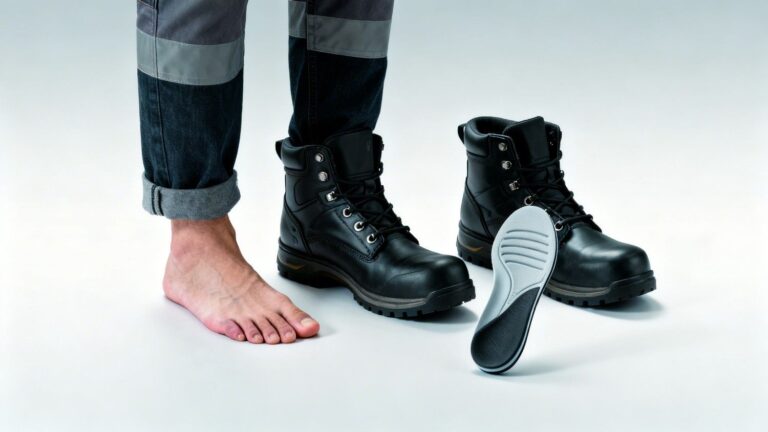
Work boots often tolerate thicker supportive insoles.
Athletic shoes may perform better with slightly lower-profile designs.
Casual shoes frequently have less internal space, which may limit how much support can comfortably fit inside.
Consider Where Pain Appears
Heel pain may benefit from stronger impact absorption.
Arch fatigue often responds better to improved support.
Whole-foot soreness frequently requires a combination of cushioning and structural stability rather than either feature alone.
Choosing based on pain location is often more effective than choosing based on marketing claims alone.
Supportive Arch Insoles
Who is this for?
People who experience arch fatigue, mild overpronation, or foot soreness that worsens throughout long workdays often benefit from supportive arch insoles.
These insoles focus on maintaining better pressure distribution across the foot rather than simply adding extra softness.
Key benefits include:
- improved arch support
- reduced foot fatigue
- better weight distribution
- more consistent comfort throughout long shifts
One limitation is that firmer support can feel unusual during the first few days if you’re accustomed to very soft footwear.
Compared to purely cushioned designs, supportive arch insoles usually provide better long-term stability but may feel less plush initially.
Cushioned Work Insoles
Who is this for?
Workers who spend long hours on concrete but mainly struggle with impact-related heel discomfort often prefer cushioning-focused insoles.
These designs emphasize:
- shock absorption
- pressure relief
- softer underfoot feel
- reduced heel impact
They can be particularly helpful for:
- retail workers
- cashiers
- hospitality staff
- people walking moderate distances daily
The tradeoff is durability. Very soft cushioning materials may compress faster under heavy standing loads.
Compared with stability-focused designs, cushioned insoles usually feel more comfortable immediately but may lose support sooner.
Stability Insoles for Long Shifts
Who is this for?
People working 8–12 hour shifts on concrete often need more than simple cushioning.
Stability-focused insoles are designed for:
- prolonged standing
- repetitive walking
- consistent support
- movement control
Benefits include:
- reduced arch collapse
- improved foot alignment
- better pressure management
- long-term shape retention
Some users find them slightly firmer at first, but many appreciate the support during longer workdays.
Compared with softer foam designs, stability insoles typically maintain performance longer under heavy use.
Work Boot Insoles
Who is this for?
People wearing safety boots, steel-toe boots, or heavy-duty work footwear often require insoles designed specifically for boot environments.
These insoles usually focus on:
- durability
- heel support
- shock absorption
- standing endurance
Because work boots already provide some structure, the insole can concentrate on improving comfort and reducing fatigue.
The main limitation is thickness. Some work-boot insoles may feel bulky in tighter footwear.
Compared with athletic-style insoles, work-boot designs generally prioritize durability over softness.
Hybrid Cushioning and Support Insoles
Who is this for?
People who want a balance between comfort and structure often find hybrid designs the most practical.
These insoles combine:
- moderate cushioning
- supportive arch contours
- durable materials
- everyday versatility
Benefits include:
- balanced comfort
- broad compatibility with different shoes
- suitable performance for mixed standing and walking
They may not provide the deepest cushioning or the strongest corrective support, but many users appreciate their versatility.
Compared with specialized designs, hybrids offer fewer extremes and more all-around usability.
Common Questions
Are soft insoles enough for concrete floors?
Not always. Soft insoles can reduce immediate pressure, but they may flatten quickly under heavy daily use. Long shifts on concrete often require a balance between cushioning and support.
What type of insole lasts longest on hard surfaces?
Compression-resistant materials such as polyurethane and denser EVA foam generally maintain their shape longer than very soft cushioning foams. Durability becomes increasingly important for full-time standing jobs.
Do concrete floors cause arch pain?
They can. Hard surfaces increase repetitive loading throughout the feet, which may contribute to arch fatigue, especially when support is insufficient.
Are gel insoles better than foam insoles for concrete?
Neither is automatically better. Gel often excels at shock absorption, while supportive foam designs may provide better long-term structure and stability.
How often should insoles be replaced?
Replacement depends on usage. People working daily on concrete may notice performance decline sooner than occasional users. Flattening, reduced support, and increasing foot fatigue are common signs replacement may be needed.
Can insoles help knee and back fatigue from standing?
Supportive insoles may help improve pressure distribution and foot mechanics, which can reduce strain traveling upward through the knees and lower back during prolonged standing.
Verdict
The best insoles for concrete floors depend less on marketing claims and more on how your feet respond to daily load.
- Choose supportive arch insoles if fatigue builds through the arches during long shifts.
- Choose cushioning-focused designs if impact discomfort and heel soreness are your main concerns.
- Choose stability insoles for prolonged standing and repetitive walking.
- Choose work-boot insoles if safety footwear is part of your daily routine.
- Choose hybrid designs if you want a balance of comfort and support for mixed activities.
There is no single best option for everyone. The right choice depends on standing duration, foot mechanics, footwear type, and where discomfort develops during the day.