Why Overpronation Causes Leg Fatigue
If your legs often feel unusually tired after walking, standing at work, or spending a full day on your feet, overpronation could be one of several contributing factors. Many people assume leg fatigue comes only from being active, but the way your feet move with every step can also influence how hard the muscles higher up the body have to work.
Overpronation describes a walking pattern where the foot rolls inward more than is typically needed during each stride. While this movement is normal to a certain extent, excessive inward motion may cause the muscles of the feet, calves, knees, and even the hips to work harder to keep the body stable. Over thousands of steps, that extra effort can gradually build into noticeable leg fatigue by the end of the day.
What Happens During Overpronation?
Every time your foot lands, it naturally rolls slightly inward to absorb shock and help adapt to the walking surface. This is an important part of healthy walking mechanics and allows forces to spread more evenly through the foot.
With overpronation, the inward rolling motion continues farther or lasts longer than usual before the foot begins pushing forward. As a result, muscles that help stabilize the foot and lower leg often remain active for a longer portion of each step.
If insoles are your next step, see our guide to the best insoles for overpronation.
This doesn’t mean everyone with overpronation will experience discomfort. Many people have mild overpronation without symptoms. Problems are more likely to develop when this movement is combined with long periods of walking, prolonged standing, worn footwear, or repetitive daily activity.
Readers looking for a broader explanation of excessive inward foot movement may also find Causes of Overpronation helpful.
Why the Legs Become Tired More Quickly
Walking appears simple, but every step requires dozens of muscles to work together. When the foot rolls inward more than expected, the muscles responsible for controlling that movement often work longer and harder to maintain stability.
The calf muscles are frequently among the first to notice the extra workload. They help control ankle movement while supporting the body during push-off. If these muscles must repeatedly compensate for additional inward motion, they may begin feeling tired sooner than expected.
The muscles surrounding the knees and hips also contribute to keeping the legs aligned throughout walking. Even subtle changes in foot mechanics can influence how these muscles coordinate over time. Rather than causing immediate pain, this often results in a gradual feeling of heaviness or reduced endurance after hours of activity.
This explains why many people notice fatigue building slowly instead of experiencing sudden discomfort.
Everyday Situations That Can Make Fatigue Worse
Leg fatigue related to overpronation usually develops during repeated daily activities rather than short bursts of movement.
People who work in retail, healthcare, hospitality, warehouses, or manufacturing often spend many consecutive hours standing or walking on hard surfaces. Concrete and tile floors provide little natural shock absorption, meaning the muscles of the feet and legs continually manage the same repeated loading.
Long shopping trips, sightseeing vacations, airport travel, and daily commuting can create similar conditions. Even recreational walking becomes more demanding when supportive footwear begins wearing out or no longer provides adequate stability.
Walking uphill, carrying heavy bags, or spending several days in a row with unusually high activity levels may further increase muscle fatigue because the lower legs must generate greater force while maintaining balance.
Readers interested in how repeated walking affects comfort may also explore Why Walking Fatigue Builds Throughout the Day.
Risk Factors That Increase Muscle Fatigue
Overpronation is only one factor that can contribute to tired legs. Several additional circumstances may increase the likelihood of fatigue developing.
People with flexible arches may experience greater inward foot movement during walking. Older footwear with compressed midsoles can provide less stability than when new, allowing muscles to compensate more during each step.
Reduced strength in the feet, calves, hips, or core can also make it more difficult to maintain efficient movement throughout the day. Likewise, suddenly increasing walking distance or standing time without gradually adapting may overload muscles that are not yet conditioned for prolonged activity.
Body weight, previous injuries, overall fitness, and walking technique all influence how efficiently the lower limbs manage repeated loading. Because multiple factors often work together, leg fatigue rarely has a single cause.
Early Signs Compared With More Persistent Symptoms
The earliest signs are usually subtle. Your calves may feel tired after a routine walk that previously felt easy, or your legs may seem heavier during the final hours of a work shift. Some people notice they recover overnight, only for the same fatigue to return the next day.
As fatigue becomes more persistent, the tired feeling may begin appearing earlier during activity. Standing for long periods may become less comfortable, and walking longer distances may require more frequent rest breaks.
It’s also common to notice uneven wear along the inside edge of walking shoes or a growing sense that the legs are working harder than expected for everyday activities. These changes don’t necessarily confirm overpronation as the sole cause, but they can provide useful clues when considered alongside other symptoms.
Readers comparing different levels of inward foot motion may also find Mild vs Severe Overpronation useful.
When Leg Fatigue Deserves More Attention
Occasional tired legs after a physically demanding day are completely normal. However, persistent fatigue that develops after relatively short periods of walking or standing deserves closer evaluation.
If fatigue is regularly accompanied by swelling, increasing pain, numbness, weakness, or discomfort that spreads into the knees, hips, or lower back, it may indicate that additional factors are contributing to the problem. Likewise, symptoms that continue despite adequate rest or appropriate footwear should not simply be ignored.
Understanding how overpronation influences walking mechanics is an important first step toward identifying why your legs may tire more quickly than expected. Sometimes relatively small adjustments in walking habits, footwear, or support strategies are enough to improve comfort before symptoms become more disruptive.
Reducing Leg Fatigue During Everyday Activities
If overpronation contributes to leg fatigue, the goal is usually to reduce unnecessary strain rather than completely changing the way your feet move. Small adjustments made consistently often have a greater impact than dramatic changes.
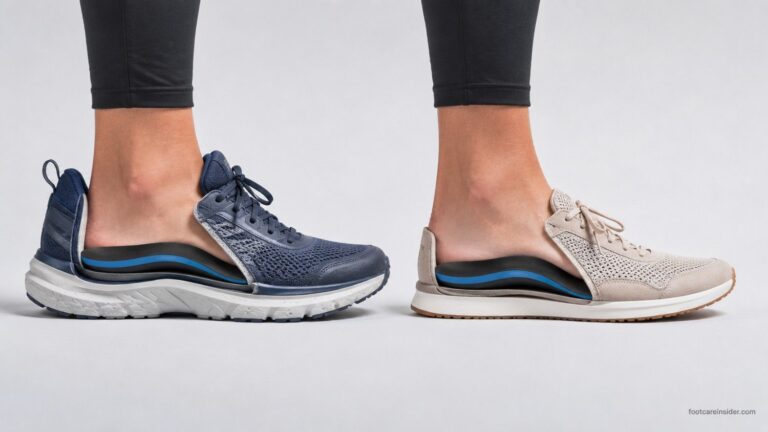
Supportive, properly fitted walking shoes can provide a more stable foundation, especially if you spend many hours standing or walking on hard surfaces. Replacing shoes before their cushioning and structure wear out may also help reduce the amount of work your muscles perform throughout the day.
Gradually increasing walking distance instead of making sudden jumps in activity gives the muscles of the feet and legs time to adapt. Taking short movement breaks during long work shifts and varying your walking surfaces whenever possible may also reduce the buildup of fatigue.
Strengthening the feet, calves, hips, and core can improve overall walking efficiency, helping the body manage repeated loading with less effort.
If you’re wondering whether the problem starts with your foot structure, see Can Flat Feet Cause Leg Tiredness? for a detailed explanation.
Can Insoles Help With Leg Fatigue?
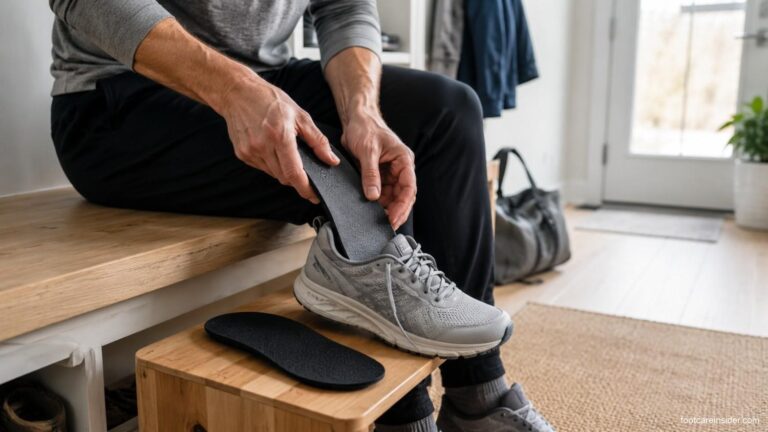
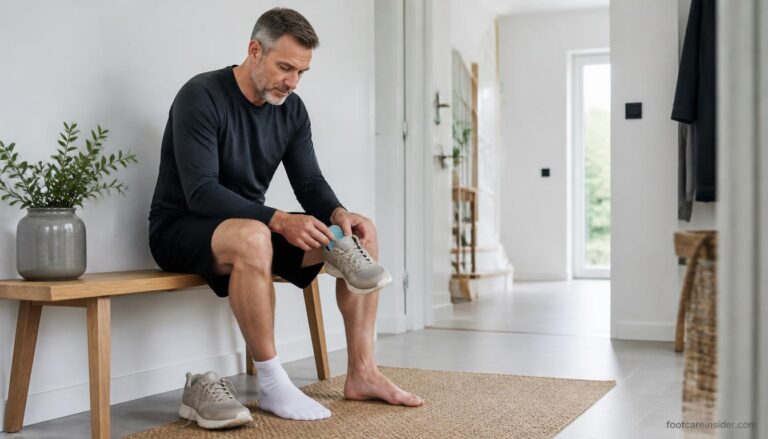
Supportive insoles may improve comfort for some people by helping stabilize the foot during walking. While they cannot eliminate overpronation entirely or “fix” leg fatigue on their own, they may reduce the extra workload placed on certain muscles.
The most appropriate insole depends on factors such as foot shape, shoe type, activity level, and the degree of support needed. Someone with mild overpronation during everyday walking may benefit from moderate support, while others may require a more structured solution recommended by a healthcare professional.
Insoles are generally most effective when combined with suitable footwear, healthy walking habits, and gradual conditioning rather than being viewed as a standalone solution.
Readers comparing different support options may also find Insoles vs Supportive Shoes helpful.
When Professional Evaluation Is Appropriate
Occasional leg fatigue after a demanding day is expected. However, ongoing fatigue that develops after relatively little activity deserves closer attention.
A healthcare professional such as a podiatrist or physical therapist can evaluate how your feet, ankles, knees, and hips work together during walking. They can also assess footwear, muscle strength, flexibility, and overall gait mechanics to determine whether overpronation is contributing to your symptoms.
Professional assessment is especially worthwhile if fatigue is accompanied by persistent pain, swelling, numbness, weakness, or symptoms that continue despite changing shoes and reducing activity.
Preventing Fatigue From Building Over Time
Managing overpronation-related fatigue often focuses on reducing repeated stress before it accumulates.
Replacing worn footwear regularly, maintaining healthy leg strength, gradually increasing physical activity, and avoiding long periods of uninterrupted standing whenever possible may all help improve endurance.
Paying attention to early signs of tiredness instead of pushing through increasing fatigue may also reduce the risk of developing more persistent discomfort. Even simple habits, such as alternating between sitting and standing during the day or taking short walking breaks, can make a meaningful difference over time.
Common Questions
Can overpronation make your legs feel tired even without pain?
Yes. Many people first notice muscle fatigue rather than pain. Because the muscles work harder to stabilize the foot during walking, the legs may simply feel heavy or tired by the end of the day.
Which muscles become tired most often?
The calf muscles are commonly affected first, but muscles around the ankles, knees, hips, and even the lower back may also work harder depending on your walking mechanics and activity level.
Can better shoes reduce leg fatigue?
Supportive shoes that fit properly and still have good cushioning may improve comfort by providing a more stable base during walking. Worn-out footwear may increase the amount of work your muscles perform throughout the day.
Are insoles enough to solve overpronation-related fatigue?
Not always. Insoles may help support foot mechanics, but they work best alongside appropriate footwear, gradual activity progression, muscle strengthening, and healthy movement habits.
When should I seek medical advice?
If leg fatigue develops after minimal activity, continues despite rest, becomes progressively worse, or is accompanied by swelling, numbness, weakness, or persistent pain, it is advisable to seek professional evaluation.
Conclusion
Overpronation can contribute to leg fatigue by increasing the amount of work certain muscles perform during every step. While this additional effort is often subtle, the effect can build gradually throughout a busy day of walking or standing. Understanding how foot mechanics influence muscle workload makes it easier to recognize early signs, improve everyday comfort through practical adjustments, and know when professional advice may be appropriate.