When Should You Stop Wearing New Insoles?
A new pair of insoles can feel surprisingly uncomfortable during the first few days. Your feet may notice pressure in a different place, your arches may feel more supported than usual, or your legs may simply feel tired after a normal walk. Some adjustment is possible, but discomfort should not automatically be treated as something you have to push through. The important question is whether the sensation is mild and settling, or whether it is getting stronger with each day. Knowing that difference can help you decide when to give new insoles more time and when to stop wearing them.
New insoles are usually worth reassessing when discomfort is mild, temporary, and gradually improving with shorter periods of use. Stop using them if they cause increasing pain, numbness, tingling, blisters, significant pressure, or changes in walking that do not settle. A good fit should feel supportive without creating a new source of discomfort.
Why New Insoles Can Feel Strange at First
Changing the insole changes how your foot sits inside the shoe. Even a relatively simple replacement can alter the amount of cushioning under the heel, the shape supporting the arch, or the amount of room available around the forefoot.
That can make a familiar walking shoe feel different immediately. An insole with a firmer arch, for example, may create pressure in an area that was previously barely contacted. A thicker cushioned design may make the shoe feel more snug across the top of the foot.
This does not automatically mean the insole is wrong. Mild awareness of a new support shape can happen while your feet become accustomed to it. What matters is the direction of the change. If the sensation becomes less noticeable as you use the insoles for short periods, that is different from discomfort that becomes stronger or spreads.
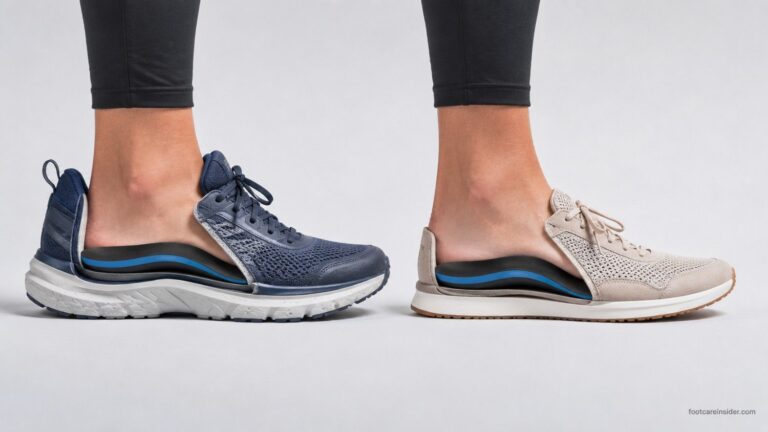
The same principle applies when comparing everyday footwear. Your walking shoes may tolerate a more substantial insole than a low-volume casual sneaker, where even a small increase in thickness can change the fit.
How Long Should You Give New Insoles to Adjust?
There is no single adjustment period that works for everyone. The right approach is to introduce new insoles gradually rather than immediately wearing them through a full workday or a long walk.
Start with a shorter period of normal activity and pay attention to how your feet feel afterward. If the insoles feel unusual but not painful, you can gradually increase wearing time as long as the response remains comfortable.
Your daily workload matters. Someone walking around the neighborhood for 20 minutes has a very different test than someone spending eight hours moving between hard indoor floors, stairs, and concrete. A small fit problem can become much more obvious after several hours of repeated loading.
If the discomfort is consistently increasing rather than settling, continuing to wear the insoles simply because they are new is not a good reason to ignore the signal.
For readers who are also noticing that their insoles seem to lose their shape over time, Why Do Insoles Feel Flat After a Few Months? can help explain how compression and material changes affect everyday support.
Signs That New Insoles May Not Be Working for You
The clearest warning sign is pain that was not present before the new insoles were introduced, particularly when it repeatedly appears during or after wearing them.
Pay attention to where the discomfort occurs. New pressure beneath the arch, increasing forefoot soreness, heel discomfort, or irritation around the edges of the foot may indicate that the shape, firmness, thickness, or fit is not appropriate for your shoes.
Other signals deserve attention too. Numbness or tingling is not something you should simply accept as part of an adjustment period. Neither are persistent blisters caused by changes in pressure or friction.
Your walking pattern can also provide useful information. If you find yourself changing your stride, avoiding part of your foot, walking unusually stiffly, or repeatedly removing the shoes because they feel wrong, the problem may be more than ordinary unfamiliarity.
The timing matters as well. Mild discomfort that becomes noticeably easier after each short wearing session is different from discomfort that returns quickly and becomes more intense each time.
What Can Make New Insoles Feel Worse?
Sometimes the problem is not the basic idea of using an insole but the match between the insole and the shoe.
A replacement insole that is too thick can reduce the available space inside the shoe. This may increase pressure over the top of the foot or squeeze the toes and forefoot. A very firm arch can also feel intrusive if your previous footwear provided little structural contact.
The opposite can happen with very soft cushioning. It may initially feel comfortable but provide a different underfoot sensation as your weight repeatedly compresses the material.
Shoe construction matters too. A roomy walking shoe may accommodate an insole that would make a narrower casual sneaker uncomfortable. The original factory liner may also be designed as part of the shoe’s available volume, so simply adding another insole on top can create a poor fit.
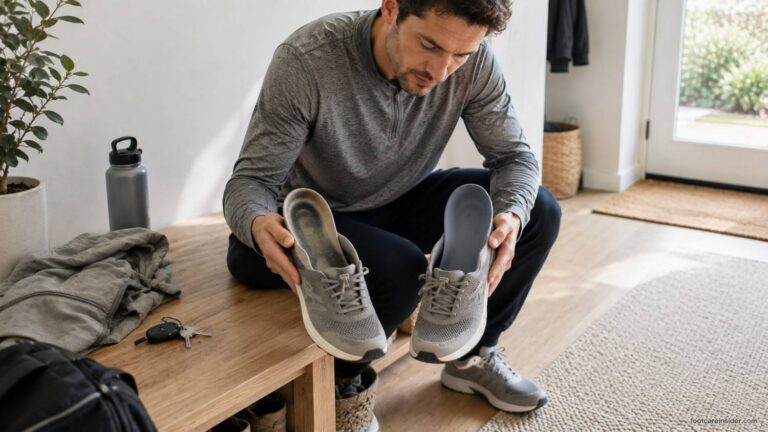
If the original liner is removable, replacing it rather than stacking another layer may provide a more sensible fit. The goal is not maximum cushioning or maximum support. It is a comfortable relationship between your foot, the insole, and the shoe.
When Should You Stop Instead of Trying to Adjust?
A new insole should not require you to endure significant or worsening symptoms just to prove that it can work.
Stop wearing the insoles if you develop persistent or increasing pain, numbness, tingling, skin irritation, repeated blistering, or a noticeable change in your normal walking pattern. These signs suggest that continuing the same setup may not be appropriate.
It is also reasonable to stop when discomfort repeatedly returns after each wearing session without any clear improvement. You can then reassess the insole’s thickness, arch shape, cushioning level, and compatibility with the shoe rather than assuming more time will solve the problem.
If you are unsure whether your discomfort is coming from the heel, arch, forefoot, or another area, the Interactive Foot Pain Tool can help you identify the location and consider common causes before deciding what to change.
Persistent, worsening, or significant foot pain deserves professional assessment, particularly when it affects normal walking or continues after you stop using the new insoles. The aim is not to force your feet to adapt to a product, but to find footwear and support that allow normal movement without creating unnecessary discomfort.
What to Do If New Insoles Are Uncomfortable
If the discomfort is mild and improving, reduce the wearing time rather than abandoning the insoles immediately. Use them during shorter walks or ordinary daily activities and increase the duration only when your feet remain comfortable. If the same discomfort returns every time, however, changing the fit may be more useful than simply wearing them longer.
Check the basics first: make sure the insole sits flat, the heel is properly positioned, and the shoe still has enough room for your toes. If the replacement is thicker than the original liner, removing the factory insole may prevent unnecessary crowding.
Small Footwear Changes Can Make a Difference
The shoes themselves can determine whether a new insole feels comfortable. A supportive insole inside a shoe with limited volume may create pressure that would not occur in a roomier walking shoe.
Look at the complete setup rather than the insole alone. Check whether your toes can move naturally, whether the heel stays secure, and whether the upper is pressing against the top of your foot. A different shoe may sometimes solve a problem that changing the insole cannot.
For everyday use, the goal is a stable, comfortable fit that still allows normal walking. More cushioning or a stronger arch shape is not automatically better if it makes the shoe too tight.
When It Makes Sense to Stop Completely
You do not need to keep testing an insole when your body is giving you increasingly clear negative signals. Stop using it if pain becomes stronger, walking changes noticeably, or you develop numbness, tingling, significant skin irritation, or repeated blisters.
If symptoms continue after removing the insoles, or if the original discomfort was already significant, consider getting professional advice rather than repeatedly changing products. Persistent or worsening pain can have causes unrelated to the insole itself.
How to Avoid the Same Problem With Your Next Pair
Before choosing another insole, consider what actually went wrong. If the problem was pressure beneath the arch, a different support shape may make more sense. If the shoe became cramped, a slimmer design or a different shoe may be the better solution. If your feet simply needed more cushioning, changing to a softer construction may be reasonable.
It is also useful to compare how your feet respond at different activity levels. An insole that feels fine during a short walk may become uncomfortable after several hours of standing or repeated walking. Your normal daily load should therefore be part of the decision, not an afterthought.
The best setup is the one that works with your footwear and routine without creating new problems.
Common Questions
How long should I try new insoles before deciding they are wrong?
Give mild, improving discomfort some time while gradually increasing wear. If symptoms repeatedly become worse rather than settling, there is little reason to continue forcing the adjustment.
Should I stop wearing new insoles if my arches feel sore?
Mild awareness of a new arch shape can occur, but increasing or persistent soreness deserves attention. Check the insole’s shape, firmness, and fit inside the shoe rather than assuming soreness is necessary.
Can new insoles cause heel or forefoot pain?
They can change how pressure is distributed inside the shoe, so a poor match may contribute to discomfort in the heel or forefoot. The shoe’s available space and the insole’s thickness and shape both matter.
Should I remove the original shoe insole?
If the original liner is removable, replacing it can provide more usable space than placing another insole on top. Always check that the replacement sits securely and does not make the shoe excessively tight.
When should I see a professional about discomfort from new insoles?
Seek professional assessment when pain is significant, persistent, worsening, or affecting normal walking, particularly if you also experience numbness or tingling. You do not need to keep wearing an uncomfortable insole while waiting for symptoms to resolve.
The Simple Rule for New Insoles
New insoles should become more comfortable as you gradually get used to them, not progressively more painful. If mild unfamiliar pressure settles, you can increase wear slowly. If pain, numbness, tingling, blisters, or walking changes develop or worsen, stop using the insoles and reassess the fit. Your footwear should support normal movement, not require you to endure significant discomfort.