Best Shoes for Male Nurses
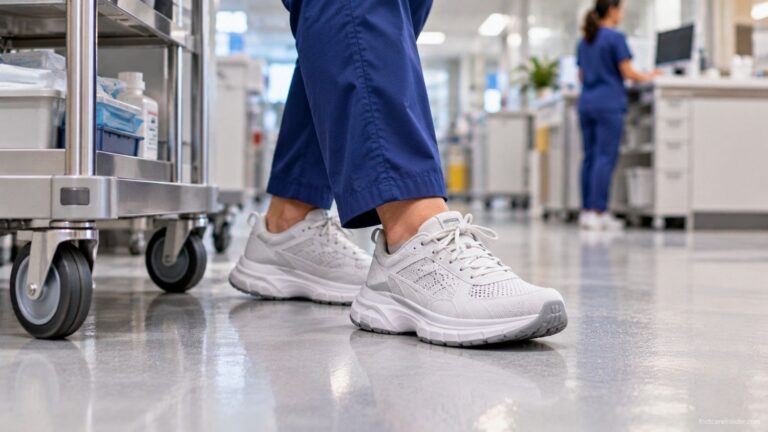
A male nurse can start a shift feeling fine and still notice a very different level of foot fatigue several hours later. A typical day may involve walking from room to room, standing beside patients, moving equipment, climbing stairs, and spending long stretches on hard hospital flooring. That makes shoe choice more important than it might seem from a quick try-on at home. When men search for shoes for nurses men, they are usually trying to find a shoe that stays comfortable through repeated walking and standing without feeling unstable, cramped, or overly soft. The five options here cover several approaches, from heavily cushioned running-style shoes to structured work footwear and a traditional clog.
The best shoes for male nurses depend on how your shift is divided between walking and standing. HOKA Bondi SR offers a heavily cushioned work-shoe approach, while Brooks Ghost 16 and HOKA Clifton 10 bring running-shoe cushioning to nurses who prefer an athletic feel. The Dansko Professional Clog and Skechers Work Squad SR take more traditional work-footwear approaches. The right choice is the one that fits your foot, your movement pattern, and your employer’s requirements.
For a closer look at whether HOKA footwear works well during demanding nursing shifts, see Are HOKA Shoes Good for Nurses and Long Shifts?.
Quick picks
HOKA Bondi SR (men’s)Work-focused cushioning
Check price on AmazonBrooks Ghost 16 (men’s)Cushioned running shoe
Check price on AmazonHOKA Clifton 10 (men’s)Light cushioned trainer
Check price on AmazonDansko Professional ClogStructured classic clog
Check price on AmazonSkechers Work Squad SRTraditional work sneaker
Check price on AmazonComparison at a glance
| Model | Style | Main focus | Best match for | Work-specific details |
|---|---|---|---|---|
| HOKA Bondi SR (men’s) | Work sneaker | Substantial cushioning | Long shifts with lots of walking and standing | Check listing |
| Brooks Ghost 16 (men’s) | Running shoe | Cushioned everyday movement | Nurses who prefer an athletic running-shoe feel | Check listing |
| HOKA Clifton 10 (men’s) | Running shoe | Cushioning with a lighter feel | Active shifts with frequent walking | Check listing |
| Dansko Professional Clog | Clog | Structured support and rocker sole | Standing-heavy shifts and clog users | Check listing |
| Skechers Work Squad SR | Work sneaker | Traditional work-shoe design | Walking and standing during active shifts | Check listing |
What should male nurses look for in a work shoe?
The most useful starting point is not the brand. It is what your feet actually do during a shift. A nurse working on a large hospital floor may accumulate substantial walking distance, with repeated steps and constant changes of direction. Another nurse may spend more time standing beside patients or at a workstation. Many shifts combine both, so the shoe needs to remain comfortable through changing movement rather than only performing well during a short walk.
Cushioning can be especially noticeable on hard floors. The midsole is the layer between the foot and outsole, and its cushioning affects how firm the ground feels beneath the heel and forefoot. HOKA is known for substantial cushioning, making the Bondi and Clifton families quite different in feel from more traditional work footwear.
Stability matters too. A shoe can feel soft underfoot while still feeling secure when you turn, stop, or accelerate down a corridor. Look for a heel that feels reasonably controlled, an upper that does not let the foot slide around, and enough room in the forefoot for natural toe movement.
Fit becomes even more important during long shifts. A shoe that feels slightly tight during a five-minute try-on may become much less comfortable after hours of walking and standing. Likewise, a shoe that feels loose around the heel can become distracting when you are repeatedly moving between rooms.
Finally, check your workplace’s actual footwear policy. Hospitals and healthcare facilities can have specific requirements covering outsole performance, color, materials, or the type of footwear permitted in clinical areas. Do not assume that a comfortable running shoe automatically meets those requirements.
Should male nurses choose running shoes or traditional work shoes?
Running shoes can be appealing when walking is a major part of your shift. The Brooks Ghost 16 and HOKA Clifton 10 both represent athletic footwear designed around repeated movement, while the Bondi SR provides a more work-focused route with the substantial cushioning associated with HOKA.
Traditional work shoes take a different approach. The Dansko Professional Clog has the structured feel and rocker sole associated with classic healthcare clogs, while the Skechers Work Squad SR provides a more conventional work-sneaker format.
Neither style is automatically better for every nurse. Someone who walks long corridors all day may prefer the feel of a cushioned athletic shoe, while someone who spends more time standing may prefer a structured clog. Personal preference also matters: the shoe should feel natural enough that you are not constantly thinking about your feet during the shift.
It is also worth remembering that softer is not always better. A heavily cushioned shoe may feel excellent to one person and too substantial to another. The best choice balances cushioning, stability, fit, and the type of movement your job requires.
For the broader footwear decision across different nursing roles and shift patterns, Best Shoes for Nurses is the main guide to use alongside this male-focused comparison.
These five models take noticeably different approaches, so the individual product choices become clearer once you look at how each one fits a real nursing workday.
HOKA Bondi SR (men’s): Work-focused cushioning
The HOKA Bondi SR is the most directly work-oriented option here for male nurses who spend long periods walking and standing and prefer a substantial amount of cushioning underfoot. The Bondi line is known for its thick cushioned platform, which gives it a noticeably softer and more substantial feel than many traditional work shoes. That can suit a nurse moving repeatedly between patient rooms, corridors, stations, and other areas of a hospital. The enclosed sneaker design also makes sense for someone who prefers an athletic-style shoe rather than a clog. It is the strongest starting point when cushioning is the main buying priority.
Why it works:
- Thick cushioning suits long periods of walking and standing.
- Work-focused sneaker design fits the demands of an active shift.
- Enclosed construction provides a familiar athletic-shoe feel.
Keep in mind: The substantial sole and cushioned platform create a distinctive feel that may be too bulky for nurses who prefer a firmer, lower-profile shoe.
Brooks Ghost 16 (men’s): Cushioned running shoe
The Brooks Ghost 16 is a better fit for male nurses who prefer the familiar feel of a modern running shoe and spend a significant part of the shift walking. Rather than looking like a traditional work shoe, it follows the athletic shape many people already know from everyday walking and running footwear. That can make it attractive for active hospital shifts where repeated movement is the bigger issue than standing in one place. The cushioning is designed for repeated steps, while the lace-up format lets you adjust the fit around the foot. It is best considered when your workplace permits this type of athletic footwear.
Why it works:
- Running-shoe design suits walking-heavy shifts.
- Cushioned construction can make repeated steps feel softer.
- Lace-up fit allows adjustment around the foot.
Keep in mind: It is a running shoe rather than a dedicated healthcare work shoe, so confirm that it meets your employer’s footwear requirements before choosing it for clinical use.
HOKA Clifton 10 (men’s): Lighter cushioned trainer
The HOKA Clifton 10 is another athletic option for male nurses who want cushioning but prefer a running-shoe approach rather than a traditional work shoe. The Clifton family is known for combining cushioning with a lighter, more streamlined feel than the most substantial shoes in the HOKA range. That makes it worth considering for nurses who cover a lot of ground during a shift and want a shoe that feels natural for continuous walking. Like the Brooks Ghost 16, however, it is a running shoe rather than a dedicated nursing model. The key question is whether that athletic construction fits both your personal preference and your workplace policy.
Why it works:
- Running-shoe design works naturally for frequent walking.
- Cushioned platform suits nurses who prefer softer underfoot comfort.
- More streamlined construction may appeal to those who find the Bondi too substantial.
Keep in mind: The Clifton 10 is not a dedicated work shoe, so check your employer’s rules and the current product listing before using it for clinical work.
Dansko Professional Clog: Structured classic clog
The Dansko Professional Clog is the clear alternative for male nurses who prefer a structured clog rather than a running-style sneaker. Its traditional construction and rocker sole create a distinctly different walking experience. A rocker sole is curved through the bottom of the shoe to encourage the foot to roll forward during the step, rather than remaining completely flat. That can appeal to nurses who spend long periods standing and prefer a more substantial, structured platform under the foot. It also makes sense for someone who already knows that clogs feel natural during a working shift. The trade-off is that the experience is quite different from a flexible athletic shoe.
Why it works:
- Structured construction provides a defined underfoot feel.
- Rocker sole encourages a rolling motion through the step.
- Clog design suits nurses who prefer traditional work footwear.
Keep in mind: The structured clog shape can take some adjustment if you normally wear flexible athletic shoes.
Skechers Work Squad SR: Traditional work sneaker
The Skechers Work Squad SR is a practical choice for male nurses who want a conventional work-sneaker format rather than the highly cushioned feel of the HOKA Bondi or the running-focused design of the Brooks Ghost and HOKA Clifton. Its athletic-inspired shape can work well for shifts that mix walking with standing, while the enclosed construction gives the foot a familiar sneaker feel. This makes it a reasonable option for nurses who want a straightforward work shoe without moving into a clog. Because workplace requirements and current model specifications can change, check the listing for the exact color, available sizes and widths, and required outsole features before purchasing.
Why it works:
- Traditional sneaker shape suits active nursing shifts.
- Enclosed construction gives a secure, familiar feel.
- Work-oriented design is an alternative to both running shoes and clogs.
Keep in mind: Check the current listing for the exact work-specific outsole specification, color options, sizing, and widths.
When your nursing shoes need more support
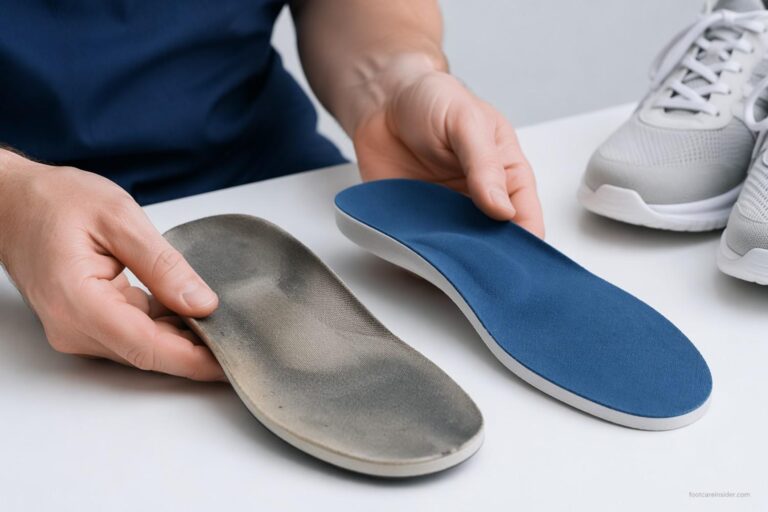
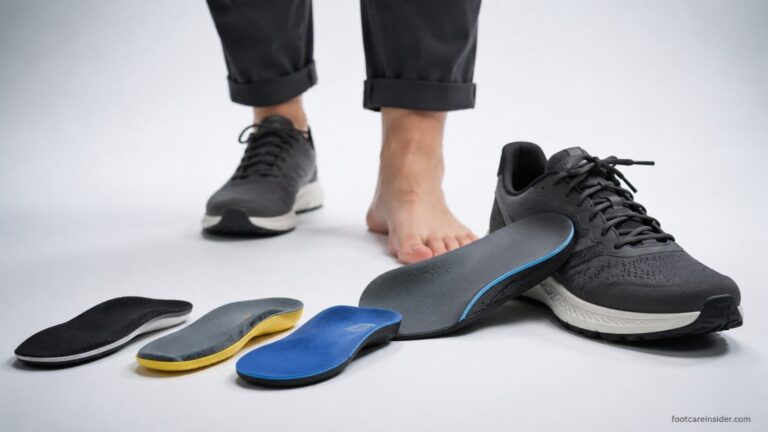
Changing shoes may improve how your feet feel during a shift, but footwear is only one part of the equation. If the heel moves excessively, the forefoot feels cramped, or the arch feels pressured after several hours, simply choosing a softer shoe may not solve the problem. The same applies when you add an insole: an insert takes up space inside the shoe and can change the fit. Male nurses who regularly stand for long periods may also want to explore guidance on insoles for standing all day. Lasting or recurring foot pain deserves a professional opinion rather than relying only on footwear changes.
Frequently Asked Questions
What are the best shoes for male nurses who walk a lot?
A cushioned athletic-style shoe can make sense for nurses who spend much of their shift walking. The HOKA Bondi SR, Brooks Ghost 16, and HOKA Clifton 10 all take that general approach, although the Bondi SR is the work-focused option among them.
Are running shoes suitable for male nurses?
They can be suitable when the workplace allows athletic footwear and the shoe provides a comfortable, secure fit. Brooks Ghost 16 and HOKA Clifton 10 are running shoes, so their suitability depends partly on your employer’s requirements.
Are clogs good for male nurses?
Clogs can suit nurses who prefer a structured shoe and spend substantial time standing. The Dansko Professional has a traditional clog design and rocker sole, but its feel is quite different from a running shoe.
Should nursing shoes have a lot of cushioning?
Not necessarily. Cushioning can be useful during long periods of walking and standing, but the amount that feels comfortable is personal. A shoe with substantial cushioning may suit one nurse while another prefers a firmer and more grounded feel.
How should men’s nursing shoes fit?
The heel should feel reasonably secure without excessive movement, while the forefoot should provide enough room for natural toe movement. Because feet can feel different after several hours on the job, a fit that is slightly restrictive at the start of a shift may become more noticeable later.
Does every nursing shoe need to be slip-resistant?
Workplace requirements vary, so there is no single rule that applies to every nurse. Check your employer’s policy and the current product listing for the required outsole specification before choosing footwear for clinical work.
Final verdict
For male nurses who spend long shifts walking and standing, the HOKA Bondi SR is the strongest match when substantial cushioning is the priority. The Brooks Ghost 16 and HOKA Clifton 10 make more sense for nurses who prefer running-shoe designs, while the Dansko Professional suits those who prefer a structured clog. The Skechers Work Squad SR offers a straightforward work-sneaker alternative. Your shift pattern, foot shape, personal preferences, and workplace rules should make the final decision.
More nurse shoe guides: slip-resistant shoes for nurses.