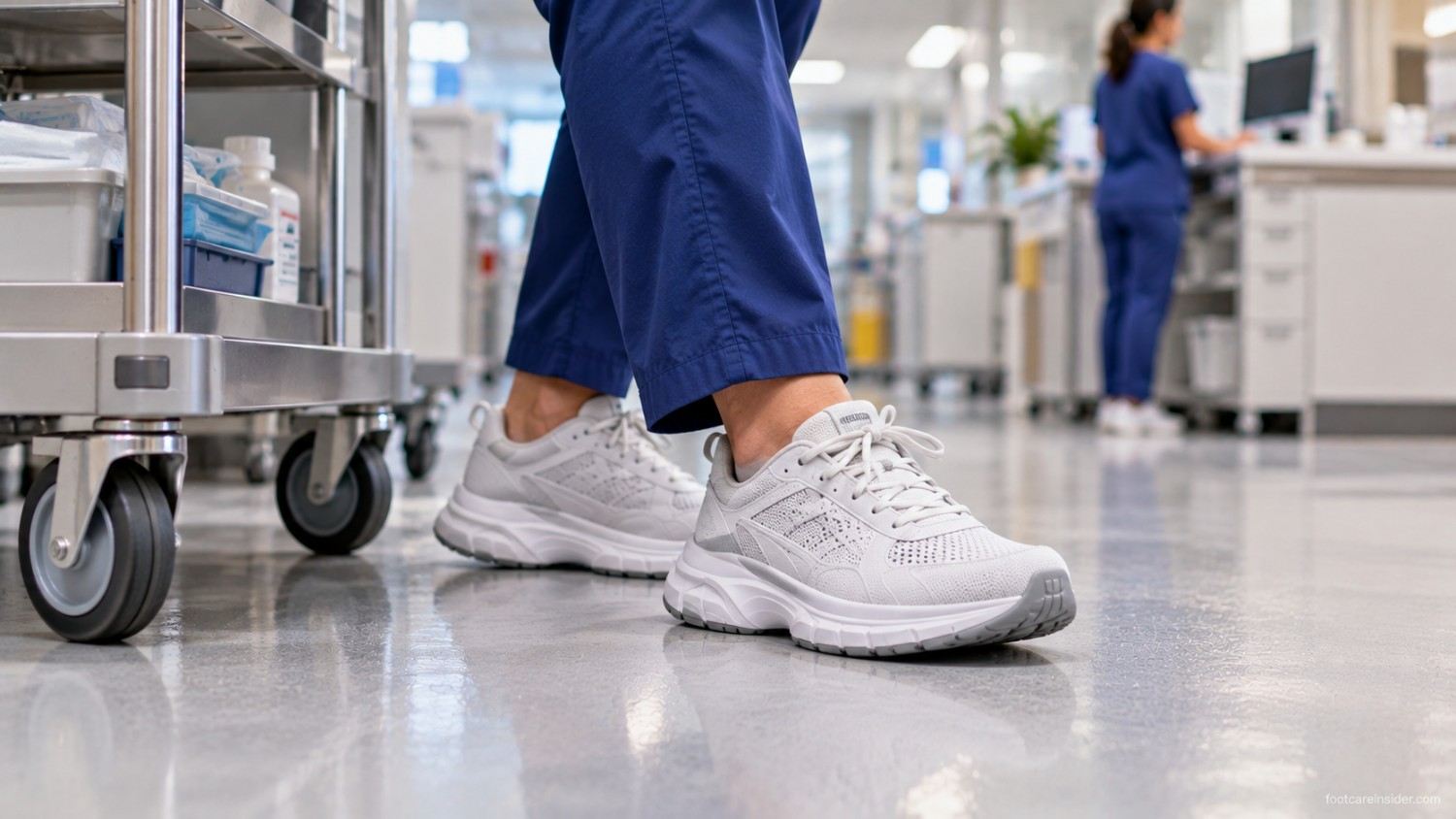
Best Wide-Width Shoes for Nurses
During a 12-hour nursing shift, shoes that feel comfortable at the start can become restrictive as the hours pass. The toes may press against the front, the sides may rub, or the upper may feel tight across the widest part of the foot. For nurses who need wide width nursing shoes, the challenge is finding enough room without sacrificing a secure fit during constant walking, standing, and turning on hospital floors. A wider shoe is not simply a longer shoe, and a roomy toe box does not automatically mean the entire shoe has a wider fit. The best starting point is to identify where the pressure occurs, then compare footwear shapes, available widths, cushioning, and stability against the demands of your actual shift.
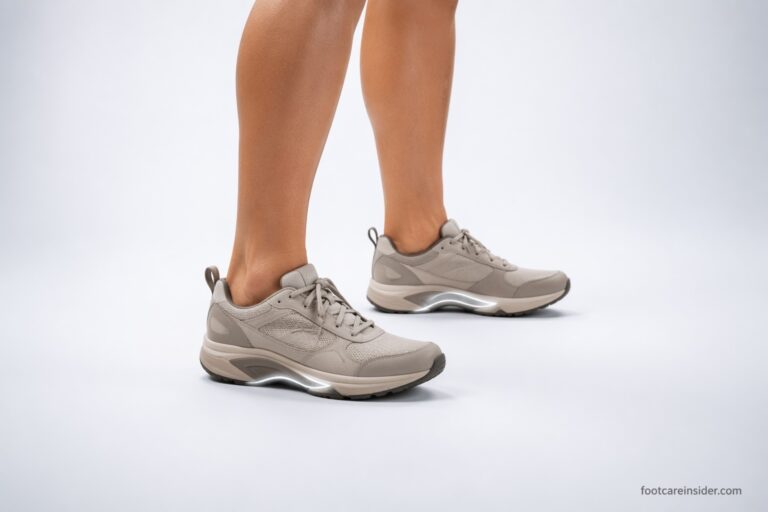
The best wide-width nursing shoes should provide adequate room across the forefoot and toes, hold the heel securely, and remain comfortable during prolonged standing and walking. The HOKA Bondi SR and Brooks Ghost 17 are sneaker options to investigate, while Crocs On The Clock offers a different work-shoe style. Wide toe box loafers may suit some preferences, but their fit and workplace suitability need checking. Always verify the exact width available for the model and size you intend to buy.
Quick picks
HOKA Bondi SR (women’s) Cushioned work sneaker
Check price on AmazonBrooks Ghost 17 (women’s) Cushioned lace-up shoe
Check price on AmazonWide Toe Box Loafers with Arch Support Roomy forefoot design
Check price on AmazonCrocs On The Clock Work-focused shoe style
Check price on AmazonCompare wide-width nursing shoe options
| Shoe | Main consideration | Potential fit preference | What to verify |
|---|---|---|---|
| HOKA Bondi SR (women’s) | Thick cushioning and substantial sole | Nurses who prefer a cushioned sneaker | Available width, toe-box room, workplace requirements |
| Brooks Ghost 17 (women’s) | Cushioned lace-up construction | Nurses who prefer a conventional athletic-shoe fit | Available width, forefoot fit, outsole suitability |
| Wide Toe Box Loafers with Arch Support | Room around the toes with built-in arch support | People who prefer a loafer shape | Exact width, heel security, suitability for clinical work |
| Crocs On The Clock | Work-focused shoe design | Nurses considering an alternative to lace-up sneakers | Fit, width, slip-resistance specifications, workplace approval |
How to tell whether you need wide shoes or a wider toe box
The location of the pressure is a useful clue when comparing nursing shoes. If the sides of your forefoot feel squeezed, a wider overall shoe may be necessary. If the pressure is concentrated around your toes, the shape of the toe box may matter just as much as the labelled width. Some shoes taper sharply towards the front, while others leave more space for the toes to spread naturally.
Check width across the forefoot
A shoe should not press painfully against the ball of your foot or create rubbing along the sides. Width labels vary between brands and models, so do not assume that the same size designation will fit identically across different shoes. Check the specific product listing for the available width options rather than relying on the product name alone.
Make sure extra room does not create heel slippage
A shoe that feels roomy at the front can still be too loose around the heel. Your foot should remain secure as you walk, turn, and change direction. If the heel repeatedly slips, you may find yourself adjusting your stride or tightening the laces excessively. Look for a fit that gives the forefoot enough space while keeping the heel comfortably in place.
What matters during a long nursing shift?
Width is the starting point, but nurses also need to consider cushioning, stability, outsole grip, and the practical demands of their workplace. A shoe can feel spacious while standing still yet become uncomfortable during several hours of movement. Whenever possible, assess the fit while standing and walking, using the socks you normally wear at work.
Cushioning and stability
Cushioning can make hard floors feel less unforgiving, but a very soft shoe is not automatically the most comfortable option for every person. The shoe should feel stable during turns and transitions between standing and walking. If you use an orthotic or supportive insole, check that it fits without crowding the toes or lifting your heel out of the shoe.
Workplace requirements
Hospitals and healthcare employers may specify footwear requirements, particularly for slip resistance and coverage. Do not assume that a shoe is approved for clinical work because it is marketed as a work shoe. Check the exact model’s specifications and your employer’s policy before relying on it for a shift.
With those factors in mind, the most useful comparison is between shoes that provide enough room in the places you need it, while still feeling secure and practical for your working environment.
HOKA Bondi SR (women’s): Cushioned work sneaker
The HOKA Bondi SR is worth considering if you prefer a substantial sneaker for long shifts rather than a loafer or clog. Its thick cushioning and substantial sole may appeal to nurses who spend hours moving between patient rooms and standing on hard floors. However, cushioning alone does not determine whether a shoe will fit a wide foot. Pay particular attention to the width available in the exact women’s size you need, the space across the ball of your foot, and whether your toes can rest without pressure. Do not assume the model is available in your required width just because the shoe looks broad. Verify the current listing before purchasing.
Why it works
- Thick cushioning offers a different underfoot feel from flatter work shoes.
- The substantial sole may appeal to nurses who prefer a more cushioned sneaker.
- The lace-up design allows some adjustment around the midfoot.
Keep in mind: The exact available width must be confirmed for your size. A wide-looking shoe is not necessarily sold in a wide width.
Brooks Ghost 17 (women’s): Adjustable lace-up fit
The Brooks Ghost 17 may suit nurses who prefer the familiar feel of a cushioned athletic shoe. Its lace-up construction lets you adjust tension across the top of the foot, which can be useful when the fit feels different across the forefoot and midfoot. Laces cannot create additional width in a shoe that is fundamentally too narrow, though. Check the available width options for the exact model and size, and make sure the widest part of your foot aligns with the widest part of the shoe. If you wear supportive inserts, try the shoe with the insert in place so that the added volume does not make the fit restrictive.
Why it works
- The lace-up design allows adjustment across the foot.
- Cushioned construction may appeal to nurses who prefer athletic footwear.
- The conventional sneaker shape is an alternative to clogs and loafers.
Keep in mind: Verify the available width and confirm that the shoe meets your employer’s requirements for clinical work.
Wide Toe Box Loafers with Arch Support: Room for the forefoot
These wide toe box loafers may appeal to nurses who prefer a slip-on style rather than a traditional lace-up sneaker. The key feature to investigate is the shape and usable space at the front of the shoe. A rounded, roomy toe box may help avoid the squeezed feeling that occurs when the toes press against a tapered front. Arch support is a separate consideration: it should feel comfortable rather than create a hard pressure point beneath the foot. Since the supplied product name does not confirm its exact dimensions or work-safety specifications, check the product listing carefully before considering these loafers for a hospital shift.
Why it works
- A wide toe box is the main feature to investigate for forefoot comfort.
- The slip-on style offers an alternative to lace-up footwear.
- The stated arch-support feature may interest people who prefer some structure under the foot.
Keep in mind: Verify the actual width, heel security, arch-support construction, and suitability for your workplace before choosing this style for nursing duties.
Crocs On The Clock: A work-focused alternative
Crocs On The Clock is another style to investigate if you want an alternative to conventional athletic sneakers. When considering this option for wide feet, look beyond the overall silhouette and check the actual space around your forefoot, the fit at the heel, and whether the shoe feels secure while walking and turning. A roomy upper will not necessarily provide the right fit across the entire foot. Nurses should also verify the exact model’s outsole specifications and confirm that it meets workplace footwear requirements. The product name alone is not enough to establish the width available or whether a particular version is approved for a clinical environment.
Why it works
- Offers a different work-shoe style from a conventional lace-up sneaker.
- Provides another option to compare when looking for a comfortable fit for long shifts.
- May appeal to people who prefer a simpler shoe design, depending on the exact model.
Keep in mind: Check the model’s actual width, heel fit, outsole specifications, and workplace suitability rather than assuming every version has the same features.
Can insoles help if nursing shoes still feel tight?
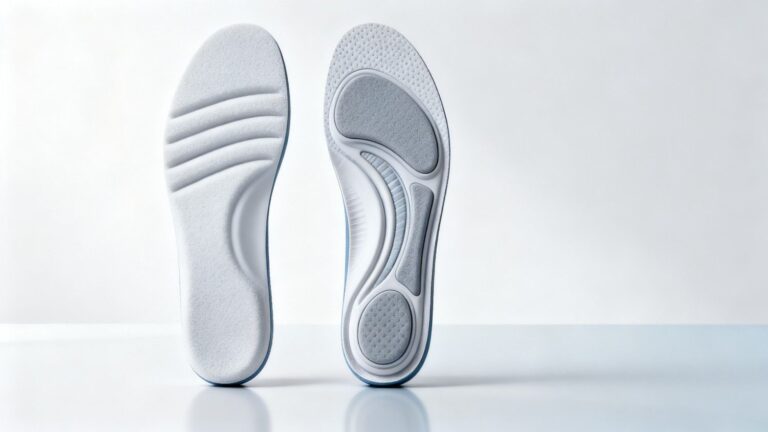
An insole can change the support and cushioning inside a shoe, but it cannot make a narrow shoe wider. A thicker or more structured insert may actually reduce the room available to your foot. If your toes or the sides of your forefoot are being squeezed, start by finding a shoe with the appropriate width and shape instead of trying to solve the problem with an insert.
If your shoes already fit comfortably but you want to explore additional underfoot support, our guide to the best insoles for wide feet covers a related buying decision. Check that any insert you consider fits the shoe’s length and width without crowding the toes or making the heel unstable.
For a broader look at footwear for healthcare shifts, see our guide to the best shoes for nurses. It provides a wider starting point if you are comparing styles beyond wide-width models.
Frequently Asked Questions
How do I know if I need wide-width nursing shoes?
If standard-width shoes consistently squeeze the sides of your forefoot or press your toes together despite having enough length, a wider fit may be appropriate. Persistent rubbing or pressure marks are further reasons to reassess the fit. Measuring both feet and trying shoes while standing can help you identify the width that feels right.
Are wide-width shoes the same as wide toe box shoes?
No. Wide-width footwear generally provides more room across a broader part of the shoe, while a wide toe box focuses on space and shape around the toes. A shoe can have a roomy toe box but still feel tight through the midfoot. Check where the pressure occurs before choosing between the two.
Should I buy a longer size to make nursing shoes wider?
Not automatically. Extra length may leave too much space in front and allow the heel to slip without providing the width you need. Start with the correct length and compare available widths. The shoe should give your toes room without allowing your foot to slide around during walking and turns.
Do wide-width nursing shoes need special insoles?
Not necessarily. First find a shoe that fits comfortably and meets your workplace requirements. An additional insole may be useful if you want a different level of support, but it should not crowd the foot or compromise heel fit. If your main problem is lateral pressure, a wider shoe is usually the more direct place to start.
When should I try on shoes for a nursing shift?
Try shoes later in the day, when your feet may be larger than they were in the morning. Wear the socks you normally use for work and walk around to assess comfort, toe room, and heel security. If you use an insert, test the shoe with it in place.
What should I check before wearing wide shoes in a hospital?
Confirm that the exact model meets your employer’s requirements for footwear coverage and slip resistance. Also check whether the shoe fits securely during quick turns and whether its width is suitable for your feet. Do not rely on a general product category or appearance as proof of workplace suitability.
Final verdict
The best wide-width nursing shoe is the one that gives your forefoot enough room while keeping your heel secure during a full shift. The HOKA Bondi SR and Brooks Ghost 17 are cushioned sneaker options to investigate; wide toe box loafers and Crocs On The Clock offer different styles to compare. Confirm the actual width available, assess the fit while standing and walking, and check your workplace’s requirements before buying. If standard shoes still create pressure, prioritize a genuinely suitable width rather than simply sizing up in length.
More nurse shoe guides: nursing shoes for plantar fasciitis and do Dansko shoes run true to size.