Best Memory Foam Insoles for Shoes (2026 Buyer’s Guide)
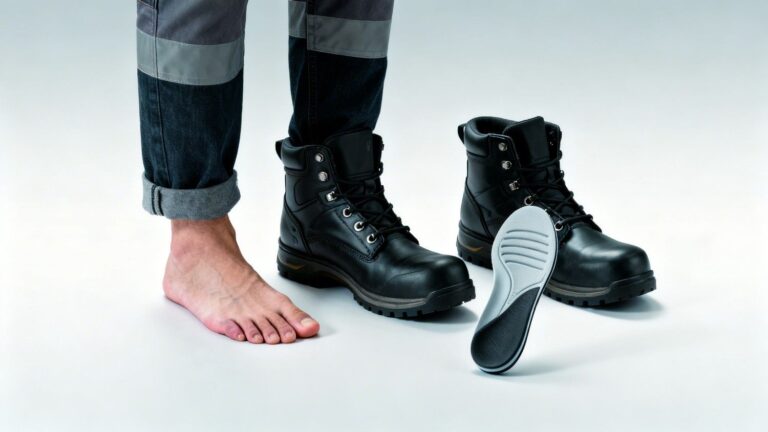
Memory foam insoles are the quickest way to make thin, hard shoes feel softer. The foam presses down under your weight and slowly moulds to the shape of your foot, which spreads pressure away from the heel and the ball of the foot.
But memory foam is a comfort material, not a support material. It’s great for sore, tired feet and flat shoe soles, and less good for feet that roll inward or need a firm arch. Below are our picks, plus a firmer option for when memory foam isn’t enough.
Quick picks
Best memory foam insole overall: Dr. Scholl’s Memory Foam Insoles
Best budget soft insole: TEOYETTSF Cushion Insoles
When you need more support than foam: PowerStep Pinnacle Maxx
Comparison at a glance
| Insole | Best for | Feel | Arch support |
|---|---|---|---|
| Dr. Scholl’s Memory Foam | Everyday shoes, sneakers, walking | Soft, moulds to your foot | Light |
| TEOYETTSF Cushion Insoles | Adding softness on a budget | Soft and breathable | Light |
| PowerStep Pinnacle Maxx | Long shifts, flat feet, feet that roll inward | Firm with a cushioned top | High |
1. Dr. Scholl’s Memory Foam Insoles: best overall
Best for: sneakers, casual shoes and everyday walking
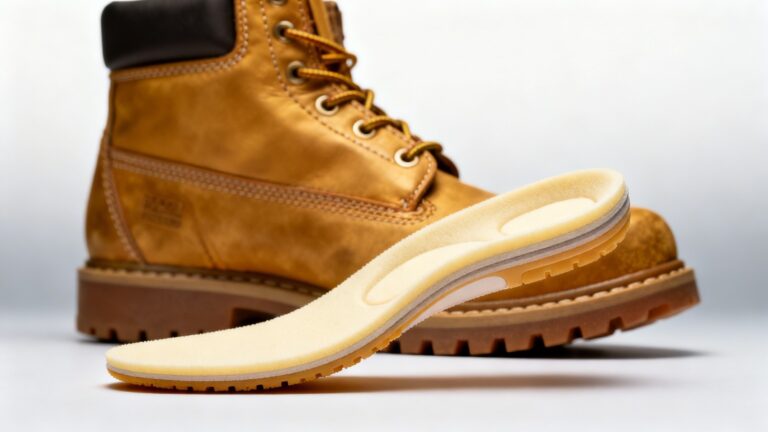
This is the classic memory foam insole: a soft foam layer that sinks under pressure and fills the gaps between your foot and the shoe. If your shoes feel thin or hard after a few hours, this is the easiest upgrade.
Why we picked it:
- Soft cushioning that spreads pressure across the foot
- Moulds to your foot shape as you wear it
- Trim-to-fit sizing for most shoes
- Widely available in US sizes
Keep in mind: like all memory foam, it slowly flattens with daily use and gives only light arch support. If your arches ache or your feet roll inward, look at the PowerStep option below.
2. TEOYETTSF Cushion Insoles: best budget soft insole
Best for: trying extra cushioning without spending much
If you want to find out whether a softer feel helps your feet before paying more, this low-cost cushioned insole is a sensible first try. It adds softness to flat or thin-soled shoes and is designed to be breathable for everyday wear.
Why we picked it:
- Soft, cushioned feel underfoot
- Breathable design
- Low price
Keep in mind: budget cushioning wears down faster than premium foam and gives little structure. Think of it as a comfort upgrade, not a fix for foot pain.
3. PowerStep Pinnacle Maxx: when memory foam isn’t enough
Best for: standing all day, flat feet and feet that roll inward
This one is not a memory foam insole, and that’s the point. Many people buy memory foam, love it for a week, then find their feet are sore again because the foam has no structure. PowerStep combines a firm arch shell and deep heel cradle with a cushioned top layer, so you still get some softness, plus real support.
Why we picked it:
- Firm arch that doesn’t flatten under body weight
- Deep heel cradle for stability
- Cushioned top layer for comfort
- Holds up far longer than soft foam
Keep in mind: it feels firmer than memory foam, so break it in over a few days.
Who memory foam insoles are best for
A good choice if you:
- have shoes with thin or hard soles
- feel general soreness after walking or standing
- want more comfort in sneakers or casual shoes
- have mild heel discomfort from hard floors
Not the best choice if you:
- have flat feet or feet that roll inward. Soft foam lets the arch keep collapsing. See insoles for overpronation.
- stand 8 hours or more a day on concrete. Foam flattens quickly under that load. See insoles for standing all day.
- need strong arch support. A firmer insole will work better. See memory foam vs orthotic insoles.
How to choose memory foam insoles
- Thickness. Thicker foam feels softer but takes up more room. In snug shoes, choose a thinner insole or remove the original one first.
- Arch shape. Some memory foam insoles have a slight arch contour. If your arches get tired, look for memory foam insoles with arch support rather than a completely flat insole.
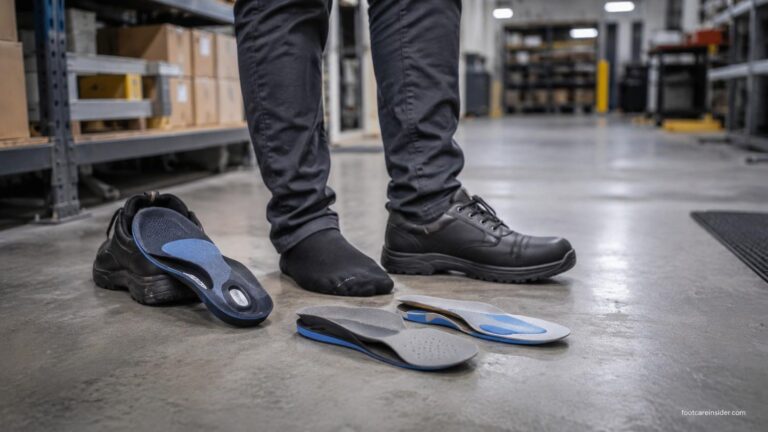
- Shoe type. Memory foam inserts work best in sneakers and casual shoes. For heavy work boots, see memory foam insoles for work boots.
- Breathability. Memory foam can feel warm. A breathable or fabric top layer helps if your feet get sweaty.
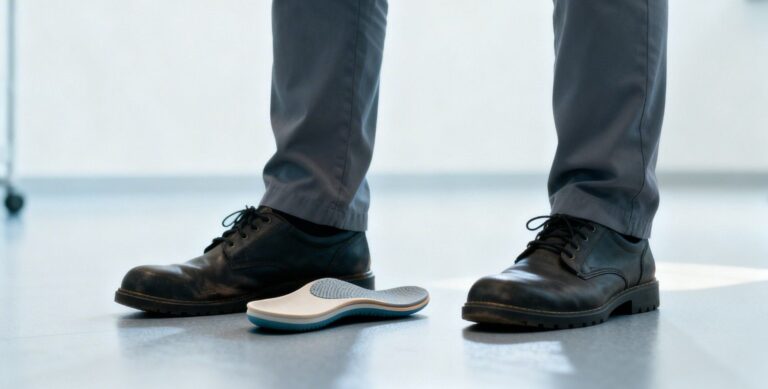
- Fit. Remove your shoe’s original insole before adding a new one. Stacking two insoles crowds the shoe. See should you remove original insoles.
Memory foam vs gel vs EVA
- Memory foam: the softest feel, and it moulds to your foot. It flattens faster.
- Gel: firmer and bouncier, with good shock absorption. It stays cooler than foam. See memory foam vs gel insoles.
- EVA: lighter and firmer, and it holds its shape longer. See memory foam vs EVA insoles.
If softness is your main goal, memory foam wins. If you want your insoles to last and support you, EVA or a structured insole is usually the better buy.
Frequently asked questions
Are memory foam insoles good for standing all day?
They feel great at first, but on hard floors all day the foam compresses and loses its cushioning. For long shifts, a firmer insole with a cushioned top usually works better.
How long do memory foam insoles last?
Usually 3 to 6 months of daily wear, depending on your body weight and how many hours you wear them. See how long do insoles last.
Are memory foam insoles good for flat feet?
They add comfort, but they don’t hold up a low arch. People with flat feet usually do better with structured support. See best insoles for flat feet.
Are memory foam insoles good for plantar fasciitis?
They can ease heel pressure, but most people with heel pain also need arch support. See memory foam insoles for plantar fasciitis.
Can I use memory foam insoles in work boots?
Yes, especially thicker ones, as long as you remove the original insole so the boot doesn’t feel tight.
Our picks: Pairing a soft insole with a cushioned shoe? Here is one to look at.
HOKA Clifton 10 (women) – A lightweight, cushioned everyday shoe.
Final verdict
For everyday comfort in sneakers and casual shoes, Dr. Scholl’s Memory Foam Insoles are the easy choice. If you want to try extra softness on a small budget, start with TEOYETTSF Cushion Insoles. And if your feet still hurt after a few weeks of soft foam, that’s usually a sign you need support, not more cushioning. That’s when PowerStep Pinnacle Maxx is the better buy.