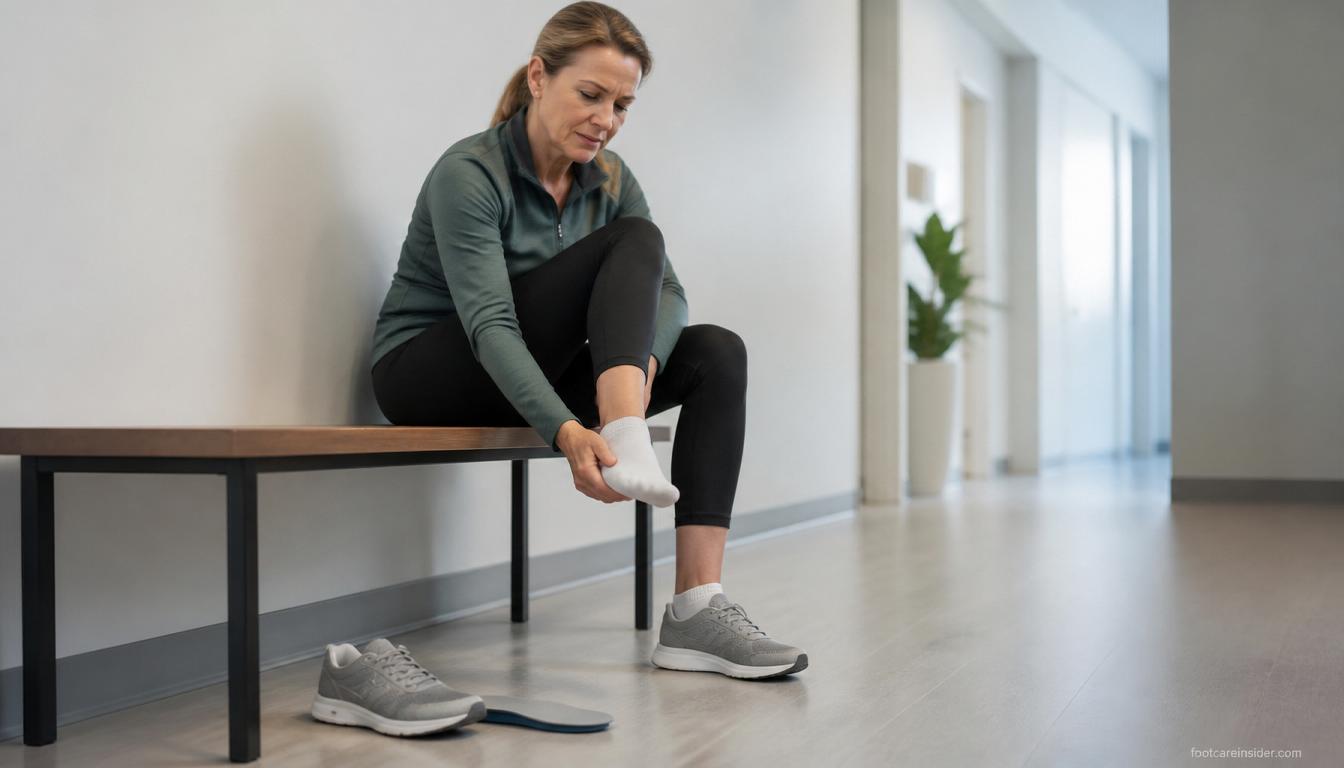
Why Walking Hurts Your Arches
If your arches start aching during walks, it usually means the tissues that support the middle of your foot are being overloaded rather than sharing force well. Sometimes that happens because the arch is collapsing too much with each step, sometimes because the foot stays too rigid and stops absorbing shock well, and sometimes because your shoes, walking volume, or calf and ankle mechanics are pushing more strain into the arch than it can comfortably handle. The pain may begin as a mild tired, tight, or burning feeling during longer walks, then show up earlier or last longer as the irritation builds.
Arch pain while walking is not always a sign of a serious injury, but it is worth paying attention to if it keeps returning. In many cases, the problem is less about one dramatic event and more about repeated load: longer walks than usual, a sudden jump in daily steps, hard walking surfaces, worn-out shoes, or a foot that needs more support than it’s getting. The tricky part is that “arch pain” can come from several slightly different problems, so the pattern matters.
What the arch is actually doing when you walk
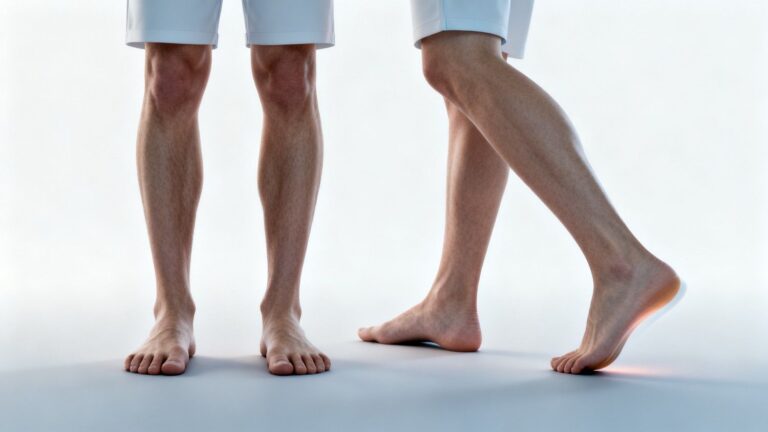
Your arch is not just a curved shape in the middle of the foot. It works more like a flexible support system that helps spread force, store a bit of energy, and stabilize the foot as you move from heel strike to push-off. Every step asks the arch to do two jobs that almost compete with each other: it has to give enough to absorb load, but it also has to firm up enough to help you push forward.
Pain under the whole foot rather than just the arch is covered in bottom of foot pain when walking. Our foot arch pain guide covers other common causes.
When you are ready to choose, our best insoles for walking guide compares the options.
When that balance is off, the arch can become sore. If the foot rolls inward more than it can control, the tissues along the inside of the arch may get stretched and irritated over and over. If the foot stays stiff and doesn’t adapt well to the ground, force may not be distributed smoothly, which can also leave the arch feeling beaten up by the end of a walk. That’s one reason arch pain while walking doesn’t always look the same from person to person.
Why walking can irritate the arch in the first place
Walking seems gentle compared with running, but it still places repeated load through the same structures hundreds or thousands of times in a row. If you’re on your feet a lot for work, walk for exercise, or suddenly increase your daily step count, that repeated motion can expose weaknesses in support, mobility, or footwear faster than you’d expect.
For some people, the issue is that the arch muscles and connective tissue are working too hard to control foot motion. For others, the calf is tight, the ankle doesn’t move well, and the foot compensates by flattening or twisting more than it should. Shoes can also play a role. A very flat, unsupportive shoe may leave the arch doing more work than necessary, while a worn midsole can stop cushioning force properly and make the foot feel tired earlier in the walk.
If your discomfort tends to show up during longer walks or after a full day of errands, it can help to compare that pattern with Why Your Feet Feel More Tired After Long Shifts.
Common causes of arch pain while walking
One of the most common causes is simple overload. That can mean more walking than your feet are used to, especially if the increase happened quickly. A vacation with long sightseeing days, a new walking routine, or a job that suddenly has you moving more can all be enough to irritate the arch.
Another common cause is poor control of foot motion. If the foot rolls inward heavily with each step, the tissues on the inner side of the arch can become overworked. That doesn’t automatically mean you have a serious foot problem, but it does mean the arch may be absorbing more stress than it should. On the other side of the spectrum, a very rigid foot can also hurt because it doesn’t spread force efficiently.
Plantar fascia irritation is another possibility. The plantar fascia is a thick band of tissue that runs along the bottom of the foot and helps support the arch. When it becomes irritated, pain may be felt in the arch, the heel, or both. Some people assume plantar fasciitis only means heel pain, but the discomfort can extend into the arch, especially after long periods of walking or standing.
There are also cases where the source is higher up the chain. Tight calves, weak foot muscles, poor ankle mobility, and even a change in walking mechanics after a knee or hip issue can shift more load into the arch than usual.
Risk factors that make arch pain more likely
A few patterns make arch pain while walking more likely. One is a sudden change in walking load. If you go from a fairly sedentary routine to several miles a day, your feet may simply not be conditioned for it yet. Another is wearing shoes that no longer match your walking demands. Shoes don’t have to look destroyed to stop supporting you well; sometimes the midsole has already compressed enough to change how the foot feels on longer walks.
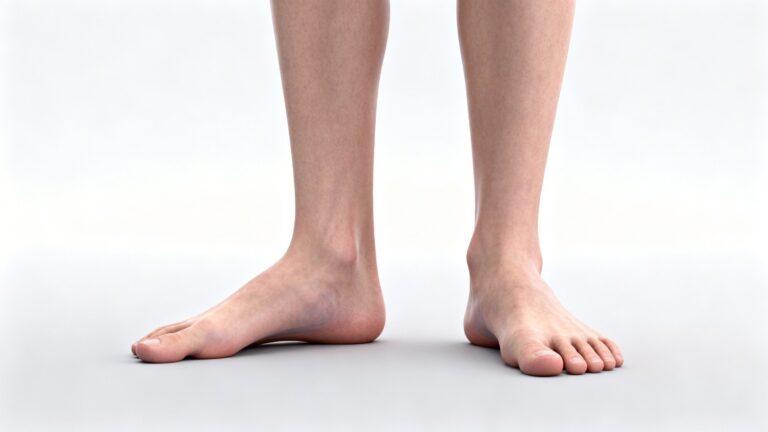
Foot structure matters too, though not always in a dramatic way. Very flat feet can place more strain on the inside of the arch, while high arches may struggle with shock absorption and pressure distribution. Neither automatically guarantees pain, but both can influence where stress ends up during walking.
Work and environment matter as well. If you’re walking on concrete, tile, or other unforgiving surfaces for hours at a time, the foot has less help from the ground beneath it. Readers dealing with that kind of surface-related strain may also want to read Why Hard Floors Cause Foot Fatigue.
How arch pain usually starts and how it can progress
Early arch pain often feels vague. You may notice tightness, a dull ache, or a tired, slightly burning sensation through the middle or inner side of the foot after a long walk. It might settle with rest and not bother you much the next morning. At that stage, the tissues are often telling you they’re being asked to do more than they can comfortably recover from, but the problem may still be fairly manageable.
As the irritation builds, the pattern can change. The pain may start earlier in the walk, show up with shorter distances, or linger after you’ve stopped moving. You may begin to notice tenderness when pressing into the arch, stiffness when you first stand up, or a sense that one foot tires out faster than the other. Some people also change the way they walk without realizing it, which can shift stress into the ankle, calf, or knee.
If your arch discomfort is tied to the way your foot rolls and loads under pressure, What Causes Overpronation can help you understand one of the more common mechanics behind that pattern.
When it becomes more than “just sore feet”
Not every sore arch needs medical care, but there’s a point where it stops being normal post-walk discomfort and starts looking like a problem that deserves closer attention. If pain is getting sharper instead of just tired or achy, if it’s appearing earlier and earlier, or if you’re changing the way you walk to avoid it, that’s a sign the issue is no longer just a temporary overload response.
It’s also worth taking more seriously if the pain is concentrated in one very specific spot, if there’s visible swelling, if the arch feels unstable, or if the pain keeps returning despite reducing walking volume and improving footwear. Arch pain that’s worst first thing in the morning can point toward plantar fascia irritation, while pain that continues even when you’re not walking may suggest a more stubborn tissue problem or a different diagnosis entirely.
The good news is that arch pain while walking often improves once you identify what’s driving the strain — whether that’s too much walking load, poor footwear, lack of support, tight calves, or a foot mechanics issue that needs a bit more structure and recovery.
Ways to reduce arch pain while walking
The right fix depends on why your arch is getting overloaded, but a few non-commercial changes help a lot of people. The first is to look at walking load honestly. If your pain started after you increased steps, added longer walks, or spent more time on hard surfaces, backing down for a week or two can calm the tissue enough to break the cycle. That doesn’t mean complete rest in every case, but it often means shorter walks, more breaks, or splitting one long walk into two smaller ones.
Footwear matters just as much. If your shoes are very flat, very soft, or worn through the midsole, your arch may be doing more work than it should. A shoe with a stable base, decent midfoot hold, and predictable cushioning often makes walking feel less irritating even before you add anything else. Calf tightness is another common piece of the puzzle. If the ankle doesn’t move well, the foot often compensates, and that can push more strain into the arch during each step. Gentle calf stretching and ankle mobility work won’t solve every case, but they’re often part of the bigger fix.
It can also help to think about surface and pace. Long walks on concrete, tile, or uneven ground can provoke arch symptoms faster than the same distance on a more forgiving surface. And if you walk quickly with a long stride, you may be loading the foot more aggressively than you realize. Sometimes a slightly shorter stride and a more relaxed pace reduce irritation surprisingly well.
Where insoles can help — and where they can’t
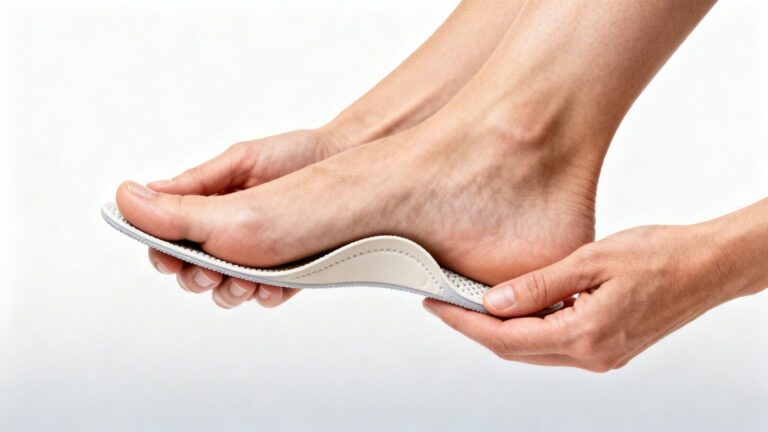
Insoles can be useful if your arch pain is being driven by poor support, foot fatigue, or the way your foot loads inside a shoe. They can reduce some of the strain on the arch by improving contact under the midfoot, giving the foot a more stable base, or helping a worn-out shoe perform a little better. That said, insoles are not a cure-all. If the real problem is a rapidly increasing walking load, a very irritated plantar fascia, or a shoe that fundamentally doesn’t fit your foot shape, an insole alone may not fix it.
The goal is not always “more arch support.” Some people do better with gentle structure and cushioning, while others need a firmer platform that controls motion more clearly. If you already know your arch pain tends to build with long hours on your feet, it may be worth comparing support-focused options in Best Insoles for Standing All Day.
When it’s time to get medical advice
If arch pain while walking is mild, new, and clearly linked to a recent increase in activity or poor footwear, it often makes sense to start with load reduction, shoe changes, and a bit of recovery. But if the pain is sharp, localized, worsening, or affecting how you walk, it’s worth getting assessed rather than guessing.
That’s especially true if you have swelling, pain that doesn’t improve with rest, pain that wakes you up, numbness, or a feeling that the foot is unstable. Ongoing arch pain can sometimes be related to plantar fascia irritation, posterior tibial tendon strain, stress injury, or a more complex mechanical problem that needs a proper exam. If you’ve been trying sensible changes for a few weeks and the pattern is not improving, that’s a reasonable point to stop self-managing alone.
How to keep it from coming back
Prevention usually comes down to reducing the same stress pattern that caused the problem in the first place. Increase walking volume gradually rather than making big jumps. Replace shoes before they feel completely dead underfoot. If you know hard floors bother you, rotate routes or break up long walking sessions when possible. And if your arches tend to fatigue faster than the rest of your foot, it’s worth paying attention to calf mobility, shoe fit, and whether your current footwear is actually giving your midfoot any help.
It also helps to catch symptoms early. Mild arch soreness that only appears after a long day is easier to calm than pain that has already become part of every walk. If your discomfort tends to show up alongside heel pain, it’s worth understanding how those patterns overlap because the fix can change slightly depending on where the load is landing. In that case, Best Insoles for Heel Pain may help you sort out the support side of the picture.
A simple way to think about it is this: arch pain from walking usually gets better when the foot is asked to do a little less unsupported work, not when you push through it and hope it settles on its own.
Common Questions
Can walking too much cause arch pain?
Yes. A sudden increase in walking volume is one of the most common reasons the arch becomes sore. Even if walking is generally low impact, repeated steps on tired tissues can still irritate the arch if your feet are not used to the load.
Is arch pain while walking always plantar fasciitis?
No. Plantar fascia irritation is one possible cause, but arch pain can also come from poor support, overpronation, tight calves, a fatigued posterior tibial tendon, or simple overload from walking more than usual. The exact pain pattern matters.
Do flat feet always cause arch pain when walking?
Not always. Some people with flat feet walk long distances without pain, while others get sore because the tissues along the inside of the foot have to work harder to control motion. Flat feet can be a contributing factor, but they are not the whole story by themselves.
Should I stop walking completely if my arches hurt?
Usually not, unless the pain is severe or you suspect an injury that needs medical evaluation. In many cases, it makes more sense to temporarily reduce walking distance, avoid hard surfaces, and address shoes or support rather than stopping all activity.
What kind of shoes help with arch pain while walking?
In general, shoes that feel stable through the midfoot, hold the heel well, and don’t collapse under load tend to be more helpful than very flimsy or worn-out shoes. The best choice still depends on whether your main issue is lack of support, poor shock absorption, or a mismatch between your foot shape and the shoe.
Conclusion
If your arches hurt when you walk, the problem is often less about walking itself and more about how much stress the arch is being asked to absorb with each step. Load increases, worn shoes, hard surfaces, tight calves, poor support, and foot mechanics can all play a role. The earlier you notice the pattern, the easier it usually is to calm it down.
For many people, improvement comes from a combination of smarter walking load, better footwear, and support that matches the way the foot actually behaves during a walk. But if the pain is getting sharper, more persistent, or is changing how you move, it’s worth treating it as more than simple soreness and getting it checked.