Why Your Feet Feel More Tired After Long Shifts
If your feet feel noticeably more tired after a long shift, it usually means the amount of standing, walking, floor impact, and muscle work in your day is starting to outpace the support and recovery your feet are getting. For some people that shows up as a dull ache in the arches. For others it feels like burning under the ball of the foot, heel soreness, or a heavy, worn-out feeling that only appears late in the day. The common thread is repeated load. Your feet are handling thousands of small stresses during a shift, and over time that can leave them feeling much more fatigued than they did at the start of the workweek.
That tired feeling is easy to dismiss because it doesn’t always look like a classic injury. You may not have one sharp pain point, obvious swelling, or a sudden event that explains it. But foot fatigue can still be a sign that something about your daily setup — your floor surface, work pace, footwear, support level, or recovery — is no longer working as well as it should.
Why foot fatigue builds up during long shifts
The foot is doing more during a workday than most people realize. It absorbs force from the ground, helps stabilize your posture, adapts to turns and uneven weight shifts, and pushes you forward every time you walk. Even when you’re “just standing,” the muscles in the feet and lower legs are constantly making small adjustments to keep you balanced.
Over a short period, that’s not a problem. Over eight, ten, or twelve hours, it can become one.
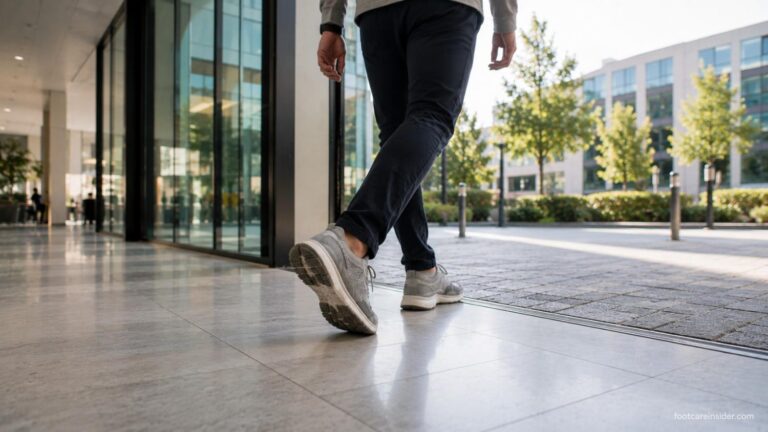
Hard floors make that worse because they give very little back. Tile, sealed concrete, hospital flooring, retail floors, and many workplace surfaces increase the amount of force the foot has to absorb. A shift that mixes standing in place with frequent walking can be especially tiring because the foot never really settles into one pattern. It has to handle pressure, movement, stabilization, and repeated push-off all in the same day.
This is one reason tired feet often feel different from one job to another. A nurse walking corridors for most of the shift may feel more arch and forefoot fatigue, while a cashier standing in one area for hours may notice more heel pressure and a heavy, stiff feeling by the end of the day.
What “tired feet” usually means in real life
People describe foot fatigue in a lot of different ways, but the pattern matters.
For some, it feels like the arches are overworked and weak late in the day, almost as if the foot is collapsing under them. Others feel it mostly in the heel, especially after long hours on hard surfaces. Some notice burning or pressure under the ball of the foot, which is common when body weight repeatedly shifts forward through the day. And for plenty of workers, the whole foot just feels flat, heavy, and worn out by the time they get home.
That doesn’t necessarily mean something is seriously wrong. It often means the foot is under more cumulative stress than it can comfortably manage with the support it currently has.
If you already notice that fatigue is worst during long standing days rather than shorter active days, it can help to compare that pattern with Best Insoles for Standing All Day.
Common reasons your feet feel more tired after work
Long shifts don’t affect everyone the same way. Two people can work the same hours and come away feeling very different. Usually, that comes down to a combination of workload, foot mechanics, footwear, and recovery rather than one single cause.
Hard floors and repeated impact
The most obvious factor is surface hardness. Standing and walking on hard indoor floors increases the amount of force moving back up through the foot with every step. That doesn’t always create immediate pain, but it can wear your feet down faster over the course of a shift.
Footwear that feels fine early but fails later
A shoe can feel comfortable when you first put it on and still be a poor match for a ten-hour day. Soft insoles often feel pleasant at first but flatten under repeated load. Shoes that are too loose can force the foot to work harder to stay stable. Shoes that are too flat or too unsupportive can leave the arch doing more of the work than it should.
Too much load for the amount of support underfoot
This is a big one. Some feet tolerate long standing fairly well until the support underneath starts to give out. If the insole is worn down, the shoe is losing structure, or the support simply doesn’t match the shift demands, the muscles in the foot and lower leg can end up carrying extra work hour after hour.
Not enough recovery between shifts
If you are working several long shifts back to back, even moderate foot strain can start to accumulate. In that situation, the tired feeling isn’t always about one bad day. It’s often about not fully resetting before the next one begins.
Risk factors that make foot fatigue more likely
Some factors don’t cause tired feet on their own, but they make the problem more likely to show up or worsen over time.
One is body weight and total daily load. The more force the foot has to absorb over a shift, the more important support and surface management become. Another is shift structure. Jobs with lots of turning, stopping, restarting, and mixed standing and walking can fatigue the foot faster than smoother movement patterns.
Foot shape can also play a role. If your arches collapse inward more easily, if your forefoot takes a lot of pressure, or if one side of the foot does more of the work than the other, fatigue can build more quickly. That doesn’t always mean you have a specific diagnosis, but it does affect how much support your feet may need to stay comfortable through a long day.
The age of your shoes matters too. Even if the upper still looks good, the midsole and insole may have lost much of the cushioning and structure that were helping you earlier on. Many people keep work shoes far longer than the support underfoot actually lasts.
Early signs versus signs that the problem is getting bigger
In the early stage, tired feet often show up as a late-shift problem only. You feel mostly fine in the morning, then by the last few hours of work your heels, arches, or forefeet start to feel heavy and overworked. After some rest, the discomfort settles down.
As the problem progresses, the fatigue tends to arrive earlier, last longer, or become more localized. You may start noticing one-sided heel pain, morning stiffness, soreness that lingers into the next day, or a pattern where the feet never quite feel recovered before the next shift starts. At that point, it’s less about normal end-of-day tiredness and more about a load problem that is no longer being managed well.
If the fatigue is especially tied to hard indoor surfaces, it can also help to look at how flooring changes foot stress over time. Standing on Tile Floors vs Concrete Floors is useful if you’re trying to work out whether the surface itself is a major part of the problem.
When tired feet become more than “just part of the job”
There is a difference between feet being understandably tired after a demanding shift and feet consistently struggling to cope with normal work demands. The second one deserves more attention.
If the tired feeling is turning into regular heel pain, burning under the forefoot, arch soreness that changes how you walk, or discomfort that starts showing up outside work hours too, it’s a sign to take the problem more seriously. The same applies if one foot is clearly worse than the other, if symptoms are moving up into the ankles or calves, or if the issue is getting worse even after you’ve tried changing shoes.
That doesn’t automatically mean something severe is going on. It does mean the load on your feet may be pushing past what your current footwear, support, and recovery habits can handle.
Why the pattern matters more than the label
One of the easiest mistakes is to focus too much on naming the problem and not enough on how it behaves. “Tired feet” can involve heel pressure, arch fatigue, forefoot overload, or general whole-foot exhaustion, and each one points toward a slightly different kind of fix.
A worker whose feet feel beaten up by hard floors may need more shock absorption. Someone whose arches feel tired and unstable by the end of the shift may need more structure. Another person may mainly need to replace a pair of shoes that still look fine on the outside but are no longer doing much underneath.
That’s why it helps to pay attention to three simple questions:
- Where in the foot does the fatigue show up most?
- Is the shift mostly standing, mostly walking, or a mix of both?
- Does the discomfort feel like impact, instability, pressure, or just general end-of-day heaviness?
Those details usually tell you much more than the phrase “my feet are tired” by itself.
If your fatigue tends to come with a feeling that the arch is no longer holding up by the end of the day, a support-focused guide like Best Insoles for Hospital Workers can help you compare the kinds of underfoot support that tend to work better for long-shift jobs.
What usually helps reduce foot fatigue after long shifts
The good news is that tired feet after work often improve once you change the part of the setup that is doing the most damage. That doesn’t always mean buying something new. Sometimes it’s a support issue, sometimes it’s a shoe-fit issue, and sometimes it’s simply that your feet are taking the same load day after day without enough recovery.
The first thing to look at is whether your current shoes still match the job you’re asking them to do. A pair that feels comfortable for the first two hours can still be a poor match for a 10-hour shift. If the midsole is compressed, the stock insole is flattened, or the shoe has become too loose and unstable, your feet may be doing extra work every hour just to stay comfortable and balanced.
Start with the simplest fixes first
If your feet are getting more tired than they used to, it helps to work through the obvious variables before assuming something more serious is going on.
Check whether your shoes are worn out in the ways that matter
A work shoe can look fine from the outside and still be worn out where it counts. If the cushioning feels flat, the heel feels harsher than it used to, or the shoe feels noticeably less supportive late in the day, the problem may be the midsole or insole rather than the upper. This is especially common in jobs with long standing and hard floors, where cushioning breaks down faster than people expect.
Think about where the fatigue is actually showing up
If the main issue is heel soreness and a bruised, beaten-up feeling under the foot, you may need more shock absorption. If the fatigue is more about arches feeling weak or overworked by the end of the shift, support and stability often matter more than softness. If the burning is mostly under the ball of the foot, it can be worth looking at forefoot pressure, shoe fit, and whether you’re spending long periods shifted forward onto the front of the foot.
Rotate shoes if you’re wearing the same pair every day
If you work several long shifts per week, rotating between two decent pairs can help more than people expect. It gives the midsole and insole more time to rebound, and it reduces the chance that one worn pair is quietly carrying the whole workload.
Where insoles fit into the picture
Insoles can absolutely help, but mostly when they solve the right problem. They are not a cure-all for every type of foot fatigue, and adding a random soft insert to a shoe that already fits poorly can sometimes make things worse.
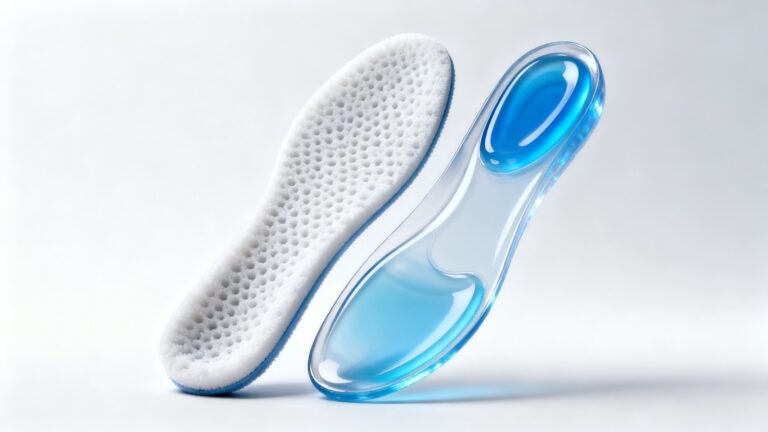
If your feet mainly feel pounded by hard floors, a more cushioned insole may reduce some of that impact fatigue. If your arches feel tired and unstable by the end of the day, a more supportive insole often makes more sense than a very soft comfort insert. And if your work shoes are tight to begin with, the best option may be a lower-volume insole rather than a thick one that crowds the foot.
That’s where support-focused articles can help narrow the direction. If the pattern sounds more like long-shift arch and heel fatigue in a demanding work environment, Best Insoles for Hospital Workers is a useful next read.
If the bigger question is whether you need more softness or more structure underfoot, Soft vs Firm Insoles is often the comparison that makes the choice clearer.
Small non-commercial changes that can make a real difference
Not every solution has to come from the shoe itself. A few practical habits can reduce the load your feet are carrying across the week.
One is getting out of work shoes soon after the shift instead of staying in them for hours. Another is giving your calves and feet a little movement rather than going straight from a long standing day into complete stillness. That doesn’t need to be a complicated routine — even a few minutes of gentle calf stretching, ankle movement, or rolling the foot through a comfortable range can help if stiffness is part of the problem.
It also helps to notice whether your worst foot-fatigue days are the ones with the hardest floors, the least sitting, or the most back-to-back shifts. That kind of pattern tells you whether the issue is mostly impact, total standing time, or cumulative weekly load.
When it’s worth getting medical advice
Sometimes tired feet are exactly what they sound like: tired feet. But if the fatigue is turning into regular pain, showing up much earlier in the shift, waking you up stiff in the morning, or changing how you walk, it’s worth getting a proper assessment instead of trying to guess your way through it.
The same applies if one foot is clearly worse than the other, if you’re getting numbness or tingling, or if the discomfort is moving up into the ankle, knee, or lower back. At that point, it’s less about normal work fatigue and more about a load problem that may need a closer look.
Common Questions
Is it normal for my feet to feel tired after every long shift?
Some foot fatigue is common if you spend hours standing or walking on hard floors, especially in jobs with little chance to sit down. But if it happens every shift, keeps getting worse, or starts affecting how you walk or recover between workdays, it’s worth treating it as a problem to solve rather than something you simply have to accept.
Do softer shoes always help tired feet?
Not necessarily. Softer shoes can help if the main issue is hard-floor impact and heel soreness, but they are not always the best answer for arch fatigue or instability. In some cases, a slightly firmer and more supportive setup works better over a full shift than something that feels plush for the first hour and flat by the last one.
Can insoles actually make a noticeable difference?
They can, especially if the fatigue is related to poor support, worn stock insoles, or a mismatch between your shoes and the demands of the shift. The key is matching the insole to the problem rather than assuming every tired foot needs the same type of cushioning.
When should I worry that tired feet are becoming something more serious?
If the tired feeling is turning into sharp heel pain, persistent arch pain, forefoot burning, or discomfort that lasts well beyond the shift, it’s worth paying closer attention. Ongoing symptoms, one-sided pain, or changes in the way you walk are good reasons to stop guessing and consider medical advice.
Can hard floors really make that much difference?
Yes. Hard surfaces like tile and concrete can increase the amount of force your feet absorb over the course of a shift, especially if you’re standing in one place for long periods. Shoes and insoles can help, but they don’t completely erase the effect of repeated hours on unforgiving flooring.
The main thing to take away
If your feet feel more tired after long shifts, the issue is usually not random. It’s often a sign that the amount of standing, walking, hard-floor impact, or underfoot strain in your day is no longer being balanced well by your shoes, support, and recovery habits. Sometimes the fix is more cushioning, sometimes it’s more structure, and sometimes it’s simply replacing a shoe or insole that stopped doing its job months ago.
The useful question isn’t “why are my feet suddenly weak?” It’s “what part of my workday is making my feet work harder than they should?” Once you look at it that way, the next step becomes much easier to spot.