Walking Shoes vs Insoles for Comfort
Choosing between new walking shoes and insoles can be confusing when your feet simply feel uncomfortable after a few miles or a long day. Both can improve comfort, but they solve different parts of the problem. Walking shoes provide a complete cushioning and stability platform around the foot, while insoles change the support and pressure distribution inside footwear you already own.
That difference matters in real life. If the entire shoe feels unstable, compressed, or worn out, replacing the insole may only hide part of the problem. If your shoes still perform well but your arches, heels, or forefoot need more targeted support, changing the whole shoe may be unnecessary.
Our picks: If your shoes are still in good shape and only one spot underfoot needs help, these two are a practical place to start.
Arch Support Insoles – For tired arches on longer walks.
Dr. Scholl’s Gel Comfort – Gel cushioning that takes the edge off repeated impact on sidewalks and other hard surfaces.
What Walking Shoes and Insoles Actually Do
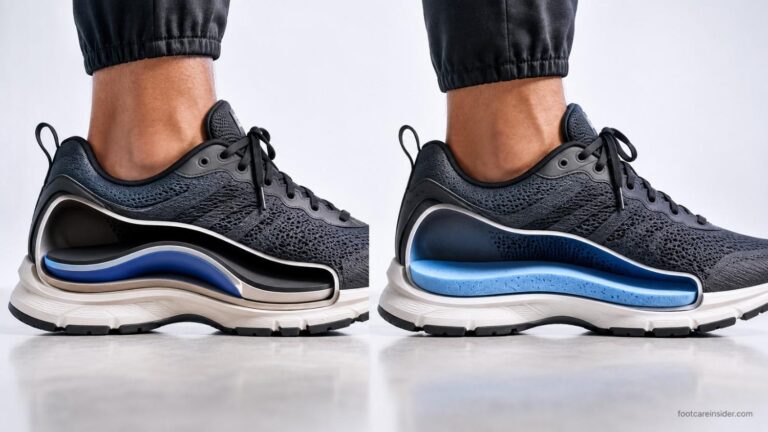
Walking shoes are designed as a complete system. The outsole provides contact with the ground, the midsole manages cushioning and repeated load, and the upper helps hold the foot in position. The heel shape and overall platform can also influence how stable the shoe feels as you move through each step.
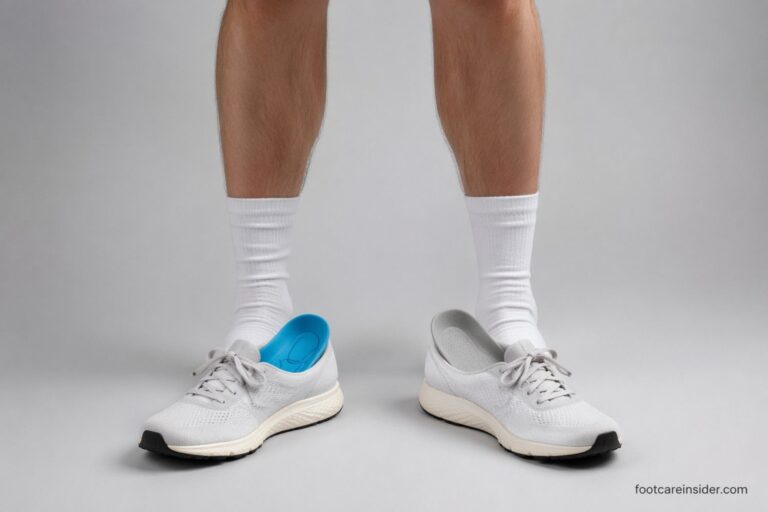
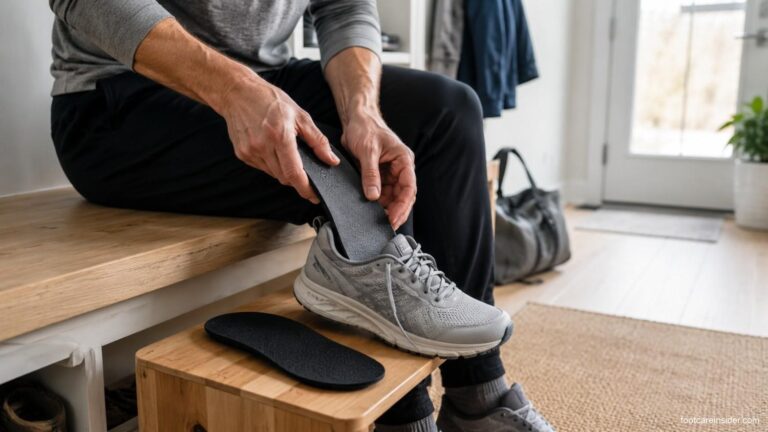
Insoles work inside that existing structure. They replace or sit above the original footbed and can change how pressure feels under the heel, arch, and forefoot. Some focus mainly on cushioning. Others provide a firmer shape intended to support the arch or create a more stable feeling underfoot.
If you decide insoles are worth adding, see our best insoles for walking.
The simplest comparison is that a walking shoe affects the whole footwear platform, while an insole makes a more focused adjustment inside it.
Readers dealing specifically with arch discomfort during walks may also find Why Walking Hurts Your Arches useful when trying to identify whether support or walking load is the bigger issue.
Insole vs Midsole vs Outsole: What’s the Difference?
These three parts are often mixed up, and the difference decides whether new insoles can fix your problem.
| Part | Where it is | What it does | Can you replace it? |
|---|---|---|---|
| Outsole | Bottom of the shoe | Touches the ground, gives grip and wears down | No |
| Midsole | Between the outsole and your foot | Provides cushioning and stability, and compresses with use | No |
| Insole (footbed) | Inside the shoe, under your foot | Fine-tunes support and comfort | Yes |
That is why a new insole cannot fix a worn-out midsole. If the shoe itself has lost its cushioning, read insoles vs supportive shoes before buying anything.
The Structural Difference Matters More Than It Seems
A walking shoe has much more influence over side-to-side stability and the way the foot interacts with the ground. A broad, stable sole can feel controlled during longer walks, while a narrow or highly flexible shoe may allow more movement. The condition of the midsole matters too because repeated use gradually changes how the shoe behaves under load.
An insole cannot rebuild a compressed midsole or correct an outsole that has worn unevenly. It still depends on the shoe surrounding it.
However, insoles can change the internal support profile more directly than buying another general-purpose walking shoe. Someone whose shoes feel comfortable everywhere except beneath the arch may benefit from a targeted adjustment rather than replacing otherwise functional footwear.
Fit is the limitation. A thick insole placed inside a low-volume walking shoe can raise the foot, crowd the toes, or create heel slippage. In that situation, technically “better” cushioning may actually make the shoe less comfortable.
Cushioning, Stability, and Pressure Feel Different
Walking shoes usually create cushioning through the midsole beneath the entire foot. This can make repeated steps feel less harsh, particularly when walking on sidewalks, concrete, or other firm surfaces. The sensation is influenced by the shoe’s overall geometry and how the cushioning compresses under body weight.
Insoles place cushioning or support closer to the foot. A soft insole may reduce the feeling of pressure under sensitive areas, while a more structured option can create firmer contact beneath the arch. Neither approach automatically feels better. Some walkers dislike noticeable arch pressure and prefer a forgiving footbed; others find overly soft cushioning tiring because their feet feel less stable.
This is similar to the comfort question explored in Soft vs Firm Insoles, where the softer option is not automatically the more comfortable choice for every type of daily load.
Responsiveness also differs. A fresh walking shoe can provide a consistent feel through the full stride. An insole mainly changes what happens between the foot and that shoe platform. If the base underneath is already poor, the improvement may be limited.
Which Option Fits Different Walking Routines?
For someone walking several miles most days, the condition and structure of the walking shoe deserve attention first. High walking volume repeatedly loads the outsole and midsole, so a shoe that has lost its shape can affect comfort even with a good insole inside it.
For mixed daily routines — commuting, errands, standing, and moderate walking — insoles may make more sense when the shoes are still in good condition but the feet feel tired in a specific area. Arch fatigue, mild heel pressure, or a desire for a slightly more stable underfoot feel are examples where changing the internal support can be a practical direction.
Standing jobs create another situation. A person may not cover huge distances but can still accumulate hours of pressure through the feet. Here, the decision is less about walking performance and more about whether the existing shoe platform remains supportive throughout the day.
Athletic walking or fast-paced fitness walking generally places more demand on the complete shoe. A casual insole can alter comfort, but it cannot turn an unsuitable everyday sneaker into purpose-built walking footwear.
Cost and Long-Term Value
Walking shoes usually cost more upfront because you’re replacing the entire footwear system. Prices vary widely, but a quality pair commonly represents a larger purchase than an aftermarket insole. That higher cost can make sense when the outsole is worn, cushioning has compressed, or the shoe no longer feels stable.
Insoles are generally the lower-cost adjustment and may extend the useful comfort of shoes that are structurally sound. They also let you target support more specifically. The value drops, however, if you keep putting new insoles into shoes whose midsoles and outsoles are already exhausted.
Durability depends heavily on walking volume, body weight, surfaces, and how often the footwear is used. Neither walking shoes nor insoles should be judged by price alone. A cheaper insole replaced repeatedly may not offer better long-term value, just as an expensive walking shoe is poor value if its shape does not suit your foot.
The practical question is simple: does the discomfort come from the whole shoe, or from how your foot is supported inside a shoe that still works well? That distinction usually makes the choice between walking shoes and insoles much clearer.
The Pros and Cons in Everyday Use
Walking shoes have the advantage of managing comfort from the ground up. Cushioning, outsole grip, stability, and fit work together, which matters when you walk frequently or the existing shoe is already worn. The drawback is cost and fit uncertainty; buying a new pair does not guarantee that its arch shape or cushioning feel will suit you.
Insoles offer a more targeted adjustment. They can change arch contact, heel cushioning, or underfoot firmness without replacing a good shoe. However, they remain dependent on the shoe around them. A supportive insole inside an unstable or compressed shoe still has a weak foundation.
Who Should Choose Walking Shoes?
This is for you if the whole shoe feels tired rather than one specific area of your foot. Uneven outsole wear, flattened cushioning, poor heel hold, or instability during longer walks all point toward the footwear itself.
New walking shoes also make more sense for higher-mileage routines or faster fitness walking. In these situations, the complete platform is doing repeated work. An insole may change pressure under the foot, but it cannot restore a worn midsole.
Who Should Choose Insoles?
Insoles are the more logical direction when your current shoes still fit well and feel stable, but your feet need a more specific adjustment. Arch fatigue, heel pressure, or discomfort that builds after hours of standing and walking can sometimes respond better to targeted internal support.
They can also be useful when you wear the same work shoes regularly and do not want to replace structurally sound footwear. Readers comparing support for prolonged daily use may find Best Insoles for Standing All Day helpful.
What Happens With Long-Term Use?
Walking shoes and insoles both change as they accumulate miles. Shoe midsoles gradually compress, while outsoles can wear unevenly and affect the stability of the complete platform. Insoles can also flatten or lose their original support feel, especially under repeated daily load.
The difference is replacement scope. Replacing an insole refreshes one part of the footwear setup. Replacing a walking shoe renews the entire system. If discomfort returns quickly after adding fresh insoles, the shoe underneath deserves a closer look.
Walking Shoes vs Insoles: The Simple Comparison
Walking shoes are generally better when the complete footwear platform is worn, unstable, or poorly matched to your walking routine.
Insoles make more sense when the shoe still performs well but your foot needs more targeted cushioning, arch contact, or internal stability.
Frequently Asked Questions
Are insoles better than walking shoes for arch pain?
Not automatically. Insoles can provide more targeted arch contact, but a worn or unstable walking shoe may still limit their benefit. The condition of the shoe should be considered first.
Can I put supportive insoles in walking shoes?
Yes, provided there is enough room and the fit remains secure. Removing the original removable liner often creates more space, but the new insole should not cause toe crowding or heel slippage.
Should I replace my shoes or try insoles first?
If the outsole and midsole remain in good condition, trying an appropriate insole can be a reasonable adjustment. If the shoe feels compressed, uneven, or unstable, replacement usually addresses more of the problem.
Do expensive walking shoes remove the need for insoles?
No. Price does not guarantee that a shoe’s internal support profile matches every foot. Some people remain comfortable with the original footbed, while others prefer a different level of arch contact or cushioning.
Can insoles make walking shoes uncomfortable?
Yes. An insole that is too thick, too firm, or poorly shaped for the shoe can create pressure and fit problems. More support is not always more comfortable.
Are insoles worth it for casual walkers?
They can be, if your shoes are still in good shape and a specific spot, like the arch or heel, gets tired. If you only walk short distances without any discomfort, you may not need them. If you do walk longer distances or are on your feet most of the day, see our guide to insoles for walking.
Is the insole the same as the midsole?
No. The insole is the removable layer your foot sits on. The midsole is the cushioning layer built into the shoe underneath it, and it cannot be replaced.
Final Verdict
If your entire shoe feels worn, unstable, or flat during longer walks, start with walking shoes. If the shoe still fits and performs well but your arches, heels, or pressure points need targeted help, insoles are the more focused choice. Comfort depends on fixing the part of the footwear setup that is actually failing.