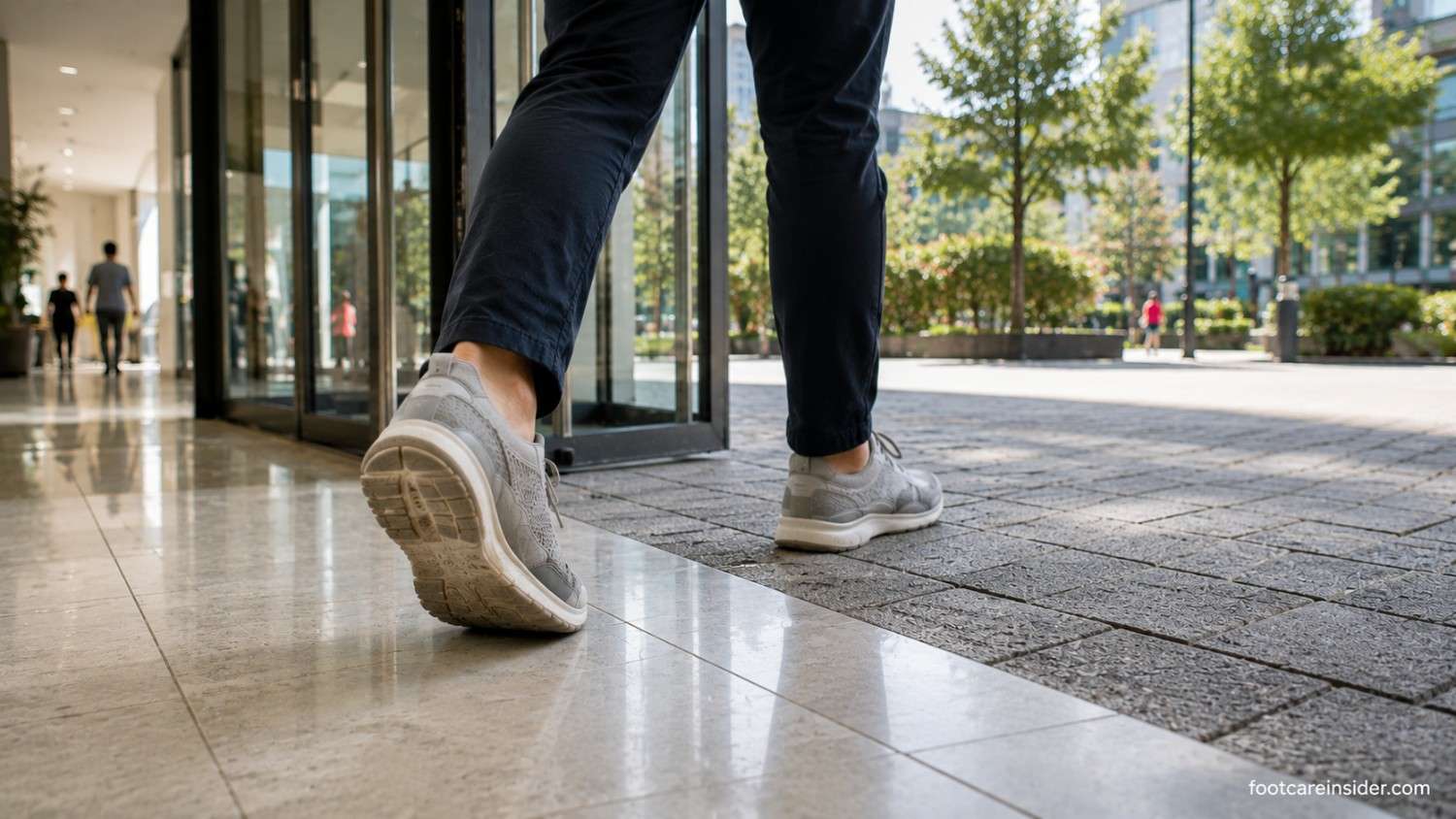
Walking on Pavement vs Indoor Surfaces
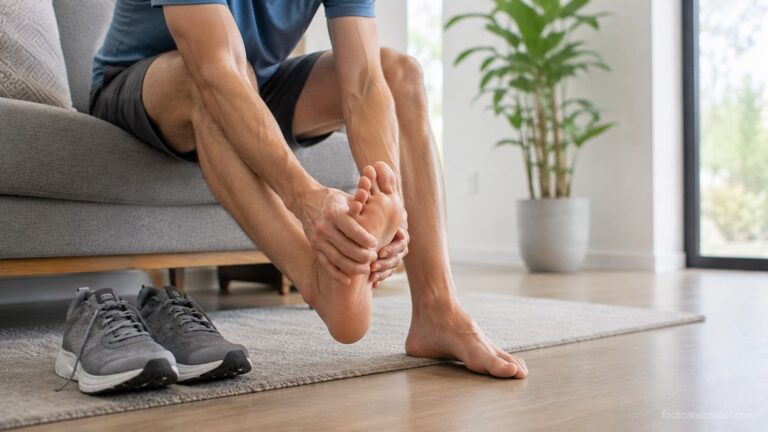
Walking can feel completely different depending on what is under your shoes. A 30-minute walk on pavement may leave your heels or arches feeling more tired than an hour spent moving through a store, office, or indoor corridor. Yet indoor walking is not automatically easier. Tile, polished concrete, and other firm floors can also build fatigue when you spend most of the day moving across them.
When comparing pavement vs indoor walking for feet, the main difference is usually how consistently the surface loads the foot. Pavement tends to deliver repeated firm impact over continuous steps, while indoor surfaces often combine hard flooring with shorter walking patterns, turns, stops, and periods of standing.
Why the Surface Under Your Feet Matters
Your feet repeatedly accept body weight as you walk. The shoe, its midsole, the insole, and the surface all influence how that load feels.
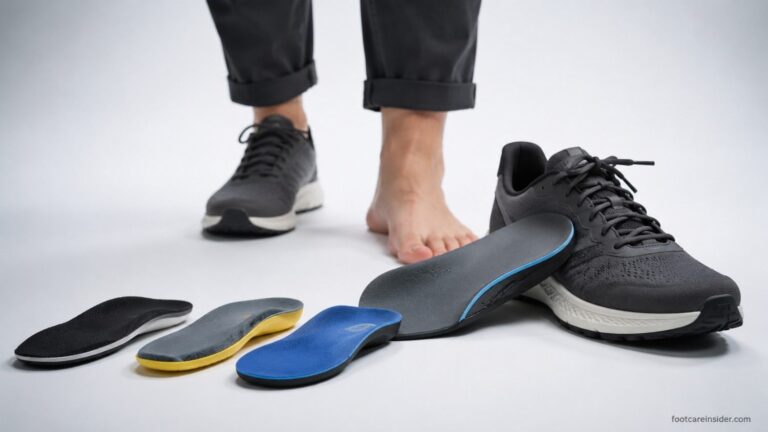
Our best insoles for walking guide shows what suits hard pavement.
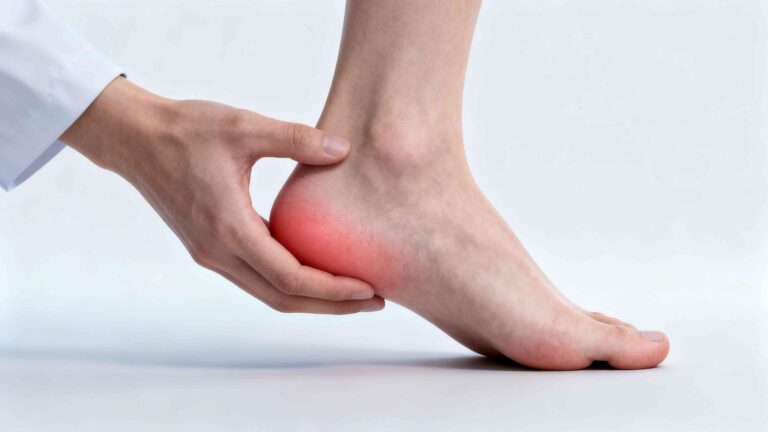
Outdoor pavement is usually firm and relatively unforgiving. When you walk several miles, the same basic heel-to-toe movement may repeat thousands of times. Even when no single step feels uncomfortable, fatigue can gradually build around the heel, arch, or forefoot.
Indoor walking is often more fragmented. You might cross an office, stand at a desk, walk down a corridor, turn sharply, then remain still for several minutes. The surface may still be hard, but the movement pattern is different.
Readers interested in how repeated steps affect support may find Insoles and Walking Mechanics useful when looking more closely at the relationship between footwear and walking movement.
Pavement Creates More Continuous Repeated Impact
Pavement walking usually involves longer uninterrupted periods of forward movement. Sidewalks, paved paths, and urban streets encourage a relatively consistent stride, particularly when commuting or walking for exercise.
That repetition matters. The heel contacts the ground, the foot moves forward under load, and the next step begins. Over a longer distance, cushioning materials inside the shoe repeatedly compress and rebound.
A comfortable walking shoe may manage this well at first. Later in the walk, however, a compressed midsole or thin stock liner may feel less forgiving. Someone who notices increasing discomfort after several miles may therefore be dealing more with accumulated walking load than with standing-related fatigue.
This is one reason Insoles for Long Distance Walking focuses more heavily on repeated impact, support retention, and durability.
Compared with indoor walking, pavement often places greater emphasis on cushioning that remains responsive and support that does not quickly feel flat under repeated steps.
Indoor Floors Change the Way Fatigue Builds
Indoor surfaces vary, but many commercial and workplace floors are harder than they initially appear. Tile, polished concrete, vinyl over a firm base, and thin commercial flooring may provide very little natural give.
The difference is often the walking pattern.
A retail worker may take thousands of steps without ever completing a continuous three-mile walk. An office worker may alternate between sitting, standing, and short trips through corridors. Someone shopping for several hours may repeatedly slow down, turn, and stop.
These patterns can create a more mixed feeling of fatigue. Instead of noticing repeated heel impact from continuous walking, the feet may gradually feel generally tired, pressured, or less comfortable as the day progresses.
The comparison between Standing on Tile Floors vs Concrete Floors also shows why indoor surface type can change how prolonged foot loading feels.
Pavement is often a distance-and-repetition problem. Indoor hard floors are more likely to combine walking load with standing time and frequent changes in movement.
Cushioning and Stability Play Different Roles
A softer underfoot feel can make firm pavement more comfortable, especially when repeated heel contact is the main source of fatigue. Cushioning helps create a more forgiving interface between the foot and the hard surface.
But softness alone does not determine walking comfort.
During continuous walking, an excessively soft shoe or insole may compress and feel less stable as distance increases. Some walkers prefer a slightly more structured platform because it maintains a consistent feel through repeated steps.
Indoor walking introduces another consideration: frequent direction changes and standing. A very plush insole may initially feel comfortable, yet a stable base can feel more predictable when turning, stopping, or remaining on the same hard surface for hours.
In simple terms, pavement may make repeated impact more noticeable, while indoor surfaces can make the balance between cushioning and stability more important across mixed movement.
Daily Routine Often Matters More Than the Surface Name
Surface alone does not tell the whole story.
Walking one mile on pavement in supportive walking shoes is different from covering six miles in worn casual sneakers. Likewise, spending 20 minutes inside a store is very different from completing an eight-hour shift across hard commercial flooring.
Activity level, footwear condition, body weight, walking distance, and standing time all change how the feet respond.
For someone commuting on sidewalks, continuous-step comfort may matter most. A worker moving across indoor hard floors may need support that remains consistent during both walking and standing. A person who divides the day between outdoor errands and indoor environments may need a more balanced setup rather than one designed around a single surface.
This is where comparing the surface is useful—but understanding the actual routine is more useful.
Which Surface Offers Better Long-Term Comfort Value?
There is no direct cost attached to choosing pavement or indoor flooring, but the surface can influence how quickly footwear comfort changes.
Frequent pavement walking may expose worn midsoles and compressed cushioning sooner because of continuous repeated use. Shoes used for high daily mileage may need closer attention as their underfoot feel changes.
Indoor walkers may accumulate fewer continuous miles but still spend many hours loading the same footwear. In that situation, support retention and all-day comfort can matter as much as visible outsole wear.
The better long-term value usually comes from matching footwear and insole support to the actual walking pattern. Pavement walkers may prioritize repeated-impact comfort and durability, while people moving across indoor hard floors may place greater value on balanced cushioning, stability, and comfort during periods of standing.
The Advantages and Limitations of Pavement Walking
Pavement makes walking distance easy to build. Sidewalks and paved paths support a steady forward rhythm, which can be useful for commuting, exercise, and longer daily walks. The drawback is repetition. Firm ground combined with thousands of similar steps may make heel impact or arch fatigue more noticeable as distance increases, especially when footwear cushioning has already compressed.
The Advantages and Limitations of Indoor Walking
Indoor walking often involves shorter bursts of movement, making continuous impact less intense than a long pavement walk. However, hard tile or commercial flooring can still feel unforgiving over several hours. Frequent stopping, turning, and standing may create broader foot fatigue. The limitation is that comfortable cushioning must often work alongside enough stability for mixed movement.
Pavement May Suit Steady, Distance-Based Walking Better
Pavement is the more natural environment if your routine involves commuting on foot, continuous exercise walks, or covering predictable distances outdoors. The consistent surface allows a regular stride, although worn shoes may become noticeable sooner.
People whose heels feel increasingly tired after several miles may benefit from examining cushioning and footwear condition rather than assuming all walking discomfort comes from poor arch support.
For a closer look at gradual fatigue during everyday movement, Why Walking Fatigue Builds Throughout the Day explores how repeated walking load can accumulate.
Indoor Surfaces May Be More Relevant for Mixed Movement
Indoor hard floors are especially relevant to people who alternate between walking and standing. Retail environments, hospitals, offices, and large commercial spaces rarely involve one uninterrupted walking pattern.
If your feet feel generally tired after several hours rather than uncomfortable after a specific distance, the combination of hard flooring, standing time, and repeated short walks may be more important than heel impact alone. A balanced underfoot feel may make more sense than maximum softness.
How the Two Surfaces Compare Over Time
Repeated pavement mileage can gradually expose cushioning breakdown because the shoe compresses through thousands of continuous steps. A shoe that once felt responsive may begin to feel flatter during longer walks.
Indoor footwear can age differently. Outsoles may show less obvious mileage wear, yet the liner and cushioning can still compress from hours of standing and movement.
Pavement is generally more demanding for continuous repeated impact. Indoor hard surfaces are more likely to combine walking fatigue with prolonged standing and frequent changes in movement.
Frequently Asked Questions
Is pavement worse for your feet than indoor flooring?
Not automatically. Pavement may create more repeated impact during long walks, while hard indoor flooring can build fatigue through hours of mixed standing and walking. Your total load and footwear matter more than the surface name alone.
Why do my feet hurt more after walking on pavement?
Continuous pavement walking repeats a similar loading pattern for many steps. As shoe cushioning compresses, heel or arch fatigue may become more noticeable, particularly during longer distances.
Can indoor tile floors cause foot fatigue?
Yes. Hard tile provides limited surface give, and several hours of standing and short-distance walking can gradually make the feet feel tired or pressured.
Do I need different insoles for pavement and indoor walking?
Not necessarily. Pavement walkers may value repeated-impact cushioning and durability, while people on indoor hard floors may prefer a balance of cushioning and stability for mixed standing and movement.
Which surface is better for long walks?
A predictable pavement or paved path can work well for continuous walking when footwear is suitable. Indoor surfaces may reduce exposure to weather but are not automatically softer or more comfortable for the feet.
Pavement vs Indoor Surfaces: The Practical Choice
Neither surface is universally easier on the feet. Pavement tends to emphasize repeated impact and distance-related fatigue, while indoor hard floors combine shorter walking patterns with standing, turning, and gradual all-day load.
If discomfort appears after several miles, look closely at cushioning, shoe wear, and repeated impact. If your feet become generally tired after hours indoors, consider the combined effect of hard flooring, standing time, and stability. Your daily movement pattern is the better guide.