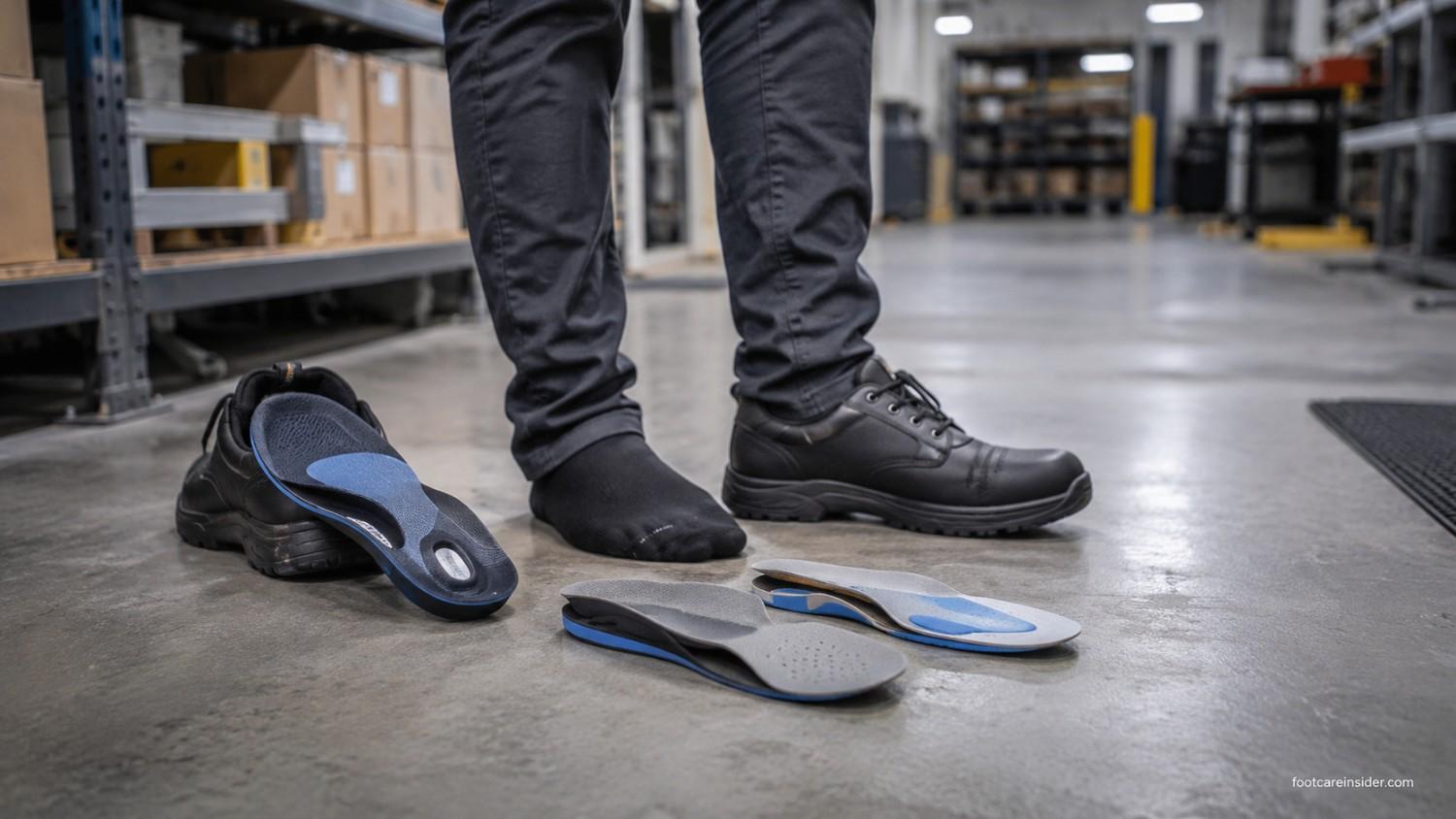
Best Insoles for Hard Floors at Work
By the end of a long shift, it often feels like the floor is pushing back against your feet. Whether you work in retail, healthcare, warehouses, hospitality, manufacturing, or any job that requires hours of standing and walking, hard surfaces can gradually wear you down. The discomfort usually starts in the heels, arches, or balls of the feet, but over time it can spread into the ankles, knees, and lower back.
If you’re searching for the best insoles for hard floors, the goal is not simply to add more cushioning. The right insole should help distribute pressure, support your foot structure, and reduce fatigue throughout the day. Some insoles focus on softness, while others prioritize stability and long-term support. Understanding the difference can help you avoid wasting money on options that feel good for a few days but fail under daily workload.
People who spend long hours on concrete, tile, or other unforgiving surfaces often benefit from solutions similar to those discussed in insoles for standing all day, where support and pressure management become just as important as cushioning.
Why Hard Floors Create So Much Foot Fatigue
Hard floors absorb very little impact.
If body weight is a factor, see insoles for heavy people for firm, supportive options.
Every step creates force that travels through the feet and into the rest of the body. During a short period, this may not seem significant. However, after thousands of steps or several hours of standing, the accumulated stress becomes noticeable.
The feet naturally act as shock absorbers. The arches help distribute force while muscles and connective tissues manage movement. When these structures become overloaded, fatigue develops.
Common symptoms include:
- Aching arches
- Burning sensations under the forefoot
- Heel soreness
- General foot fatigue
- Leg heaviness at the end of a shift
- Lower-back discomfort linked to prolonged standing
Workers who already have flat feet, high arches, or overpronation may notice these symptoms sooner because their feet often experience uneven pressure distribution.
Why Standard Shoe Insoles Often Fall Short
Many shoes include removable insoles from the factory. While they may feel comfortable initially, they are typically designed to fit a broad range of users rather than provide long-term support.
Several common problems appear with standard insoles:
Too Soft Under Load
Soft foam may feel pleasant when first stepping into a shoe. However, under eight to ten hours of standing, highly compressible materials can flatten significantly.
The result is less cushioning by the end of the day, exactly when support is needed most.
Limited Arch Support
Many stock insoles provide minimal structural support. Without proper arch reinforcement, the foot may work harder to maintain stability throughout the day.
Faster Wear
Budget foam materials tend to break down relatively quickly under constant pressure. Workers on hard floors often replace factory insoles frequently because performance declines after repeated use.
Poor Motion Control
Standard insoles usually focus on comfort rather than foot mechanics. For people whose feet roll inward excessively or experience instability, this can contribute to fatigue over time.
What Features Matter Most for Hard Floors?
Not every insole marketed for comfort performs well on hard surfaces. Certain characteristics become especially important when daily standing and walking are involved.
Arch Support
Arch support helps distribute pressure more evenly across the foot.
This doesn’t necessarily mean the highest arch support available. Instead, it means finding support that matches your foot shape and activity level.
Workers with flatter arches often benefit from more structured support, while those with higher arches may need additional cushioning combined with moderate support.
Many readers researching support options also explore best insoles for flat feet because arch function plays such a large role in workplace comfort.
Cushioning Versus Control
One of the biggest mistakes people make is assuming softer always means better.
Soft cushioning helps reduce pressure, but excessive softness can create instability. Firmer support may initially feel less comfortable but often performs better during long workdays.
A useful way to think about it is that cushioning absorbs force, while control helps manage it.
The most effective insoles often combine both.
Material Selection
Different materials behave differently throughout the day.
EVA Foam
EVA is commonly used because it balances cushioning and support. It typically retains its shape better than softer foams during prolonged standing.
Gel Components
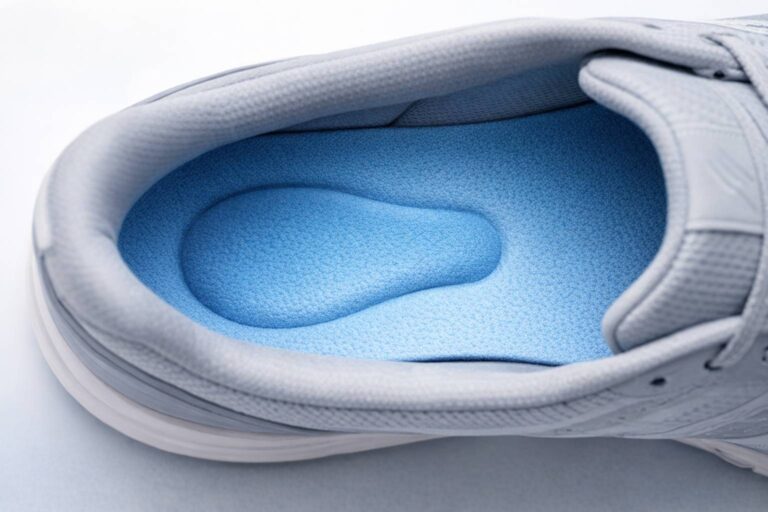
Gel inserts can improve shock absorption, particularly around the heel. However, gel alone does not automatically provide support.
Polyurethane (PU)
PU materials are often chosen for durability and long-term resilience. Many work-focused insoles use polyurethane because it resists compression effectively.
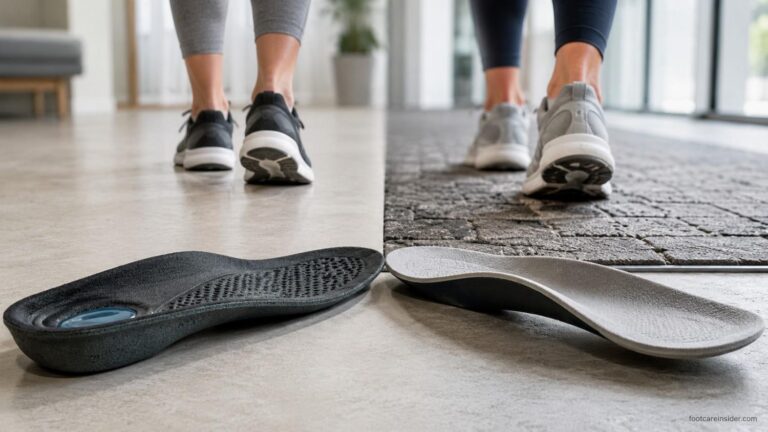
A small comparison illustrates the difference: gel often emphasizes impact absorption, while supportive foam structures focus more on maintaining foot alignment throughout the day.
Firmness Balance
Extremely soft insoles can feel wonderful in the store but struggle during extended shifts.
Extremely firm insoles may provide support but can feel uncomfortable for some users.
Most workers benefit from a balanced design that combines moderate cushioning with stable support.
Durability
When standing on hard floors every day, durability becomes a practical consideration.
An inexpensive insole that requires frequent replacement may ultimately cost more than a higher-quality option that maintains performance for several months.
Questions about longevity often lead people to how long do insoles last, especially when comparing different materials and construction methods.
How to Choose the Right Insole for Your Situation
The best choice depends on several factors.
Mild Fatigue
If your feet simply feel tired after work but you experience little actual pain, moderate cushioning and light arch support may be sufficient.
Moderate Fatigue
If discomfort develops daily and affects your walking after work, a more supportive insole with structured arch support and durable cushioning may be beneficial.
Severe Discomfort
If fatigue is accompanied by persistent heel pain, arch pain, or joint discomfort, more specialized support may be necessary.
Daily Activity Level
Someone standing at a workstation for eight hours faces different demands than someone walking several miles across a warehouse or hospital floor.
Higher movement levels generally increase the importance of durability and support consistency.
Shoe Type Matters
Work boots, athletic shoes, safety shoes, and casual work footwear all fit differently.
An insole that performs well in a deep work boot may not fit properly inside a low-volume sneaker.
Pain Location
Heel discomfort often points toward shock absorption needs.
Arch fatigue may indicate a support issue.
Whole-foot fatigue frequently benefits from a balanced combination of cushioning, support, and pressure distribution.
Understanding where your discomfort occurs makes selecting the right insole much easier.
Support and cushioning make more sense once you understand what the floor is actually doing to your feet over a full shift. For that background, Why Hard Floors Cause Foot Fatigue is a strong next read before deciding what kind of insole support you need.
Cushioned Work Insoles
Who is this for?
Workers who spend most of their shift standing in one location and primarily struggle with sore heels, aching feet, and general end-of-day fatigue.
Cushioned insoles focus on reducing pressure between the foot and hard flooring. They can make concrete, tile, and other unforgiving surfaces feel less harsh throughout the day.
Why They Work
The additional cushioning helps absorb some of the repeated impact and pressure that builds up during long shifts. Many people notice less heel soreness and reduced foot fatigue.
Key Benefits
- Comfortable underfoot feel
- Good shock absorption
- Helpful for mild to moderate fatigue
- Easy transition from standard insoles
Limitations
Highly cushioned insoles sometimes compress over time. If foot mechanics are contributing to discomfort, cushioning alone may not solve the problem.
Comparison Insight
Compared with supportive arch-focused models, cushioned insoles prioritize comfort first and structure second.
Arch Support Insoles
Who is this for?
Workers whose fatigue is concentrated around the arches, or those with flat feet, overpronation, or noticeable foot instability.
Why They Work
Arch support helps distribute pressure more evenly across the foot rather than allowing excessive strain on specific areas.
Key Benefits
- Better pressure distribution
- Improved stability
- Reduced arch fatigue
- Often helpful during long standing shifts
Limitations
Some users experience a short adjustment period, especially if they are transitioning from very soft insoles.
Comparison Insight
While cushioned insoles focus on comfort sensations, arch-support designs focus more on managing load and alignment.
Polyurethane Work Insoles
Who is this for?
Employees working full-time shifts on concrete floors who need durability as much as comfort.
Why They Work
Polyurethane materials typically resist compression better than many softer foams. This helps maintain support during repeated daily use.
Key Benefits
- Long-lasting performance
- Consistent support
- Good pressure management
- Suitable for heavy daily workloads
Limitations
They may feel firmer initially than softer foam alternatives.
Comparison Insight
Polyurethane often sacrifices some initial softness in exchange for longer-lasting support and resilience.
Gel-Enhanced Insoles
Who is this for?
Workers who experience concentrated heel impact or prefer a softer walking experience.
Why They Work
Gel inserts help absorb impact energy, particularly in high-pressure areas such as the heel and forefoot.
Key Benefits
- Strong shock absorption
- Comfortable heel cushioning
- Helpful for repetitive walking
- Often feels soft immediately
Limitations
Gel alone doesn’t necessarily provide meaningful arch support or motion control.
Comparison Insight
Compared with structured support insoles, gel models generally focus more on impact reduction than foot stability.
Hybrid Support and Cushioning Insoles
Who is this for?
People who need both comfort and support throughout a demanding workday.
Why They Work
Hybrid designs combine structured support features with cushioning materials. This allows them to address multiple causes of fatigue simultaneously.
Key Benefits
- Balanced comfort and stability
- Versatile for different foot types
- Suitable for standing and walking
- Often works well for mixed work environments
Limitations
Finding the right balance can take some trial and error.
Comparison Insight
Hybrid models often outperform highly specialized designs for workers who experience multiple types of discomfort rather than a single problem.
Frequently Asked Questions
What type of insole is best for standing on concrete all day?
Many workers find that a combination of support and cushioning works best. Extremely soft insoles may flatten during long shifts, while supportive designs often maintain comfort for longer periods.
Are gel insoles good for hard floors?
Gel insoles can help reduce impact and improve comfort, especially around the heel. However, people with arch fatigue or instability may need additional support.
How long do work insoles typically last?
Lifespan varies based on material quality, body weight, activity level, and work environment. Premium polyurethane and structured support insoles often last longer than basic foam models.
Can insoles help reduce leg fatigue?
They can. Better pressure distribution and foot support may reduce strain that travels into the legs during prolonged standing and walking.
Should I choose soft or firm insoles?
The answer depends on your needs. Soft insoles prioritize immediate comfort, while firmer designs often provide more consistent support during extended workdays.
Final Verdict
The best insoles for hard floors are not necessarily the softest ones available.
If your primary issue is heel soreness and general foot fatigue, cushioned or gel-enhanced options may provide noticeable relief. If arch strain and instability are contributing to discomfort, structured support models often perform better over long shifts.
Workers spending entire days on concrete typically benefit from durable materials and balanced support rather than maximum softness alone.
The right choice becomes much easier when you identify where your discomfort occurs, how much time you spend standing, and whether you need cushioning, support, or a combination of both.