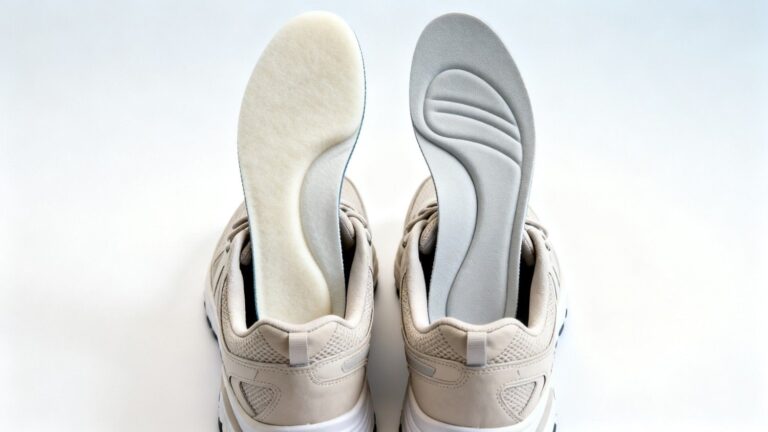
Knee Pain Insoles vs Arch Support Insoles
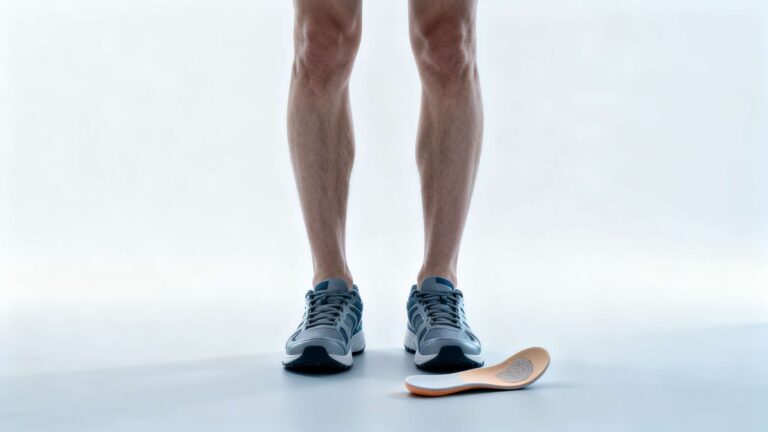
Choosing between knee pain insoles and arch support insoles can be confusing because the two are often discussed together. While both can influence how your feet, ankles, and knees move during walking or standing, they are designed with different priorities in mind. The right choice depends less on where you feel discomfort and more on what is contributing to it in the first place.
For some people, reducing impact on the knees is the main goal. Others need better foot alignment because poor arch support affects the way force travels up through the legs. Understanding these differences can help you select an insole that better matches your daily routine, whether you spend long hours standing at work, walk frequently, or simply want more comfortable movement throughout the day.
Knee Pain Insoles vs Arch Support Insoles: Quick Comparison
At a glance, knee pain insoles primarily focus on reducing impact forces and improving lower-limb alignment to lessen stress on the knees. Arch support insoles, on the other hand, are designed to support the foot’s natural arch, improve stability, and promote more efficient weight distribution.
Neither option is automatically better. Someone with knee discomfort caused by poor foot mechanics may benefit from additional arch support, while another person whose knees are irritated by repeated impact may find greater relief from insoles designed to absorb shock.
If you’re unsure how arch support influences overall foot mechanics, our guide to How Insoles Support Your Arches explains the role of proper support in everyday movement.
What Are Knee Pain Insoles?
Knee pain insoles are designed to help reduce stress placed on the knee joint during standing, walking, and other daily activities. Rather than treating the knee directly, they work by changing how forces are transferred from the foot through the ankle and into the leg.
Depending on the design, these insoles may include:
- Shock-absorbing cushioning
- Heel stabilization
- Mild corrective shaping
- Pressure-distributing materials
- Enhanced overall comfort
Their primary goal is to reduce repetitive loading that may contribute to knee discomfort during everyday movement.
They are commonly chosen by:
- People who spend many hours standing
- Individuals recovering from mild overuse
- Walkers who experience knee fatigue
- Adults seeking additional cushioning inside everyday shoes
What Are Arch Support Insoles?
Arch support insoles are designed to maintain the natural shape of the foot while improving stability during movement. Instead of focusing mainly on cushioning, they help control how the foot rolls, distributes pressure, and supports body weight.
Most arch support insoles include:
- Structured medial arch support
- A supportive heel cup
- Firmer midfoot construction
- Stable base materials
- Balanced pressure distribution
These features aim to reduce excessive movement within the foot, particularly for people with flat feet or low arches.
Readers interested in different foot structures often compare Arch Support vs Shock Absorption before deciding whether structured arch support may be appropriate.
Structural Differences
Although both products fit inside shoes, their overall construction reflects different purposes.
Knee Pain Insoles
These typically emphasize:
- Softer cushioning
- Shock absorption
- Pressure reduction
- Heel comfort
- Flexible materials
Many designs prioritize comfort during repeated impact rather than rigid correction.
Arch Support Insoles
These usually feature:
- Firmer support through the arch
- Defined foot contours
- More stable heel positioning
- Greater resistance to compression
- Improved motion control
Instead of allowing the foot to sink into soft foam, they aim to keep the foot better aligned throughout each step.
For someone standing all day, this structural difference can noticeably change how the feet and lower legs feel by the end of a work shift.
Material and Functional Differences
Materials play an important role in how each insole performs over time.
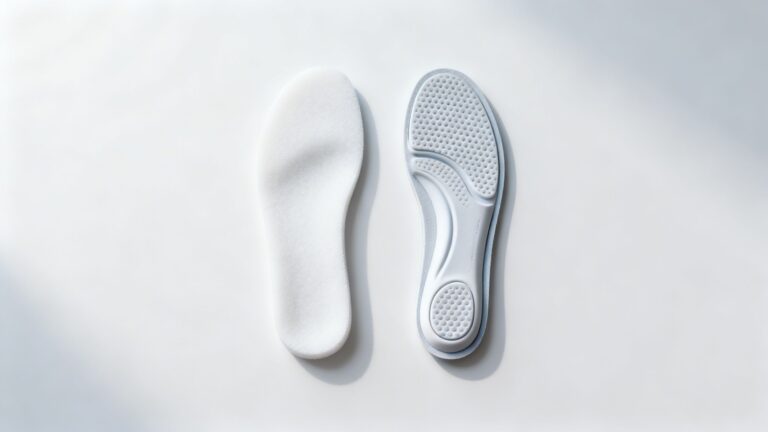
Knee pain insoles often rely on softer foams, gel inserts, or cushioning materials that absorb repeated impact. They usually feel more forgiving underfoot and may provide immediate comfort when walking on hard surfaces.
Arch support insoles commonly use firmer EVA foam, reinforced plastic shells, or denser support materials that hold their shape more effectively during long-term use. Rather than emphasizing softness, they focus on maintaining consistent support throughout the day.
This creates an important functional difference:
- Knee pain insoles generally prioritize cushioning and impact reduction.
- Arch support insoles generally prioritize stability and foot alignment.
Some premium products combine both characteristics, but most lean toward one design philosophy.
People comparing overall support levels sometimes also read Soft vs Firm Insoles to better understand how cushioning and stability affect comfort in different situations.
Intended Use Cases
Daily activities often determine which style makes more sense.
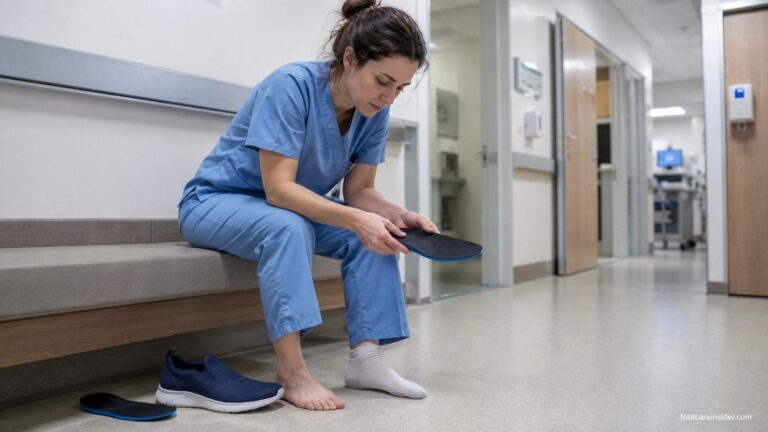
Someone working in retail, healthcare, or warehouse environments may appreciate the additional cushioning offered by knee pain insoles if hard floors contribute to fatigue.
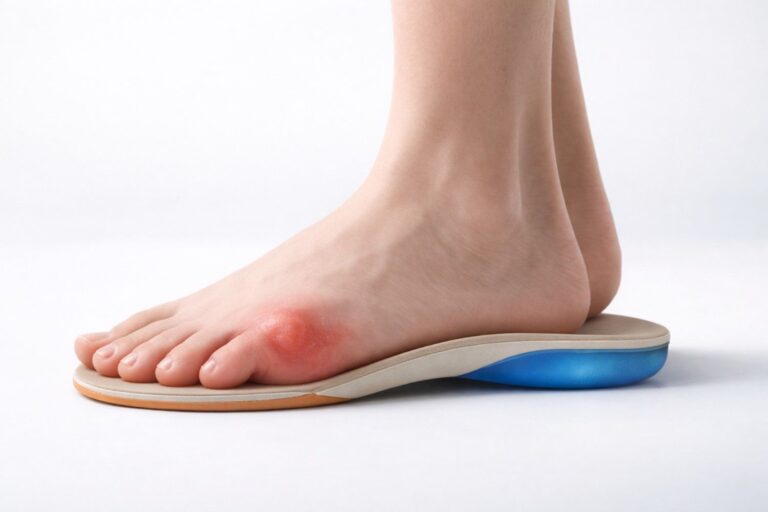
Individuals whose walking pattern is affected by low arches or overpronation may benefit more from structured arch support because improving foot mechanics can influence movement throughout the lower body.
Athletes present another example. A recreational walker looking for softer landings may prioritize cushioning, while someone seeking greater stability during repetitive training may prefer more supportive arch-focused designs.
Neither choice replaces properly fitted footwear, but both can complement supportive shoes depending on individual needs.
Cost and Long-Term Value
Price varies considerably depending on materials and construction.
Basic knee pain insoles often fall into an affordable price range, particularly those focused mainly on additional cushioning. Softer materials, however, may compress more quickly with frequent use, meaning replacement could be needed sooner.
Arch support insoles generally cost a little more because of their structured design and denser materials. While the initial investment may be higher, many retain their shape longer under daily use.
The better value depends on your priorities. If immediate cushioning is most important, a softer insole may meet your needs. If maintaining consistent support over many months is the goal, a structured arch support model may offer longer-lasting performance.
Pros and Cons of Knee Pain Insoles
Knee pain insoles can be a practical choice for people whose primary goal is reducing impact during everyday movement. Their softer construction often feels comfortable immediately, especially when walking on concrete, tile, or other hard surfaces. Many users also appreciate that they require little adjustment time because the cushioning feels familiar from the first wear.
The trade-off is that softer cushioning may compress over time, particularly for people who spend long hours standing or walking. While they can improve comfort, they may not provide enough structural support for individuals whose knee discomfort is related to poor foot alignment.
Pros and Cons of Arch Support Insoles
Arch support insoles excel at providing consistent foot stability. By helping support the natural arch and improving weight distribution, they can reduce excessive foot motion that sometimes contributes to discomfort higher up the kinetic chain, including the knees.
The downside is that firmer support can feel unusual during the first few days of use. Some people benefit from gradually increasing wear time while their feet adapt to the additional structure. Readers interested in this adjustment period may find Why Do Insoles Hurt My Arches? helpful.
Who Should Choose Knee Pain Insoles?
Knee pain insoles may be the better option if:
- Your main concern is reducing impact while walking or standing.
- You spend long hours on hard floors at work.
- You prefer a softer, more cushioned feel inside your shoes.
- Your footwear already provides reasonable arch support but lacks shock absorption.
- You experience general knee fatigue after long days rather than discomfort linked to a specific foot condition.
For many people, additional cushioning can improve overall comfort without dramatically changing how the foot moves.
Who Should Choose Arch Support Insoles?
Arch support insoles may be a better fit if:
- You have flat feet or low arches.
- Your feet tend to roll inward excessively while walking.
- You want greater stability rather than maximum softness.
- You experience tired arches along with knee discomfort.
- You need consistent support throughout long workdays or extended walking sessions.
Because the feet influence alignment throughout the lower body, improving arch support may also improve overall walking mechanics in some individuals.
Long-Term Comparison
Over months of regular use, the differences between these two types of insoles often become more noticeable.
Knee pain insoles typically provide immediate comfort thanks to their softer cushioning. However, materials designed for shock absorption may gradually compress, especially with daily wear or higher body weight. This can reduce their effectiveness over time and lead to more frequent replacement.
Arch support insoles generally maintain their shape longer because of their firmer construction. While they may feel less plush underfoot, they often deliver more consistent support throughout their lifespan.
Neither design is inherently superior. Long-term satisfaction usually depends on choosing the insole that matches your individual foot mechanics and daily activities.
Quick Comparison Summary
| Knee Pain Insoles | Arch Support Insoles |
|---|---|
| Better for reducing impact | Better for improving foot support |
| Softer underfoot feel | Firmer, more structured feel |
| Ideal for hard-floor comfort | Ideal for improving stability |
| May compress sooner | Often lasts longer |
| Focuses on cushioning | Focuses on alignment and support |
Frequently Asked Questions
Can arch support insoles help knee pain?
They can for some people. If knee discomfort is influenced by poor foot alignment or excessive inward rolling of the foot, improved arch support may reduce stress throughout the lower leg. The underlying cause of knee pain varies from person to person, so results differ.
Are knee pain insoles the same as orthotics?
Not necessarily. Many knee pain insoles are designed primarily to increase cushioning and reduce impact, while custom orthotics are prescribed to address specific biomechanical issues. Some supportive insoles combine both cushioning and structural features.
Which type is better for standing all day?
It depends on why standing causes discomfort. If hard surfaces create fatigue, cushioned knee pain insoles may feel more comfortable. If standing leads to tired arches or poor foot stability, structured arch support may provide better long-term support.
Can I use both cushioning and arch support?
Yes. Many modern insoles combine moderate cushioning with structured arch support to provide a balance of comfort and stability. The ideal combination depends on your footwear, activity level, and individual foot shape.
How often should insoles be replaced?
Most quality insoles last between six and twelve months with regular use, although heavier use may shorten their lifespan. Replace them when cushioning breaks down, visible wear appears, or support noticeably decreases.
Final Verdict
When comparing knee pain insoles vs arch support insoles, the better choice depends on the reason you need additional support rather than the location of your discomfort.
If your priority is reducing impact during long periods of standing or walking, knee pain insoles may provide the comfort you’re looking for. If your goal is improving foot stability and supporting natural alignment, arch support insoles are often the more appropriate option.
Some people ultimately benefit from an insole that combines both cushioning and structural support, especially if they spend many hours on their feet each day. Matching the design to your individual needs is generally more important than choosing the softest or firmest option available.