Thin Running Insoles vs Thick Cushioned Insoles
If you’ve ever shopped for running insoles, you’ve probably noticed a major difference between products. Some are thin and lightweight, while others are noticeably thicker with extra cushioning under the heel and forefoot.
Neither approach is automatically better. Thin running insoles focus on maintaining shoe fit, ground feel, and stability, while thick cushioned insoles prioritize shock absorption and underfoot comfort. The right choice depends on how you run, how your shoes fit, and what type of support your feet need.
For some runners, a thicker insole reduces fatigue during longer runs. For others, a thinner design feels more natural and responsive. Understanding the differences can help you avoid buying an insole that feels great in the store but disappointing after several miles.
If you are not choosing for running specifically, our general guide to thick vs thin insoles covers everyday shoes and standing.
What Thin Running Insoles Are Designed to Do
Thin running insoles are built to add support without significantly changing how the shoe fits.
Because they take up less space inside the shoe, they allow the foot to sit closer to the original design of the running shoe. Many runners appreciate this because it preserves the shoe’s intended feel and responsiveness.
Thin insoles often focus on:
- Lightweight support
- Improved fit
- Better ground awareness
- Reduced bulk inside the shoe
They are commonly used by runners who already wear well-cushioned shoes and simply want additional support or stability.
Some thin models include surprisingly strong arch support despite their low profile. Readers researching support-focused options often compare these designs with best insoles for flat feet when evaluating how much structure they actually need.
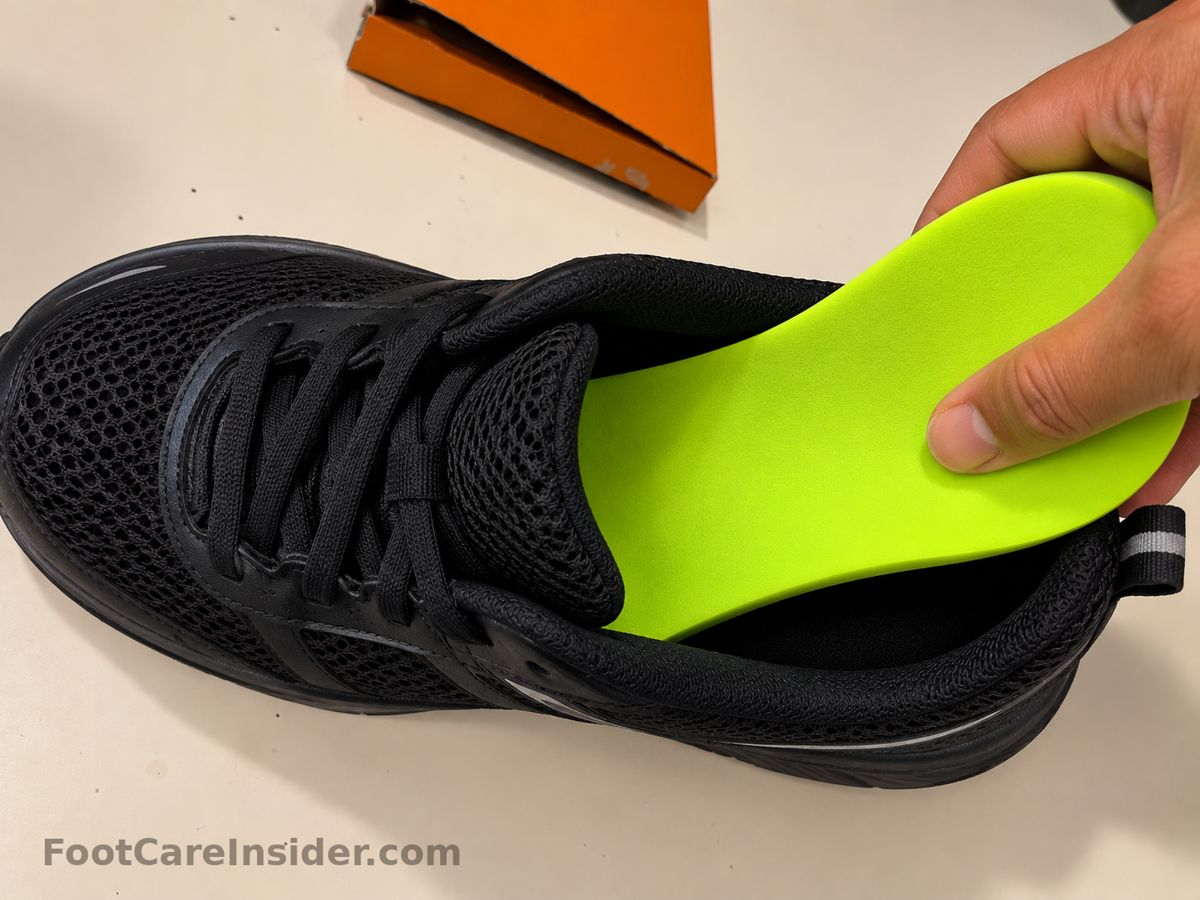
What Thick Cushioned Insoles Are Designed to Do
Thick cushioned insoles take a different approach.
Instead of minimizing bulk, they add extra material beneath the foot to improve shock absorption and comfort. This additional cushioning can help reduce the feeling of impact during running, walking, and prolonged standing.
Many thick insoles use:
- EVA foam
- Polyurethane foam
- Gel inserts
- Multi-layer cushioning systems
The goal is usually to create a softer underfoot experience.
For runners dealing with foot fatigue, long training sessions, or hard pavement, additional cushioning may feel more comfortable over extended distances.
However, more cushioning does not always mean more support. Some thick insoles focus primarily on comfort rather than foot control.
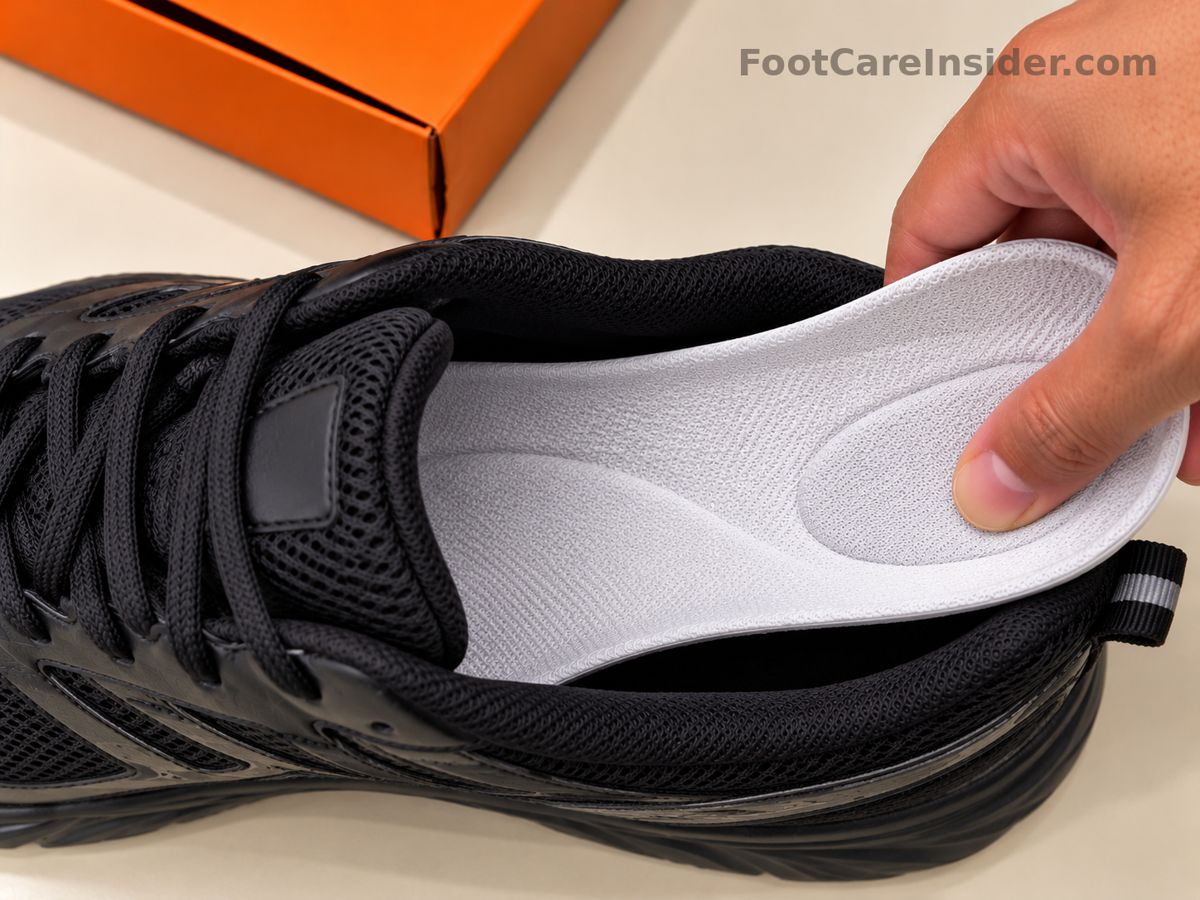
Structural Differences
The most obvious difference is thickness, but the structural differences go much deeper.
Thin insoles generally allow the shoe’s original midsole and support features to do most of the work. They act more like an enhancement to the existing shoe.
Thick cushioned insoles become a larger part of the overall footwear system. They can significantly change how the shoe feels, fits, and performs.
A thin insole usually preserves interior volume, while a thick insole can reduce available space inside the shoe.
This becomes especially important for runners with narrow-fitting shoes or limited toe-box room.
Cushioning Versus Responsiveness
One of the biggest trade-offs involves cushioning and responsiveness.
Thicker insoles generally absorb more impact forces.
As a result, they may feel softer during long runs or prolonged standing.
Thin insoles often provide greater responsiveness because less material separates the foot from the shoe platform.
Some runners prefer this direct feel because it creates a stronger connection to the ground and can make movement feel more efficient.
This is similar to discussions found in soft vs firm insoles, where comfort and support may not always point in the same direction.
Stability and Pressure Distribution
Pressure distribution can differ significantly between the two designs.
Thicker insoles frequently spread pressure across a larger surface area because additional foam helps absorb force.
Thin insoles may provide less cushioning but can still offer excellent stability if they include structured support features.
This is why thickness alone should never be used as a measure of support quality.
A well-designed thin insole may provide more control than a heavily cushioned model.
Where Each Option Fits Best
Thin running insoles often appeal to:
- Competitive runners
- Lightweight shoe users
- People who prefer ground feel
- Runners seeking minimal fit changes
Thick cushioned insoles are commonly chosen by:
- Long-distance runners
- Heavier runners
- People sensitive to impact
- Individuals experiencing foot fatigue
The difference is not limited to running.
Someone spending long work shifts on hard surfaces may also evaluate insoles for standing all day because the same cushioning-versus-support decisions apply outside athletic use.
Cost and Long-Term Value
Price differences vary widely depending on materials and construction.
Thin insoles often use less material, but advanced support systems can still make them relatively expensive.
Thick cushioned insoles sometimes cost more because of their additional foam layers and shock-absorbing components.
Long-term value depends less on initial price and more on durability.
Some soft foam designs provide excellent comfort initially but compress more quickly over time.
Meanwhile, certain thin support-focused insoles maintain their structure for much longer despite having less material.
As a result, replacement frequency can be just as important as purchase price when evaluating overall value.
Pros and Cons of Thin Running Insoles
Thin running insoles offer several advantages, particularly for runners who already like how their shoes feel.
Because they add very little bulk, they usually preserve the shoe’s original fit and performance characteristics. Many runners appreciate this because it allows them to maintain a natural running feel while adding some support.
The downside is that thin insoles generally provide less shock absorption. If you regularly run on pavement or experience foot fatigue after longer distances, the reduced cushioning may become noticeable over time.
For runners prioritizing responsiveness and shoe fit, this trade-off may be worthwhile.
Pros and Cons of Thick Cushioned Insoles
Thick cushioned insoles are often chosen for comfort.
The additional material beneath the foot can help reduce impact forces and create a softer feel during running, walking, and standing. This is especially appealing for people who spend long periods on hard surfaces.
However, increased thickness can sometimes alter shoe fit. In certain shoes, a thick insole may reduce interior space or make the foot sit higher inside the shoe.
For some runners, the extra cushioning feels protective. For others, it may reduce the direct and responsive feel they prefer.
Who Should Choose Thin Running Insoles?
This option may be a good fit for you if:
- You already like your running shoes and simply want additional support.
- You prefer a lightweight, responsive feel.
- Your shoes have limited interior space.
- You prioritize stability and control over maximum softness.
Thin insoles are often popular among runners who want to preserve the original design of their footwear while making small improvements to comfort or support.
If your primary concern is performance and responsiveness rather than impact reduction, a thinner design may feel more natural.
Who Should Choose Thick Cushioned Insoles?
This option may be a better choice if:
- You experience foot fatigue during longer runs.
- You frequently run on hard surfaces.
- You prefer a softer underfoot feel.
- You spend substantial time walking or standing outside of running.
The extra cushioning can help reduce the sensation of repetitive impact, particularly during high-mileage weeks or long periods on your feet.
For some individuals, comfort becomes the deciding factor rather than responsiveness.
Long-Term Performance Comparison
Over time, durability becomes an important factor.
Thin support-focused insoles often maintain their shape well because they rely less on soft cushioning materials. Their support characteristics may remain relatively consistent throughout their lifespan.
Thick cushioned insoles can provide excellent comfort, but softer foam layers may gradually compress with repeated use.
This does not mean thick insoles wear out quickly. It simply means that cushioning materials often experience more noticeable changes over time than structural support components.
When evaluating long-term performance, the quality of materials often matters more than thickness alone.
Quick Comparison Summary
Thin Running Insoles:
- Better for responsiveness
- Better for preserving shoe fit
- Often preferred by performance-focused runners
- Typically provide less cushioning
Thick Cushioned Insoles:
- Better for impact absorption
- Better for comfort-focused users
- Often preferred for longer standing and walking periods
- May change shoe fit more significantly
Neither option is universally superior. The better choice depends on your priorities.
Common Questions
Are thick insoles better for running?
Not necessarily. Thick insoles provide additional cushioning, but some runners prefer the responsiveness and lighter feel of thinner designs. The ideal choice depends on comfort preferences, running style, and footwear.
Do thin insoles provide enough support?
They can. Thickness and support are not the same thing. Some thin insoles contain structured support features that provide excellent stability despite their low profile.
Can thick insoles make shoes fit differently?
Yes. Because they occupy more space inside the shoe, thick insoles can alter fit and reduce available room. This is especially noticeable in narrow or snug-fitting running shoes.
Which type lasts longer?
Durability varies by construction and materials. Thin support-focused insoles often maintain their structure well, while thick cushioned insoles may experience gradual foam compression over time.
Are thick insoles better for standing all day?
For many people, additional cushioning improves comfort during prolonged standing. However, support remains important, so the best option often combines cushioning with adequate stability.
Our picks: One pick for each style, plus a running option.
Low-profile insoles – A thin insole that keeps the fit and feel of your shoes.
Stability running insoles – Support for runners whose feet roll inward.
Cushion insoles – A thicker insole with more shock absorption.
Final Verdict
Thin running insoles and thick cushioned insoles serve different purposes.
Thin insoles focus on preserving shoe fit, responsiveness, and natural movement. They often appeal to runners who want support without dramatically changing how their shoes perform.
Thick cushioned insoles focus more on comfort and impact reduction. They are frequently preferred by people dealing with foot fatigue, long periods of standing, or higher mileage running routines.
The right choice depends less on thickness itself and more on what your feet need most. If you value responsiveness and minimal bulk, thin insoles may be the better fit. If comfort and shock absorption are your primary concerns, thicker cushioned designs may be worth considering.