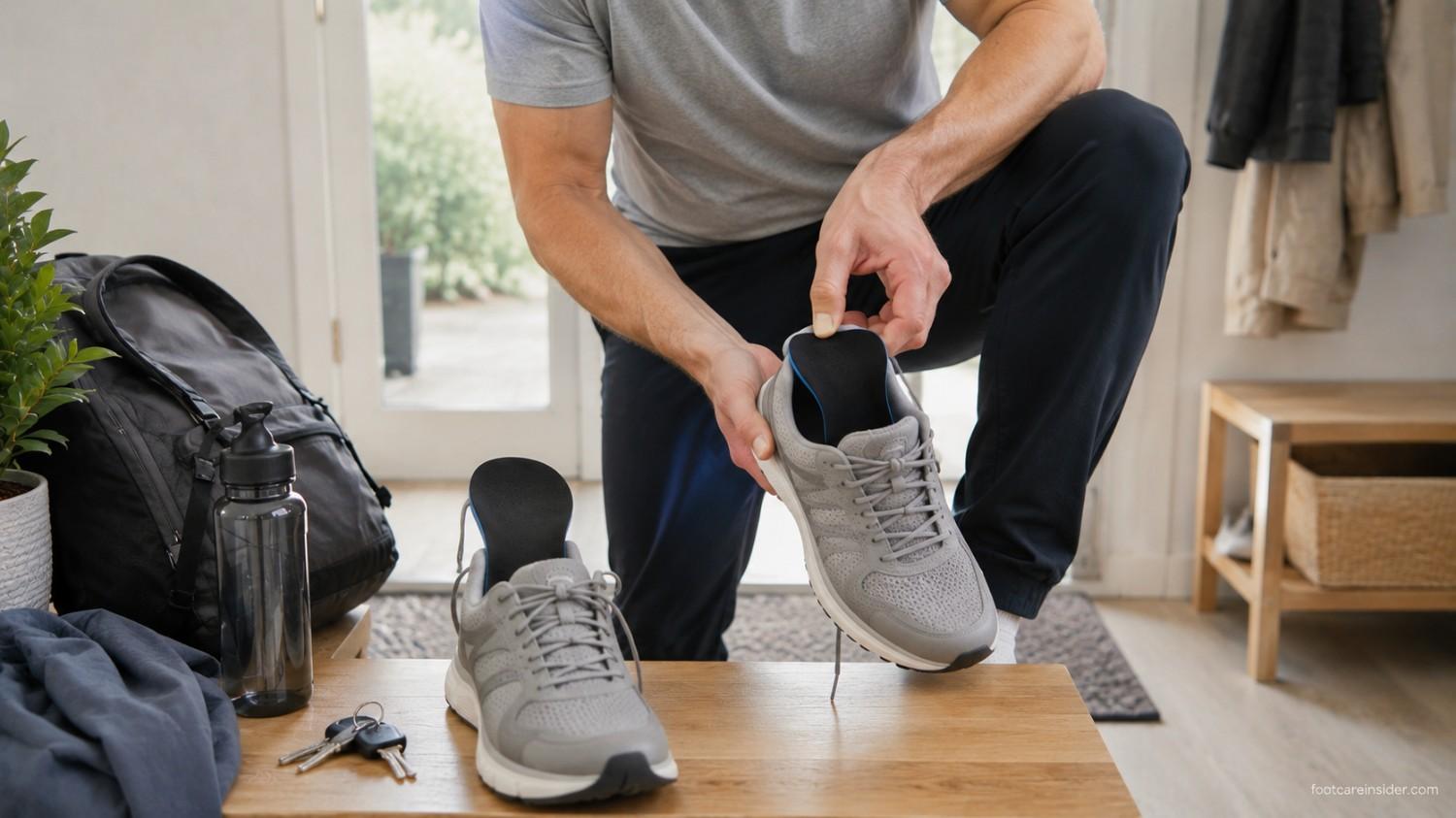
Why Do Insoles Curl Up Inside Shoes?
If you’ve noticed your insoles curling up inside your shoes, you’re not alone. It often starts as a slight lift near the heel or toe, but over time the insole may shift, bunch up, or fold as you walk. Besides being annoying, curled insoles can make your shoes feel unstable, create pressure points, and reduce the support they were designed to provide. Whether you wear walking shoes, work boots, or everyday sneakers, understanding why this happens can help you prevent further wear and restore a more comfortable fit.
In most cases, insoles curl up because they no longer fit the shoe correctly, have worn down with repeated use, or move inside the shoe during walking. Heat, moisture, repeated flexing, and incorrect sizing can also cause materials like EVA foam to lose their original shape. Replacing worn insoles or improving the fit often solves the problem before it affects comfort.
What Causes Insoles to Curl Up?
Several factors can cause insoles to curl instead of lying flat inside a shoe. Often, it’s a combination of normal wear and how the shoe is used each day.
One of the most common reasons is repeated bending during walking. Every step causes the shoe to flex, especially beneath the forefoot where the metatarsals help push the body forward. Over thousands of steps, the constant flexing gradually weakens the insole’s structure.
Moisture is another major contributor. Sweat can soak into fabric-covered insoles and soften adhesives or compress foam materials. Even durable EVA foam may slowly lose resilience after months of repeated exposure to heat and moisture.
A poor fit also increases the risk. An insole that’s slightly too long may press against the front of the shoe every time you walk, encouraging the toe area to curl upward. Similarly, an insole that’s too narrow may shift from side to side until the edges begin lifting.
Readers experiencing other fit-related problems may also find Can You Trim Insoles to Fit Your Shoes? helpful.
Everyday Habits That Increase the Risk
Some daily routines place much more stress on insoles than others.
People who spend long hours standing on concrete floors or walking several miles each day naturally flex their footwear far more than occasional users. Over time, this repeated movement accelerates wear.
Removing insoles frequently to dry shoes can also contribute if they are bent sharply during removal or reinserted carelessly. Folding an insole, even slightly, can create a permanent weak point that becomes more noticeable with continued use.
Using one pair of shoes every day without allowing them to dry fully may also shorten insole life. Constant moisture and repeated compression leave less time for the materials to recover between wears.
Certain footwear creates additional challenges. Tight-fitting walking shoes or narrow work boots leave little room for the insole to expand naturally during movement, increasing friction between the shoe and the insole.
Early Signs Before Curling Becomes Worse
Curling usually develops gradually rather than appearing overnight.
At first, you might notice the front edge catching slightly when putting your foot into the shoe. Later, the heel may begin lifting when you remove your foot, or the insole may slide slightly after several minutes of walking.
As the problem progresses, small wrinkles may develop beneath the arch or forefoot. These uneven areas can change how pressure is distributed across the foot, sometimes leading to mild discomfort by the end of a busy day.
The heel, arch, and forefoot all respond differently to uneven support. The arch normally helps distribute body weight, while the heel absorbs the initial impact of each step. When a curled insole changes that balance, some people notice localized fatigue rather than immediate pain.
When Curling Starts Affecting Comfort
A slightly lifted corner isn’t always a serious concern, but an insole that repeatedly folds, slides, or bunches under your foot should not be ignored.
As the insole loses its ability to stay flat, it provides less consistent support beneath the arch and heel. Walking may begin to feel uneven, especially during longer outings or full work shifts. Some people unconsciously adjust their gait—the natural pattern of walking—to avoid the raised section, which can place extra stress on other parts of the foot and lower leg.
If the curled area creates rubbing, pressure points, or discomfort that becomes difficult to pinpoint, the Interactive Foot Pain Tool can help identify where symptoms are developing before exploring possible contributing factors.
People comparing different insole designs may also benefit from reading Low-Profile vs Standard Insoles for Shoe Fit to understand how thickness and overall construction can influence long-term fit and stability.
How to Stop Insoles From Curling
The best solution depends on what’s causing the curling in the first place. If the insole is simply dirty or slightly damp, removing it from the shoe and allowing it to air dry completely may help it lie flatter again.
Check that the insole is sitting fully inside the shoe with the heel pressed firmly into the heel cup. If it has shifted forward or sideways, repositioning it may solve the problem before it worsens.
If the insole is too long for the shoe, trimming it carefully along the manufacturer’s guidelines may improve the fit. However, if the material has permanently warped or folded, cutting it is unlikely to restore its original shape.
Can New Insoles Prevent the Problem?
Replacing old insoles with a better-fitting pair often prevents future curling, especially if the originals have become compressed after months of use.
A properly sized replacement should fit snugly inside the shoe without buckling at the toe or lifting around the edges. Supportive insoles made from durable EVA foam or similar materials generally retain their shape longer than very soft inserts that compress quickly under repeated walking.
If your shoes have limited interior space, a slimmer design may also reduce unnecessary movement inside the shoe.
Readers choosing a replacement may find Can Insoles Be Washed Safely? useful for learning how proper care can help extend insole life.
When It’s Better to Replace Than Repair
Some curled insoles simply reach the end of their useful life.
If the edges continue lifting after repositioning, the foam remains permanently bent, or the fabric covering begins separating from the base, replacement is usually the better option. Trying to glue or flatten severely worn insoles often provides only temporary improvement.
Replacing worn insoles before they begin affecting your walking comfort can also help prevent unnecessary pressure on the heel, arch, and forefoot during daily activities.
Preventing Curling in the Future
A few simple habits can significantly increase the lifespan of your insoles.
Allow your shoes to dry completely between wears whenever possible, especially after long walks or busy workdays. Rotate between two pairs of shoes if you wear the same footwear every day.
Remove insoles carefully instead of folding them, clean them using gentle methods, and replace them once they begin losing their shape instead of waiting until they become severely distorted.
Taking these small steps helps maintain more consistent support and keeps your shoes feeling comfortable for longer.
Common Questions
Why do my insoles keep curling at the toe?
This usually happens when the insoles are slightly too long, repeatedly flex at the front of the shoe, or have begun wearing out. Excess moisture can also weaken the material over time.
Can curled insoles be flattened again?
Minor curling may improve after proper drying and repositioning, but permanently bent or worn insoles rarely return to their original shape.
Does washing insoles cause them to curl?
Not usually if they’re washed gently and air dried. High heat, machine drying, or prolonged soaking are much more likely to damage their structure.
Should I replace curled insoles immediately?
If the curling affects comfort, causes slipping, or creates pressure points while walking, replacing the insoles is usually the most practical solution.
Conclusion
Insoles often curl because of repeated flexing, moisture, poor fit, or normal wear over time. While small amounts of curling can sometimes be corrected through proper positioning and care, severely warped insoles usually need replacing. Choosing the correct size, keeping insoles dry, and maintaining them regularly can help preserve their shape and keep your shoes comfortable for everyday walking and standing.