Can You Trim Insoles to Fit Your Shoes?
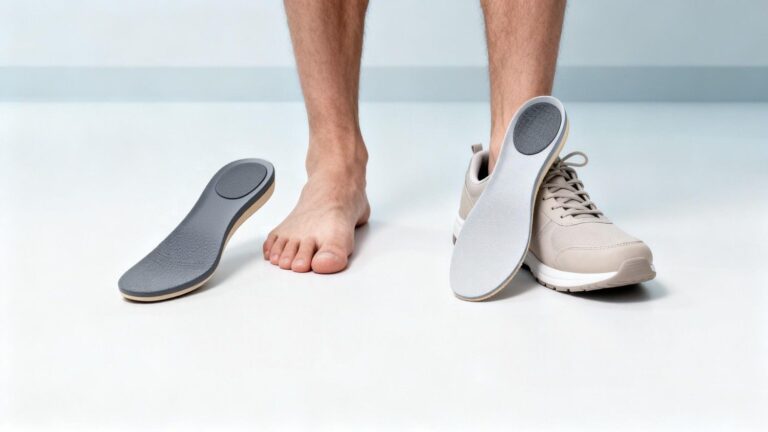
Yes, many replacement insoles can be trimmed to fit your shoes, and doing so correctly can improve comfort, stability, and overall support. Most full-length insoles are intentionally made slightly larger than standard shoe footbeds so they can be customized for different shoe styles. However, trimming too much—or cutting the wrong areas—can reduce the support the insole is designed to provide.
Whether you’re replacing worn factory insoles or installing supportive inserts for walking, work, or everyday use, taking a careful approach helps ensure the best fit. A properly trimmed insole should sit flat inside the shoe without curling, bunching, or leaving gaps around the edges.
Why Some Insoles Are Designed to Be Trimmed
Unlike the original insoles that come with most shoes, replacement insoles are often manufactured in size ranges rather than exact shoe sizes. This allows one model to fit several sizes after minor adjustments.
Most trim-to-fit insoles include printed cutting guidelines on the underside. These lines provide a starting point, but they shouldn’t replace checking the fit inside your actual shoes. Shoe interiors vary significantly between athletic shoes, work boots, casual sneakers, hiking footwear, and dress shoes.
A careful trim helps the insole match the shape of your shoe while preserving its support structure.
If you’re unsure how an insole should sit once installed, How Should Insoles Fit Inside Your Shoes? explains the characteristics of a proper fit.
How to Trim Insoles Correctly
The safest approach is to trim gradually rather than trying to achieve the perfect fit in a single cut.
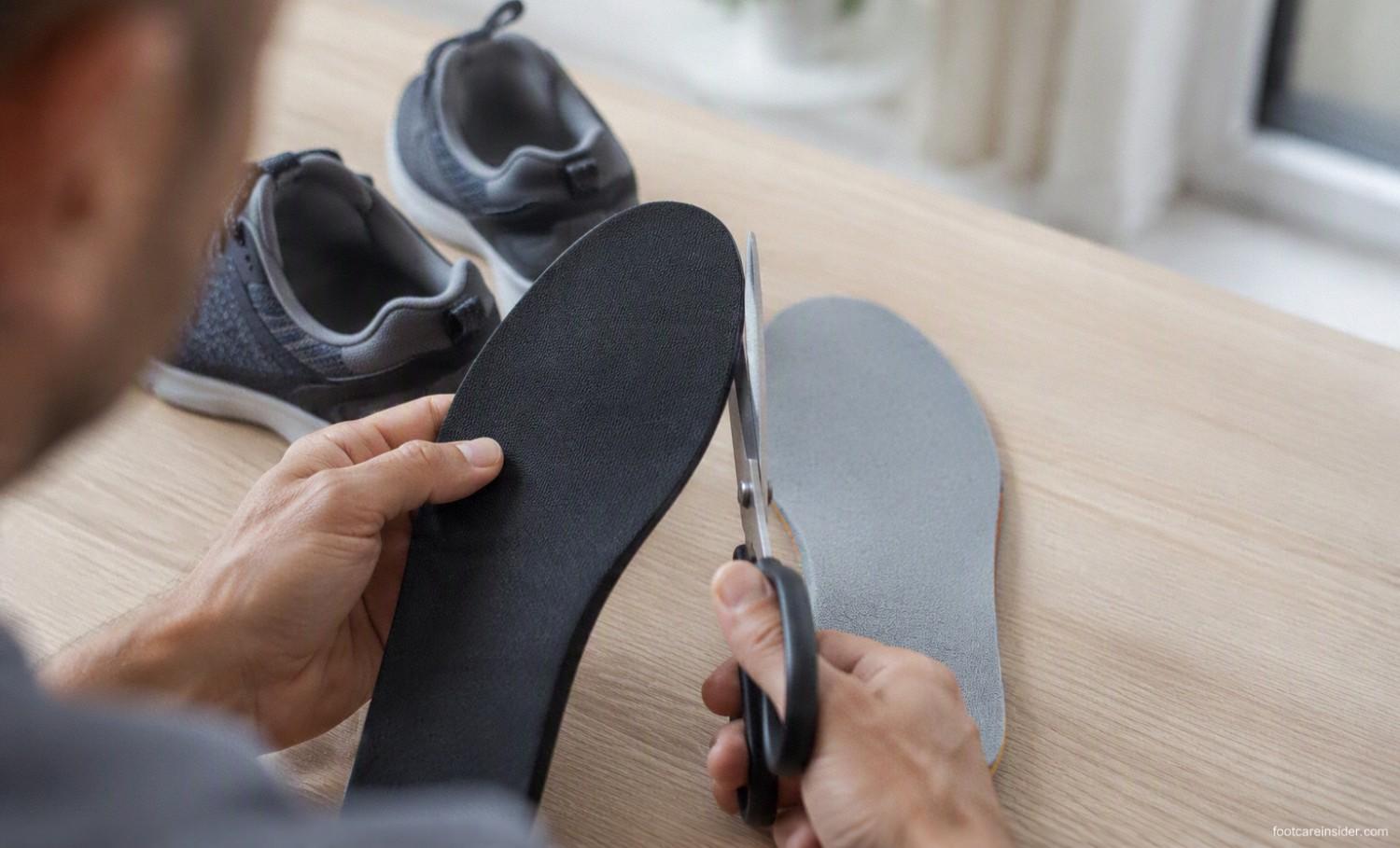
Many people begin by removing the factory insole from their shoe and placing it directly on top of the replacement insole. This provides a useful template for comparing size and shape, provided the original insole matches the shoe well.
Using a sharp pair of scissors, trim only a small amount from the toe area at a time. After each adjustment, place the insole back inside the shoe and check whether it lies flat without folding or lifting around the edges.
It’s much easier to remove a little more material than it is to replace material that has already been cut away.
Common Mistakes When Trimming Insoles
Most problems occur because too much material is removed too quickly.
One common mistake is cutting into the arch support or heel cup. These areas are designed to maintain the insole’s structure and should generally remain untouched. Trimming is usually limited to the front portion of the insole where the toes sit.
Another mistake is making uneven cuts. Jagged edges may catch on the shoe lining or create small pressure points during walking.
Some people also attempt to force one pair of insoles into shoes that have a completely different shape. Running shoes, work boots, and narrow dress shoes often require different insole profiles, even if they share the same shoe size.
Why Proper Fit Matters
An insole that has been trimmed correctly should feel like part of the shoe rather than an object sitting inside it.
If the insole is too large, it may wrinkle or lift along the edges. If it’s trimmed too small, it can slide forward or sideways during walking, reducing both comfort and stability.
Even small fit issues become more noticeable during long work shifts, extended walks, or days spent standing on hard surfaces. As your feet repeatedly load and unload the shoe, an improperly fitted insole may gradually shift out of position.
Readers experiencing this issue may also benefit from Why Do Insoles Slide Inside Your Shoes?, which explains the most common reasons insoles move during everyday use.
Signs You May Have Trimmed Too Much
A poorly trimmed insole doesn’t always cause immediate discomfort.
Instead, you may notice subtle changes over time, especially after spending several hours on your feet.
Common signs include:
- The insole slides inside the shoe.
- Small gaps appear around the edges.
- Your heel no longer sits securely in the heel cup.
- The arch support feels slightly out of position.
- The front of the shoe feels less stable during walking.
If these issues appear shortly after trimming, removing additional material is unlikely to solve the problem. In many cases, the insole has simply become too small for the shoe.
When Trimming Isn’t the Right Solution
Not every insole is designed to be customized.
Some premium insoles are manufactured in exact sizes with carefully engineered shapes. Trimming these products may affect how they distribute pressure or support the foot.
Before cutting any insole, check the manufacturer’s instructions to confirm whether trimming is recommended.
Likewise, trimming won’t solve problems caused by shoes that are excessively narrow, too shallow, or significantly too large. In these situations, choosing footwear that better matches the shape of your feet is often a more effective long-term solution.
If you’re deciding whether to replace or remove your factory footbed before installing a new one, Should You Remove Original Insoles Before Adding New Ones? explains when keeping or removing the original insole provides the best fit.
Tips for Getting the Best Fit After Trimming
Once the insole has been trimmed, it’s important to test it before wearing the shoes for a full day.
Place the insole inside the shoe and make sure it lies completely flat from heel to toe. It shouldn’t buckle, lift at the edges, or leave noticeable gaps around the sides.
Walk around indoors for a few minutes on different surfaces. Pay attention to whether your heel feels stable, your toes have enough room, and the insole remains securely in place.
If you notice pressure against your toes, remove the insole and trim only a very small amount from the front before testing again. Making several small adjustments almost always produces a better result than making one large cut.
The Role of Insoles in Comfort and Support
A properly fitted insole helps distribute pressure more evenly across your feet during walking and standing. It can also improve stability inside the shoe by reducing unwanted movement.
However, trimming an insole should never change its overall shape or remove important support features. The goal is simply to match the dimensions of the shoe while preserving the manufacturer’s intended design.
When correctly fitted, the insole should feel secure without drawing attention to itself during everyday activities.
When Medical Advice May Be Appropriate
If your feet continue to feel uncomfortable after correctly fitting your insoles, the issue may not be caused by the insole itself.
Consider speaking with a healthcare professional if you experience:
- Persistent foot pain despite properly fitted footwear.
- Pain that worsens with walking or standing.
- Swelling, numbness, or tingling.
- Difficulty performing everyday activities because of foot discomfort.
- Symptoms that continue for several weeks without improvement.
Foot discomfort can have many causes, and footwear is only one part of the overall picture.
Preventing Fit Problems in the Future
A few simple habits can help you avoid needing major adjustments with future insoles.
Whenever possible:
- Choose the correct shoe size before selecting an insole.
- Follow the manufacturer’s trimming guidelines.
- Trim gradually and test the fit often.
- Replace worn insoles before they lose their shape.
- Keep shoes clean and dry to help insoles sit securely.
Taking a few extra minutes during installation can improve both comfort and the lifespan of your insoles.
Common Questions
Can all insoles be trimmed?
No. Many full-length replacement insoles are designed to be trimmed, but some premium models come in exact sizes and should not be modified. Always check the manufacturer’s instructions before cutting an insole.
How much should I trim from an insole?
Only remove small amounts at a time, usually from the toe area. Test the fit after each adjustment to avoid cutting away too much material.
What happens if I trim too much?
An insole that’s too small may slide inside the shoe, leave gaps around the edges, or reduce the support provided beneath your foot. Unfortunately, once material has been removed, it cannot be replaced.
Should I use my old insole as a template?
Yes, in many cases. Placing the original insole on top of the replacement can provide a useful guide, provided the factory insole fits the shoe correctly.
Can trimming affect arch support?
If trimming is limited to the front of the insole, the arch support is usually unaffected. Cutting into the arch or heel sections, however, may reduce the insole’s ability to provide proper support.
Conclusion
Many replacement insoles are designed to be trimmed, making it possible to achieve a comfortable and secure fit in a wide variety of shoes. The key is to trim gradually, test the fit frequently, and avoid removing material from areas that provide structural support.
Taking the time to customize an insole properly can improve comfort, reduce movement inside the shoe, and help your footwear perform as intended during everyday walking and standing.