Ultimate Guide to Choosing Insoles
Understanding Your Feet Before Choosing Insoles
If you’ve ever stood in a store (or scrolled online) trying to pick insoles, you’ve probably noticed how overwhelming it gets. Soft, firm, gel, arch support, orthotic—everything promises comfort, but very little explains what your feet actually need. Prefer a quick answer? Try our insole finder quiz.
That’s where most people go wrong.
Choosing the right insole isn’t about picking what feels good for five minutes. It’s about understanding how your feet move, where the pressure goes, and what kind of support your body is missing.
Still unsure? What type of insoles do I need walks through the main types.
This guide will walk you through how to choose insoles the right way—based on function, not guesswork.
Why People Need Insoles in the First Place
Insoles are not just for comfort. They exist to support the natural mechanics of your feet.
Your feet absorb impact, stabilize your body, and help you move efficiently. When something in that system is off—alignment, pressure distribution, or support—you start to feel it.
Common reasons people look into insoles include:
- Foot pain (heel, arch, or forefoot)
- Knee or lower back discomfort
- Fatigue from standing or walking
- Uneven shoe wear
- Flat feet or high arches
These are not random issues. They’re often connected to how your foot interacts with the ground.
The Root Cause: Foot Mechanics and Alignment
To understand how to choose insoles, you need a basic idea of foot mechanics.
When you walk, your foot naturally rolls slightly inward. This is called pronation, and it helps absorb shock. But when that movement becomes excessive (overpronation) or too limited (underpronation), problems begin. High arches need a different fit, which we cover in our best insoles for high arches guide.
Here’s what happens:
- The arch may collapse or stay too rigid
- The ankle shifts out of alignment
- The knee rotates inward or outward
- Pressure builds in areas not designed to handle it
Over time, this leads to strain—not just in the feet, but throughout the body.
For example, many people dealing with alignment issues benefit from structured support similar to what’s explained in best insoles for overpronation.
Risk Factors That Affect Your Foot Health
Not everyone needs the same type of insole because not everyone has the same risk factors.
Some of the most common include:
1. Foot Structure
- Flat feet (low arches)
- High arches
- Flexible vs rigid arches
Each type changes how weight is distributed across your foot.
2. Body Weight
More weight = more pressure.
This increases stress on:
- The arch
- The heel
- The forefoot
Over time, this can lead to fatigue and pain if support is insufficient.
3. Activity Level
Your daily routine matters more than you think.
- Standing all day → constant pressure
- Running → repetitive impact
- Walking → moderate but continuous load
Each requires a different type of support. For example, people on their feet for long hours often need solutions similar to insoles for standing all day.
4. Footwear
Shoes play a major role.
Many modern shoes:
- Have flat insoles
- Lack arch support
- Focus more on style than function
This creates a gap that insoles are meant to fill.
How Symptoms Differ (And Why That Matters)
Not all foot discomfort feels the same—and that’s important when deciding how to choose insoles.
Heel Pain
Often linked to plantar fasciitis or impact stress.
Arch Pain
Usually related to lack of support or collapsing arches.
Forefoot Pain
Can come from pressure overload or poor weight distribution.
General Fatigue
Often caused by standing long hours without proper support.
Each symptom points to a slightly different need. Choosing the wrong type of insole may provide temporary relief but won’t fix the underlying issue.
When It Becomes More Than Just Discomfort
There’s a point where foot problems go beyond mild irritation.
Warning signs include:
- Persistent pain lasting more than 2–3 weeks
- Pain that worsens with activity
- Swelling or inflammation
- Pain spreading to knees, hips, or lower back
At this stage, your body is compensating for poor alignment.
Ignoring it can lead to:
- Chronic plantar fasciitis
- Joint stress
- Long-term mobility issues
This is where choosing the right support becomes more than a comfort decision—it becomes preventative care.
The Common Mistake Most People Make
When people try to figure out how to choose insoles, they usually focus on one thing:
👉 Softness
But softness alone doesn’t solve structural problems.
- Too soft → your arch collapses further
- Too firm (without proper design) → discomfort
Understanding this balance is key, especially when comparing options like soft vs firm insoles.
The Real Goal
The goal of choosing insoles isn’t just to feel better for a few hours.
It’s to:
- Support natural foot alignment
- Reduce stress on joints
- Improve overall movement
- Prevent problems from getting worse
Once you understand this, the decision becomes much clearer.
How to Choose Insoles Correctly (And When They Actually Help)
Now that you understand why foot problems happen, the next step is applying that knowledge in a practical way.
Most people still make decisions based on guesswork—picking whatever feels comfortable in the moment. But learning how to choose insoles properly means matching the insole to your specific needs, not just your preferences.
Step-by-Step: How to Choose Insoles
Instead of relying on marketing claims, use this simple framework.
Step 1: Identify Your Main Goal
Start with the reason you’re looking for insoles.
Ask yourself:
- Are you trying to reduce pain?
- Improve comfort during long hours?
- Correct alignment issues?
- Prevent future problems?
Each goal leads to a different type of insole.
For example:
- Pain relief → targeted support
- All-day comfort → balanced cushioning
- Alignment → structured, firmer design
Step 2: Understand Your Arch Type
Your arch plays a major role in how your foot distributes weight.
There are three common types:
Low Arch (Flat Feet)
- Foot rolls inward more than normal
- Needs structured arch support
Neutral Arch
- Balanced movement
- Works well with moderate support
High Arch
- Less shock absorption
- Needs cushioning + support
If you’re unsure, a simple wet footprint test can give you a rough idea.
People with flat feet, for example, often benefit from support similar to what’s discussed in insoles for flat feet.
Our picks: Once you know your arch type, these are three examples to start from. For a faster match by daily routine see what type of insoles do I need.
Low arch (flat feet): Superfeet Green – firm, structured support that holds its shape.
Neutral arch: Moderate Support Insoles – balanced support and cushioning for everyday use.
High arch: Cushion Insoles – extra shock absorption for feet that absorb little impact on their own.
Step 3: Match Insoles to Your Activity
Your daily routine should guide your choice.
- Standing all day → stability + pressure distribution
- Walking → moderate cushioning + flexibility
- Running → impact absorption + motion control
Choosing the wrong type for your activity is one of the fastest ways to waste money on insoles that don’t work.
Step 4: Choose the Right Level of Support
This is where many people get confused.
Support is not about “hard vs soft” — it’s about function.
- Too soft → lacks structure
- Too rigid → uncomfortable
The best option is usually:
👉 structured support with controlled cushioning
This balance is what helps maintain alignment without causing discomfort.
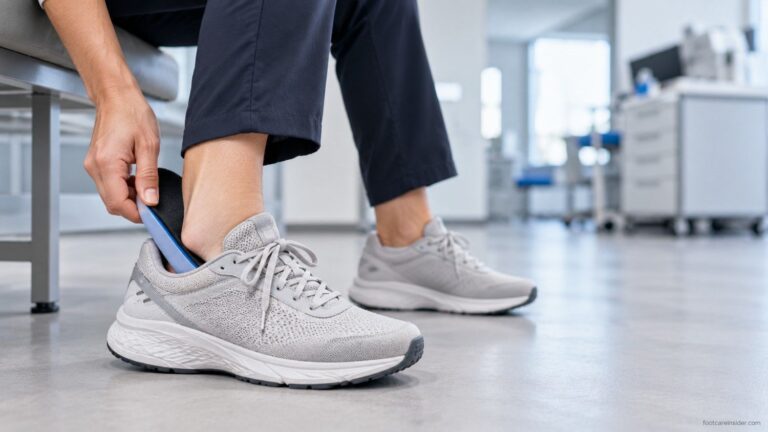
Step 5: Check Fit and Shoe Compatibility
Even the best insole won’t work if it doesn’t fit your shoe properly.
Make sure:
- It doesn’t overcrowd your shoe
- It matches your shoe type (running, work, casual)
- You remove the original insole if needed
Poor fit can lead to:
- Increased pressure
- Reduced circulation
- More discomfort
When Insoles Actually Help
Insoles are effective when the issue is related to:
- Poor foot alignment
- Lack of arch support
- Repetitive stress from daily activity
- Mild to moderate foot pain
They work by:
- Redistributing pressure
- Supporting the arch
- Stabilizing movement
For example, alignment-focused solutions like those explained in best insoles for overpronation help control excessive inward foot movement.
When Insoles Are NOT Enough
Insoles are helpful—but they’re not a cure for everything.
You may need medical attention if:
- Pain is severe or persistent
- There’s visible swelling
- You feel numbness or tingling
- Pain affects multiple joints
In these cases, insoles can still be part of the solution—but not the only one.
A podiatrist may recommend:
- Custom orthotics
- Physical therapy
- Footwear changes
Things to Try First at Home
Before relying entirely on insoles, it’s important to address the root cause.
1. Foot Strengthening Exercises
Simple exercises can improve stability and reduce strain.
Examples:
- Toe curls
- Arch lifts
- Calf stretches
2. Proper Footwear
Shoes should:
- Support your arch
- Fit properly
- Match your activity
Even the best insole can’t fix a poorly designed shoe.
3. Rest and Load Management
Overuse is a major factor.
If you’re constantly on your feet, your body needs recovery time.
4. Weight Distribution Awareness
Small posture adjustments can reduce pressure on certain areas of the foot.
Prevention: How to Avoid Foot Problems Long-Term
Learning how to choose insoles is not just about solving current issues—it’s about preventing future ones.
Here’s what helps:
- Rotate your shoes regularly
- Replace worn-out insoles on time
- Avoid overly flat footwear
- Pay attention to early signs of discomfort
Ignoring small symptoms often leads to bigger problems later.
Frequently Asked Questions
How do I know if I need insoles?
If you experience foot pain, fatigue, or discomfort during daily activities, insoles may help improve support and reduce strain.
Can insoles fix flat feet permanently?
No. Insoles support your foot and improve alignment, but they don’t permanently change foot structure.
Should I choose soft or firm insoles?
It depends on your needs. Most people benefit from a balance of support and cushioning rather than extreme softness or rigidity.
How long does it take to adjust to insoles?
Typically 3–7 days. Mild discomfort is normal at first, but sharp pain is not.
How often should insoles be replaced?
Most insoles last 6–12 months, depending on usage and material quality.
You can also view complete foot care guide library here.
Final Thoughts: Choosing Insoles the Right Way
Choosing insoles isn’t about finding the most comfortable option in the moment. It’s about understanding your body, your movement, and your daily demands.
When you learn how to choose insoles properly, you stop guessing.
You start making decisions based on:
- Structure
- Support
- Function
And that’s what leads to real, lasting improvement—not just temporary comfort.
For everyday use and long periods on your feet, consider insoles for walking to improve comfort and reduce fatigue.
If you’re noticing discomfort or reduced support, this guide on signs you need new insoles explains when it’s time to replace them.