Best Insoles for Heavy People and Big Men
Understanding the Right Support for Higher Body Weight
Why Foot Pain Is More Common for Heavier Individuals
Foot discomfort can affect anyone, but it tends to appear more frequently and more intensely in people carrying higher body weight. The feet are responsible for supporting the entire body, absorbing impact with every step, and maintaining balance while standing or walking. When that load increases, the pressure placed on the arches, heels, and forefoot rises significantly.
For this reason, many people start searching for insoles for heavy people after noticing persistent foot fatigue, sore arches, or heel pain during daily activities. Long work shifts, standing on hard floors, and extended walking can amplify these issues even further.
While quality shoes provide some support, the internal structure of most footwear is not designed to handle the extra stress associated with higher body weight. Over time, this can lead to flattened shoe cushioning, uneven pressure distribution, and discomfort that spreads beyond the feet to the knees, hips, and lower back.
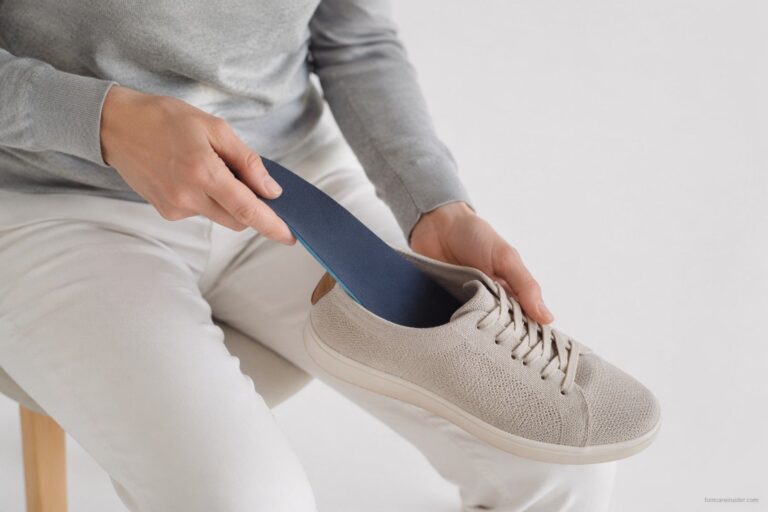
Supportive shoe inserts can help solve this problem by improving weight distribution and stabilizing the foot during movement. However, not all inserts are created equally. The most effective insoles for heavy people must be built with stronger materials and structural support than standard options.
Quick picks
PowerStep Pinnacle MaxxBest overall
Check price on AmazonSuperfeet GreenMost support
Check price on AmazonSuperfeet WorkBest for work boots
Check price on AmazonDr. Scholl’s GelBest for heel cushioning
Check price on AmazonWhy Standard Insoles Often Fail
Most factory insoles included with shoes are designed for basic comfort rather than structural support. They are typically made from thin foam or soft cushioning layers that feel comfortable at first but compress quickly under higher pressure.
For individuals needing insoles for heavy people, this creates several common problems.
First, standard foam inserts tend to flatten after repeated use. Once compressed, they lose their ability to absorb shock and redistribute pressure across the foot.
Second, many generic insoles lack proper arch support. Without reinforcement in the arch area, the foot may roll inward or outward slightly with each step. This can contribute to fatigue, instability, and joint strain.
Third, durability becomes a major issue. Lightweight materials simply cannot withstand the repeated impact forces associated with higher body weight, leading to faster wear and reduced support.
Because of these limitations, choosing specialized insoles for heavy people is important for maintaining long-term comfort and foot stability.
When Do You Actually Need Insoles for Heavy People?
Not everyone requires specialized support, even if they experience occasional foot fatigue. However, body weight does influence how much pressure your feet absorb during daily movement.
As a general guideline:
- Individuals over 180–200 lbs often begin to notice increased foot fatigue with standard insoles
- Above 220 lbs, softer inserts tend to compress more quickly and lose effectiveness
- At higher weights, durability and structural support become significantly more important than cushioning alone
This doesn’t mean that everyone above a certain weight needs rigid orthotics. Instead, it highlights how increased load changes what your feet require from an insole.
In practical terms:
- Lighter individuals can prioritize comfort
- Heavier individuals need a balance of support, durability, and shock absorption
This is why insoles for heavy people are typically designed with stronger materials and reinforced arch structures, rather than soft cushioning alone.
Key Features That Matter Most
When selecting supportive inserts, several design elements play an important role in performance. The best insoles for heavy people combine durability, structured support, and effective shock absorption.
1. Strong Arch Support
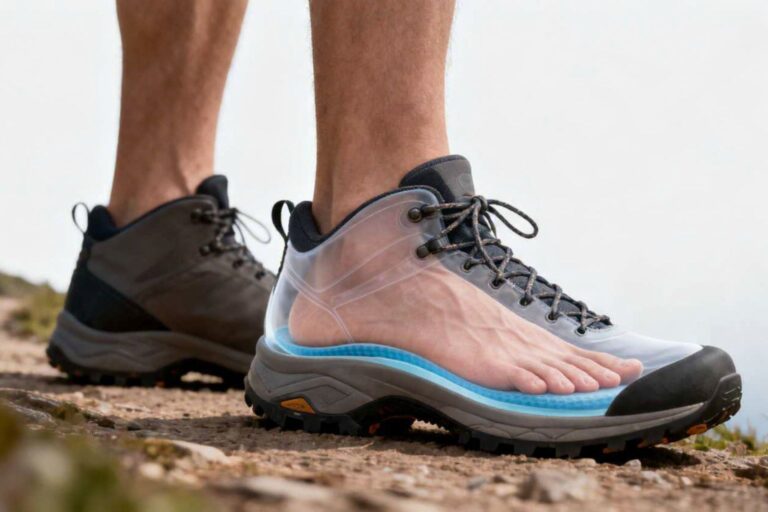
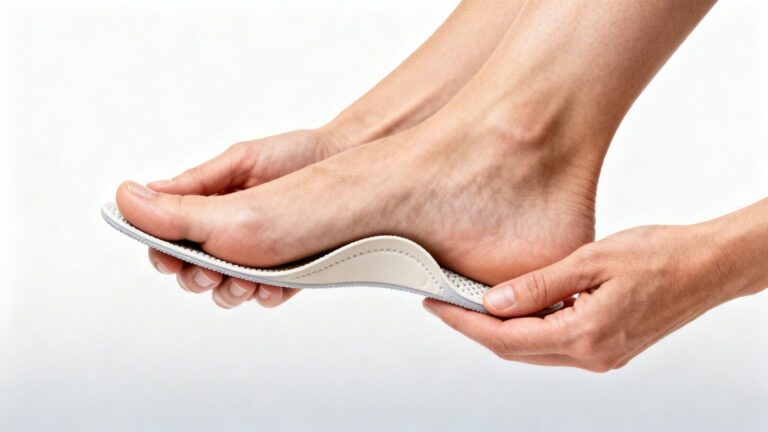
A reinforced arch helps distribute body weight more evenly across the foot rather than concentrating pressure on the heel or forefoot. This reduces fatigue and helps maintain natural foot alignment.
Poor foot alignment can sometimes contribute to discomfort higher up the body. Understanding why flat feet cause knee pain can help explain how foot mechanics influence the knees during daily movement.
People with flat feet often need even stronger structural support. Our guide on Best Insoles for Flat Feet explains how arch structure affects comfort and stability.
2. Effective Shock Absorption
Walking and standing create repeated impact forces. For heavier individuals, those forces can be significantly stronger.
Quality insoles for heavy people typically include high-density EVA foam, gel layers, or specialized cushioning materials designed to absorb shock while maintaining structural integrity.
The goal is to reduce pressure without allowing the insert to collapse under load.
3. Durable Materials
Durability is essential when evaluating insoles for heavy people. Strong materials allow the insert to maintain its shape and support even after months of daily use.
Common durable components include:
- High-density EVA foam
- Polyurethane support layers
- Reinforced plastic or composite arch plates
- Carbon stability frames
These materials help the insole withstand higher loads without losing effectiveness.
4. Balanced Firmness
While soft cushioning may feel comfortable initially, overly soft inserts often compress too quickly. The most effective insoles for heavy people strike a balance between cushioning and firmness.
Moderately firm support structures help stabilize the foot while still providing shock absorption.
This stability is particularly useful for people who spend long hours standing, which is discussed in Best Insoles for Standing All Day .
5. Deep Heel Cup
A deep heel cup is another important design feature found in many supportive inserts. This structure helps cradle the heel, improve stability, and guide the foot into a more natural walking motion.
Better heel positioning can also reduce pressure on surrounding joints and improve overall balance.
A Practical Buying Framework
Finding the right insoles for heavy people becomes much easier when you evaluate a few key factors before purchasing.
First, consider your daily activity level. People who stand or walk for extended periods may benefit from thicker cushioning and durable shock-absorbing materials.
Second, look at the type of shoes you wear most often. Athletic shoes, work boots, and casual footwear all have different interior shapes and available space for inserts. Selecting insoles designed for your shoe type ensures a better fit.
Third, evaluate your foot structure. Individuals with high arches, flat feet, or overpronation may require different types of arch support or motion control.
Our guide on Insoles for Overpronation explains how inserts can help stabilize foot movement.
Finally, remember that all inserts wear out eventually. Knowing when to replace them is important for maintaining consistent comfort and support.
You can learn more in How Long Do Insoles Last .
Choosing the right insoles for heavy people is about balancing durability, stability, and cushioning to match your lifestyle and footwear. In the next section, we’ll explore the main categories of insoles that work best for heavier body types, along with their advantages, limitations, and ideal use cases.
Quick Comparison: Which Type Is Best?
| Insole Type | Best For | Support Level | Cushioning Level |
|---|---|---|---|
| High-Density Foam | Daily comfort and walking | Medium | High |
| Orthotic Support | Arch support and stability | High | Medium |
| Gel Cushioning | Heel pressure relief | Medium | High |
| Work Boot Insoles | Standing on hard surfaces | High | Medium |
| Stability Insoles | Overpronation control | High | Medium |
Best Types of Insoles for Heavy People
1. High-Density Foam Insoles
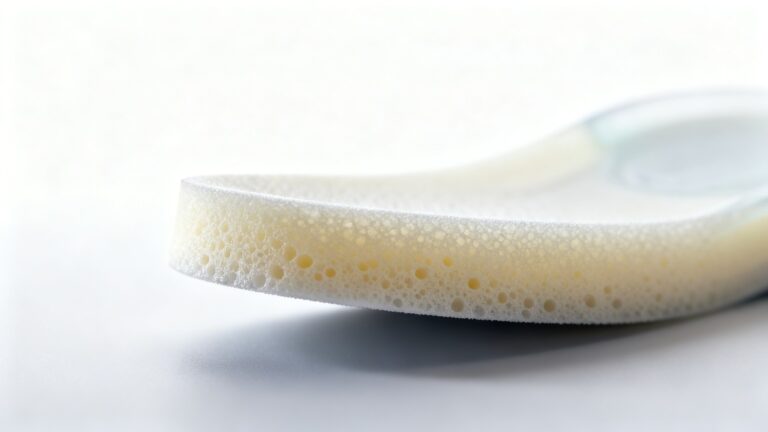
High-density foam inserts are one of the most common options recommended as insoles for heavy people. Unlike soft foam found in basic shoe inserts, these versions are designed to resist compression and maintain support over time.
Best for:
People who spend long hours walking or standing and need consistent cushioning.
Pros
- Good shock absorption
- Comfortable for daily use
- Lightweight and flexible
Limitations
- May wear down faster than rigid orthotic styles
- Support level varies by brand
Compared with gel-based inserts, high-density foam usually offers better durability while still providing comfortable cushioning.
2. Orthotic Support Insoles
Orthotic-style inserts focus heavily on structural support rather than soft cushioning. Many models include reinforced arch plates and firm heel stabilization.
These are often considered some of the most effective insoles for heavy people because they help maintain foot alignment and distribute body weight more evenly.
Best for:
People experiencing arch fatigue, overpronation, or posture-related discomfort.
Pros
- Strong arch support
- Excellent stability
- Long lifespan
Limitations
- May feel firm initially
- Requires adjustment period
Orthotic inserts typically provide stronger structural support than foam models but slightly less cushioning.
3. Gel Cushioning Insoles
Gel-based inserts prioritize impact absorption and comfort. They contain flexible gel pads designed to absorb shock during walking or standing.
Some people searching for insoles for heavy people prefer gel options because they reduce heel pressure effectively.
Best for:
Individuals experiencing heel discomfort or walking on hard surfaces.
Pros
- Excellent shock absorption
- Comfortable for long shifts
- Reduces heel pressure
Limitations
- Less structural support than orthotic styles
- Gel may wear out faster under heavy load
Compared with foam inserts, gel models often provide superior cushioning but slightly less stability.
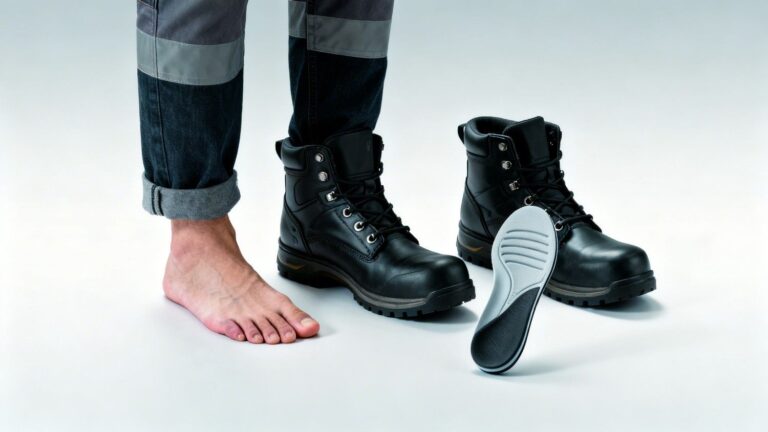
4. Work Boot Insoles
Work boots typically require thicker and more durable inserts due to limited interior cushioning and harder surfaces.
Specialized insoles for heavy people designed for work boots often combine dense foam with reinforced arch support to handle demanding environments.
Best for:
Construction workers, warehouse employees, and anyone standing on concrete floors.
Pros
- Durable construction
- Strong arch support
- Designed for heavy-duty footwear
Limitations
- May feel bulky in lightweight shoes
- Slightly heavier than athletic inserts
These inserts are often more durable than general-purpose insoles because they’re built specifically for demanding work conditions.
5. Stability Insoles for Motion Control
Stability inserts are designed to guide the foot through a more controlled walking motion. They are especially helpful for people experiencing overpronation.
Because stability inserts reinforce the midfoot and heel area, they are commonly recommended insoles for heavy people needing improved balance and alignment.
Best for:
People whose feet roll inward while walking.
Pros
- Improved alignment
- Reduced joint strain
- Better motion control
Limitations
- Less cushioning than soft foam models
- May feel firm initially
These inserts often combine structural arch support with firm heel stabilization for improved foot mechanics.
Our picks: Shoes are the other half of the equation. A well-cushioned shoe is a good place to start.
HOKA Bondi SR (men) – A heavily cushioned, slip-resistant shoe for long days on your feet.
Which Type of Insole Is Best for Most Heavy People?
There is no single best insole for every heavier individual.
- If comfort is the main goal, high-density foam inserts are often the most balanced choice.
- If arch support and stability are priorities, orthotic-style insoles usually provide the strongest structure.
- If heel discomfort is the primary concern, gel-based cushioning can help absorb impact.
- If you spend long hours on concrete floors, work boot insoles often offer the best combination of durability and support.
- If your feet roll inward while walking, stability insoles may provide better alignment control.
Matching the insole to your specific needs generally produces better results than choosing the firmest or most expensive option available.
Frequently Asked Questions
What kind of insoles are best for a 250-pound man?
Look for insoles with firm arch support, a deep heel cup and dense foam such as EVA or PU that won’t flatten quickly. Many brands label these models “heavy duty” or rate them for people over 220 pounds. Full-length insoles usually give the most even support.
What are the best insoles for heavy men with flat feet?
Choose firm insoles with a low to medium arch and a deep heel cup. A very high arch can feel uncomfortable on flat feet, while a firm, lower arch helps stop the foot from rolling inward without pressing too hard. Wear them for a few hours a day at first and build up gradually.
What are the thickest insoles available?
Extra-thick cushioned insoles exist, but thicker isn’t always better. Very thick insoles need roomy shoes, and soft foam can still flatten under higher body weight. For most heavier people, a dense, supportive insole matters more than thickness. If you choose a thicker pair, remove the original insole first. See Should You Remove Original Insoles Before Adding New Ones.
Do heavier people need special insoles?
Yes. Higher body weight increases pressure on the feet, which means standard inserts may compress too quickly. Specialized insoles for heavy people are designed with stronger materials and better structural support.
Are firm or soft insoles better?
Most heavier individuals benefit from moderately firm inserts. Firm support structures maintain alignment and prevent excessive compression, while cushioning layers still absorb shock.
How long do supportive insoles last?
Durability depends on the materials and usage. Many high-quality inserts last between six months and a year with daily use. For more details, see How Long Do Insoles Last .
Can insoles help reduce knee or back pain?
They can. By improving foot alignment and distributing pressure more evenly, supportive inserts can reduce strain on the knees, hips, and lower back.
Do insoles work with any shoes?
Most inserts are designed for athletic shoes, work boots, or casual footwear. However, thin models are also available for tighter shoe designs.
Final Verdict
Choosing the right insoles for heavy people can significantly improve daily comfort, reduce foot fatigue, and support better alignment during walking and standing.
The best option depends on your needs:
- High-density foam for balanced comfort
- Orthotic inserts for maximum support
- Gel cushioning for impact absorption
- Work boot insoles for demanding environments
- Stability inserts for motion control
By selecting durable materials and proper arch support, you can greatly improve foot comfort and maintain better overall stability throughout the day.
If foot instability or inward rolling is part of the problem, structured support like insoles for overpronation can make a noticeable difference.
For those with low arches, combining this with the right best insoles for flat feet often provides even better results.