Why Work Shoes Feel Less Comfortable Later in the Day
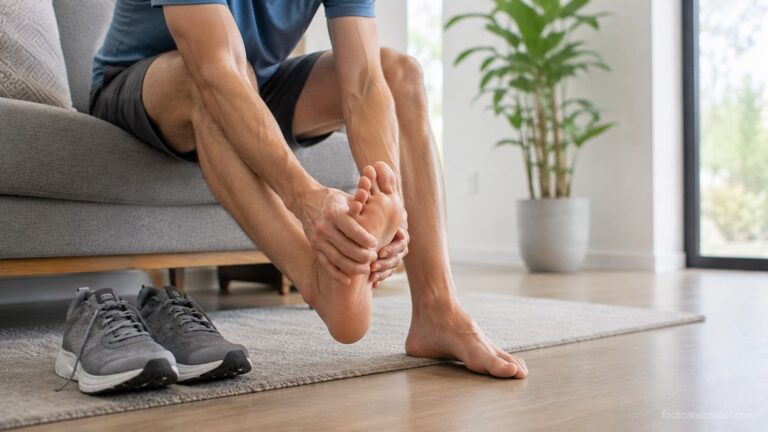
It is common for work shoes to feel fine when you first put them on and much less comfortable several hours later. A long shift can mean sustained standing, repeated walking, hard floors, and gradual swelling or fatigue in the feet. The shoes themselves may not have changed, but the way your feet interact with them can change as the day goes on. You may notice pressure around the heel or forefoot, tired arches, a tighter feeling across the shoe, or general discomfort that was not there in the morning.
Work shoes often feel less comfortable later in the day because the feet have accumulated hours of standing and walking, while heat, fatigue, and subtle changes in foot volume can make footwear feel tighter. Hard flooring and worn cushioning can add to the problem. The pattern matters: discomfort that appears only after a long shift is different from pain that is present from the first steps of the day.
Why Work Shoes Can Feel Fine in the Morning
The first few hours of a shift are usually easier because your feet have not yet absorbed the day’s full workload. Whether you are standing at a workstation, walking between rooms, working on a retail floor, or moving around a warehouse, the total time on your feet gradually adds up.
If the shoes are fine but your feet still ache by evening, compare the best insoles for standing all day.
As the day progresses, the muscles, tendons, ligaments, and other tissues involved in standing and walking are exposed to repeated loading. Your gait may also become slightly less efficient when you are tired, even if you do not notice a major change in how you walk.
There is another simple factor: your feet can feel different later in the day than they do in the morning. After hours of standing and walking, some people notice more fullness or pressure inside their shoes. A pair that felt comfortably roomy at 7 a.m. can feel noticeably less forgiving by late afternoon.
This is one reason end-of-day discomfort deserves to be considered separately from the initial fit of the shoe.
What Changes During a Long Workday?
Standing and walking create different types of demand, and many jobs combine both.
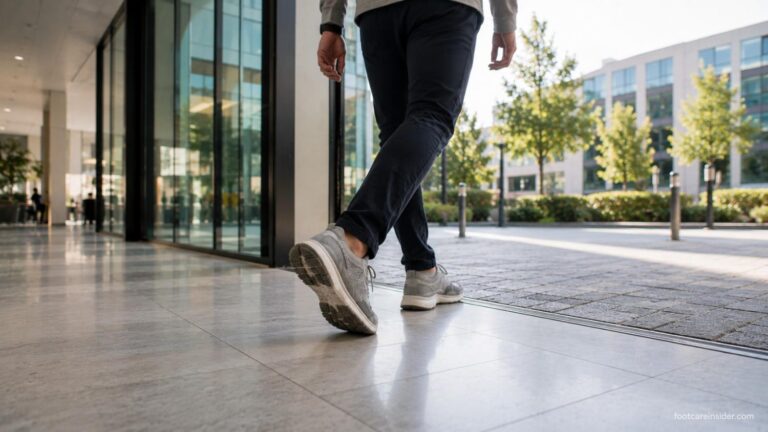
Prolonged standing keeps the feet continuously involved in supporting body weight. Walking adds repeated loading as pressure moves from the heel through the arch and toward the forefoot with each step. If the workday also includes stairs, frequent turning, carrying equipment, or moving across hard commercial flooring, the cumulative workload can become substantial.
The surface underneath you can matter too. Concrete, tile, and other firm floors provide little cushioning of their own, leaving more of the job to the footwear. If that footwear already has worn cushioning or limited support, the difference may become more noticeable as the shift continues.
For a closer look at how firm flooring contributes to accumulated fatigue, Why Hard Floors Cause Foot Fatigue is a useful related guide.
The key point is that later-day discomfort does not necessarily mean something suddenly went wrong with the shoe. Sometimes the shoe is exposing its limitations only after the feet have been working for several hours.
Why Shoes Can Start Feeling Tighter Later in the Day
A common complaint is that work shoes feel tighter around the forefoot or toes as the day progresses.
Several things can contribute to that sensation. Long periods of standing and walking can change how much space your feet appear to need inside the shoe. Warm conditions, long shifts, and repeated activity can also make a previously comfortable fit feel less forgiving.
This is especially noticeable with structured work shoes, boots, or safety footwear that already fits fairly closely. A small reduction in usable internal space can feel much more significant after several hours than it does when the feet are fresh.
The insole also plays a role. A thick replacement insole can reduce the vertical room available inside the shoe, and stacking a new insole over an existing liner can make the fit tighter still. That is why a thicker insole is not automatically a better answer for late-day discomfort.
If your main complaint is that the shoes become uncomfortably tight as the day goes on, Can Insoles Make Shoes Too Tight can help explain the fit issue in more detail.
How Foot Fatigue Changes the Way a Shoe Feels
Sometimes the shoe itself has not become more uncomfortable; your feet have become less tolerant of the same pressure.
Early in a shift, mild pressure under the heel, arch, or forefoot may barely register. Several hours later, that same pressure can become much more noticeable because the surrounding tissues are fatigued.
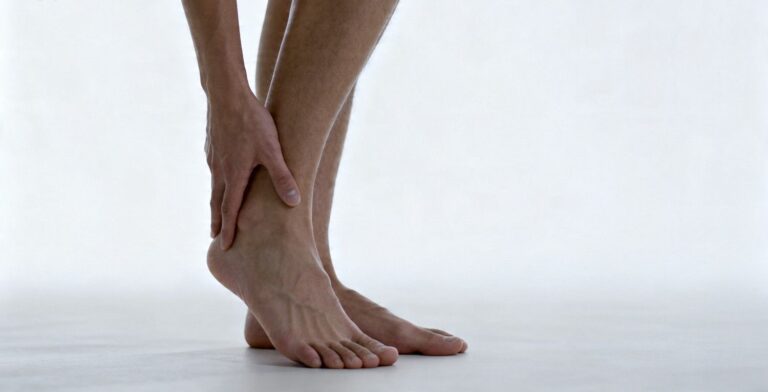
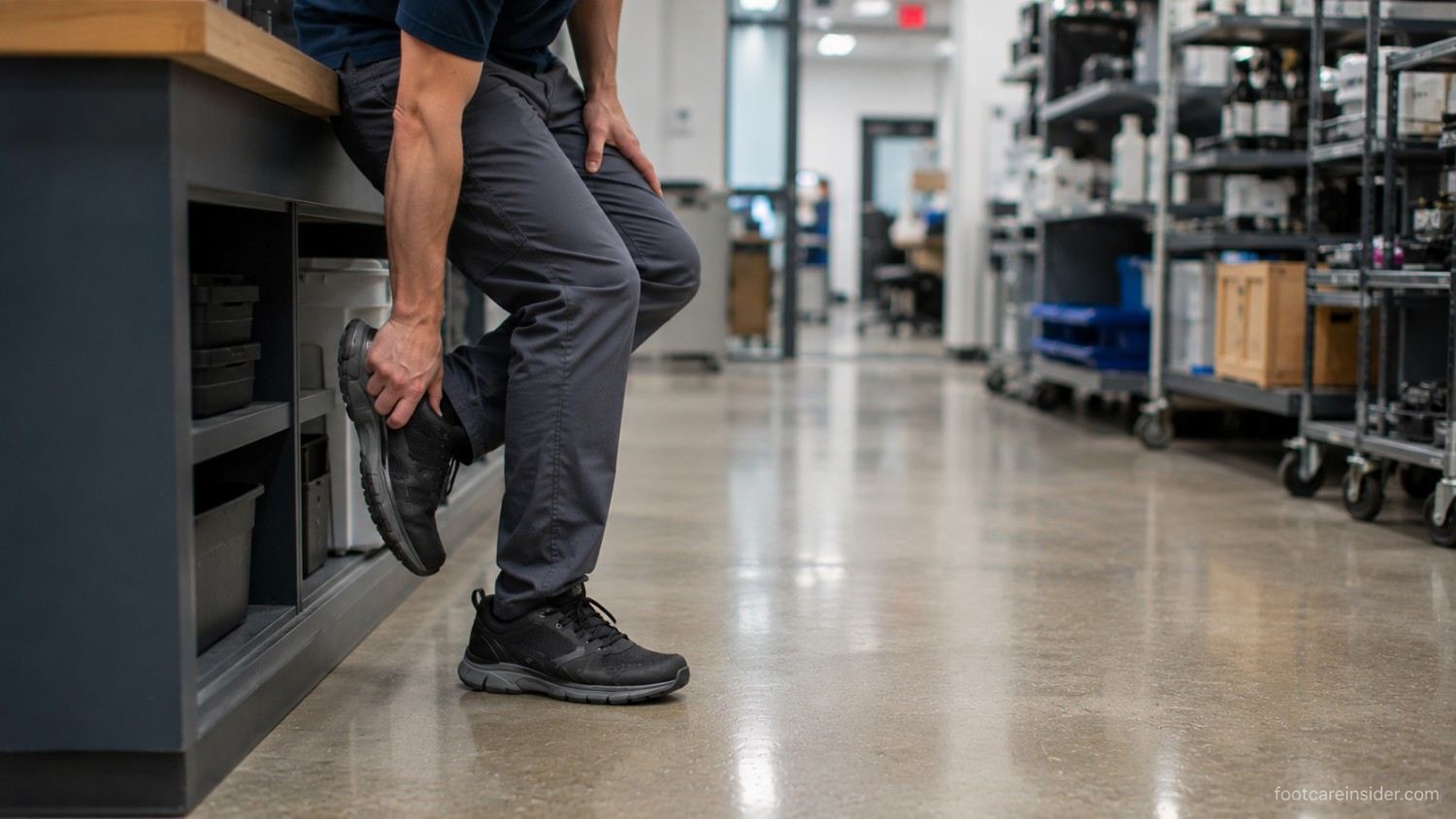
You may notice this as a general heavy feeling first. Later, the discomfort may become more specific. The heel may feel sore after repeated walking, the arch may feel tired after prolonged standing, or the forefoot may feel compressed in a shoe that seemed perfectly acceptable earlier.
That progression is useful when assessing the problem. If discomfort consistently appears after a certain number of hours, think about what changes between the beginning and end of the shift: standing duration, walking load, floor hardness, shoe temperature, footwear fit, and the condition of the insole.
If you are unsure where the discomfort is actually coming from, the Interactive Foot Pain Tool can help you identify the location of your symptoms and explore related foot-pain information.
When Later-Day Discomfort Means Your Shoes Need Attention
Not every uncomfortable evening means you need new work shoes. A demanding shift can simply leave your feet tired.
The pattern becomes more useful when it repeats. If your shoes are comfortable during short periods but consistently become uncomfortable after several hours, the combination of workload and footwear deserves a closer look. Check whether the outsole is worn, whether the cushioning has become noticeably flatter, and whether the insole still holds its shape.
Also pay attention to how quickly the discomfort appears. Feeling tired after a twelve-hour shift is different from feeling significant pain after only an hour or two. If the problem starts earlier over time, continues even after rest, or becomes strong enough to alter your normal walking, it should not simply be written off as ordinary work fatigue.
Persistent or worsening pain is a reason to seek professional assessment, particularly when it is localized, repeatedly interrupts normal activity, or comes with other concerning changes.
The most useful question is not simply, “Why do my work shoes hurt later?” It is whether the discomfort is being driven mainly by the workload, the flooring, the shoe fit, the insole, or a combination of those factors. Once that pattern is clear, the next buying or footwear decision becomes much easier.
Small Changes That Can Improve Comfort Later in the Day
Start with the basics before changing your footwear completely. Taking short opportunities to sit, changing position regularly, and avoiding long periods in exactly the same stance can reduce the continuous load on your feet. When work involves walking, vary your pace naturally and use reasonable breaks to let your feet recover.
Footwear condition matters too. Check whether the outsole is worn unevenly, whether the cushioning feels flatter than it used to, or whether the shoe has lost some of its original structure. A shoe that has gradually changed over months can become uncomfortable late in the day even though it still looks usable.
How the Insole Can Affect End-of-Day Comfort
An insole can change how your foot feels inside the shoe, but the right choice depends on what is actually causing the discomfort.
If your main issue is general fatigue after long periods on hard floors, some cushioning may make the underfoot feel more forgiving. If your arches feel tired or unsupported, a more structured design may be worth considering. When the shoe becomes tight later in the day, however, adding a thick insole can make the problem worse.
This is why comfort is not simply about choosing the softest option. A practical insole needs to fit the shoe, remain comfortable throughout the shift, and provide the type of support your work pattern calls for.
If you’re considering replacement timing, How Long Do Insoles Last can help you recognize signs that an older insole has lost useful cushioning or support.
When to Reconsider the Work Shoe Itself
Sometimes the insole is not the main problem.
A work shoe can become less comfortable because the midsole has compressed, the outsole has worn down, or the upper has become less supportive. A shoe can also simply be the wrong shape for your foot, especially if your toes feel increasingly restricted after several hours.
Try to separate the timing of the discomfort from the location. If the whole foot feels tired after a long shift, overall workload may be the main factor. If one specific area repeatedly becomes painful, the footwear may be contributing, but the pattern deserves closer attention rather than assuming that a new insole will solve it.
A good work shoe should remain reasonably comfortable across the period you actually use it, not just during the first hour.
When Persistent Discomfort Should Be Checked
There is a difference between ordinary end-of-day fatigue and pain that keeps progressing.
Consider getting professional advice if discomfort becomes persistent, begins much earlier in the workday, continues after rest, or changes the way you walk. Significant swelling, sudden pain, numbness, or symptoms following an injury also deserve appropriate attention.
An insole or footwear adjustment can be part of a comfort strategy, but it should not be used to ignore symptoms that are getting worse.
Common Questions
Why do my work shoes feel tight in the afternoon?
Your feet can feel different after hours of standing and walking, and heat, activity, and fatigue can make a close-fitting shoe feel more restrictive. A thick insole can add to the problem by reducing the space inside the shoe.
Should I buy softer insoles for end-of-day foot fatigue?
Soft cushioning may help when general fatigue and hard flooring are the main issues. If your arches feel unsupported or your feet feel unstable, a more structured option may be a better fit.
Why are my shoes comfortable in the morning but painful later?
The footwear has not necessarily changed. The accumulated load from standing and walking can make the same pressure more noticeable as your feet become fatigued during the day.
Should I replace my work shoes or just the insoles?
Look at both. If the shoe itself has worn cushioning, poor fit, or a damaged outsole, replacing only the insole may not address the underlying comfort problem.
The Main Thing to Watch
When work shoes become uncomfortable later in the day, look at what changes between morning and evening. If the main difference is accumulated standing and walking, focus on workload, cushioning, and recovery. If the shoe becomes noticeably tight, investigate fit and insole thickness. If the discomfort keeps becoming stronger or starts earlier in the day, don’t assume it is simply normal fatigue.