How Shoe Fit Changes the Way Insoles Feel
A new insole can feel completely different from one shoe to another, even when the insole itself has not changed. A roomy walking shoe may make a structured insole feel comfortable, while the same insole can feel too high or restrictive inside a snug work shoe. The difference often comes down to available space, the shape of the shoe, the original liner, and how securely the foot sits inside the footwear. Understanding how shoe fit affects insoles is important because an insole cannot be judged properly in isolation. The shoe and insole work as one system.
Shoe fit affects how insoles feel because an insole changes the amount of space, support, and pressure inside the shoe. A thicker or more structured insole can improve cushioning or support in a roomy shoe but feel cramped in a low-volume shoe. The shape of the footwear, the removable liner, toe room, and how your foot moves during standing and walking all influence the final result.
Why the Same Insole Can Feel Different in Different Shoes
An insole does not sit in a neutral space. It occupies part of the shoe’s internal volume and changes the surface your foot rests on.
That means two people can use the same insole and have very different experiences. One person may place it into a roomy walking shoe and feel comfortably supported. Another may put it into a close-fitting work shoe and immediately notice pressure around the arch, heel, or forefoot.
The shape of the shoe matters as much as its stated size. Some shoes have more depth through the midfoot, while others are shallow and leave little vertical room above the foot. Toe-box width also matters, particularly if an insole changes how your foot sits inside the shoe.
The effect may become more noticeable during a long day. A shoe that feels acceptable for a short walk can feel increasingly tight after hours of standing or walking because the foot is working continuously and there is less tolerance for pressure.
This is also why work shoes can feel more uncomfortable later in the day.
This is why testing an insole only by holding it in your hand or looking at its thickness does not tell you how it will actually feel in use.
The First Fit Question: How Much Space Does the Shoe Have?
Before thinking about cushioning or arch support, look at the space already available inside the shoe.
A low-volume shoe leaves less room for an added insole. A deeper shoe gives the foot more vertical space and may accommodate a thicker or more structured design without changing the fit as dramatically.
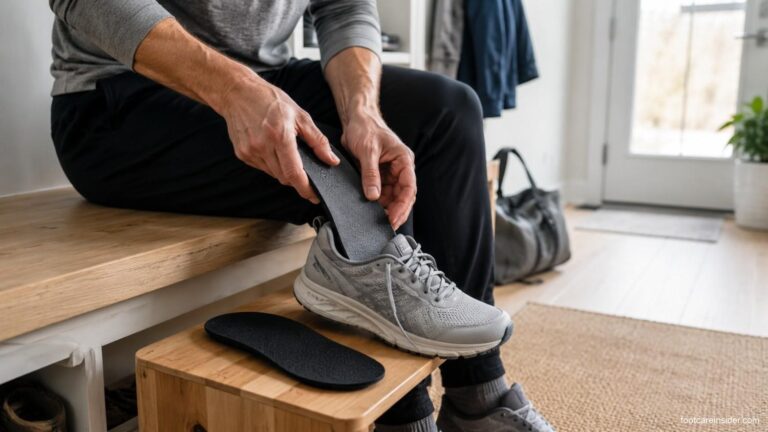
The original removable liner is important too. If the shoe has a removable factory insole, replacing it can create more room than simply placing a new insole on top. If the original liner stays underneath, the combined thickness can become significant.
This is particularly relevant when the shoe already feels snug. The toes may have less freedom, the upper can press more firmly against the foot, and the entire shoe may feel different even though the outsole and upper have not changed.
Readers dealing with this exact issue can explore Can Insoles Make Shoes Too Tight for a closer look at the relationship between added insole thickness and shoe space.
How Insole Thickness Changes the Feel
Thickness is not simply a comfort feature. It changes how the foot sits inside the shoe.
A thicker insole can provide more material for cushioning and support, but it also occupies more internal space. A thin insole usually leaves more room for the foot and can be easier to fit into snug footwear, although it may provide less material for cushioning or structure.
The difference can be subtle at first. You might notice that your heel sits slightly higher, your toes have less room to move, or the upper presses differently across the top of the foot. During walking, these small changes can become more noticeable because the foot repeatedly moves through the shoe.
A thinner design is therefore not automatically inferior to a thicker one. It may simply be better suited to a shoe with limited internal volume.
For a direct comparison of these tradeoffs, Thick vs Thin Insoles is useful when deciding how much insole material your footwear can realistically accommodate.
Why Shoe Shape Matters as Much as Shoe Size
Two shoes with the same listed size can have very different internal shapes.
One may have a wider forefoot and more depth around the arch, while another may taper more quickly toward the toes or sit closer over the top of the foot. An insole has to work within that shape.
The heel cup is another consideration. If the insole raises your heel too much or changes the foot’s position inside the heel area, the shoe can feel less secure. A well-fitting shoe should still hold the foot comfortably without forcing it forward or creating unusual pressure.
The arch area can also change how an insole feels. A structured support placed inside a shallow shoe may feel much more pronounced than the same support inside a deeper shoe. That does not necessarily mean the insole is too aggressive; the surrounding footwear may simply provide less room for the foot and insole to work together.
Walking shoes and work footwear can therefore require different choices even when the underlying foot-support goal is similar.
When a Good Insole Feels Wrong Because of the Shoe
Sometimes the insole is not the problem. The combination is.
A supportive insole can be well designed yet feel uncomfortable when paired with a shoe that is too shallow, too narrow, or already tightly fitted around the foot. Likewise, a very soft insole may feel pleasant but change the foot’s position enough to create a different pressure pattern.
Pay attention to what happens immediately after installing the insole and then again after a normal period of standing or walking. If pressure appears only after several hours, the issue may be cumulative lack of space rather than the insole’s basic shape.
If the shoe becomes noticeably uncomfortable during everyday walking, it is also useful to separate the role of the shoe from the role of the insole. A footwear change may sometimes be more appropriate than continually switching between different insoles.
The goal is not to find an insole that feels good on its own. It is to find a combination where the shoe shape, available space, insole profile, and foot movement all work together comfortably.
How to Check the Fit Before Using a New Insole
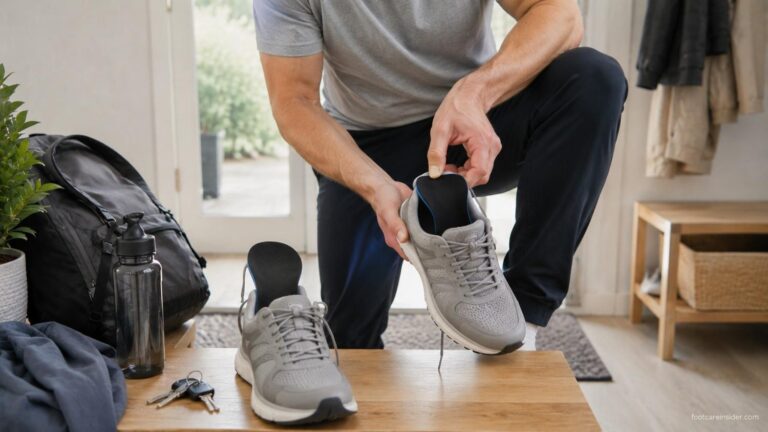
Start by putting the insole into the shoe the way you plan to wear it and walk around for several minutes. Pay attention to your toes, heel, arch, and the top of the foot rather than focusing only on whether the insole feels soft.
Your toes should still have comfortable room to move, and your heel should stay securely in place. If the upper suddenly feels tight or your foot feels pushed upward against the shoe, the insole may be taking up more space than the footwear can accommodate.
It is also worth checking whether the original liner is removable. Replacing it can create useful space, but only when the shoe is designed to work that way.
When More Cushioning Is Not Necessarily Better
A thicker insole often sounds like the obvious choice when comfort is the goal, but more material does not automatically mean a better result. If your shoe already has a cushioned midsole, adding a very thick insole may simply reduce usable space.
The same applies to softer materials. A soft surface can feel pleasant initially, while a somewhat firmer option may provide a more consistent platform during longer periods of standing or walking.
For readers deciding between these different feel profiles, Soft vs Firm Insoles can provide a more direct comparison.
The better choice is the one that improves comfort without changing the shoe’s fit in an unwanted way.
What to Do When an Insole Makes the Shoe Uncomfortable
If a new insole immediately creates pressure, do not assume that your feet simply need to “get used to it.” First check whether the shoe has enough room for the added height and whether the insole is positioned correctly.
If the problem is mainly tightness, a thinner profile may be more appropriate. If the issue is a very noticeable pressure point under the arch, the shape of the insole and the shape of the shoe may not be working well together.
Try the combination with your normal socks and during the type of activity where you plan to use it. A setup that feels acceptable while sitting can feel very different after an hour of walking.
When an insole repeatedly changes how comfortable your shoes feel, the practical answer may be to change the insole, the footwear, or both rather than forcing the combination.
Signs the Fit Is Working Well
A good shoe-and-insole combination should feel reasonably natural during ordinary movement. You should have enough room for the toes, a secure heel, and an even, comfortable contact under the foot.
The insole should not constantly remind you that it is there. Some adjustment in feel is normal when changing footwear, but ongoing pressure, rubbing, excessive tightness, or a feeling that your foot is being pushed into an unusual position suggests that the fit deserves another look.
It also helps to judge the combination over a realistic period rather than a single step. Shoes used for a full work shift or several miles of walking need to remain comfortable after sustained use, not merely feel good for five minutes.
Common Questions
Can the same insole fit every shoe?
No. Shoe depth, width, heel shape, and internal volume can all change how the same insole feels. An option that works comfortably in a roomy walking shoe may feel too bulky in a shallow work shoe.
Should I remove the original insole before adding a new one?
If the original insole is removable, doing so may create more usable space. However, the resulting fit still needs to be secure and comfortable, and the shoe should be designed to accommodate the replacement.
Why does my insole feel fine at first but uncomfortable later?
The feet and footwear experience greater load after hours of standing or walking, so small fit problems can become more noticeable over time. Heat, fatigue, and reduced space inside the shoe can also make pressure feel stronger later in the day.
How do I know when an old insole should be replaced?
Look for changes in cushioning, compression, shape, or support rather than relying only on how old it is. How Long Do Insoles Last explains some of the practical signs that an insole may no longer be performing as it once did.
The Shoe and Insole Have to Work Together
An insole cannot be judged separately from the shoe carrying it. A thicker design may work well in a deep, roomy shoe but create problems in a close-fitting one, while a slimmer option may be easier to live with when space is limited. The best combination is the one that gives your foot the support or cushioning you need while preserving a secure, comfortable fit during the activity you actually do.