Cushioning Insoles vs Support Insoles for Daily Use
Choosing between cushioning and support can be surprisingly difficult when the same pair of shoes is used for commuting, errands, work, and everyday walking. Both types can make a shoe feel better, but they address different comfort priorities. Cushioning focuses more on how the foot feels against the ground, while support focuses more on maintaining structure and stability under repeated use.
For someone who spends several hours walking on sidewalks, standing indoors, and moving between different surfaces during a normal day, the difference can become noticeable by evening. The right choice depends less on which type sounds more comfortable and more on what your feet actually need from the shoe.
Cushioning insoles mainly add softness and pressure absorption, while support insoles place more emphasis on structure, stability, and maintaining the foot’s position under load. Neither is automatically better for daily use: cushioning can suit people who mainly want impact comfort, while support may make more sense when arch fatigue or mild instability is the bigger concern.
What Is the Difference Between Cushioning and Support Insoles?
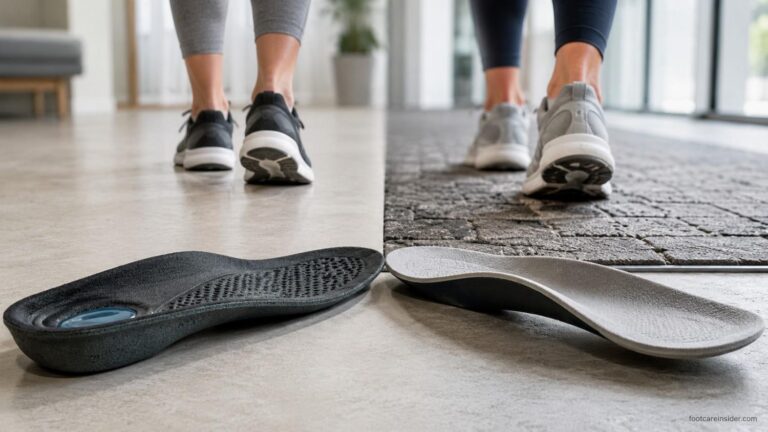
Cushioning insoles are designed primarily to soften the contact between the foot and the shoe. They may use materials such as memory foam, gel cushioning, EVA foam, or polyurethane to absorb some pressure and make walking or standing feel less harsh.
Support insoles take a more structured approach. They commonly include a shaped arch area, a firmer base, or other features intended to provide more consistent support as the foot moves through the day.
That difference affects the overall feel. A cushioned insole may feel immediately softer when you step into the shoe, whereas a support-oriented insole can feel firmer or more noticeable under the arch.
For general foot comfort, it is also useful to understand how different support levels feel in practice. Soft vs Firm Insoles provides a closer comparison of how firmness changes the experience underfoot.
How Cushioning Insoles Behave During Everyday Use
Cushioning becomes particularly noticeable when the feet repeatedly meet hard surfaces. Walking on concrete sidewalks, tile, or other firm flooring creates repeated impact, and additional cushioning can make those contacts feel less abrupt.
This can be useful for someone whose main complaint is general foot fatigue or pressure beneath the heel and forefoot after a long day. A cushioned insole can also make a relatively firm everyday shoe feel more forgiving.
The trade-off is that softness does not automatically provide stability. A very plush insole may feel comfortable at first but can feel less controlled during long periods of walking, especially if the material compresses substantially under repeated load.
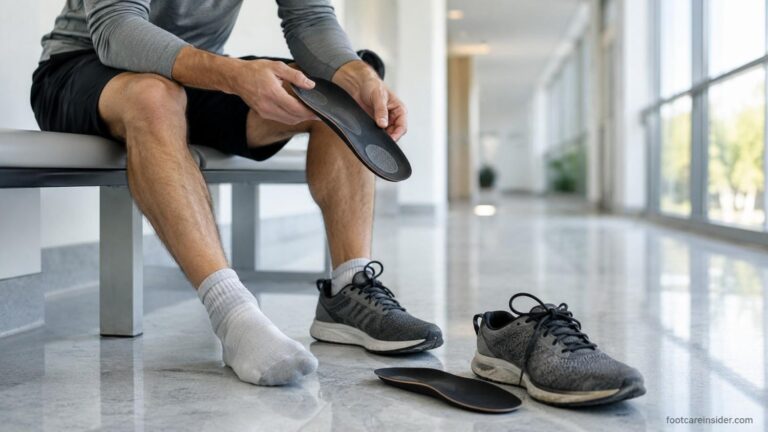
Cushioning also has to fit inside the shoe properly. A thick insole can reduce available space around the toes or raise the heel inside a shoe that was already snug. For everyday use, a moderate amount of cushioning may therefore be more practical than simply choosing the softest option available.
How Support Insoles Behave During Everyday Use
Support insoles are more concerned with structure than softness. Their shaped arch and firmer construction can provide a more stable platform for the foot while standing and walking.
This can be useful when the feet feel tired because they lack a sense of stability rather than because the ground feels harsh. Someone who notices arch fatigue after several hours of walking may prefer the more structured feel of a support insole.
The experience can take some adjustment. A support insole may feel firmer beneath the arch than a basic comfort liner, and a design with substantial structure may not suit a shoe with very little interior room.
Support also does not necessarily mean rigid. Some everyday support insoles combine a structured base with moderate cushioning, creating a middle ground between a soft comfort insert and a highly firm orthotic-style design.
How They Differ Under Repeated Standing and Walking
Daily use is rarely just standing or just walking. A typical day might involve walking to the car, standing at a desk, sitting for a while, walking through a store, and then spending several more hours on your feet.
Cushioning tends to make more sense when the main issue is repeated impact or pressure. Support becomes more relevant when stability and arch fatigue are more noticeable.
For example, someone who walks several miles during the day may appreciate cushioning under the heel and forefoot, particularly when using firm walking shoes. Someone who spends much of the day alternating between standing and short periods of walking may care more about maintaining a stable, consistent feel beneath the arch.
The distinction is not absolute. A support insole can still be cushioned, and a cushioning insole can still provide some basic structure. The important question is which characteristic should dominate the design for your particular routine.
Which Type Makes More Sense for Different Daily Routines?
For mostly casual walking and errands, cushioning may be enough when the shoes already provide reasonable stability and the main complaint is general tiredness or pressure.
For longer walking days, the choice becomes more dependent on the individual. Repeated heel impact can make cushioning attractive, but arch fatigue or a feeling of instability may shift the preference toward structured support.
Standing-heavy routines can also go either way. Someone standing on hard floors may prefer cushioning because the surface feels unforgiving, while someone with tired arches may find a moderately supportive design more useful than extra softness.
The shoe itself matters too. A roomy walking shoe can accommodate a more substantial insole, while a low-volume casual sneaker may require a slimmer design. An insole that works well in one pair can therefore feel completely different in another.
Readers who are primarily trying to improve comfort in their regular walking shoes may also find Best Insoles for Shoes You Wear Every Day useful when considering everyday fit and support options.
What About Durability and Long-Term Value?
Neither cushioning nor support automatically lasts longer. Durability depends on the materials, construction, how often the shoes are worn, walking distance, body weight, and the amount of repeated loading.
Soft cushioning materials can gradually compress, particularly when used for many hours every day. As the material loses some of its original rebound, the insole may feel noticeably different even though it still looks intact.
Structured support insoles can also lose their original shape or resilience. A firmer construction may retain its overall structure longer in some situations, but that does not guarantee a particular lifespan.
For daily use, value is therefore better judged by how consistently the insole maintains the comfort and support you actually need rather than simply by its initial price. A moderately priced insole that remains comfortable and fits the shoe properly may be more useful over time than a more expensive option that does not suit your routine.
The Pros and Cons of Cushioning Insoles
Cushioning insoles are often the simpler choice when your main concern is how hard the ground feels during everyday walking and standing. They can make firm shoes feel more forgiving and may reduce the sensation of pressure beneath the heel or forefoot. The limitation is that extra softness does not necessarily provide the same level of stability as a structured support insole. Very soft materials can also compress over time with heavy daily use.
The Pros and Cons of Support Insoles
Support insoles can be more useful when your feet feel tired because of a lack of structure rather than impact alone. A shaped arch and firmer base may create a steadier platform during walking and prolonged standing. The drawback is that some people find structured support less immediately comfortable, especially if they are accustomed to soft cushioning. A bulky support design can also be difficult to fit into tighter everyday shoes.
Cushioning Is Usually the Better Starting Point for Hard-Surface Comfort
This is for you if your everyday routine involves walking on sidewalks, tile, concrete, or other firm surfaces and your main complaint is general impact or pressure. A moderately cushioned insole can make each step feel less harsh, particularly in shoes with relatively firm midsoles. Compared with a structured support model, it prioritizes underfoot softness, but it may offer less help if arch fatigue is your bigger issue.
Support Makes More Sense When Your Arches Feel Tired
This is for you if your feet feel reasonably cushioned but your arches become tired during several hours of standing or walking. A structured support insole can provide a more consistent platform beneath the arch and may feel steadier as your activity continues. Compared with a soft comfort insole, it emphasizes stability rather than plushness. The limitation is that the firmer shape may take some adjustment.
Choose a Balanced Insole for Mixed Standing and Walking
If your normal day switches between sitting, standing, short walks, errands, and longer periods on your feet, a balanced insole may be the most practical direction. Look for moderate cushioning combined with moderate structure rather than an extreme at either end. This approach can provide more versatility than a very soft or very firm design, although it may not maximize either cushioning or support.
A Slim Cushioning Insole Fits Better in Low-Volume Shoes
If your everyday sneakers already feel fairly snug, a slim cushioning insole may make more sense than a thick comfort insert. It can add some underfoot cushioning without taking away as much toe or heel space. Compared with a substantial support insole, the low-profile design is easier to accommodate in tighter footwear. The trade-off is less structural support and potentially less cushioning depth.
Choose Firmer Support When Stability Matters More Than Softness
If your feet feel unstable or your arches become noticeably fatigued during repeated walking, a firmer support-oriented design may be worth considering. It can provide a more structured base than a plush cushioning insole and may maintain its shape better under repeated load. The drawback is a firmer feel underfoot, which may be less comfortable for someone whose primary problem is hard-surface impact.
Which Is Better for Long-Term Daily Use?
The better long-term choice is the one that continues to match your routine without creating new fit problems. Cushioning can lose some of its original softness as materials compress, while structured insoles can gradually lose resilience or shape as they are repeatedly loaded.
For someone walking several miles most days, durability and support retention may matter more than maximum softness. For lighter everyday use, a comfortable cushioning insole may provide everything needed without adding unnecessary structure.
The shoe also needs to be considered. Even a well-designed insole can become uncomfortable if it raises the heel too much, crowds the toes, or changes the fit of the shoe. Check the insole periodically for flattening, uneven compression, or changes in how your feet feel during normal use.
The Simple Difference Between the Two
Cushioning insoles = better starting point when impact, pressure, and general underfoot comfort are the main concerns.
Support insoles = better starting point when arch fatigue, stability, and maintaining structure are the bigger concerns.
For mixed daily use, a moderate combination of cushioning and support can make more sense than choosing either extreme.
Frequently Asked Questions
Are cushioning insoles better for walking?
They can be a good choice when repeated walking mainly creates heel or forefoot pressure and general fatigue. If walking also causes noticeable arch fatigue or instability, a more structured design may be worth considering.
Are support insoles good for standing all day?
They can be useful when prolonged standing makes the arches feel tired or unsupported. However, if hard flooring is the main problem, some people may prefer more cushioning or a balanced design.
Can I use a support insole in everyday sneakers?
Yes, provided the shoe has enough interior space. If the sneaker is already tight, a low-volume support insole is usually easier to fit than a thick, heavily structured model.
Do cushioning insoles wear out faster than support insoles?
Not necessarily. Both types can change with repeated use, and durability depends on construction, materials, activity level, and how frequently the shoes are worn. Look for visible compression and changes in comfort rather than relying only on a fixed replacement schedule.
Should I choose cushioning or support for mixed daily use?
Start with the problem you notice most. If your feet mainly feel pressure and impact, lean toward cushioning; if they mainly feel tired or unstable around the arch, lean toward support.
Final Verdict
For daily use, cushioning makes the most sense when comfort against hard surfaces is your priority, while support is the better direction when arch fatigue or stability is more noticeable. If your routine includes both walking and standing, a moderate combination of cushioning and structure may offer the most practical balance without going too far in either direction.