Can Flat Feet Cause Hip Pain?
Understanding Flat Feet Hip Pain and Alignment
If you’ve been dealing with ongoing hip discomfort and can’t quite figure out why, your feet might be part of the problem.
Many people experiencing flat feet hip pain don’t realize the issue often starts with poor foot alignment. So, can flat feet cause hip pain? In many cases, yes. When the arches collapse, the body compensates in subtle ways that gradually affect the knees, hips, and even the lower back. This type of flat feet hip pain often develops gradually and is easy to overlook at first.
Understanding the connection between flat feet and hip pain is key to identifying the real cause—and choosing the right way to address it.
For the full picture, see our complete flat feet guide.
What Are Flat Feet?
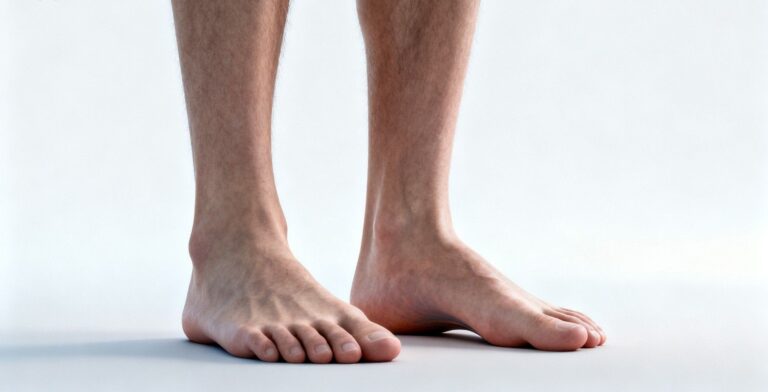
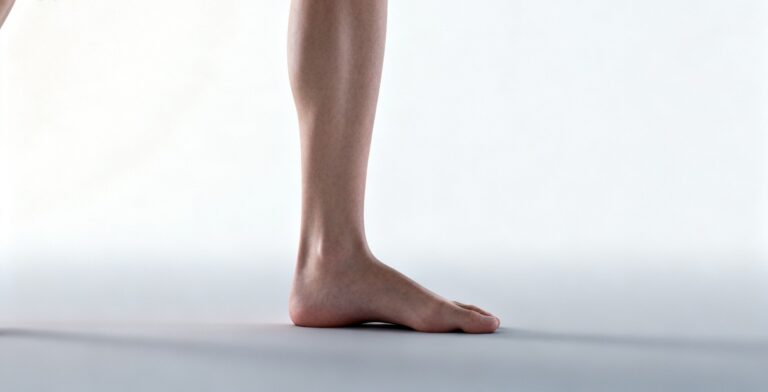
Flat feet, also known as fallen arches, occur when the arch of the foot collapses or doesn’t form properly. Instead of having a visible curve along the inside of the foot, the entire sole comes into contact with the ground.
This changes how your body distributes weight and absorbs impact.
In a healthy foot:
- The arch helps with shock absorption
- The foot rolls slightly inward (normal pronation)
- Movement stays controlled and efficient
With flat feet:
- The arch collapses
- The foot rolls inward excessively (overpronation)
- Stability decreases
That excessive inward motion is where problems begin.
How Flat Feet Lead to Hip Pain
To understand the link between flat feet and hip pain, you need to look at the body as a chain.
When your foot overpronates:
- The ankle tilts inward
- The lower leg rotates inward
- The knee follows that rotation
- The hip joint shifts out of alignment
This chain reaction is often referred to as the “kinetic chain.”
The hip isn’t the starting point—but it becomes one of the areas that absorbs the consequences.
Over time, this altered alignment can lead to:
- Muscle imbalances
- Joint stress
- Uneven load distribution
That’s why the pain may feel like a hip issue, even though the root cause starts in the foot.
Root Causes Behind the Problem
Flat feet themselves don’t always cause pain. The issue develops when they affect movement patterns.
Common contributing factors include:
1. Overpronation
Excessive inward rolling of the foot creates instability.
This forces other joints—especially the hips—to compensate.
Many people dealing with this benefit from structured support similar to what’s discussed in best insoles for overpronation.
2. Weak Foot and Leg Muscles
The muscles that support the arch and stabilize movement may not be strong enough.
This leads to:
- Increased strain on joints
- Poor control during walking or running
3. Poor Alignment Over Time
Even small alignment issues, repeated daily, can build into larger problems.
What starts as mild instability can become:
- Chronic discomfort
- Altered gait patterns
- Persistent joint stress
4. Inadequate Footwear
Shoes without proper support can make flat feet worse.
Flat, unsupportive footwear:
- Encourages arch collapse
- Reduces stability
- Increases strain up the chain
Risk Factors That Increase the Likelihood
Not everyone with flat feet develops hip pain. Certain factors increase the risk:
- Long hours of standing or walking
- High-impact activities (running, sports)
- Excess body weight
- Previous injuries affecting gait
- Weak core or hip muscles
If your daily routine puts repeated stress on your feet, the chances of that stress reaching your hips are higher.
People who spend long hours on their feet often notice this connection more clearly, especially when support is lacking—something explored in insoles for standing all day.
How Symptoms Can Differ
Hip pain related to flat feet doesn’t always feel the same for everyone.
Some common patterns include:
Dull, Aching Pain
Often felt on the outside of the hip, especially after long periods of standing or walking.
Tightness or Stiffness
You may feel restricted movement in the hip joint, particularly after rest.
Pain That Builds Gradually
Unlike acute injuries, this type of discomfort tends to develop slowly over time.
Associated Lower Body Pain
Flat feet rarely affect just one area.
You might also notice:
- Knee discomfort
- Shin splints
- Lower back tension
These are all signs of the same underlying alignment issue.
When It Becomes More Serious
Occasional discomfort is one thing. Persistent pain is another.
You should pay closer attention if:
- Pain lasts longer than a few weeks
- It worsens with activity
- It starts affecting your mobility
- You notice changes in how you walk
At this stage, the body is no longer compensating efficiently.
Instead, it’s under strain.
Left unaddressed, this can lead to:
- Chronic joint stress
- Muscle imbalances
- Long-term movement dysfunction
The Bigger Picture
So, can flat feet cause hip pain?
Yes—but not directly.
Flat feet change how your body moves. Over time, those changes place stress on areas that aren’t designed to handle it—especially the hips.
Understanding this connection is the first step toward fixing the problem properly.
What Helps, When Insoles Work, and How to Prevent Hip Pain
Now that the connection between flat feet and hip pain is clear, the next step is understanding what actually helps—and just as importantly, what doesn’t.
There’s no single fix that works for everyone. The right approach depends on how severe the issue is, how long it’s been present, and what your daily activity looks like.
But there is a clear path forward.
Non-Commercial Treatment Options (Start Here First)
Before relying on any external support, it’s important to address the root of the problem: movement and stability.
1. Strengthening the Right Muscles
Flat feet often come with weak supporting muscles—not just in the foot, but also in the legs and hips.
Key areas to focus on:
- Foot intrinsic muscles (arch support)
- Calves and ankles (stability)
- Glutes and hips (alignment control)
Simple exercises like:
- Toe raises
- Arch lifts
- Glute bridges
can improve how your body handles movement.
Over time, better muscle support reduces the strain traveling up to your hips.
2. Improving Mobility and Flexibility
Tight muscles can pull your body out of alignment.
Common problem areas include:
- Calves
- Hip flexors
- Hamstrings
Regular stretching helps restore balance and allows your joints to move more naturally.
3. Adjusting Footwear
Shoes play a bigger role than most people realize.
Supportive footwear should:
- Match your arch type
- Provide stability
- Avoid excessive flatness
Wearing unsupportive shoes daily can reinforce poor movement patterns, making flat feet hip pain worse over time.
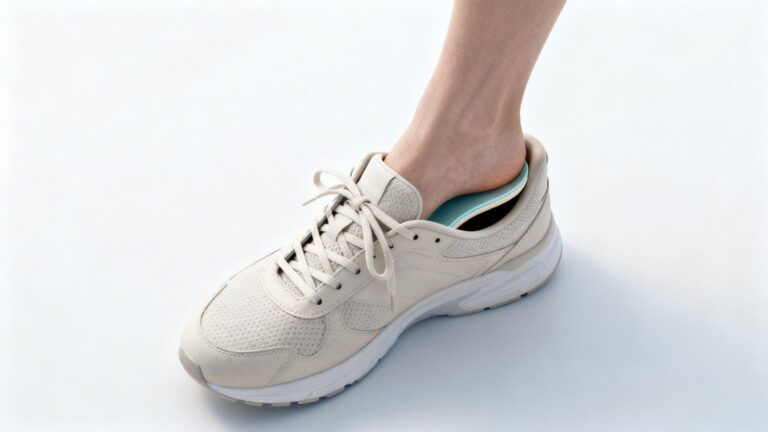
When Insoles Actually Help
Choosing the right level of support matters, especially when comparing different materials and structures—see our guide on soft vs firm insoles for a clearer breakdown.
They help most when:
- Your foot lacks structural support
- Overpronation is affecting alignment
- You spend long hours standing or walking
In these cases, insoles act as a stabilizing layer.
They:
- Support the arch
- Reduce inward foot collapse
- Improve alignment throughout the kinetic chain
This reduces the stress reaching your hips.
For example, structured support similar to what’s explained in insoles for flat feet can help restore balance at the foundation level.
When Insoles May Not Be Enough
While insoles can improve alignment, they don’t address everything.
You may need medical evaluation if:
- Hip pain is sharp or severe
- Pain persists despite using supportive insoles
- You experience numbness, tingling, or weakness
- Your walking pattern changes noticeably
In these cases, the issue may involve:
- Joint inflammation
- Tendon problems
- More complex biomechanical conditions
A healthcare professional may recommend:
- Physical therapy
- Custom orthotics
- Imaging or further assessment
Prevention: Reducing the Risk Long-Term
Preventing flat feet hip pain is not about one solution—it’s about consistency.
1. Maintain Foot Strength
Strong feet provide better natural support.
Even a few minutes of targeted exercises each day can make a difference over time.
2. Choose Supportive Footwear Early
Don’t wait until pain starts.
Shoes that support your arch and control movement help prevent misalignment from developing.
3. Replace Worn-Out Insoles
Support breaks down over time.
Once insoles lose their structure:
- Alignment worsens
- Pressure increases
- Symptoms may return
4. Pay Attention to Early Signs
Small discomfort often comes before bigger problems.
Ignoring early warning signs can allow minor issues to develop into chronic conditions.
Pregnancy can also change your arches, so read flat feet during pregnancy if that applies to you. Foot mechanics can also affect your lower back; see how flat feet lead to back pain.
Frequently Asked Questions
Can flat feet directly cause hip pain?
Not directly. Flat feet affect alignment, which can lead to hip strain over time.
Will insoles completely fix hip pain?
They can help reduce the cause, but they may not fully eliminate pain if other factors are involved.
How long does it take to feel improvement?
Some people notice changes within a few days, while others may take a few weeks depending on severity.
Are exercises or insoles more important?
Both matter. Insoles provide support, while exercises improve long-term stability.
Can hip pain go away if flat feet are corrected?
In many cases, reducing the underlying alignment issue can significantly improve or resolve symptoms.
For expert advice, read all expert foot care guides here.
Final Thoughts: Address the Cause, Not Just the Pain
So, can flat feet cause hip pain?
Yes—but the pain you feel in your hips is often the result of something happening lower down.
When your feet lose support, your entire body adjusts. Over time, those adjustments create strain in places like the hips.
The key is not just relieving symptoms—but correcting the movement pattern.
Learning how your body works together—from foot to hip—puts you in a much stronger position to fix the issue properly.