Insoles for Shin Splints
If you’ve ever felt that sharp, aching pain running along the front of your lower leg after a walk or workout, you know how frustrating shin splints can be. It often starts as a mild discomfort… then slowly turns into something that limits how far you can walk, how long you can stand, or whether you can train at all.
For many people, the issue isn’t just overuse — it’s poor foot mechanics. And that’s where the right insoles for shin splints can make a real difference.
What Are Shin Splints (And Why They Keep Coming Back)
Shin splints — medically known as medial tibial stress syndrome — occur when the muscles, tendons, and bone tissue around your shin become overloaded.
This usually happens when:
- Your foot rolls inward too much (overpronation)
- Your arches collapse under pressure
- Your muscles absorb more impact than they should
The result? Repetitive stress that builds up over time.
That’s why people who run, walk long distances, or stand all day are especially prone to it.
But here’s the key point most people miss:
Shin splints are often a symptom — not the root problem.
And in many cases, that root problem starts at your feet.
Why Standard Insoles Fail for Shin Splints
Most shoes come with basic, flat insoles that are designed for mass production — not for support.
They are typically:
- Too soft
- Too thin
- Lacking structure
- Quick to compress
At first, they might feel comfortable. But over time, they allow your foot to collapse inward, increasing strain on your lower leg.
This is exactly what worsens shin splints.
Even soft memory foam inserts — while comfortable — don’t correct movement. They simply cushion it.
If you’re unsure about softness vs support, see Soft vs Firm Insoles .
To actually reduce shin pain, insoles need to do more than absorb shock.
They need to control motion and stabilize your foot.
What Features Matter in Insoles for Shin Splints
Choosing the right insoles for shin splints isn’t about brand names — it’s about biomechanics.
Here’s what actually makes a difference:
1. Proper Arch Support
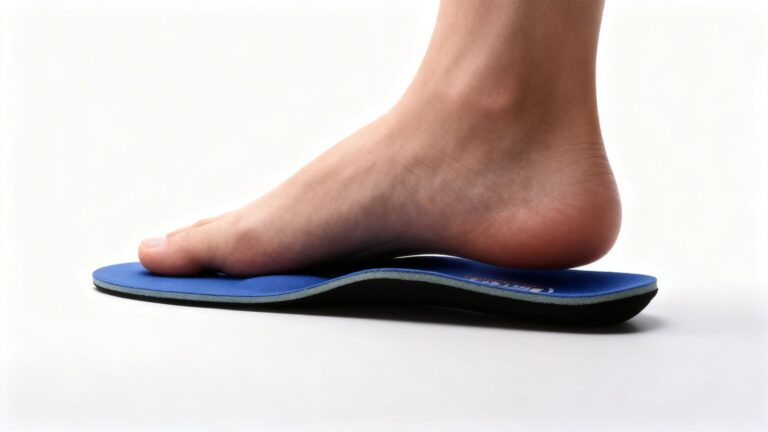
Your arch acts like a shock absorber. When it collapses, that stress transfers upward into your shins.
Good insoles should:
- Match your arch height (low, medium, high)
- Provide firm but comfortable support
- Prevent excessive inward rolling
If you also deal with flat feet, this becomes even more important — see Best Insoles for Flat Feet .
2. Controlled Cushioning (Not Too Soft)
Shock absorption matters — but only when paired with structure.
Look for:
- Medium-density foam
- Impact distribution without sinking
- Long-lasting compression resistance
Too soft = no stability
Too hard = discomfort
Balance is key.
3. Heel Stability and Deep Heel Cup
A stable heel reduces unnecessary movement during walking or running.
This helps:
- Align your ankle properly
- Reduce tibial rotation
- Limit stress traveling up the shin
A deep heel cup is one of the most underrated features in preventing shin splints.
4. Firmness Level
For shin splints, slightly firmer insoles tend to perform better than ultra-soft ones.
Why?
Because they:
- Control motion
- Support alignment
- Reduce repetitive strain
Soft insoles feel good short-term.
Firm insoles fix the problem long-term.
5. Durability and Material Quality
Cheap insoles break down quickly — and once they lose structure, they stop working.
Look for:
- EVA or PU foam
- Reinforced arch shells
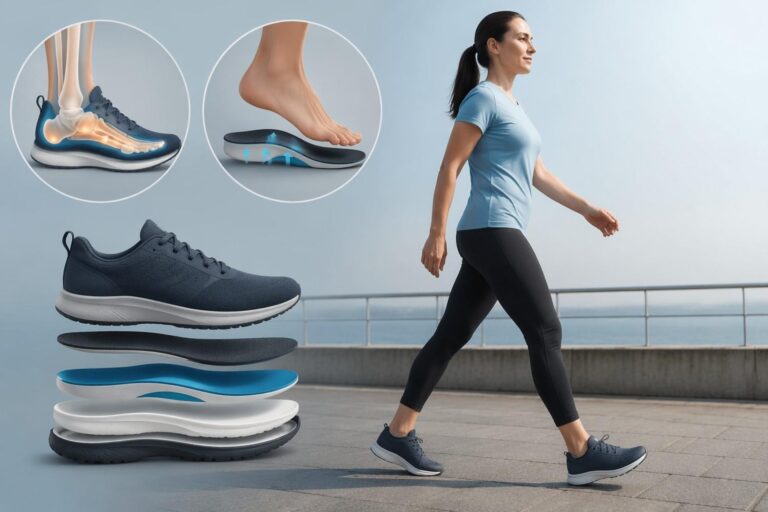
- Multi-layer construction
If you’re active daily, durability isn’t optional.
How to Choose Insoles for Shin Splints (Simple Framework)
Instead of guessing, use this step-by-step approach:
Step 1: Identify Your Foot Type
- Flat feet → need strong arch support
- Neutral → moderate support
- High arches → more cushioning + support
Step 2: Match Your Activity
- Running → lightweight + stability
- Standing all day → thicker cushioning
- Walking → balanced support
If you’re on your feet all day, also see Best Insoles for Standing All Day .
Step 3: Consider Pain Severity
- Mild discomfort → moderate support
- Ongoing pain → firmer, structured insoles
- Chronic issues → consider medical evaluation
Step 4: Check Shoe Compatibility
- Remove original insoles if needed
- Ensure proper fit (not too tight)
- Avoid overcrowding your shoes
Why Choosing the Right Insoles Matters
Shin splints don’t usually go away by just “resting more.”
If the underlying issue — poor alignment — isn’t addressed, the pain comes back.
The right insoles for shin splints can:
- Reduce impact stress
- Improve walking mechanics
- Support your arches properly
- Prevent recurring pain
And in many cases, they’re one of the simplest ways to fix the problem without overcomplicating things.
Top Insoles for Shin Splints (Expert Breakdown)
Now that you understand what actually causes the problem and what features matter, let’s break down the types of insoles for shin splints that consistently perform well.
Instead of random picks, this is structured by use case and foot mechanics — so you can match the right type to your situation.
1. Motion Control Insoles (Maximum Stability)
Best for: Moderate to severe shin splints, overpronation, flat feet
These are designed to actively control foot movement, especially inward rolling that puts stress on your shins.
Why they work:
- Firm arch support prevents collapse
- Medial reinforcement reduces ankle roll
- Deep heel cup stabilizes alignment
Pros:
- Strong correction for biomechanical issues
- Reduces stress on shins, knees, and ankles
- Ideal for long-term use
Limitations:
- Can feel firm at first
- Requires short break-in period
Insight:
If your shin splints are persistent or getting worse, this is usually the most effective category.
2. Cushioned Support Insoles (Balanced Comfort + Support)
Best for: Mild to moderate shin splints, daily walking, general use
These combine shock absorption with moderate structure, making them a good middle-ground option.
Why they work:
- Absorb impact from hard surfaces
- Provide enough support to reduce strain
- More comfortable for everyday wear
Pros:
- Comfortable right away
- Versatile for different shoe types
- Good for long hours on feet
Limitations:
- Less corrective than motion control insoles
- May not be enough for severe overpronation
Insight:
If your pain is more fatigue-based than structural, this type often works well.
3. Sport / Running Insoles (Dynamic Impact Control)
Best for: Runners, gym training, high-impact activity
These are built for repetitive impact, where shin splints are most common.
Why they work:
- Target shock absorption during movement
- Support foot alignment under load
- Reduce vibration through the lower leg
Pros:
- Designed for performance
- Lightweight and breathable
- Helps reduce running-related shin pain
Limitations:
- Less durable for everyday heavy use
- Not ideal for work boots or casual shoes
Insight:
If your shin pain shows up mainly during running, this is where you should focus.
4. Work / All-Day Insoles (Fatigue Reduction)
Best for: Standing 6–10+ hours, hard floors, work environments
Long periods of standing create constant pressure on your legs — including your shins.
Why they work:
- Distribute pressure evenly
- Reduce muscle fatigue
- Provide stable base support
Pros:
- Built for durability
- Thicker cushioning for hard surfaces
- Helps prevent pain buildup
Limitations:
- Bulkier than other types
- May not fit all shoes
Insight:
If your job keeps you on your feet all day, this category is essential.
You can explore more options here: Best Insoles for Standing All Day
5. Low-Profile Insoles (Tight-Fit Shoes)
Best for: Dress shoes, narrow sneakers, limited space
Sometimes the problem isn’t just support — it’s fit.
Why they work:
- Designed to fit in tight shoes
- Provide moderate support without bulk
- Improve alignment subtly
Pros:
- Easy to fit in most shoes
- Lightweight and discreet
- Better than factory insoles
Limitations:
- Less cushioning
- Not ideal for severe pain
Insight:
These are not the strongest option — but they’re far better than using no support at all.
Quick Comparison Insight
- Severe pain / flat feet → Motion control insoles
- Daily walking / mild pain → Cushioned support
- Running / workouts → Sport insoles
- Standing all day → Work insoles
- Tight shoes → Low-profile insoles
Choosing the wrong type is one of the biggest reasons people don’t see results.
Frequently Asked Questions
Do insoles really help shin splints?
Yes — when the right type is used. Insoles for shin splints help reduce impact, improve alignment, and prevent the repetitive stress that causes pain. Why Flat Feet Cause Knee Pain
How long does it take to feel relief?
Many people notice improvement within a few days to two weeks, especially if the cause is biomechanical.
Should I choose soft or firm insoles?
For shin splints, moderate to firm support is usually better than soft cushioning. Soft inserts may feel good but often lack stability.
Can insoles completely fix shin splints?
They can significantly reduce symptoms, but combining them with rest, stretching, and proper footwear gives the best results.
Do I need custom orthotics?
Not always. Many over-the-counter insoles work well. However, if pain is severe or persistent, a specialist may recommend custom options.
Final Verdict: Choosing the Right Insoles for Shin Splints
Shin splints aren’t just about overuse — they’re often a sign that your foot mechanics need support.
The best insoles for shin splints don’t just cushion your step.
They stabilize your foot, control motion, and reduce stress on your lower legs.
- If you need correction → go with motion control
- If you want balance → choose cushioned support
- If you’re active → use sport insoles
- If you stand all day → prioritize durability + shock absorption
The goal isn’t just comfort — it’s preventing the problem from coming back.
Choosing the right support now can make a noticeable difference in how your legs feel every single day.
If you’re dealing with foot alignment issues, check our guide on best insoles for overpronation to improve support and stability.
If you’re wondering whether support can reduce injury risk, read can insoles prevent injury for a deeper explanation.