7 Signs You Need New Insoles (Most Ignore #3)
If your feet feel more tired than usual, your shoes suddenly feel uncomfortable, or you’re noticing new aches in your heels, arches, or even your knees — it may not be your shoes at all.
One of the most overlooked causes of foot discomfort is worn-out or ineffective insoles.
Many people continue using the same inserts for months (or even years) without realizing they’ve lost their support. Over time, this can affect not just your feet, but your posture, alignment, and overall comfort throughout the day.
Understanding the signs you need new insoles can help you prevent small discomforts from turning into long-term problems.
Quick answer: your insoles need replacing when your feet tire faster than before, the cushioning feels hard or flat, the arch no longer springs back when you press it, or old aches return. Most daily-use insoles last about 3–6 months, less with heavy standing. Worn insoles often still look fine, so test them rather than judge by sight.
What Does It Mean When Insoles Wear Out?
Insoles are designed to provide cushioning, support, and stability. But they are not permanent.
With daily use, materials like foam, gel, and support structures gradually break down. This reduces their ability to:
- Absorb shock
- Support the arch
- Stabilize the heel
- Distribute pressure evenly
When this happens, your body begins to compensate — often in ways that lead to discomfort or pain.
For example, if your arch support weakens, your foot may collapse slightly inward, increasing strain on the plantar fascia. Over time, this can lead to issues similar to those discussed in arch pain relief insoles .
Root Causes of Insole Breakdown
Understanding why insoles wear out helps explain why symptoms appear.
1. Material Compression
Most insoles rely on foam or gel for cushioning. With repeated pressure from walking or standing, these materials flatten and lose elasticity.
2. Loss of Structural Support
Higher-quality insoles include firm arch supports or stabilizing frames. Over time, these structures weaken or shift, reducing their effectiveness.
3. Moisture and Heat Exposure
Feet produce sweat throughout the day. Combined with body heat, this creates an environment that accelerates material degradation.
4. Activity Level
If you spend long hours standing or walking — especially on hard surfaces — your insoles will wear out significantly faster.
People who stand all day often experience faster breakdown, which is why choosing the right support (like those in insoles for standing all day is critical ).
Common Risk Factors
Not everyone wears out insoles at the same rate. Several factors can speed up the process:
High Daily Activity
Jobs that require prolonged standing or walking increase pressure on insoles.
Body Weight
Higher body weight places more force on cushioning materials, causing faster compression.
Foot Type
Flat feet, high arches, or overpronation create uneven pressure distribution, leading to quicker wear in specific areas.
If your feet roll inward excessively, it can accelerate breakdown in the inner arch area — similar to patterns seen in insoles for overpronation .
Shoe Type
Minimal or unsupportive shoes rely heavily on insoles. This causes them to wear out faster compared to structured footwear.
Early Signs You Need New Insoles
Recognizing early symptoms is key to preventing more serious problems.
1. Increased Foot Fatigue
If your feet feel tired sooner than usual, your insoles may no longer be absorbing impact effectively.
2. Loss of Cushioning
Shoes may start to feel harder underfoot, especially on concrete or tile surfaces.
3. Visible Flattening
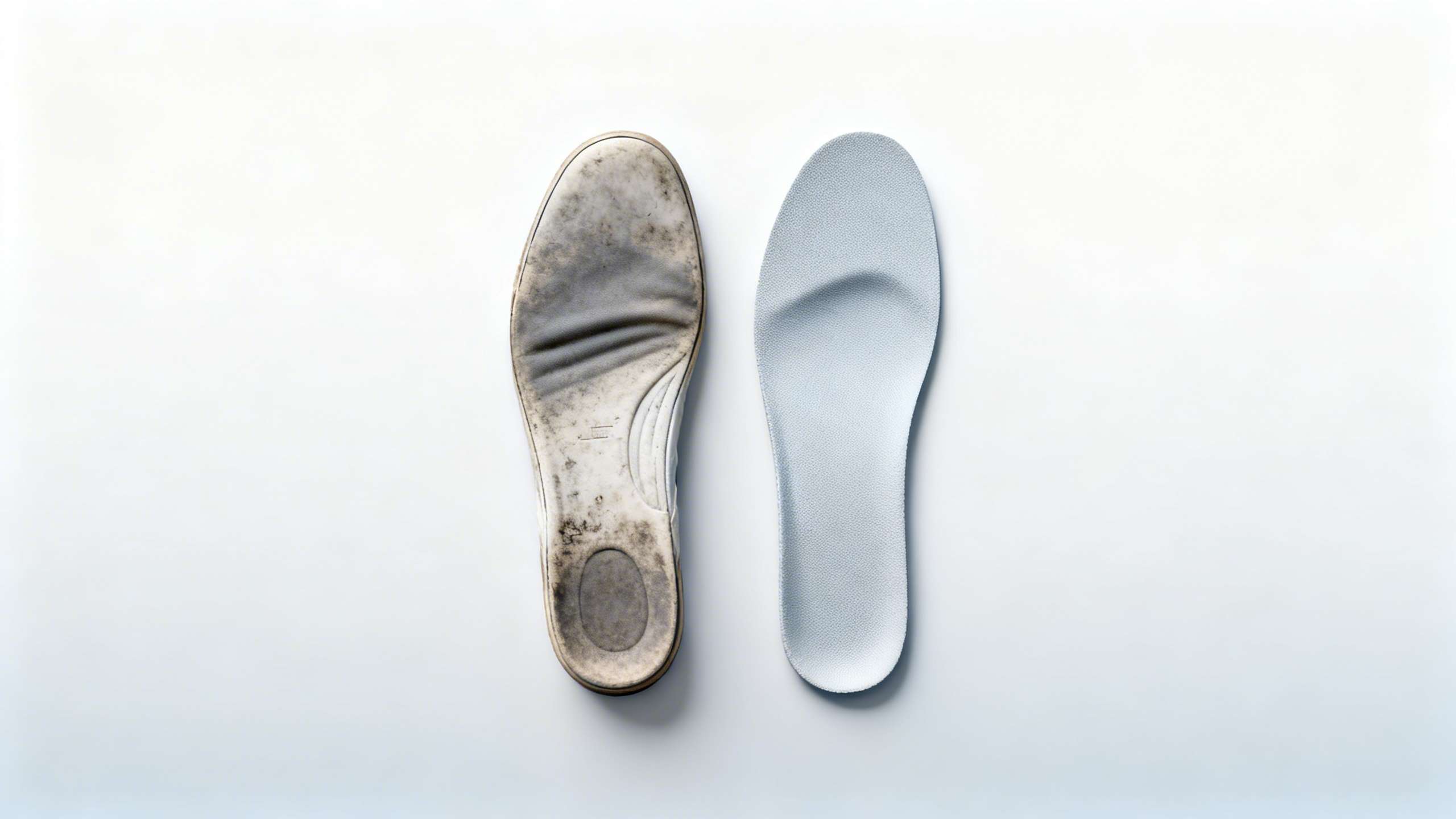
If your insoles look compressed or uneven, they’ve likely lost their functional support.
4. New Pressure Points
Discomfort in the heel, ball of the foot, or arch often indicates uneven weight distribution.
5. Shoe Fit Feels Different
Even if your shoes haven’t changed, worn insoles can alter how they feel on your feet.
6. Cracks, Peeling or Bunching
Splits in the top cover, peeling edges or foam that bunches under the heel mean the insole is breaking down and no longer holds its shape.
7. Old Pain Comes Back
If heel, arch or knee aches that had eased return while you wear the same insoles, the support has probably faded. Pain that comes back is often the clearest sign.
Two-Minute Tests You Can Do at Home
- Press test: push your thumb into the heel and forefoot. If the foam stays dented or feels thin and hard, the cushioning is gone. More on this in why cushioning breaks down.
- Bend test: flex the insole. A good arch support resists and springs back. If it folds easily, it has lost support. See do insoles lose arch support over time.
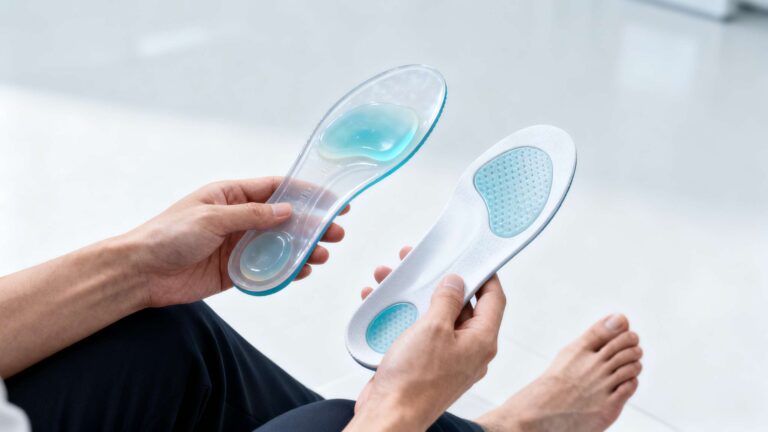
- Side-by-side test: hold your old insole next to an unused one, or a photo of it new. Compare thickness and arch height. Worn vs new insoles explains what to look for.
- Wear-pattern test: look for one-sided wear, which points to how your foot lands. See why insoles wear out unevenly.
Soft foam flattens fastest, so if yours are very soft, read why soft insoles flatten over time. For how long to expect from a pair, see how long insoles last.
How Symptoms Differ Based on Foot Type
Not all foot discomfort feels the same. The way worn-out insoles affect you depends on your foot mechanics.
Flat Feet
You may notice:
- Increased arch strain
- Ankle instability
- Inner foot discomfort
High Arches
Common symptoms include:
- Heel pain
- Poor shock absorption
- Pressure on the forefoot
Neutral Feet
Even with balanced feet, worn insoles can cause:
- General fatigue
- Reduced comfort
- Mild alignment issues
Each foot type responds differently to reduced support, which is why choosing the right replacement matters — especially when comparing options like high arch support insoles .
When Does It Become a Serious Problem?
Ignoring the signs you need new insoles can lead to more than just discomfort.
Over time, lack of proper support may contribute to:
- Plantar fascia strain
- Knee discomfort
- Lower back tension
- Postural imbalance
As your body compensates for reduced support, stress shifts upward through the kinetic chain — affecting joints beyond the feet.
This is closely related to how alignment changes impact the body, as explained in how insoles improve posture .
Why People Often Miss the Signs
One reason this issue goes unnoticed is that insole wear happens gradually.
Unlike a broken shoe sole, there’s no sudden failure. Instead:
- Support decreases slowly
- Comfort declines over time
- The body adapts without immediate pain
By the time symptoms become noticeable, the insoles are often long past their effective lifespan.
How to Fix the Problem (Step-by-Step)
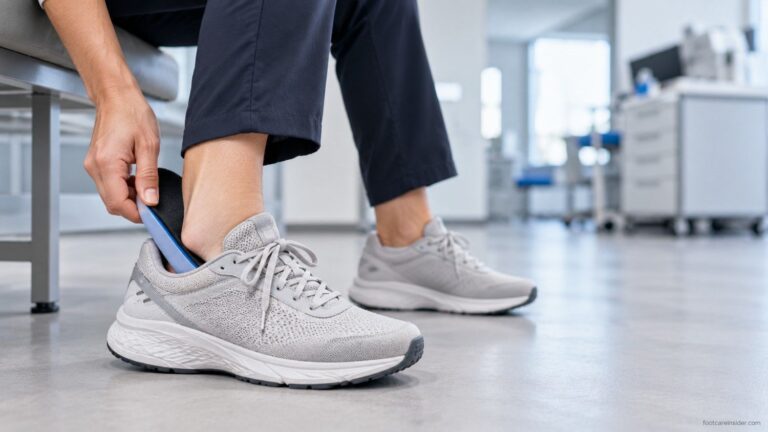
1. Replace Worn-Out Insoles
This is the most direct and effective solution.
If your current insoles show signs of:
- Flattening
- Uneven wear
- Reduced cushioning
They are no longer doing their job.
Replacing them restores:
- Shock absorption
- Arch support
- Proper pressure distribution
If your discomfort is centered around the arch, upgrading to structured support like best insoles for arch pain can help rebalance foot mechanics.
2. Match Insoles to Your Foot Type
Not all insoles are the same.
Choosing the wrong type can actually make symptoms worse.
- Flat feet / overpronation → need firm, structured support
- High arches → need cushioning + targeted arch support
- Neutral feet → benefit from balanced designs
If you’re unsure, comparing support levels — like in soft vs firm insoles — can help you make a better decision.
3. Check Your Shoes
Even the best insoles won’t work properly in poor footwear.
Look for:
- Stable heel structure
- Adequate space for inserts
- Good base support
Worn-out shoes reduce the effectiveness of new insoles significantly.
4. Reduce Temporary Strain
While transitioning to new insoles, you can reduce stress by:
- Limiting time on hard surfaces
- Rotating between shoes
- Stretching the calves and plantar fascia
This gives your feet time to adjust and recover.
Replacement Insoles by Foot Type
If your test says it is time, choose the replacement for your foot, not just the same pair again.
Flat feet or overpronation: Superfeet Green – firm, structured arch support that holds its shape.
High arches or hard floors: Cushion Insoles – more shock absorption where the foot lacks it.
Long days standing: Powerstep Maxx Support – structure with cushioning for heavy daily use.
Do Insoles Help — And When?
Insoles can be highly effective, but only in the right situations.
They Help When:
- Pain is caused by poor support or alignment
- You stand or walk for long hours
- Your shoes lack built-in cushioning
- You have mild to moderate biomechanical issues
For example, people who spend long shifts on their feet often benefit from solutions like best insoles for standing all day because they reduce fatigue and stabilize movement.
They May NOT Be Enough When:
- Pain is severe or persistent
- There is inflammation or injury
- Structural conditions require medical treatment
Insoles are a support tool — not a cure for every condition.
When to Consider Medical Care
It’s important to recognize when the problem goes beyond worn-out insoles.
Seek professional help if you have:
- Sharp or stabbing heel pain
- Swelling that doesn’t improve
- Pain lasting more than 2–3 weeks
- Numbness or tingling
- Difficulty walking normally
These symptoms may indicate conditions such as plantar fasciitis, tendon issues, or joint problems that require proper diagnosis.
Ignoring them can lead to longer recovery times and more complex treatment.
Prevention: How to Make Insoles Last Longer
Preventing the problem is easier than fixing it.
1. Replace Insoles Regularly
Average lifespan:
- Light use → 4–6 months
- Daily use → 3–4 months
- Heavy use → 2–3 months
Waiting too long is one of the main reasons people experience recurring discomfort.
2. Rotate Your Shoes
Using the same pair every day accelerates wear.
Rotating between 2–3 pairs allows insoles to:
- Recover shape
- Dry properly
- Maintain structure longer
3. Keep Insoles Dry
Moisture weakens materials.
- Air them out after use
- Avoid prolonged damp conditions
4. Choose Quality Materials
Higher-quality insoles:
- Maintain structure longer
- Provide consistent support
- Reduce long-term cost
Cheap foam inserts often compress quickly and need frequent replacement.
Frequently Asked Questions
How often should I replace insoles?
Most people should replace them every 3–6 months, depending on use. Heavy daily use shortens lifespan significantly.
Can worn-out insoles cause pain?
Yes. Loss of support leads to poor alignment, which can result in foot, knee, or back discomfort.
Do insoles lose support even if they look fine?
Yes. Internal breakdown isn’t always visible. If comfort has decreased, performance likely has too.
Are expensive insoles always better?
Not always — but higher-quality materials tend to last longer and provide better support.
Can I use the same insoles in different shoes?
You can, but frequent switching may reduce effectiveness and lifespan.
What’s the biggest mistake people make?
Waiting too long to replace them. By the time pain appears, the insoles are usually already ineffective.
Do worn-out insoles feel hard?
Often yes. As the foam compresses it loses its give, so shoes feel firmer underfoot, especially on concrete or tile. If the press test shows a thin, hard layer, the cushioning is spent.
Why do my new insoles hurt?
New insoles need an adjustment period, especially firmer ones. Wear them for a few hours at first and build up over one to two weeks. See how long arch support takes to feel normal. If pain continues or gets worse, the type may not suit your foot.
Educational Conclusion
The signs you need new insoles are often subtle at first — a bit of extra fatigue, slight discomfort, or reduced cushioning.
But over time, these small changes can lead to larger issues affecting your entire body.
Insoles play a key role in:
- Supporting your feet
- Maintaining alignment
- Reducing strain during daily activity
Replacing them at the right time is one of the simplest ways to protect your foot health and prevent long-term discomfort.
Staying aware of early warning signs allows you to act before problems develop — keeping your movement comfortable, stable, and pain-free.
To improve posture and reduce pressure on your feet, take a look at our guide on best insoles for overpronation.
For everyday use, replacing them with insoles for walking can improve comfort and reduce foot fatigue.