Ultimate Guide to Flat Feet (Causes, Symptoms, Treatment & Best Insoles)
If you’ve ever felt your feet ache after standing all day, noticed your arches seem to disappear when you step down, or wondered why your shoes wear unevenly, you’re not alone. Flat feet are extremely common—and for many people, they come with a mix of confusion and discomfort.
Some people live with flat feet without any issues. Others deal with daily fatigue, pain, or even problems that extend beyond the foot. That difference often leads to one big question:
Is this something I need to fix—or just manage?
This guide is designed to give you a clear, calm, and complete understanding of flat feet so you can make informed decisions without guesswork.
What Are Flat Feet and Why Do They Matter?
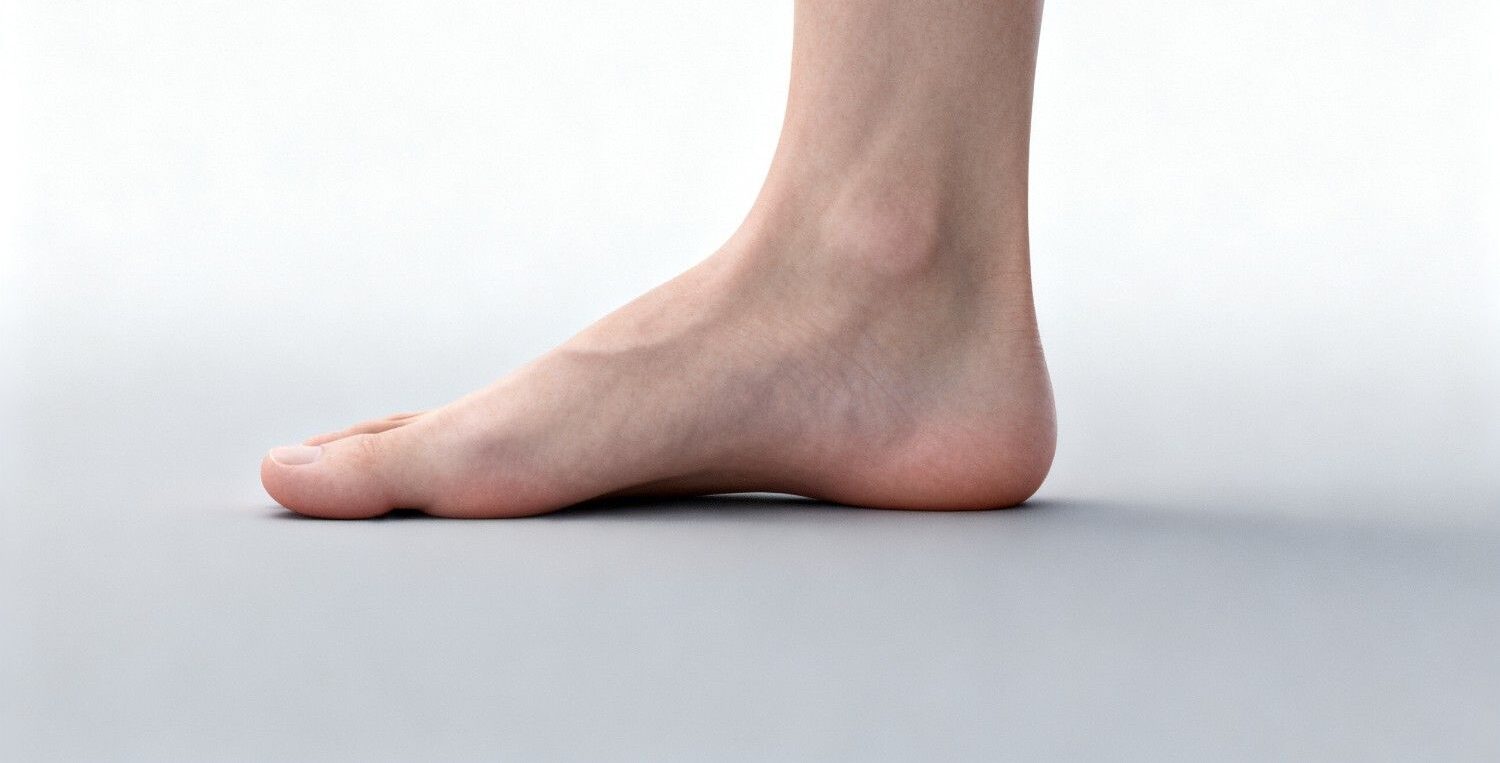
Flat feet (also called fallen arches) occur when the arch of the foot flattens during standing or movement. Instead of having a visible curve along the inner foot, most or all of the sole touches the ground.
This matters because the arch plays a key role in:
- absorbing impact
- stabilizing movement
- distributing body weight
When the arch doesn’t function properly, the way your body handles pressure changes—from your feet all the way up to your knees and hips.
In this guide, you’ll learn:
- what flat feet actually are
- why they develop
- how they affect your body
- what can help reduce discomfort
What Are Flat Feet (Core Explanation)
Types of Flat Feet
Not all flat feet are the same. Understanding the type can help explain why some people feel no discomfort, while others experience ongoing strain.
Flexible flat feet
This is the most common type. The arch appears when the foot is not bearing weight (like when sitting), but flattens when standing. In many cases, this is painless but can lead to fatigue over time.
Rigid flat feet
With rigid flat feet, the arch remains flat even when not standing. This type is less common and may be linked to structural limitations in the foot. It’s more likely to cause discomfort or reduced mobility.
Adult-acquired flat feet
Some people develop flat feet later in life. This often happens when the structures supporting the arch—especially tendons—become strained or weakened over time. Lifestyle factors, load, and aging can all contribute.
If you’re unsure which type applies to you, understanding the underlying causes can help clarify the situation: what causes flat feet
Your foot is a complex structure made up of bones, muscles, ligaments, and tendons working together. One of its most important features is the arch, which acts like a natural spring.
There are three main arches in the foot, but the one most people refer to is the medial arch—the inner curve of your foot.
When functioning properly, this arch:
- compresses slightly when you step
- absorbs shock
- helps push your body forward
With flat feet, this arch either:
- never fully develops
- or collapses under weight
This doesn’t always mean something is “wrong.” In many cases, it simply means the foot structure is different. Problems usually arise when the foot cannot handle load efficiently over time.
Flat Feet vs Overpronation
Flat feet are often confused with overpronation—but they are not exactly the same thing.
Flat feet describe the structure of the foot (low or collapsed arch).
Overpronation describes the movement pattern—when the foot rolls inward excessively during walking or standing.
Many people with flat feet also overpronate, but not all. The difference becomes clearer when you look at how the foot behaves during movement.
If you want a deeper breakdown of this relationship, this guide explains it clearly: flat feet vs overpronation
Understanding this distinction is important because treatment approaches often depend more on how your foot moves than just how it looks.
Causes of Flat Feet
Flat feet rarely come from a single cause. Instead, they develop from a combination of structural and lifestyle factors.
Muscle weakness
The small stabilizing muscles in the foot help support the arch. If they are weak, the arch may collapse more easily under pressure.
Tendon dysfunction
The posterior tibial tendon plays a major role in maintaining arch stability. When it becomes strained or fatigued, support decreases.
Genetics
Some people are naturally born with lower arches or more flexible ligaments, making flat feet more likely.
Load and lifestyle factors
Long hours of standing, walking on hard surfaces, or carrying extra body weight can gradually increase strain on the foot.
For a deeper look into these contributing factors, you can explore this detailed breakdown: what causes flat feet
Symptoms (Early → Advanced)
How to Tell If You Have Flat Feet
Flat feet can often be identified with simple observations at home, though professional evaluation may be helpful in some cases.
One common method is the wet footprint test. After wetting your feet, step onto a surface where your footprint is visible.
- A full footprint with little to no inward curve may suggest flat feet
- A visible arch curve suggests a more typical foot structure
Other signs include:
- your entire sole touching the ground when standing
- shoes wearing more on the inside
- ankles rolling inward
However, appearance alone doesn’t always tell the full story. Movement matters just as much as structure. For example, the way your foot rolls during walking is explained in more detail here: flat feet vs overpronation
If you experience ongoing pain, swelling, or instability, it may be worth seeking a professional assessment.
Flat feet can feel very different depending on the person, their activity level, and how their body adapts.
Early signs:
- foot fatigue after standing
- mild discomfort in the arch or heel
- feeling of “tired” feet
Moderate symptoms:
- noticeable pain after walking or standing
- ankle instability
- uneven shoe wear
More advanced symptoms:
- persistent pain in the arch or heel
- swelling along the inner ankle
- discomfort spreading to knees or legs
Some people only notice symptoms during specific activities, while others feel them daily. This variation is one reason why a single solution doesn’t work for everyone.
If you’re dealing with discomfort, this guide on flat feet pain relief covers practical ways to reduce daily strain.
How Flat Feet Affect the Body
Flat Feet in Adults vs Children
Flat feet can look similar across ages, but they don’t behave the same way.
In children, flat feet are very common. The arch often develops naturally as the foot grows and strengthens. In most cases, no treatment is needed unless there is pain or functional limitation.
In adults, flat feet are usually more about function than development. The arch structure is already formed, so changes tend to be related to:
- muscle strength
- tendon support
- daily load and activity
This is why adults are more likely to experience symptoms such as fatigue or discomfort, especially during long periods of standing or walking.
The key difference is simple:
- children → development stage
- adults → load and function over time
How Flat Feet Affect Daily Life
Flat feet often become noticeable during everyday activities rather than at rest.
Standing for long periods
Jobs that require standing can increase pressure on the arch and lead to fatigue or discomfort by the end of the day.
Walking long distances
Without proper shock absorption, the foot may tire faster, leading to soreness or imbalance.
Running or higher impact activity
Repeated impact can increase strain on the foot and surrounding joints, especially if movement patterns are not well supported.
Work environments
Hard surfaces, long shifts, and limited recovery time can all make symptoms more noticeable.
In these situations, some people find that additional support can help reduce daily strain. For example, certain options discussed here: insoles for standing all day are often used in high-load environments.
Your feet are the foundation of your entire body. When that foundation changes, the effects don’t stay isolated.
With flat feet, the foot may roll inward more than expected. This can change alignment and increase stress along the kinetic chain:
- Feet: reduced shock absorption
- Ankles: increased inward movement
- Knees: altered tracking and pressure
- Hips: compensation in movement patterns
Over time, this chain reaction can lead to discomfort beyond the foot itself. For example, many people with flat feet experience knee strain due to alignment changes.
This connection is explained further here: why flat feet cause knee pain
Understanding this broader impact helps explain why flat feet are not just a “foot issue”—they are a movement and load issue affecting the whole body.
Can Flat Feet Be Fixed?
One of the most common questions is whether flat feet can be permanently corrected.
The answer depends on what you mean by “fixed.”
Structure vs function matters here:
- Structure → the shape of your arch
- Function → how your foot moves and handles load
In most adults, the structure of the arch does not permanently change. However, the function of the foot can absolutely improve.
That means:
- better stability
- reduced strain
- less pain during daily activities
So rather than trying to “rebuild” the arch, the goal is to improve how the foot performs under real-life conditions.
Treatment Options: Start at Home
Before considering external support, it’s important to look at what your body can do on its own.
Foot Strengthening
Exercises that target the intrinsic foot muscles can help improve support over time.
Examples include:
- short foot exercise (lifting the arch slightly)
- toe spreading and control
- towel scrunches
These help the foot become more active instead of passive.
Movement Adjustments
How you walk and stand plays a major role.
Small changes like:
- avoiding excessive inward collapse
- distributing weight evenly
- maintaining better posture
can reduce long-term strain.
Load Management
Flat feet often become problematic under constant load.
Helpful adjustments:
- taking breaks during long standing periods
- alternating activities
- avoiding repetitive stress without recovery
This is especially relevant for people who spend hours on their feet daily. In those situations, certain supportive options may help reduce fatigue—like those discussed here: insoles for standing all day
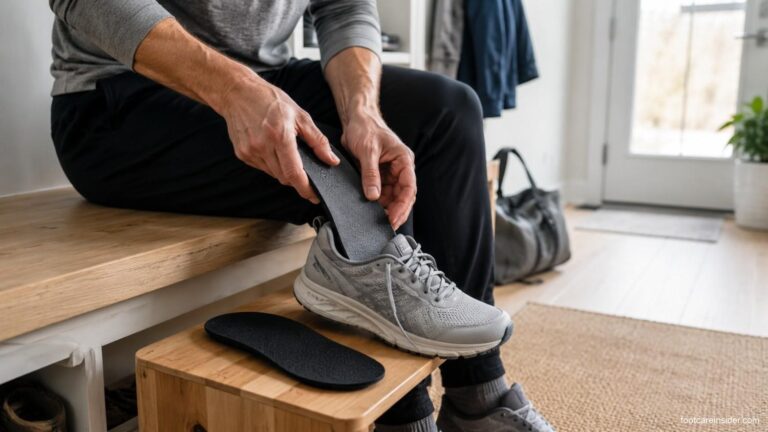
Role of Insoles (Soft + Educational)
Insoles are one of the most commonly used tools—but they’re often misunderstood.
They do not fix flat feet, but they can help manage how your foot handles pressure.
Insoles work by:
- redistributing weight
- supporting the arch during activity
- reducing localized stress
For many people, this leads to less fatigue and more comfort, especially during long periods of standing or walking.
For example, structured options discussed in best insoles for flat feet are often used to provide additional support during daily movement.
However, it’s important to understand their limits:
- they don’t strengthen muscles
- they don’t change bone structure
- they don’t correct movement patterns on their own
They are most effective when combined with movement and strengthening strategies.
Choosing the Right Support
Choosing the Right Shoes for Flat Feet
Footwear plays a major role in how your feet handle daily load.
Supportive structure
Shoes with proper arch support and a stable base can help distribute pressure more evenly.
Cushioning vs stability
- Cushioning helps absorb impact
- Stability helps control movement
The right balance depends on your activity level and comfort needs.
What to avoid
- completely flat shoes with no support
- worn-out soles
- overly soft shoes that collapse under weight
Foot shape also matters. For example, people with wider feet may need more space and support, as discussed here: insoles for wide feet
In other cases, different arch profiles may require different types of support: best insoles for high arches
Not all support is the same. What works depends on your needs, activity level, and comfort.
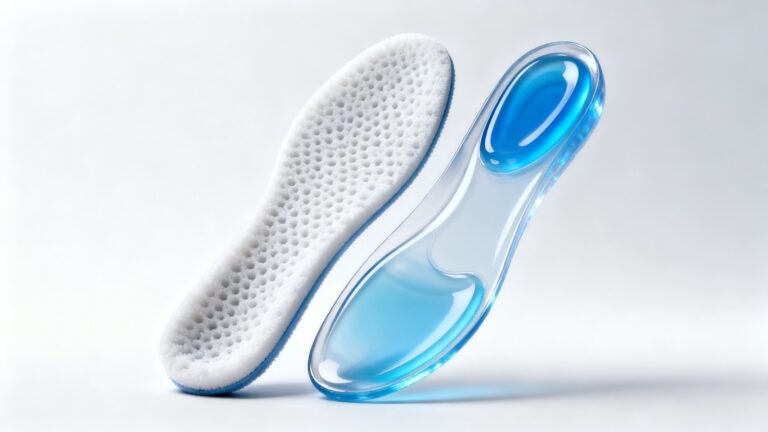
Soft vs Firm Support
- Soft insoles → more cushioning, less structure
- Firm insoles → more stability, less compression
Some people benefit from cushioning, while others need more control.
Foot Type Considerations
Even within flat feet, there are variations.
For example:
- wider feet may require more space and stability → insoles for wide feet
- higher arch compensation in other areas may need different support → best insoles for high arches
The goal is not to “force” the foot into a shape, but to support how it functions best.
Prevention
Even if you already have flat feet, daily habits can make a significant difference over time.
Footwear matters
Shoes with proper structure and support reduce unnecessary strain.
Stay active—but balanced
Regular movement helps maintain function, but overuse without recovery can increase stress.
Consistency over intensity
Small daily habits—like movement awareness and supportive footwear—often matter more than occasional effort.
Micro Comparison
Exercises improve long-term function, while insoles provide short-term support during activity.
Both have value—but they solve different parts of the problem.
Common Questions
Do flat feet always cause pain?
No. Many people have flat feet without symptoms. Pain usually appears when the foot struggles to handle load over time, especially during long periods of standing, walking, or high-impact activity.
Are insoles necessary for everyone with flat feet?
Not always. Some people manage well with strength and movement adjustments alone, while others benefit from added support. Insoles are most helpful when the foot needs assistance distributing pressure more evenly.
Can flat feet get worse over time?
They can, especially with high load, poor footwear, or lack of support. Over time, this can lead to increased strain on the ankles, knees, or lower back if not managed properly.
Is walking barefoot good for flat feet?
It depends. In controlled environments, it may help strengthen the foot and improve awareness. However, on hard surfaces or during long periods, it can increase strain and discomfort.
Do children outgrow flat feet?
Many children develop arches naturally as they grow and their muscles strengthen. In adults, structural changes are less common, but function and comfort can still improve with the right approach.
How do I know if I need support?
If you experience consistent fatigue, discomfort, or instability—especially after daily activities—support may help reduce strain. This is particularly relevant for people who spend long hours on their feet.
Long-Term Outlook for Flat Feet
Flat feet are common, and in many cases, they can be managed effectively with the right approach.
For some people, they remain painless throughout life. For others, symptoms may appear depending on activity level, footwear, and daily habits.
The long-term outlook often depends on:
- how well the foot handles load
- consistency of supportive habits
- awareness of movement and strain
Rather than focusing on changing foot structure, most improvements come from supporting function over time.
With the right balance of movement, support, and consistency, many people are able to stay active and comfortable without major limitations.
Educational Conclusion
Flat feet are not simply about having a low arch—they’re about how your body manages movement and load over time.
For some people, they cause no issues at all. For others, they lead to discomfort that affects daily activities like standing, walking, or exercising.
The key is understanding that:
- structure doesn’t always change
- function can improve
- support can help—but it’s not the full solution
Flat feet are best managed through a combination of awareness, movement, and consistent daily habits. Small adjustments—like improving how you move, choosing supportive footwear, or reducing excessive strain—can make a meaningful difference over time.
When these elements work together, it becomes much easier to reduce pressure on the feet, improve overall comfort, and maintain long-term mobility without relying on a single solution.
More flat feet guides
Pain and symptoms
- Why Flat Feet Hurt More in the Morning
- Flat Feet Pain After Standing All Day (Why It Happens)
- Flat Feet and Calf Pain: Causes and Support
- Flat Feet and Ankle Pain: Causes and Support
- How Flat Feet Lead to Back Pain (Causes & Solutions)
- Can Flat Feet Cause Hip Pain? (Full Guide)
- Why Flat Feet Cause Shin Splints (Full Guide)
- Flat Feet and Plantar Fasciitis Explained
- Do Flat Feet Cause Bunions? Explained Clearly
Causes, signs and what to expect
- Early Signs of Flat Feet (Before Pain Starts)
- How Flat Feet Are Diagnosed (Simple Guide)
- Do Flat Feet Get Worse Over Time? Signs & Causes
- Can Flat Feet Be Corrected? What Actually Helps
- Flat Feet During Pregnancy: Causes & Relief
- Can Flat Feet Affect Posture and Alignment?
- Flat Feet and Balance Problems Explained
- Why Flat Feet Get Tired Faster (It’s Not Just Weak Arches)
- Can Flat Feet Cause Leg Tiredness?
- Flat Feet Walking vs Standing Pain Explained
Treatment and exercises
Curious how we choose what we write about? See how we pick products.