Flat Feet vs Overpronation: Key Differences Explained (2026)
It’s easy to confuse flat feet and overpronation. They’re often mentioned together, sometimes even used interchangeably. But they’re not the same thing—and understanding the difference matters more than most people realize.
If you’re dealing with foot discomfort, choosing the right support, shoes, or exercises depends on knowing what’s actually happening in your foot. Treating flat feet like overpronation (or the other way around) can lead to the wrong approach—and slower results.
Flat Feet vs Overpronation: Key Difference
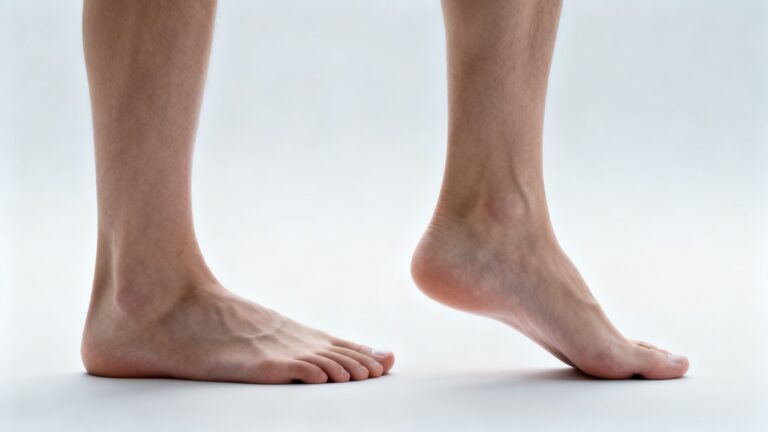
Flat feet describe a foot structure, where the arch is low or collapses under weight.
Overpronation describes a movement pattern, where the foot rolls inward excessively during walking or standing.
In simple terms:
- Flat feet = how your foot is built
- Overpronation = how your foot moves
You can have:
- flat feet without overpronation
- overpronation without flat feet
- or both at the same time
For a deeper breakdown of how these two are connected, see flat feet vs overpronation.
That’s where the confusion usually comes from.
What Are Flat Feet?
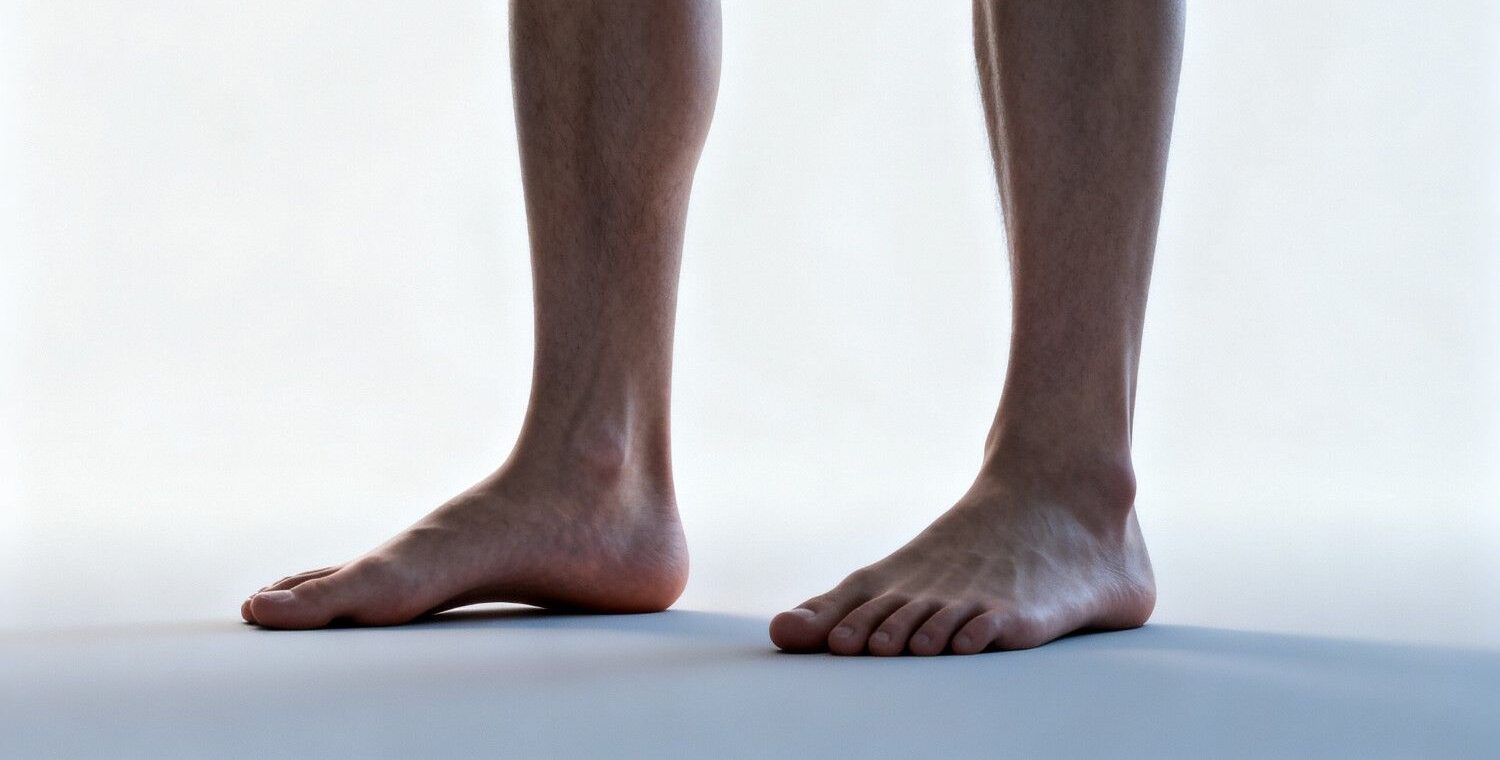
Flat feet (also called fallen arches) occur when the inner arch of the foot lowers when weight is applied.
This can be:
- flexible (arch appears when not standing)
- rigid (arch remains low even without pressure)
In daily life, flat feet may lead to:
- more surface contact with the ground
- increased pressure along the inner foot
- faster fatigue during long periods of standing
Flat feet are primarily about structure, not movement.
What Is Overpronation?
Overpronation refers to how the foot moves during walking or standing.
A normal foot naturally rolls inward slightly to absorb shock. But with overpronation:
- the foot rolls inward more than needed
- the ankle tilts inward
- weight shifts unevenly across the foot
This can affect how force travels through the body, especially during repetitive movement like walking or running.
Structural Differences
The biggest difference between flat feet and overpronation lies in what they describe.
Flat feet:
- structural condition
- arch shape is lower than average
- visible when standing still
Overpronation:
- movement pattern
- involves dynamic motion during walking
- not always visible when standing still
👉 A person can have a normal-looking arch but still overpronate during movement.
👉 Another person can have flat feet but maintain relatively stable movement.
Material & Functional Differences (How They Feel)
From a practical standpoint, the difference shows up in how your feet feel during daily use.
Flat feet often feel like:
- lack of support under the arch
- general fatigue after long standing
- pressure spread across the entire foot
Overpronation tends to feel like:
- instability or inward collapse
- uneven pressure on the inner foot
- strain during movement, especially walking or running
👉 Flat feet = more about support
👉 Overpronation = more about control
Intended Use Cases (Real-Life Context)
Understanding the difference becomes clearer when you look at real-world situations.
Standing Jobs (Retail, Warehouse, Healthcare)
Flat feet:
- may lead to fatigue from lack of arch support
Overpronation:
- may lead to instability and uneven pressure over time
In high-load environments, supportive solutions are often needed—see insoles for standing all day for how daily strain impacts foot function.
Walking & Daily Movement
Flat feet:
- can feel tiring during long walks
Overpronation:
- may affect walking efficiency and alignment
Athletic Activity
Flat feet:
- may reduce shock absorption efficiency
Overpronation:
- can affect movement mechanics and performance
👉 In active settings, movement control becomes more important than structure alone.
Cost & Value Differences (Support Perspective)
Although these aren’t “products,” the way each condition is managed can differ in cost and approach.
Flat feet:
- often addressed with supportive footwear or insoles
- focus on distributing pressure
Overpronation:
- often requires more structured support
- focus on controlling motion and alignment
For those exploring supportive options, pages like best insoles for flat feet can help clarify what features matter depending on your situation.
Why the Difference Matters
Treating flat feet and overpronation as the same issue can lead to mismatched solutions.
For example:
- adding soft support may help flat feet
- but may not control overpronation
👉 The better approach depends on understanding whether the issue is structural, movement-based, or both.
Understanding the difference is one thing—knowing what it means for your own situation is where it becomes useful. Flat feet and overpronation can overlap, but they don’t behave the same way over time. Each has its own strengths, limitations, and practical implications depending on how you move and what your daily routine looks like.
Pros & Limitations (Explained Clearly)
Flat Feet
Flat feet aren’t automatically a problem. Many people live with them comfortably, especially if their movement is stable.
Advantages:
Flat feet can distribute pressure across a larger surface area. In some cases, this reduces localized stress points, especially during standing.
Limitations:
The main issue is reduced structural support. Without a strong arch, muscles and tendons often work harder to maintain stability. Over time, this can lead to fatigue, particularly during long periods on your feet.
👉 In simple terms: flat feet are not unstable by default—but they can become tiring under load.
Overpronation
Overpronation is more about movement efficiency than structure.
Advantages:
A small amount of inward motion helps absorb shock. This is part of normal walking mechanics.
Limitations:
When that inward motion becomes excessive, the foot loses control during movement. This can create uneven force distribution, affecting not just the foot, but also the ankle and knee over time.
👉 Overpronation is less about comfort and more about control.
Who Should Pay Attention to Flat Feet
Flat feet matter more in situations where support and endurance are key.
You’re more likely to notice effects if you:
- stand for long hours (retail, healthcare, warehouse work)
- feel general foot fatigue rather than sharp discomfort
- notice your feet flatten more under load
In these cases, improving support—through footwear or external support—can help reduce daily strain.
Who Should Pay Attention to Overpronation
Overpronation becomes more relevant when movement and alignment are involved.
You may be dealing with overpronation if you:
- feel your ankles roll inward when walking
- notice uneven shoe wear on the inner side
- experience instability rather than just fatigue
This tends to show up more during:
- walking long distances
- running
- repetitive movement
For a deeper understanding of how this affects the rest of the body, see why flat feet cause knee pain.
Long-Term Comparison
Over time, the difference between flat feet and overpronation becomes more noticeable.
Flat feet:
- may remain stable for years
- symptoms often relate to fatigue and load
- improvement comes from better support and strength
Overpronation:
- can affect movement patterns continuously
- may influence alignment in the knees and lower body
- improvement focuses on control and stability
👉 Flat feet tend to affect comfort over time
👉 Overpronation tends to affect movement over time
Micro Comparison Summary
- Flat feet = structural shape, related to support and fatigue
- Overpronation = movement pattern, related to control and alignment
FAQ
Are flat feet and overpronation the same thing?
No. Flat feet describe the shape of the foot, while overpronation describes how the foot moves. They can occur together, but they are not the same condition.
Can you have flat feet without overpronation?
Yes. Some people have flat arches but maintain stable movement. In these cases, the issue is more about support than control.
Can overpronation happen without flat feet?
Yes. A person can have a normal arch but still experience excessive inward movement during walking or running.
Which one causes more problems?
It depends on the situation. Flat feet often lead to fatigue, while overpronation can affect movement mechanics and alignment.
Do both conditions need the same type of support?
Not always. Flat feet often benefit from general arch support, while overpronation may require more structured support to control movement.
How do I know which one I have?
Observing both structure and movement is key. Looking at your foot while standing and how it behaves while walking can help identify the difference.
Final Verdict
Flat feet and overpronation are closely related—but they’re not interchangeable.
Flat feet are about structure.
Overpronation is about movement.
For some people, only one applies. For others, both play a role. The right approach depends on understanding which one is affecting your daily movement—not just how your foot looks.
There isn’t a single “better” or “worse” condition. The goal is simply to match the solution to what your foot actually needs.