Best Insoles for Flat Feet at Work
Workdays have a way of amplifying small problems. What starts as a mild ache in the morning can turn into a deep, persistent discomfort by mid-afternoon—especially if you have flat feet.
Standing for hours, walking across hard floors, or even sitting with poor support inside your shoes can all contribute. The pressure builds slowly. First in the arches, then the heels, and eventually it spreads upward into the ankles, knees, and lower back.
That’s why more people are searching for work insoles flat feet solutions. Not because they want extra comfort—but because they need something that actually holds up through a full workday.
And that’s where most insoles fall short.
The Real Problem: Flat Feet + Work Environment
Flat feet change how your body distributes weight.
Instead of having a natural arch to absorb impact, the foot flattens. This causes:
- inward rolling (overpronation)
- uneven pressure across the sole
- increased strain on muscles and joints
Now combine that with a typical work environment:
- standing on concrete or hard floors
- long shifts with minimal breaks
- repetitive movement or walking
The result?
Constant stress on the feet—without enough structural support to manage it.
For work insoles flat feet, the goal isn’t just comfort. It’s sustained support under continuous load.
Why Standard Insoles Don’t Work
Most factory insoles inside work shoes are not designed for real support. They’re thin, basic, and built to keep costs down—not to protect your feet.
Here’s where they fail:
1. No True Arch Support
Flat insoles allow the foot to collapse further with every step. Over time, this increases fatigue and strain.
2. Compression Over Time
Soft foam feels comfortable at first, but under hours of pressure, it flattens. Once that happens, it stops doing anything useful.
3. Poor Fit for Work Shoes
Work boots and shoes often have specific shapes. Many generic insoles are either too thick or don’t align properly.
4. Lack of Stability
Without structure, your foot continues to roll inward, which affects alignment throughout the body.
That’s why choosing proper work insoles flat feet options requires more than grabbing the softest insert you can find.
What Features Actually Matter
Not all features are equally important. Some directly impact how your feet feel after 8+ hours. Others are just marketing.
Let’s focus on what actually works.
1. Structured Arch Support
This is non-negotiable.
A good insole should:
- support the arch without forcing it
- maintain shape under pressure
- reduce inward rolling
If you want a broader breakdown of arch types and support levels, see best insoles for flat feet.
2. Targeted Cushioning
Work environments demand shock absorption—but not everywhere equally.
The key areas:
- heel (for impact)
- forefoot (for movement)
Too much cushioning across the whole insole can make shoes feel tight and unstable.
3. Material Quality
Materials determine performance over time.
Common options:
- EVA foam → lightweight, moderate durability
- Polyurethane → more durable, better for long shifts
- Gel → targeted shock absorption
For work insoles flat feet, higher-density materials tend to last longer under constant load.
4. Moderate Firmness
This is where many people go wrong.
- Too soft → collapses quickly
- Too firm → uncomfortable over long hours
The ideal is moderate firmness that maintains support without feeling rigid.
5. Durability for Daily Use
Work insoles aren’t occasional—they’re used every day.
Look for:
- materials that don’t flatten quickly
- reinforced structure in high-pressure zones
- consistent performance over time
6. Stability Features
If your feet roll inward, stability matters.
Features like:
- deep heel cups
- side support structures
help guide the foot into a more stable position.
If you’re unsure how this affects movement, see flat feet vs overpronation.
How to Choose the Right Insoles (Simple Framework)
Choosing the right work insoles flat feet option becomes easier when you follow a clear process.
Step 1: Understand Your Work Environment
Ask:
- Are you standing all day?
- Walking frequently?
- On hard surfaces?
The more demanding the environment, the more support you need.
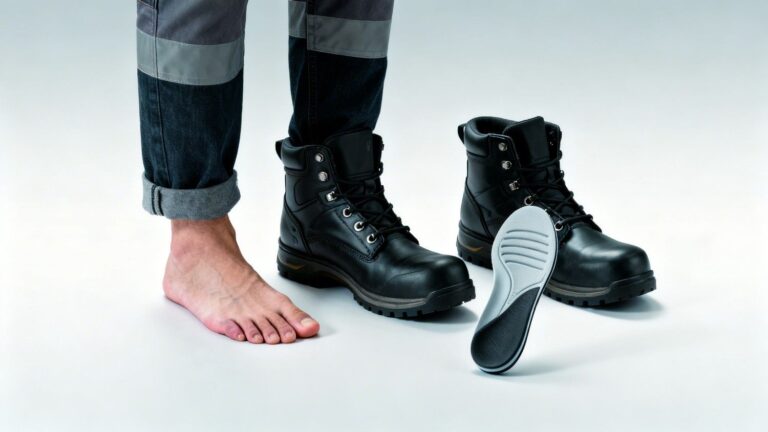
Step 2: Match Your Shoe Type
Work boots, sneakers, and dress shoes all have different internal space.
Make sure the insole:
- fits without crowding
- doesn’t change how the shoe feels
Step 3: Prioritize Support Over Softness
Comfort matters—but support determines long-term relief.
A soft insole without structure won’t hold up through a full shift.
Step 4: Consider Your Symptoms
- Arch pain → focus on support
- Heel pain → add cushioning
- Instability → prioritize structure
Step 5: Avoid Overcomplication
You don’t need the most expensive or complex option.
You need:
- the right fit
- the right support level
- consistent performance
The Bottom Line Before You Buy
For work insoles flat feet, the real goal is simple:
👉 Reduce strain
👉 Improve alignment
👉 Stay comfortable throughout the day
Anything that doesn’t support those outcomes is just extra padding—not a solution.
Now that you understand what actually matters, the next step is choosing the right type of insole for your work environment.
Not all work insoles flat feet options perform the same. Some focus on structure, others on cushioning, and some try to balance both. The best choice depends on how you spend your day—standing, walking, lifting, or moving constantly.
Below are five practical categories that work in real-world job conditions.
best insoles for retail workers
1. Firm Support Insoles (All-Day Stability)
These are built around structure. They use firmer materials and defined arch support to maintain alignment under long hours of pressure.
Best for:
People standing for long shifts (warehouses, retail, healthcare)
Pros:
- Strong arch support that doesn’t collapse
- Helps reduce inward rolling
- Maintains performance throughout the day
Limitations:
- Less soft cushioning
- May feel firm at first
Comparison Insight:
Compared to softer insoles, these prioritize stability over comfort. But for work insoles flat feet, that trade-off often leads to better long-term relief.
2. Cushioned Work Insoles (Impact Reduction)
These insoles focus more on shock absorption, especially in the heel and forefoot. They still provide support, but with a softer feel.
Best for:
Jobs with constant walking or movement
Pros:
- Reduces impact on hard surfaces
- More comfortable for walking-heavy roles
- Helps reduce fatigue over time
Limitations:
- Less structural support
- May compress faster
Comparison Insight:
If your main issue is foot fatigue rather than instability, this category offers a more forgiving feel while still supporting flat feet.
3. Heavy-Duty Insoles (High Load Support)
Designed for physically demanding jobs, these insoles use durable materials and reinforced support zones.
Best for:
Construction, industrial work, or heavy body weight
Pros:
- High durability under constant pressure
- Strong support structure
- Long lifespan compared to standard options
Limitations:
- Slightly heavier feel
- May require a short break-in period
Comparison Insight:
These perform better under load compared to standard insoles. If your work involves lifting or long hours on hard floors, this category holds up better.
4. Low-Profile Work Insoles (Tight Shoe Fit)
These are thinner insoles designed to fit into tighter work shoes or boots without affecting fit.
Best for:
Work shoes with limited internal space
Pros:
- Easy to fit into most footwear
- Lightweight and unobtrusive
- Maintains shoe comfort
Limitations:
- Less cushioning
- Reduced long-term durability
Comparison Insight:
These are a practical solution when space is limited—but they work best for moderate support needs.
5. Hybrid Everyday Insoles (Balanced Performance)
These combine support, cushioning, and flexibility into one design. They’re made for people who need versatility throughout the day.
Best for:
Mixed work environments (standing + walking + sitting)
Pros:
- Balanced comfort and support
- Suitable for long daily use
- Adapts well to different activities
Limitations:
- Not specialized for extreme conditions
- May not handle heavy-duty use
Comparison Insight:
If your job isn’t extremely demanding but still causes discomfort, this is often the safest starting point.
FAQ
Do insoles really help flat feet at work?
Yes—if they provide proper arch support and maintain structure throughout the day. The right insole redistributes pressure and reduces fatigue.
Should work insoles be soft or firm?
A balance works best. Too soft and they collapse, too firm and they feel uncomfortable. Moderate firmness with structure is ideal.
How long do work insoles last?
Most last between 3–6 months with regular use. Heavy-duty options may last longer. Learn more here: how long do insoles last.
Can insoles fix flat feet permanently?
No. Insoles support your feet while you wear them but don’t permanently change foot structure. See do insoles fix flat feet.
Are insoles better than changing shoes?
They work best together. Supportive shoes plus the right insoles create the best results.
Final Verdict
Choosing the right work insoles flat feet solution isn’t about picking the softest or most expensive option—it’s about matching the insole to your job and your foot structure.
- Standing all day? → Firm support insoles
- Walking constantly? → Cushioned work insoles
- Heavy-duty work? → Reinforced support designs
- Tight shoes? → Low-profile insoles
- Mixed routine? → Hybrid everyday insoles
The right choice reduces strain, improves comfort, and helps you get through long workdays without constant foot fatigue.