Best Shoes for Nurses with Flat Feet
During a nursing shift, your feet rarely get a proper break. You move between patient rooms, stand beside beds, turn quickly in narrow spaces and walk across hard hospital floors for hours. If you have flat feet, you may find that some shoes feel comfortable at first but become tiring as the shift progresses. The challenge is finding footwear that fits securely, provides a stable platform and feels comfortable through repeated standing and walking. When searching for shoes for nurses with flat feet, it helps to look beyond the amount of cushioning. Arch shape, heel stability, shoe width and the way the sole moves underfoot can all influence whether a pair feels right for your feet.
For nurses with flat feet, a good starting point is a comfortable, stable work shoe with enough room for the toes and cushioning suited to the demands of the shift. Some people prefer a supportive, structured platform, while others feel better in a cushioned walking shoe or a clog with a firm base. Flat feet do not automatically mean you need strong arch support, and no single shoe works for everyone. The best choice is the one that fits your foot shape, feels stable during movement and meets your workplace requirements.
For a broader comparison of work footwear, including options for different nursing shifts and preferences, see our guide to the best shoes for nurses.What Matters Most in Nursing Shoes for Flat Feet?
Flat feet describe a foot shape in which the arch is low or makes substantial contact with the ground when standing. This is not automatically a problem, and people with flat feet do not all move in the same way. Some have flexible arches that lower under load; others have a more rigid foot shape. The shoe features that feel comfortable can therefore differ from one nurse to another.
Stability and fit: A secure heel and a shoe that holds the foot comfortably can help the footwear feel predictable during repeated turns and changes of direction. The shoe should not squeeze the forefoot or allow the heel to slip excessively.
Cushioning: A cushioned midsole can soften the feel of repeated steps on hard floors. However, a very soft or tall platform may feel less stable to some people. More cushioning is not automatically the right answer for flat feet.
Arch support: A shaped footbed or supportive insole may feel helpful if you prefer contact beneath your arch. It should not press sharply into the foot or force it into an uncomfortable position. If the shoe already has a supportive footbed, adding another insole may change the fit and reduce toe room.
Workplace suitability: Nurses should also consider the surfaces they work on, cleaning requirements and any employer rules for work footwear. Do not assume that a shoe is slip-resistant, waterproof or suitable for every clinical environment without checking the exact model and workplace requirements.
Quick Picks: Five Options to Compare
Quick picks
HOKA Bondi SR (women’s)Cushioned work-shoe option
Check price on AmazonBrooks Ghost 17 (women’s)Cushioned walking-shoe option
Check price on AmazonDansko Professional ClogStructured clog design
Check price on AmazonWomen’s Ultimate Arch Support ShoesBuilt-in support focus
Check price on AmazonOverpronation / Stability InsoleInsole option for existing shoes
Check price on AmazonHow These Options Differ for Nurses with Flat Feet
| Option | Main reason to consider it | What to check |
|---|---|---|
| HOKA Bondi SR (women’s) | Thick cushioning in a work-shoe design | Fit, stability, and verified workplace outsole requirements |
| Brooks Ghost 17 (women’s) | Cushioned running-shoe design for walking | Workplace suitability, fit, and underfoot stability |
| Dansko Professional Clog | Structured clog with a rocker-style sole | Heel security, comfort while walking, and fit |
| Women’s Ultimate Arch Support Shoes | Option to explore if built-in arch support is a priority | Exact model construction, arch shape, and sizing |
| Overpronation / Stability Insole | Potential way to change support in compatible shoes | Insole shape, shoe space, and whether it replaces the original footbed |
Should Nurses with Flat Feet Choose Stability or Cushioning?
The decision depends on how your feet feel in your current shoes. If the main issue is that the floor feels hard underfoot, a cushioned shoe may be a sensible option to try. If your feet feel less secure during turns or you prefer a firmer platform, a more structured design may be worth comparing. These are comfort preferences rather than rules based on arch height alone.
Overpronation is a related but different consideration. Pronation is the natural inward movement of the foot as it accepts weight during walking. Overpronation generally describes a greater degree of inward movement than is typical, but a low arch does not prove that someone overpronates or needs a stability product. A stability-focused shoe or insole may suit some people, while others with flat feet feel comfortable in a neutral cushioned shoe.
Think about the entire shoe, not only its arch. The heel should feel secure, the forefoot should have room, and the sole should feel manageable when you walk and turn. If you use an insole, check whether it changes the shoe’s fit. A supportive insert that makes the shoe too tight is unlikely to be a good combination for a long shift.
When an Insole May Be Worth Considering
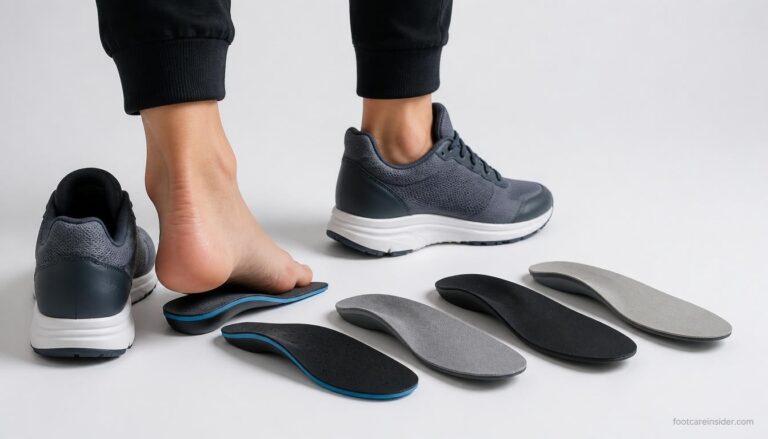
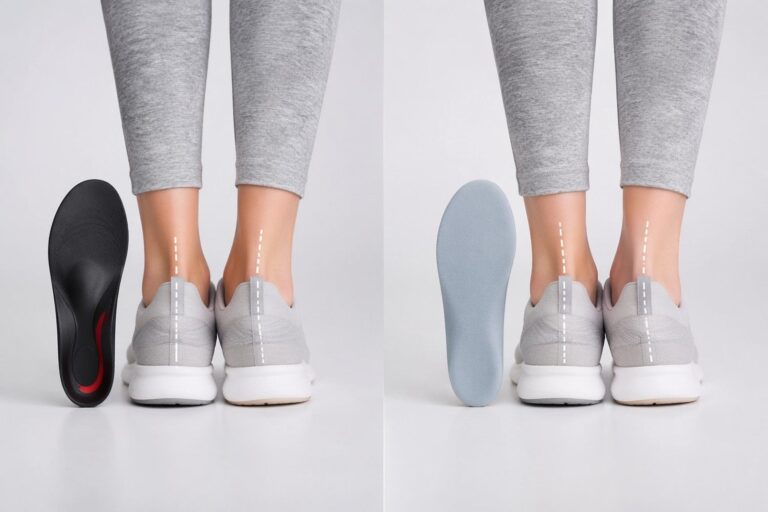
If your current nursing shoes fit well but the underfoot feel is not quite right, an insole may be an alternative to replacing the entire shoe. Some insoles provide a more defined arch shape, while others focus more on cushioning or changing the feel of the footbed. The right choice depends on your footwear, your comfort preferences and how the insole fits your foot.
Before buying one, check whether the original footbed can be removed and whether the replacement is designed to sit in its place. Adding an insole on top of an existing footbed can reduce the space available for the foot. If you want to compare insole options specifically for low arches, see our guide to the best insoles for flat feet.
Whichever direction you choose, give the footwear a careful trial before relying on it for a full shift. Pay attention to heel movement, pressure beneath the arch, rubbing and toe room. Persistent or worsening foot pain deserves professional evaluation rather than repeated footwear changes alone.
The options below cover cushioned work and walking shoes, a structured clog, a shoe marketed around arch support, and a stability-focused insole. Each serves a different possible preference, so the important question is which design fits your feet and work routine.
HOKA Bondi SR (Women’s): Cushioned Support for Long Shifts
The HOKA Bondi SR is worth considering if you want substantial cushioning in a shoe designed for work use. Its thick cushioning may appeal to nurses who spend hours walking and standing on hard hospital floors. For flat feet, though, cushioning is only one part of the decision. Pay attention to how securely your heel sits, whether the platform feels stable when turning, and whether the shoe accommodates the width of your forefoot. A shoe can feel soft underfoot yet still be a poor match if its shape or fit does not suit your feet. Try to assess the whole shoe rather than choosing on cushioning alone.
Why it works
- Thick cushioning may suit nurses who prefer a softer feel underfoot.
- A work-oriented shoe design gives you a specific option to investigate for hospital shifts.
- It lets you evaluate cushioning and stability together rather than relying on an insole alone.
Keep in mind: Thick cushioning does not automatically provide the arch support or stability every person with flat feet prefers. Verify the exact model’s fit and workplace outsole requirements before purchasing.
Brooks Ghost 17 (Women’s): A Cushioned Walking-Shoe Option
The Brooks Ghost 17 is another option to compare if you prefer a cushioned athletic shoe for walking during a long shift. Its running-shoe design may appeal to nurses who want a familiar sneaker-style fit rather than a clog. With flat feet, consider how the shoe feels through the midfoot and heel as well as how much cushioning you notice beneath the forefoot. A neutral cushioned shoe may feel comfortable for some people with low arches, while others may prefer a more structured platform. The best way to judge the fit is to walk and turn naturally in the shoes and check for slipping or pressure.
Why it works
- Its cushioned running-shoe design is worth considering for repeated walking.
- The sneaker format may suit nurses who prefer athletic footwear.
- It provides an alternative to a work-specific shoe or clog when comparing underfoot feel.
Keep in mind: A running shoe is not automatically suitable for every clinical workplace. Check the exact model’s outsole properties and your employer’s requirements before using it on shift.
Dansko Professional Clog: A More Structured Design
The Dansko Professional Clog offers a different approach to nursing footwear from a conventional athletic sneaker. Its recognizable rocker-style sole curves through the step, creating a different walking feel from a flatter shoe. Some nurses prefer a structured clog for work, while others find this style less natural than a sneaker. If you have flat feet, pay particular attention to heel security, the space around your toes and how the sole feels as you move from standing to walking. The important question is whether the clog feels predictable and comfortable during the movements your shift requires.
Why it works
- The rocker-style sole provides a different step feel from a conventional flat sole.
- The structured clog design offers an alternative to cushioned athletic footwear.
- It allows you to compare a firmer-feeling shoe design with softer sneaker options.
Keep in mind: Clogs fit and move differently from lace-up sneakers, and not everyone finds them comfortable. Check sizing, heel security and workplace suitability before choosing this style.
Women’s Ultimate Arch Support Shoes: For Those Seeking Built-In Support
Women’s Ultimate Arch Support Shoes are worth investigating if you specifically want a shoe marketed around arch support rather than relying on a separate insert. This category may appeal to nurses who prefer support built into their footwear and want to avoid adding another layer inside the shoe. With flat feet, the fit of the arch area is especially important: support should feel comfortable rather than pressing sharply into the foot. Check the shoe’s shape against your own foot and make sure the heel and forefoot remain secure during walking. The product’s actual construction matters more than the name alone.
Why it works
- It gives you a shoe option to investigate when built-in arch support is a priority.
- It may reduce the need to add a separate insole if the built-in fit already feels suitable.
- It encourages you to evaluate arch comfort as part of the whole shoe fit.
Keep in mind: The product name alone does not establish the exact support design or workplace performance. Check the current listing for construction, sizing and outsole details before purchasing.
Overpronation / Stability Insole: An Option for Existing Shoes
If your current nursing shoes fit well but you want to explore a more structured underfoot feel, the Overpronation / Stability Insole is an option to compare. An insole changes the surface supporting your foot inside the shoe, and a stability-focused design may appeal to people who prefer more guidance beneath the arch or midfoot. However, flat feet and overpronation are not the same thing. A low arch alone does not prove that you need a stability insole, so consider your comfort and fit rather than assuming the product category is necessary. The insert must also work with the shoe’s existing shape and available space.
Why it works
- It offers a way to explore a different support feel without replacing the entire shoe.
- It may be worth considering when the existing footwear fits well but its footbed does not feel supportive enough.
- It lets you compare an insole-based change with choosing a shoe that has built-in support.
Keep in mind: An insole can make a shoe too tight or create unwanted pressure if its shape does not match your foot. Check the exact product design and whether it is intended to replace the original footbed.
How to Make the Final Choice
Start with the feature that matters most during your shift. If you prefer a softer feel underfoot, compare the cushioned HOKA Bondi SR and Brooks Ghost 17. If you like a more structured shoe, consider how the Dansko Professional Clog feels when walking and turning. If built-in arch support is your priority, investigate the Women’s Ultimate Arch Support Shoes and verify their actual construction. If your existing shoes fit well, an insole may be another route to explore.
Whichever option you consider, check fit at the end of a normal day when your feet may be slightly larger than they are first thing in the morning. Make sure the toes can spread comfortably, the heel feels secure and there is no sharp pressure beneath the arch. Do not keep wearing footwear that causes persistent discomfort in the hope that it will eventually feel right.
Frequently Asked Questions
Are cushioned shoes good for nurses with flat feet?
They may be a good option for some nurses, especially those who prefer a softer feel underfoot during repeated walking. However, cushioning alone does not determine whether a shoe is stable or fits your foot well. Consider heel security, midfoot comfort and the shoe’s overall fit.
Do nurses with flat feet always need arch support?
No. Flat feet are a foot shape, not proof that a person needs a particular type of support. Some people with low arches are comfortable in neutral footwear, while others prefer a more structured footbed. Comfort, function and individual circumstances should guide the decision.
Are stability shoes better than neutral shoes for flat feet?
Not automatically. Stability features may suit some people, but a low arch does not by itself establish that a stability shoe is necessary. Compare how the shoe feels during walking and turning, and avoid footwear that creates uncomfortable pressure.
Can an insole make nursing shoes more comfortable?
An insole may change cushioning or the feel of support beneath the foot, provided it fits the shoe properly. It can also reduce internal space or create pressure if it is too thick or has an unsuitable arch shape. Check whether the original footbed should be removed before inserting a replacement.
What should nurses check before buying work shoes?
Check fit, toe room, heel security, comfort during walking and turning, and suitability for your workplace surfaces and requirements. Do not rely on marketing descriptions alone to establish slip resistance or other safety characteristics.
When should foot pain be checked by a professional?
If foot pain persists, worsens, causes swelling or interferes with walking or work, seek advice from a qualified healthcare professional. Footwear changes may help with comfort, but they cannot address every cause of pain.
Final Verdict
The best nursing shoes for flat feet are the ones that combine a comfortable fit with the cushioning and stability you prefer. HOKA Bondi SR and Brooks Ghost 17 offer cushioned shoe designs to compare, while the Dansko Professional Clog provides a more structured alternative. The Women’s Ultimate Arch Support Shoes and a stability-focused insole are other options to investigate if support is your priority. Check the exact fit and workplace requirements before buying, and do not assume that flat feet automatically require strong arch support.
More nurse shoe guides: nursing shoes for plantar fasciitis and insoles for nurses with flat feet.