Heel Pain vs Arch Pain: How to Tell the Difference
Heel pain and arch pain can feel similar enough to cause confusion, especially when discomfort appears after walking, standing, or a busy day on your feet. Both can involve structures along the bottom of the foot, and the pain can sometimes seem to spread from one area toward another. Still, they are not the same problem. Heel pain centers more often around the back or underside of the heel, while arch pain is felt farther forward along the curved inside of the foot.
Heel pain is usually felt at or around the heel, while arch pain is more likely to follow the curved area between the heel and forefoot. The plantar fascia connects these regions, so symptoms can sometimes overlap. Where the discomfort is strongest, when it appears, and what activities bring it on can help distinguish the two.
Where Does Heel Pain Usually Occur?
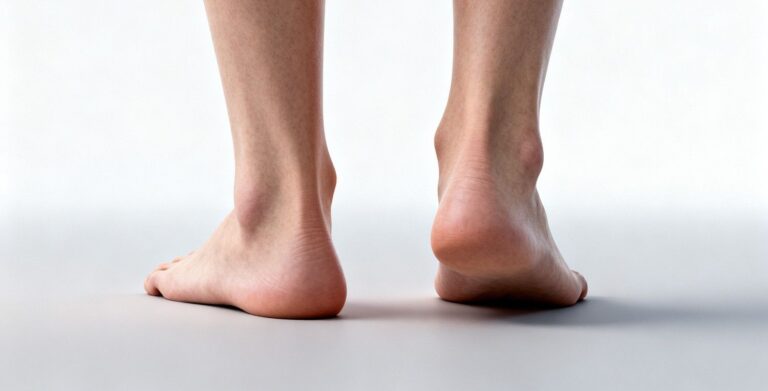
Heel pain is commonly felt underneath the heel or around the rear portion of the foot. The exact location matters because the heel contains the heel bone, soft tissues that absorb impact, and the attachment point of the plantar fascia.
For the arch side in more detail, see foot arch pain.
Some people notice heel discomfort most clearly when taking their first steps after getting out of bed or after sitting for a while. Others mainly feel it after prolonged standing, walking, running, or repeated impact.
The sensation can vary too. It may feel like tenderness, aching, or a sharper discomfort during certain steps. Heel pain does not always behave the same way from person to person, so the timing and activity pattern are useful clues.
Where Does Arch Pain Usually Occur?
Arch pain is generally located farther forward from the heel, along the curved underside of the foot. It may sit in the middle of the arch or extend toward the heel or forefoot.
Because the arch helps support the body during standing and walking, discomfort can become more noticeable after the foot has been working for several hours. Someone who spends most of a shift walking may feel relatively comfortable at first and notice increasing soreness later in the day.
The arch contains several interacting structures, including the plantar fascia, tendons, ligaments, and bones. That is one reason arch discomfort cannot always be explained by one factor alone.
For readers trying to understand arch-specific support and footwear choices, Best Insoles for Arch Pain covers how different support approaches relate to this area.
How Do Heel Pain and Arch Pain Feel Different?
The most useful difference is often location rather than the exact description of the sensation.
Heel pain tends to be concentrated near the heel itself. Arch pain is usually farther forward and may feel like aching, tightness, tenderness, or fatigue through the curved part of the foot.
There can be overlap. A problem affecting the plantar fascia, for example, may produce discomfort that is felt near the heel and along the arch rather than staying in one perfectly defined spot.
This means the question is not simply whether the pain feels sharp or dull. A better comparison is: Where is the pain strongest, and what happens when you stand, walk, or increase activity?
How Do Standing and Walking Affect Each Type of Pain?
Both heel pain and arch pain can become more noticeable with repeated loading, but the pattern may differ.
Someone standing for many hours at work may gradually develop aching through the arch as the supporting tissues remain under load. A person doing repeated walking or running may notice more discomfort around the heel when each step repeatedly stresses the foot.
Surface matters as part of the overall workload. Spending hours on hard flooring does not automatically mean there is an injury, but it can contribute to accumulated fatigue in the feet. Why Hard Floors Cause Foot Fatigue explains why prolonged exposure to firm surfaces can make feet feel increasingly tired over a workday.
Walking volume matters as well. Increasing daily steps, adding hills, starting a running program, or simply spending much longer on your feet than usual can change how both the heel and arch feel.
Can Foot Mechanics Affect Heel or Arch Pain?
Yes. The way the foot moves and distributes load during walking can influence where stress is felt, although movement patterns do not automatically explain every case of pain.
For example, overpronation describes greater inward rolling of the foot during movement, while supination describes a different pattern of loading. These terms are useful when discussing gait because they help explain why pressure may not be distributed identically across every foot.
Overpronation vs Supination provides a clearer comparison of these two movement patterns and their relationship to foot loading.
The important distinction is that heel pain versus arch pain is primarily about where the symptoms are occurring, while gait describes how the foot is moving and handling load. They are related concepts, but they answer different questions.
What Should You Look At When Comparing the Two?
A simple way to separate heel pain from arch pain is to consider four things: location, timing, activity, and progression.
If the discomfort is concentrated directly under or around the heel, heel pain is the more relevant description. If it follows the curved section farther forward along the underside of the foot, arch pain is a better description.
Then consider when it happens. Does it appear with the first few steps, after several hours of standing, during longer walks, or only after a noticeable increase in activity?
Those details often provide more useful information than the word “pain” by itself.
What Can Help With Heel Pain or Arch Pain?
The most useful next step depends on where the discomfort is occurring and what tends to trigger it. For either heel pain or arch pain, reducing a sudden increase in walking, running, or standing can help prevent the area from being repeatedly overloaded.
That does not always mean stopping all movement. Someone who normally walks for work may do better by temporarily reducing unnecessary extra walking, taking brief opportunities to sit, or avoiding a sudden jump in exercise volume. The same principle applies to running or other higher-impact activities: changing the workload is often more practical than simply pushing through increasing pain.
Footwear can also influence how comfortable the heel and arch feel. A walking shoe with enough room, a reasonably stable base, and cushioning appropriate for the activity may be more comfortable than footwear that has become compressed, worn, or restrictive.
Do Insoles Work Differently for Heel Pain and Arch Pain?
Insoles can change the way pressure is distributed under the foot, but they do not serve one universal purpose.
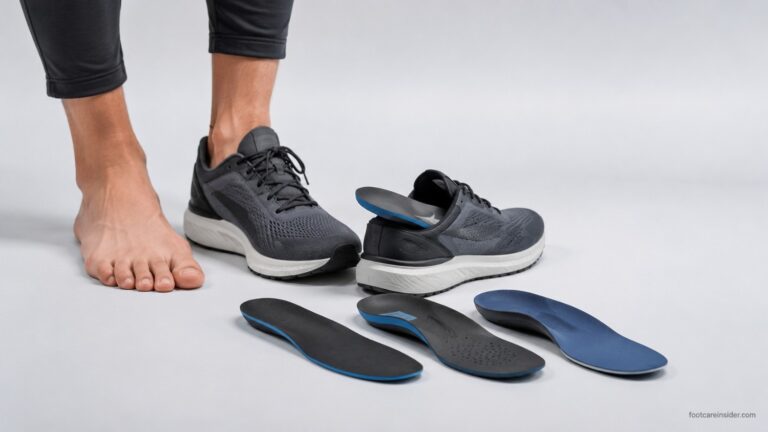
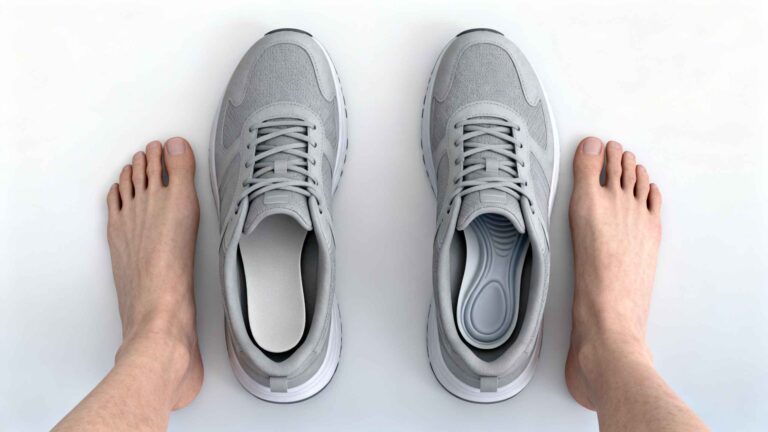
For heel discomfort, cushioning under the rear of the foot may be relevant for someone who spends a lot of time walking or standing. For arch discomfort, the position and shape of the support may matter more than simply adding softness.
This is why more cushioning is not automatically better, and more arch support is not automatically better either. An insole that feels supportive in one shoe can feel intrusive in another, particularly when the shoe has limited internal space.
The practical comparison is simple: heel-focused discomfort may make cushioning and impact feel more important, while arch-focused discomfort may make support and pressure distribution more noticeable. The symptoms and the footwear still need to be considered together.
When Should Heel or Arch Pain Be Evaluated?
Pain that is persistent, worsening, or interfering with normal walking deserves more attention than occasional soreness after an unusually demanding day.
Evaluation is especially appropriate after an injury, when there is significant swelling or bruising, when weight-bearing becomes difficult, or when pain remains pronounced even when you are resting.
The pattern also matters. Pain that keeps returning despite reducing the activity that seems to trigger it is worth discussing with a healthcare professional rather than repeatedly changing shoes or activity without understanding why it continues.
Because heel and arch pain can involve different tissues, a location-based description is useful but does not by itself establish the underlying cause.
How Can You Prevent Heel and Arch Pain From Repeating?
A gradual approach to activity is one of the simplest ways to avoid unnecessarily increasing load on the feet. If your normal routine involves several hours of standing and you suddenly add long walks or intense exercise, the combined workload can change quickly.
Pay attention to how your feet feel during the day rather than only at the end. Increasing discomfort after several hours may indicate that the current combination of activity, footwear, and surface is becoming difficult to tolerate.
It is also worth checking footwear regularly. Walking shoes and work shoes can lose cushioning or structural support with repeated use, while a shoe that feels fine for a short trip may become uncomfortable during a full shift.
Which One Is More Likely: Heel Pain or Arch Pain?
The location provides the clearest starting point.
Heel pain = discomfort centered around or beneath the heel.
Arch pain = discomfort following the curved area between the heel and forefoot.
The two can overlap because the plantar fascia and other structures extend through this region. That is why the exact location, timing, and activity pattern are more useful than trying to classify the sensation from one symptom alone.
Common Questions
Can heel pain spread into the arch?
Yes. Pain associated with structures that run from the heel toward the front of the foot can sometimes be felt across more than one area. The fact that discomfort extends into the arch does not necessarily mean it is a separate problem.
How can I tell whether my pain is in my heel or arch?
Start by identifying where the discomfort is strongest. Pain concentrated underneath or around the heel is more consistent with heel pain, while discomfort farther forward along the curved underside of the foot fits the usual description of arch pain.
Is heel pain worse from standing or walking?
It can become more noticeable with either, depending on the individual pattern. Long periods of standing create sustained loading, while walking adds repeated steps and changes in force throughout the foot.
Can arch pain turn into heel pain?
Symptoms can overlap or change location, particularly when several structures are involved. A change in where the pain is felt is useful information and may be worth discussing with a healthcare professional if it continues.
Should I use an insole for heel pain instead of arch pain?
Not necessarily. Heel and arch discomfort can call for different support characteristics, but the appropriate choice depends on the person, footwear, activity, and what is actually contributing to the symptoms.
Final Verdict
Heel pain vs arch pain is mainly a question of where the discomfort is concentrated and how it behaves during everyday activity. Heel pain is centered closer to the heel, while arch pain is located farther forward along the curved underside of the foot.
Neither description automatically identifies one specific cause. Standing duration, walking load, footwear, activity changes, and individual foot mechanics can all influence symptoms. The most useful approach is to match the location and pattern of the pain with the demands of your daily routine rather than assuming that every case needs the same solution.