Can Insoles Prevent Injury?
Pain doesn’t usually start with a dramatic moment. It creeps in quietly—an ache after a long walk, a tight feeling in your calves, a dull soreness in your knees that wasn’t there before. At first, it’s easy to ignore. But over time, small imbalances in how your body moves can build into something more serious.
That’s where the question comes in: can insoles prevent injury, or are they just another comfort add-on?
The answer isn’t as simple as yes or no. Insoles can absolutely play a role in reducing injury risk—but only when the underlying cause of the problem is understood.
Understanding How Injuries Actually Start
Most lower-body injuries don’t come from a single event. They develop from repetitive stress and poor movement patterns.
Every time your foot hits the ground, it triggers a chain reaction:
- The arch absorbs impact
- The ankle stabilizes movement
- The knee tracks forward
- The hip aligns your stride
If one part of that chain is off—even slightly—the stress shifts elsewhere.
For example:
- A collapsing arch can cause the ankle to roll inward
- That inward motion pulls the knee out of alignment
- The hip compensates, and the lower back follows
Over time, this creates strain in tissues that weren’t designed to handle it.
This is why conditions like:
- Shin splints
- Plantar fasciitis
- Knee pain
- Achilles tightness
often show up gradually rather than suddenly.
The Role of Foot Mechanics
Your feet are your foundation. When they function properly, they distribute pressure evenly and absorb shock efficiently. But when something is off—whether it’s flat feet, high arches, or instability—the entire system is affected.
People often underestimate how much foot mechanics influence injury risk.
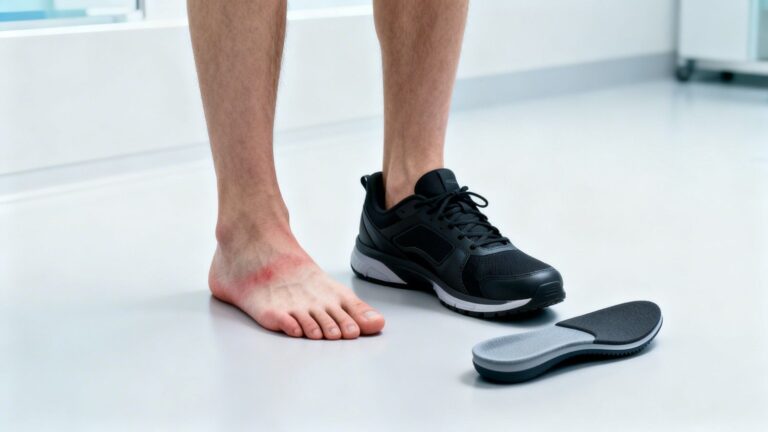
Take overpronation as an example. When the foot rolls too far inward, it doesn’t just affect the foot itself. It changes the alignment of the entire leg.
If you’ve ever noticed uneven shoe wear or inward ankle collapse, that’s a sign your movement pattern may not be stable.
For a deeper breakdown of this pattern, see insoles for overpronation.
Why Some People Are More at Risk
Not everyone develops injuries at the same rate. Certain factors increase the likelihood:
1. Long hours on hard surfaces
Standing or walking on concrete all day increases repetitive impact.
2. Improper footwear
Shoes without structure or support force your body to compensate.
3. Sudden activity increases
Jumping into running or long walks without adaptation stresses tissues quickly.
4. Pre-existing foot structure
Flat feet or high arches change how force is distributed.
5. Muscle imbalances
Weak stabilizing muscles can’t properly control movement.
When these factors combine, the risk multiplies.
Why Standard Insoles Often Don’t Help
Many people try insoles after pain starts—but choose the wrong type.
Most basic inserts are:
- Soft
- Flat
- Designed for comfort, not structure
They may feel better initially, but they don’t address the underlying issue.
In some cases, they can even make things worse.
For example:
- Soft cushioning without support allows the arch to collapse further
- Lack of heel stability leads to continued misalignment
- Low-quality materials compress quickly, losing effectiveness
This is why people often say insoles “don’t work”—when in reality, the problem is choosing the wrong kind.
The Difference Between Comfort and Prevention
It’s important to separate two ideas:
- Comfort → how something feels immediately
- Prevention → how something affects long-term movement
Soft insoles can improve comfort. But injury prevention requires biomechanical support.
That means:
- Proper arch support to control foot motion
- Heel stabilization to guide alignment
- Balanced cushioning that absorbs impact without collapsing
If you’re unsure how support level affects performance, see Soft vs Firm Insoles.
How Symptoms Show Up Differently
Not all movement issues feel the same.
Depending on your mechanics, you might notice:
- Heel pain → often linked to plantar fascia strain
- Shin discomfort → repetitive stress from poor shock absorption
- Knee pain → alignment issues during walking or running
- Foot fatigue → lack of support during long periods of standing
Some people feel pain immediately. Others only notice it after activity.
And sometimes, the problem shows up far from the source. A foot issue can easily become a knee or hip problem over time.
When It Becomes More Serious
Early signs are easy to ignore. But if left unaddressed, small issues can develop into chronic conditions.
Watch for:
- Pain that returns consistently after activity
- Discomfort spreading to knees, hips, or lower back
- Stiffness in the morning or after rest
- Reduced ability to walk, run, or stand comfortably
At this stage, the question isn’t just can insoles prevent injury—it’s whether the right support could have reduced the risk earlier.
For related movement patterns and how they affect the body, see How Flat Feet Lead to Back Pain.
So, Can Insoles Prevent Injury?
Insoles are not a cure-all. They don’t “fix” your body permanently.
But they can:
- Improve alignment
- Reduce repetitive stress
- Support natural movement patterns
And that combination can significantly lower the risk of overuse injuries.
The key is understanding when—and how—they should be used.
Can Insoles Prevent Injury?
Understanding the cause of injury is only half the equation. The next step is knowing what actually helps—and where insoles fit into that picture.
If you’re asking can insoles prevent injury, the real answer depends on how they’re used alongside other strategies.
Treatment Options (Start Here First)
Before relying on any product, it’s important to look at the basics. Many lower-body issues improve when the underlying stress is reduced and the body is given time to adapt.
1. Activity modification
Reducing intensity or duration—even temporarily—can prevent small issues from becoming chronic. This doesn’t mean stopping completely, but adjusting load while the body recovers.
2. Footwear changes
Shoes with proper structure, stability, and support often make a bigger difference than people expect. Worn-out shoes are a common but overlooked cause of discomfort.
3. Mobility and strength work
Tight calves, weak foot muscles, and poor hip stability all contribute to injury risk. Simple exercises can restore balance over time.
4. Surface awareness
Hard surfaces increase impact stress. Alternating terrain or using more forgiving surfaces can reduce repetitive strain.
These steps form the foundation. Insoles should support them—not replace them.
When Insoles Actually Help
This is where insoles can make a real difference.
Insoles are most effective when the issue involves mechanical stress or alignment problems. In those cases, they help guide movement and reduce strain with every step.
They can be useful for:
- Overpronation (excessive inward rolling)
- Flat feet or low arches
- High arches with poor shock absorption
- Long periods of standing or walking
- Repetitive impact activities like running
Instead of just adding cushioning, the right insole helps control motion and distribute pressure more evenly.
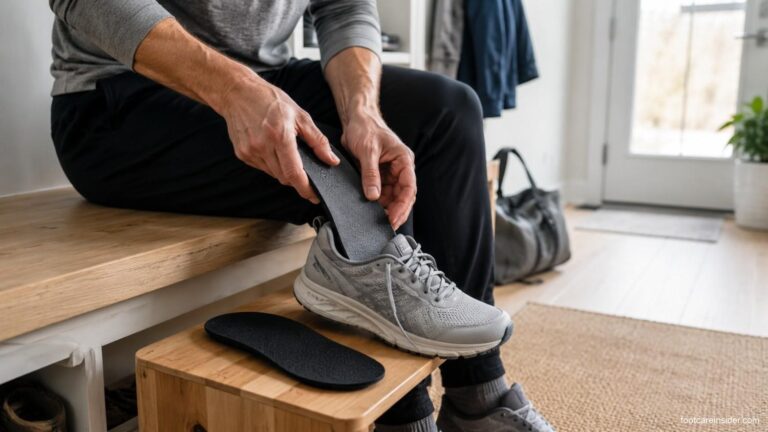
For example, people dealing with inward ankle collapse often benefit from structured support like insoles for overpronation, which focuses on stabilizing the foot rather than simply softening impact.
When Insoles Are Less Effective
There are also situations where insoles alone won’t solve the problem.
They tend to be less effective when:
- Pain is caused by acute injury (e.g., strains, tears)
- There is significant inflammation or swelling
- The issue is related to nerve compression or circulation
- Structural deformities require custom orthotics
In these cases, insoles may still play a supportive role—but they’re not the primary solution.
When Medical Care Is Necessary
Sometimes, symptoms go beyond what self-care can manage.
Consider professional evaluation if:
- Pain persists for more than 2–3 weeks
- Discomfort worsens despite rest or adjustments
- Pain spreads to other joints (knee, hip, lower back)
- You experience numbness, tingling, or instability
- You have underlying conditions like diabetes
A podiatrist or physical specialist can assess gait, alignment, and structural factors more precisely.
In some cases, custom orthotics may be recommended for more complex biomechanical issues.
Prevention Strategies That Actually Work
If your goal is long-term injury prevention, the approach needs to be consistent and practical.
Here’s what makes the biggest difference:
1. Match support to your foot type
Flat feet, neutral arches, and high arches all require different levels of support. Using the wrong type can create new issues instead of solving existing ones.
2. Rotate footwear when possible
Wearing the same shoes every day increases repetitive stress. Alternating pairs allows materials to recover and reduces load patterns.
3. Replace worn insoles regularly
Even high-quality insoles lose effectiveness over time. Most need replacing every 6–12 months depending on use.
4. Pay attention to early warning signs
Mild discomfort is often the first indicator. Addressing it early prevents progression.
5. Choose the right support for your activity
Walking, running, and standing all place different demands on your feet. For example, people on their feet all day often benefit from options like insoles for standing all day, which focus on fatigue reduction and sustained support.
Where Insoles Fit in Prevention
So, can insoles prevent injury?
They can’t eliminate risk completely. No single solution can.
But they can:
- Reduce abnormal stress patterns
- Improve alignment during movement
- Support consistent biomechanics
That combination lowers the likelihood of developing overuse injuries—especially when paired with the right habits.
Think of insoles as a tool, not a shortcut.
Frequently Asked Questions
Can insoles prevent injury completely?
No. Insoles reduce risk by improving alignment and support, but they don’t eliminate all causes of injury.
Do insoles help with running injuries?
They can, especially when the injury is linked to poor foot mechanics or impact distribution.
Are soft insoles good for prevention?
Not always. Soft insoles improve comfort but may lack the structure needed for stability.
How do I know if I need insoles?
Signs include recurring foot fatigue, uneven shoe wear, or discomfort in the feet, knees, or lower back.
Can I use the same insoles for all activities?
Sometimes, but activity-specific support is often more effective. Walking and running place different demands on the foot.
Do insoles weaken foot muscles?
Not when used correctly. They support movement but should be combined with strength and mobility work.
For more helpful info, check out all our detailed guides here.
Final Thoughts
The question can insoles prevent injury comes down to understanding what causes those injuries in the first place.
Most problems develop from repeated stress, poor alignment, and unsupported movement patterns over time.
Insoles don’t “fix” everything—but they can play a meaningful role in prevention when chosen correctly and used alongside good habits.
If your feet are better supported, your movement becomes more efficient. And when movement improves, stress decreases.
That’s where prevention really begins.
If you’re active or experience impact-related discomfort, using insoles for running can help reduce stress on your joints.