Gel vs Orthotic Insoles (What’s the Difference?)
If you’re dealing with foot pain, fatigue, or discomfort during long days, you’ve probably come across two popular options: gel insoles and orthotic insoles. At first glance, they may seem similar—but in reality, they serve very different purposes.
Understanding the difference between gel vs orthotic insoles is essential if you want real relief instead of temporary comfort.
Let’s break it down clearly.
What Are Gel Insoles?
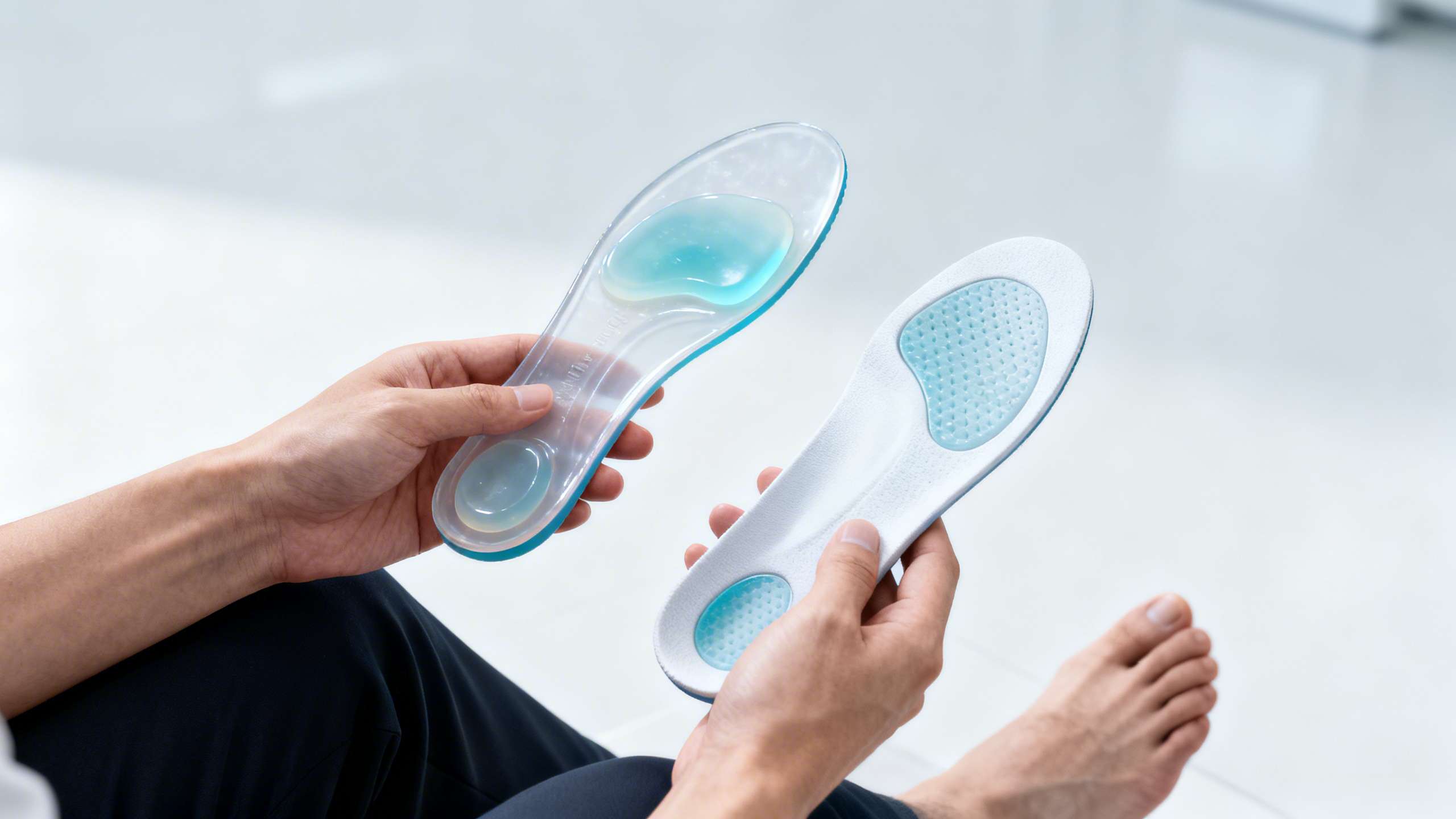
Gel insoles are designed primarily for shock absorption and cushioning.
They are typically made from:
- Silicone-based gel
- Soft polymer materials
- Flexible, compressible layers
Their main goal is simple:
👉 Reduce impact on your feet
You’ll usually find gel pads in:
- The heel area
- The forefoot
- Full-length soft inserts
These insoles are commonly used in:
- Casual shoes
- Work shoes
- Athletic footwear (for added comfort)
What Are Orthotic Insoles?
Orthotic insoles (often called “orthotics”) are designed for structural support and alignment.
They are usually made from:
- High-density foam
- Rigid or semi-rigid plastic
- EVA or polyurethane layers
Instead of just cushioning, orthotic insoles aim to:
👉 Correct how your foot moves and distributes weight
They typically include:
- Defined arch support
- Deep heel cup
- Stabilizing structure
👉 Related: insoles for overpronation
Orthotic insoles are often recommended for:
- Flat feet
- Overpronation
- Plantar fasciitis
- Chronic foot or joint pain
Structural Differences (Core Comparison)
The biggest difference in gel vs orthotic insoles comes down to structure.
Gel Insoles:
- Soft and flexible
- Compress under pressure
- No fixed shape or support system
Orthotic Insoles:
- Firm or semi-rigid
- Maintain shape under weight
- Built to guide foot alignment
👉 Think of it this way:
- Gel = comfort layer
- Orthotic = support system
Materials & Function Differences
Gel Insoles (Function: Absorption)
Gel insoles focus on:
- Reducing impact when walking or running
- Cushioning sensitive areas (heel, ball of foot)
- Improving immediate comfort
Because they compress easily, they:
- Feel soft instantly
- Adapt to foot shape temporarily
But:
- They don’t control movement
- They don’t prevent overpronation
Orthotic Insoles (Function: Correction + Support)
Orthotic insoles are built to:
- Support the arch
- Stabilize the heel
- Improve alignment from foot → knee → hip
They work by:
- Redistributing pressure
- Preventing excessive inward rolling
- Reducing strain on ligaments and joints
👉 Related: how insoles improve posture
Unlike gel insoles, they:
- Hold their shape
- Provide consistent support over time
Intended Use Cases (When Each Makes Sense)
Choosing between gel vs orthotic insoles depends on your specific problem.
When Gel Insoles Make Sense
Gel insoles are ideal if your main issue is:
- Foot fatigue after long days
- Discomfort from hard surfaces
- Mild heel pain
- General need for comfort
They’re commonly used by:
- People standing all day
- Casual walkers
- Those without major foot structure issues
👉 Related: best insoles for standing all day
When Orthotic Insoles Are Better
Orthotic insoles are the better choice if you have:
- Flat feet
- High arches
- Overpronation
- Chronic pain (heel, arch, knee, back)
They’re especially useful for:
- Long-term correction
- Injury prevention
- Improving walking mechanics
👉 Related: best insoles for flat feet
Cost Differences (What to Expect)
Another key factor in the gel vs orthotic insoles comparison is price.
Gel Insoles:
- Typically range: $10–$30
- Widely available
- Budget-friendly
Orthotic Insoles:
- Over-the-counter: $25–$60
- Custom orthotics: $200+
👉 Important insight:
- Gel insoles = cheaper upfront
- Orthotic insoles = better long-term value (for real issues)
The Key Takeaway So Far
If you’re choosing between gel vs orthotic insoles, it comes down to this:
- Gel insoles → comfort and cushioning
- Orthotic insoles → structure and correction
Neither is “better” universally—it depends on your needs.
Gel vs Orthotic Insoles – Pros, Cons, and Verdict
Now that we understand the structural differences, materials, and intended uses, it’s time to compare gel vs orthotic insoles side by side. This will help you decide which type is right for your feet and lifestyle.
Pros & Cons Breakdown
Gel Insoles
Pros:
- Immediate comfort for heels and arches
- Soft and flexible, adapts to foot shape
- Lightweight and easy to wear in most shoes
- Affordable and widely available
Cons:
- Minimal support for structural issues
- Can flatten over time, reducing effectiveness
- Not suitable for chronic pain correction
- Limited impact on alignment
Orthotic Insoles
Pros:
- Provides consistent arch support and heel stability
- Helps correct foot alignment and prevent overpronation
- Reduces strain on knees, hips, and lower back
- Durable, often lasting months to years
Cons:
- Can feel firm or uncomfortable at first
- More expensive than standard gel insoles
- May require adjustment period
- Less cushioning-focused, so may need pairing with soft shoes for comfort
Who Should Choose Gel Insoles
Gel insoles are ideal for:
- People seeking general comfort in casual or work shoes
- Individuals with mild heel pain or fatigue
- Users who spend time on hard floors but have no structural issues
- Budget-conscious buyers who want quick relief
👉 Related: best insoles for standing all day
Who Should Choose Orthotic Insoles
Orthotic insoles are better suited for:
- Flat feet or high arches needing structural support
- Overpronation or foot misalignment
- Chronic pain in heel, arch, knees, or back
- Long-term correction rather than temporary comfort
👉 Related: best insoles for flat feet
Long-Term Durability Comparison
- Gel Insoles: Soft materials compress over time; typically last 3–6 months depending on activity.
- Orthotic Insoles: Firm structure maintains integrity; OTC orthotics last 6–12 months, custom orthotics often years.
Insight: For daily support or chronic issues, orthotic insoles offer better long-term value. Gel insoles are effective for short-term comfort but require more frequent replacement.
FAQ: Gel vs Orthotic Insoles
1. Can gel insoles fix flat feet?
No, gel insoles provide cushioning but do not correct alignment. For flat feet, orthotic insoles are recommended.
2. Are orthotic insoles comfortable right away?
They may feel firm at first. Most users adapt within a few days to a week.
3. Can I use gel insoles and orthotics together?
Yes, some orthotic insoles allow a thin gel insert for added cushioning without compromising support.
4. Which is better for running?
Gel insoles are good for shock absorption in low-impact running, while orthotics help correct form and prevent injury in overpronators.
5. Are custom orthotics necessary?
Not always. Over-the-counter orthotics can work for mild to moderate issues. Custom orthotics are recommended for severe structural problems.
If you want more details, explore our full foot care guides here.
Verdict
- Choose Gel Insoles if your primary goal is comfort, cushioning, and short-term relief, especially for standing or casual activity.
- Choose Orthotic Insoles if your goal is support, correction, and long-term pain relief, especially for flat feet, overpronation, or chronic foot pain.
Bottom line:
Gel and orthotic insoles serve different purposes. Understanding your foot structure, pain patterns, and daily activity will guide you to the right choice.
You can also benefit from arch support for overpronation, especially if you experience foot fatigue or instability.