Best Insoles for Delivery Workers
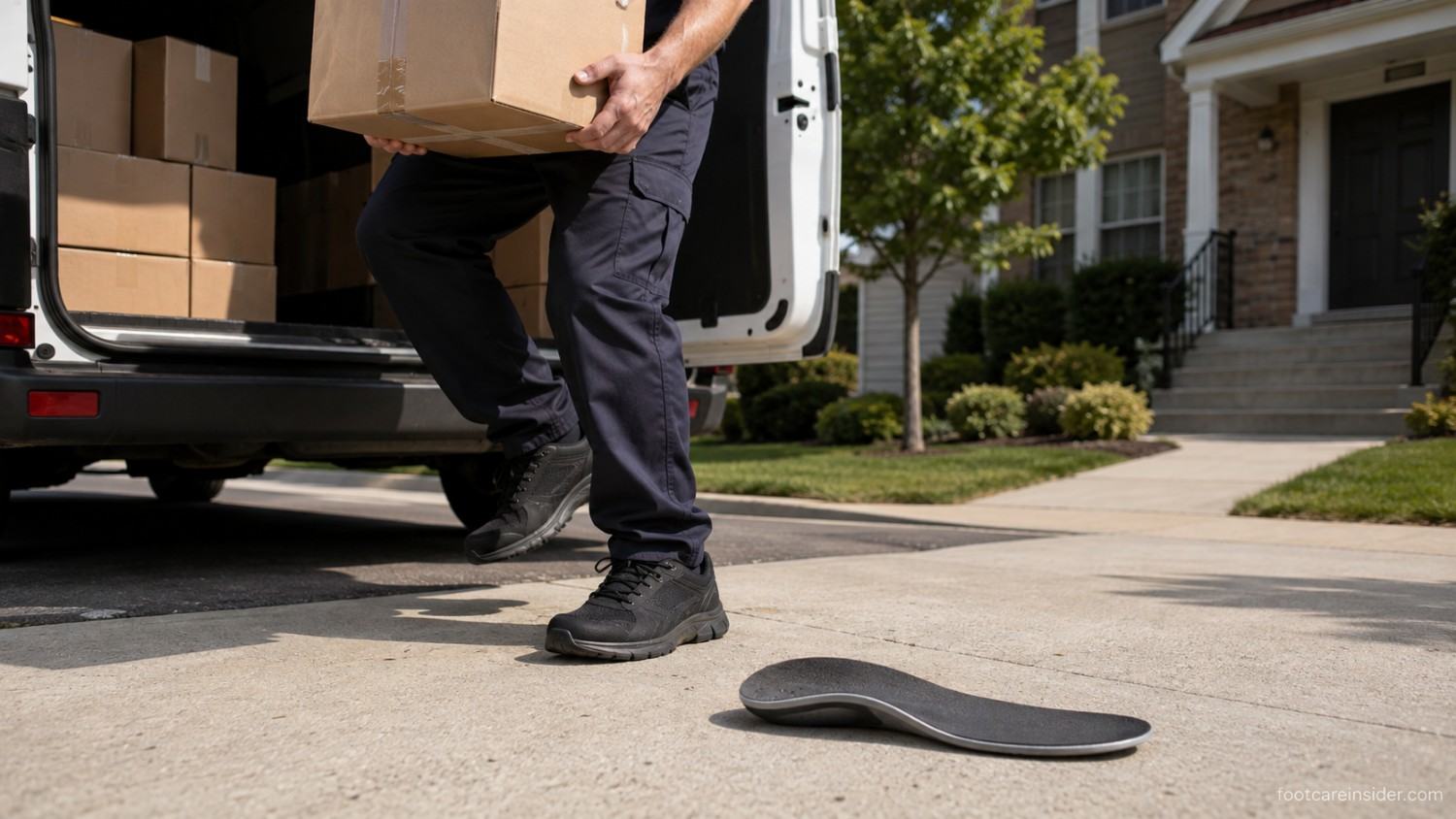
Delivery work puts a lot of repeated load through your feet. A typical route can mean hours of walking between a vehicle, houses, apartments, offices, or businesses, with frequent stops, stairs, uneven pavement, and repeated getting in and out of the vehicle. By the end of a long route, your heels may feel sore, your arches tired, or your forefoot worn down. The best insoles for delivery workers need to handle much more than simple standing comfort. They need to fit footwear that is used heavily, provide support across repeated walking, and stay comfortable as the mileage adds up.
For most delivery workers, the best insole direction comes down to balancing cushioning, support, durability, and shoe fit. Higher walking loads often make cushioning and support retention more important than plush softness alone, while workers using tighter shoes may need a lower-profile design. The right choice depends on how many miles you cover, what surfaces you walk on, and where fatigue builds first.
What Makes Delivery Work So Demanding on Your Feet
Delivery driving is not the same as spending an entire shift behind a desk or at one workstation. You may sit in the vehicle for part of the route, then immediately switch to walking, climbing stairs, carrying packages, and standing at a doorstep. That repeated change in activity puts a lot of small loads through the feet over the course of a day.
For a wider comparison across jobs and floors, see our guide to the best insoles for standing all day.
The walking itself can be substantial. A busy route may involve repeated stops across sidewalks, driveways, concrete walkways, apartment corridors, and other mixed surfaces. Even when each individual walk is short, the total daily mileage can become significant.
This is why delivery workers can finish a shift with a different type of fatigue than someone who mainly stands in one place. The heels and forefoot absorb repeated impact, while the arches and surrounding tissues help manage the constant transition between walking, stopping, turning, and carrying loads.
The Right Insole Depends on Your Route, Not Just Comfort
The goal is to match the insole to how you actually work.
A delivery worker covering high mileage needs a different balance from someone making short local runs with frequent time in the vehicle. If your feet mainly feel tired after repeated walking, cushioning and durability deserve attention. If your arches feel unsupported or your feet become less stable later in the route, a more structured support profile may make more sense.
Shoe fit matters too. A thick insole can be uncomfortable if your work shoes already fit closely, while a very soft insole may not hold its shape well under repeated daily mileage.
This is less about finding the softest option and more about finding the right combination of comfort, structure, and usable space inside the shoe.
Why Repeated Delivery Walking Builds Foot Fatigue
Walking all day exposes the feet to repeated loading rather than one long period of static pressure. Each step transfers force through the heel, arch, forefoot, and lower leg, and delivery work adds frequent starts, stops, turns, stairs, and changes in surface.
The result often appears gradually. Your feet may feel completely normal at the beginning of a route, become noticeably tired during the middle of the day, and feel sore or heavy during the last few hours. That progression is an important buying clue because it suggests that the total workload is part of the problem.
Footwear also matters. Shoes that feel acceptable for a short walk may become less comfortable after several hours and many miles. If the cushioning is worn or the foot is not well supported, the accumulated workload can become more noticeable.
For delivery workers who spend much of the route walking on firm surfaces, Why Hard Floors Cause Foot Fatigue can help explain why the environment itself can add to the strain.
Why Stock Insoles May Not Survive High Daily Mileage
The insole that comes with a walking shoe or work shoe may be perfectly adequate for occasional use, but delivery work can expose its limitations quickly. Repeated mileage can compress softer materials, leaving the insole feeling flatter or less supportive than it did when new.
Another issue is the balance between softness and structure. A plush insole may feel comfortable at the start of a route but provide less support as the day continues. Conversely, a firmer insole may feel more stable but can seem less forgiving if your main problem is general underfoot fatigue.
Durability is especially important for delivery workers because the same shoes may be worn through long routes several days a week. You want an insole that continues to provide a consistent feel rather than one that changes noticeably after heavy use.
There is also the question of shoe space. Delivery shoes are often worn for walking rather than oversized work boots, so an overly thick insole can reduce toe room or make the fit feel restrictive.
Narrowing the Right Insole Direction for Delivery Work
If your biggest problem is general fatigue after many miles, start by leaning toward cushioning that can handle repeated walking without feeling excessively soft. The goal is to make long routes more comfortable while keeping the foot supported.
If your arches become tired or unsupported as the route progresses, a more structured support direction may make more sense. This can feel steadier than a basic cushion, although a firmer profile may take more adjustment.
If you cover high daily mileage, durability and support retention should move higher on your list. A long-route worker needs an insole that maintains its shape rather than simply feeling plush when first installed.
If your work shoes are already snug, a slim or low-profile option may be the smarter route because it preserves space around the toes. The tradeoff is that thinner designs usually have less room for substantial cushioning or structure.
And if your feet feel noticeably less stable during repeated walking, a stability-focused option may be worth considering over a softer comfort-only design. The right balance depends on whether your main issue is impact, support, fatigue, or fit.
Once those factors are clear, choosing becomes much easier: think about your route, your mileage, your shoes, and what changes in your feet from the start of the day to the end.
Best for Delivery Workers Covering High Daily Mileage
If your route involves several miles of walking, frequent stops, stairs, and repeated pavement or concrete surfaces, start with a durable cushioned insole that keeps its shape under repeated use. This is generally more suitable than a very plush option that feels soft at first but compresses quickly. The tradeoff is that durability-focused cushioning may feel firmer than a comfort-first insole.
Best for Long Routes With Tired Arches
If your arches become noticeably tired during the second half of a delivery route, a structured arch-support insole may be worth considering. It can provide a more supported feel during repeated walking and carrying, rather than relying mainly on softness. The limitation is that stronger arch structure can take more room inside the shoe and may feel firmer than a cushioned design.
Best for Drivers Who Walk on Hard Outdoor Surfaces
For workers moving between a delivery vehicle, sidewalks, driveways, concrete steps, and building entrances, a cushioning-focused insole can help make repeated impact feel less demanding. It is a better match for general underfoot fatigue than a highly structured option when stability is not the main issue. The drawback is that extra cushioning may provide less controlled support.
Best if Your Delivery Shoes Feel Tight
If your walking shoes already fit snugly, choose a thin or low-profile insole before considering a thick, heavily cushioned model. Keeping more vertical space inside the shoe can improve comfort around the toes during long routes. The limitation is straightforward: a thinner design may offer less cushioning and structural support than a bulkier insole.
Best When Your Feet Feel Less Stable Late in the Route
If your feet feel increasingly unsupported during repeated walking, turning, and stepping in and out of the vehicle, a stability-focused insole may be the better direction. It prioritizes structure over plush softness and can feel more controlled during active routes. The downside is that it may feel firmer and less forgiving than a general cushioned insole.
Before choosing between a softer and more structured option, Cushioning vs Stability Insoles can help you compare the two approaches.
FAQs
Are cushioned insoles good for delivery workers?
They can be a sensible starting point when repeated walking and hard outdoor surfaces are the main sources of foot fatigue. A more structured option may be preferable when your arches feel unsupported or your feet feel unstable.
How thick should an insole be for delivery shoes?
There is no single ideal thickness. Choose enough cushioning and support for your route without making the shoe feel cramped, especially around the toes.
Should I replace the original shoe insole?
If the original liner is removable, replacing it can create more usable space and improve fit. Check that the replacement sits securely and does not make the shoe feel too tight.
How often should delivery workers replace their insoles?
Mileage, shift length, and material quality all affect lifespan. How Long Do Insoles Last can help you recognize when compression or loss of support means the insole is due for replacement.
The Best Starting Point for Your Route
If your feet mainly feel tired after high daily mileage and hard surfaces, start with cushioning and durability. If your arches become tired or your feet feel less stable, move toward structured support. When shoe space is limited, choose a low-profile option first. The best choice is the one that matches how your route actually loads your feet.