Best Insoles for Cashiers
By the time a cashier gets to the last hour of a shift, the problem usually isn’t one sharp pain — it’s the slow buildup. Your heels feel bruised on hard floors, the balls of your feet start burning near the register, or your arches feel like they’ve dropped lower than they did in the morning. If you wear tight slip-resistant work shoes, there’s often another layer to it: your feet feel squeezed, but somehow still unsupported. That combination is exactly why “insoles for cashiers” is its own use case.
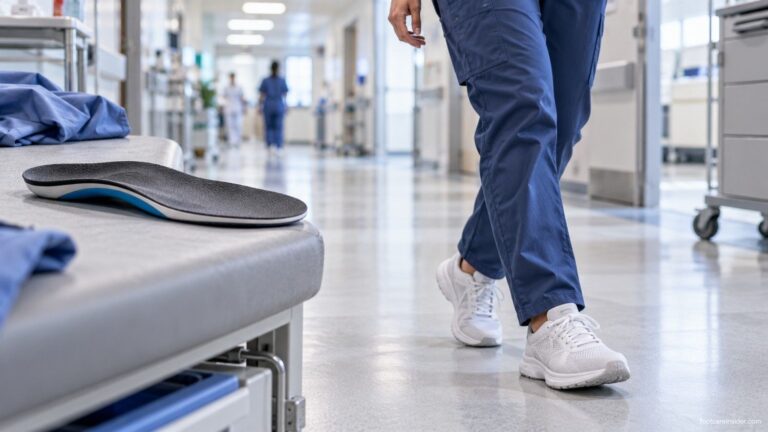
Cashiers often stand in one spot for long stretches with only short bursts of walking, which changes the pressure pattern compared with retail workers who move constantly across the floor. This guide is built to narrow the right insole direction for that exact kind of workday.the goal is simple: figure out whether your shift pattern points more toward cushioning, support, a slim low-volume insole, or a heavier-duty option before getting into actual recommendation.
Why cashier work wears feet down differently
Cashier fatigue builds in a very specific way. You’re usually not doing long-distance walking, but you are loading the same areas of the feet over and over on hard commercial flooring. That matters because standing mostly in one position creates a different strain pattern than moving continuously. Instead of spreading pressure across lots of steps and angles, the body keeps reloading the heel, forefoot, and arch in a narrower range.
There’s also less natural reset during the day. A cashier might shift weight from one foot to the other, take a few steps to bag items or grab something nearby, then go right back to the same standing position. Over a six-, eight-, or ten-hour shift, that repetitive static load can leave the plantar tissues, calves, and arches feeling more tired than people expect from a job that “doesn’t involve much walking.” Readers who feel that same end-of-day heaviness across any standing job often end up comparing Best Insoles for Standing All Day.
What this guide is actually helping you choose
This article is not trying to teach every possible cause of foot pain. It’s here to help you choose the right insole direction for cashier work specifically. That means looking at three things first: where your feet hurt or fatigue, how long and static your shifts are, and whether your work shoes have enough room for extra support.
If your main issue is hard-floor soreness under the heel or forefoot, you may need a different insole than someone whose arches collapse late in the shift. If your shoes already fit tightly, a bulky supportive insole can create a new problem even if the support itself is good.
Why cashiers often end up with heel, arch, or forefoot fatigue
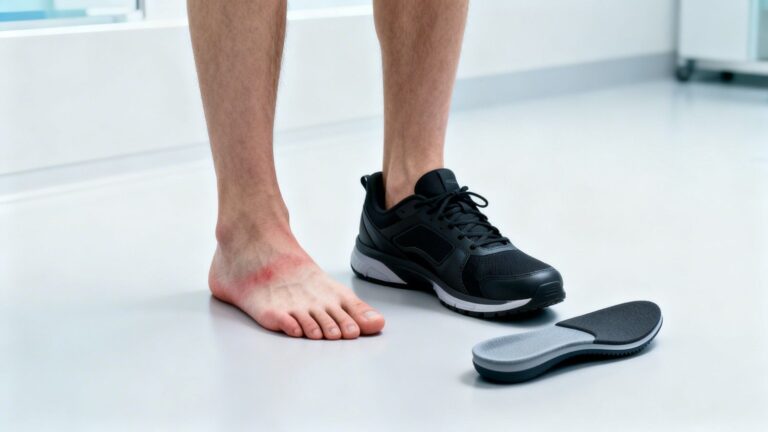
Standing in one place sounds easier than walking all day, but from a foot-fatigue perspective it can be brutal. When you keep your body in a narrow standing zone, certain pressure points take the load again and again without much variation. For cashiers, that usually means the heel during quiet standing, the forefoot when leaning slightly forward or pivoting, and the arch when the foot starts getting tired and less stable later in the day.
Hard flooring makes that worse because there’s almost no shock absorption coming from the surface itself. Even if you’re not taking thousands of steps, you’re still asking the same tissues to manage your body weight for hours. If your shoes are flat inside, if the midsole is worn down, or if your feet naturally need more support than the shoe provides, the fatigue tends to show up earlier and recover more slowly. For readers whose soreness is tied closely to heel pain rather than general standing fatigue, Best Insoles for Heel Pain can be a useful comparison point.
Why standard insoles often fail for cashiers
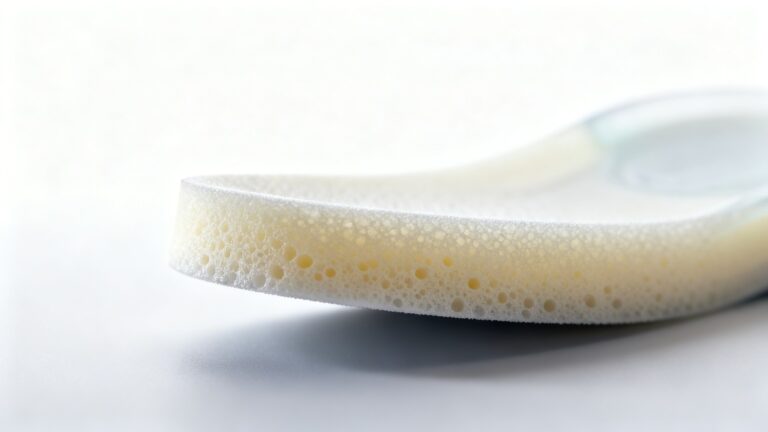
The stock insole inside many work shoes is fine for short wear, but cashier shifts expose its limits fast. The first issue is softness without structure. A basic foam liner may feel comfortable for the first hour, but under repeated standing load it often compresses too easily and stops doing much by mid-shift. That leaves you with the same hard-floor pressure, just with a thin layer of tired foam between your foot and the shoe.
The second issue is support mismatch. Some cashiers don’t need a highly corrective insole at all — they just need better shock absorption and a little more pressure relief. Others feel their arches tiring, ankles rolling inward, or feet flattening late in the day. Standard insoles are rarely built well for either end of that spectrum. They’re usually too generic, too thin, and not durable enough for repeated standing on hard floors.
Fit is the third problem. Cashier shoes are often slip-resistant work shoes, plain sneakers, or practical low-volume shoes that don’t have much spare room inside. A bulky insole can crowd the toes or lift the heel too much. That’s one reason it helps to know whether your problem is mainly about pressure relief, support, or shoe volume before buying anything.
What matters most before you choose
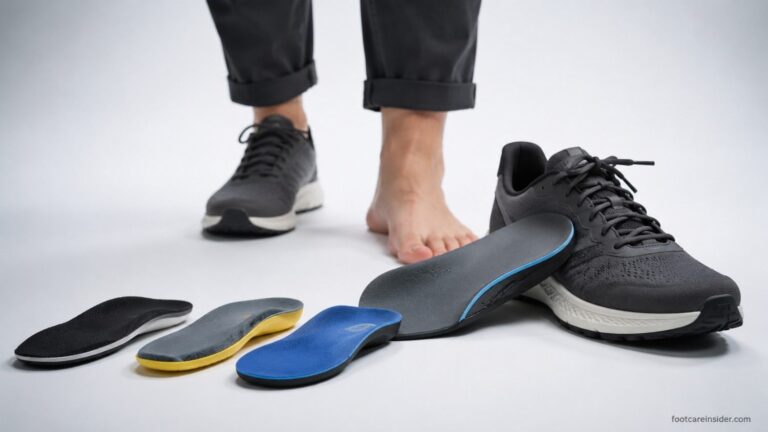
For most cashiers, the decision comes down to four possible directions.
Cushioning insoles make the most sense if your main problem is hard-floor soreness, bruised heels, or burning forefoot pressure by the end of the shift. They help more with impact and pressure than with control.
Supportive or arch-support insoles are the better direction if your arches feel tired, your feet feel unstable late in the day, or you notice inward rolling as the shift goes on. They’re less about plush comfort and more about keeping the foot from collapsing under repeated standing load.
Slim or low-volume insoles matter if your work shoes already fit snugly. These won’t usually feel as padded as thicker comfort models, but they’re often the only realistic way to add support without making the shoe unwearable.
Heavy-duty standing insoles are the better fit when your shifts are long, you work many days in a row, or you simply need something that holds up under more load and doesn’t flatten quickly.
The key is not to chase softness automatically. Soft cushioning is helpful when the problem is pressure from hard floors. It’s less helpful if your feet feel unstable or your arches are the first thing to give out. Shoe fit matters just as much: a very good insole that makes your cashier shoe too tight is still the wrong insole. If your foot fatigue clearly overlaps with arch collapse or inward rolling, it’s worth looking at Best Insoles for Overpronation as well, because that support pattern can change what works best at the register.
Insole directions that make the most sense for cashiers
For cashiers who mostly stand in one spot on tile or concrete, a cushioning insole is usually the best starting point.
This type works best when the shift ends with sore heels, burning forefoot pressure, or that “my feet feel beaten up” feeling rather than true instability. It’s usually more helpful for static hard-floor fatigue than a firm support insole, but it won’t do as much if your arches collapse late in the day.
For cashiers whose arches feel tired, strained, or less stable by the end of the shift, a supportive arch insole is often the better fit.
This is the direction to look at if standing still makes your feet feel flatter as the day goes on, or if you notice your ankles rolling inward in worn work shoes. It offers more structure than soft comfort insoles, though it can feel too firm if your real problem is just heel soreness on hard floors.
For cashiers wearing tighter slip-resistant shoes or low-volume work sneakers, a slim insole is often the safest buy.
It’s best for people who need some support or pressure relief but don’t have room for a thick insert without cramping the toes. You’ll usually give up some plush cushioning compared with bulkier comfort models, but the fit is often much better for all-day register shoes.
For long shifts, repeated weekly use, or heavier daily load, a heavy-duty standing insole makes more sense than a soft comfort insert.
This type is built for durability and for holding its shape under repeated hours on hard floors. It’s a better match for cashiers working full-time or back-to-back shifts, although it may feel stiffer and slightly bulkier than lighter cushioning insoles at first.
For cashiers whose fatigue is more specific — like heel pain, forefoot pressure, or a mix of soreness and mild instability — a targeted support insole can work well.
Think of this as the middle ground between plush cushioning and full corrective support. It’s often better for mixed symptoms than a basic soft insert, but it still has to match your shoe volume and your main pain location to work well.
Common questions from cashiers buying insoles
Should cashiers choose soft or firm insoles?
If your feet mainly feel sore from hard floors, softer cushioning usually makes more sense. If your arches feel tired, unstable, or flattened late in the shift, a firmer supportive insole is often the better choice.
Can insoles help with leg or lower-back fatigue from cashier work?
They can help indirectly by reducing foot strain and improving how your feet handle long standing. They won’t fix every cause of back pain, but better pressure relief and support often make long shifts feel easier overall.
Do insoles fit inside slip-resistant cashier shoes?
Some do, but not all. If your work shoes already feel snug, a slim or low-volume insole is usually a safer choice than a thick cushioning model.
How often should cashiers replace insoles?
For regular cashier shifts, many insoles need replacing every 6 to 12 months, sometimes sooner if they flatten fast or lose support. Heavy daily use on hard floors usually shortens lifespan.
Verdict
If your cashier shift leaves you with bruised heels or burning forefoot pressure, start with cushioning. If your arches feel tired or unstable by the end of the day, look at support first. Tight work shoes usually call for slim insoles, while long full-time shifts are often better served by a heavier-duty option that won’t flatten quickly.