Best Insoles for Security Guards
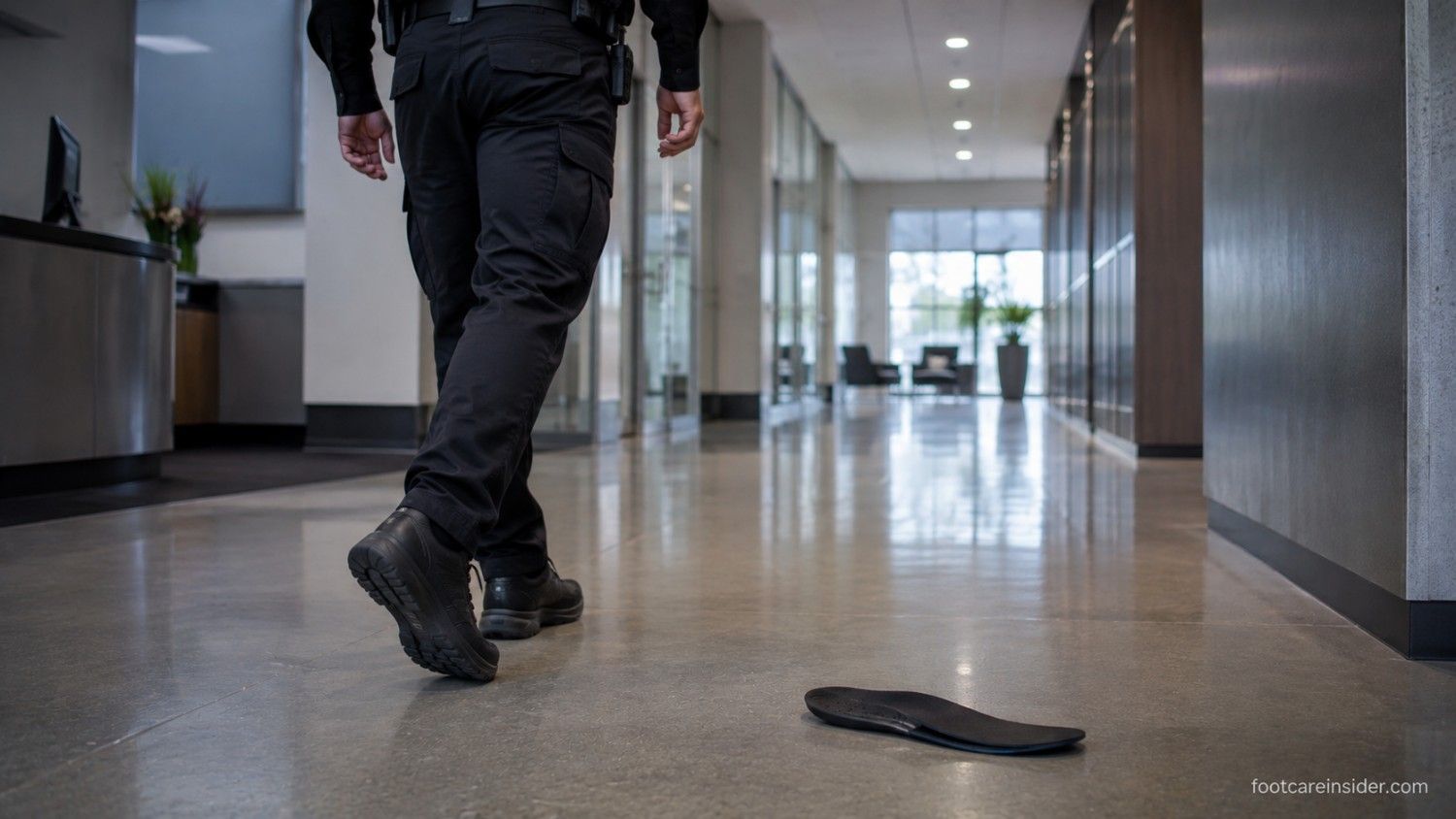
A security shift can be harder on your feet than it looks. You may spend hours standing at an entrance, walking patrol routes, checking different areas of a building, or moving between indoor and outdoor surfaces. By the final part of a long shift, the heels may feel sore, the arches tired, or the forefoot pressured inside work shoes. For security guards, the best insole is not necessarily the softest one. The better choice depends on how much you walk versus stand, how hard the flooring is, how long your shift lasts, and how much room your footwear provides.
For security guards, the best starting point is usually an insole that balances cushioning and support for long periods of standing and repeated walking. A cushioned option can make hard floors feel more forgiving, while a more structured insole may make more sense when arch fatigue or mild instability is the bigger issue. Shoe space and durability also matter because security footwear is often worn for many hours at a time.
What Makes Security Work Hard on Your Feet?
Security work rarely keeps you doing exactly one thing for an entire shift. A guard may stand at a reception desk for part of the night, walk through hallways or parking areas, then return to a fixed position. That repeated change between standing and walking creates a steady workload that can build gradually rather than causing discomfort immediately.
Standing posts for hours? Our best insoles for standing all day comparison covers more options.
Hard indoor flooring can add to that feeling. Tile, concrete, polished commercial flooring, and similar surfaces provide little natural cushioning, so your shoes and insoles handle more of the impact and pressure created by each step.
The length of the shift matters too. An eight- or twelve-hour shift gives your feet a lot more cumulative exposure than a short period of standing. By the later hours, the muscles and supporting tissues around the heel, arch, and forefoot may simply feel tired from carrying your body weight and controlling repeated movement.
For a broader explanation of this pattern, Why Hard Floors Cause Foot Fatigue is particularly relevant to security work involving long periods on firm indoor surfaces.
The Best Insole Depends on How Your Shift Feels
The goal is not to find one insole that every security guard should wear. It is to identify the support direction that matches your particular shift.
If you spend most of your time standing and your feet mainly feel tired from the floor, cushioning may be the better place to start. If you walk patrol routes for several hours, you may care more about a balance between cushioning, support, and durability.
Your discomfort pattern can narrow the choice further. Heel soreness can make cushioning more important, while tired arches may point you toward more structured support. If your feet feel less stable as the shift progresses, stability can matter more than a very soft feel.
And then there is fit. Security shoes and boots can already be fairly structured, so an insole that is too thick may reduce toe room or make the shoe feel cramped. The goal is to improve the underfoot experience without creating a new footwear problem.
Why Long Security Shifts Can Increase Foot Fatigue
During a long shift, your feet absorb repeated loads from both standing and walking. Even when patrol routes are relatively short, walking them repeatedly throughout the day can add a surprising amount of accumulated movement.
Standing has its own demands. When you stay in one position for a while, your feet continually support your body while making small balance adjustments. Then, when you move again, the load changes as your body weight shifts through the heel, arch, and forefoot.
This combination can create the familiar pattern of feeling fine at the beginning of a shift and increasingly uncomfortable later on. The longer the shift continues, the more noticeable small problems with cushioning, support, or shoe fit can become.
Footwear condition can also influence the experience. A work shoe with worn cushioning or an insole that has compressed over time may feel very different during hour ten than it did when it was new.
Why Basic Stock Insoles May Not Be Enough
Stock insoles are not automatically bad. They are simply designed as a general starting point, and security work can place demands on them that casual everyday use does not.
A softer stock insole may feel pleasant early in a shift but compress under repeated standing and walking. Once it loses some of its original shape, the cushioning or support may feel less consistent.
A basic insole may also lack the structure someone prefers when their arches become tired during repeated patrols. On the other hand, choosing a very firm support insole when the main problem is hard-floor fatigue can make the shoe feel unnecessarily rigid.
Fit is another common limitation. A security boot with limited internal volume may not tolerate a thick insole, especially if the original liner is still underneath it. In that situation, a thinner profile may be more practical than simply choosing a larger or more heavily cushioned option.
The same principle applies to durability. If you wear your work shoes for long shifts several days a week, an insole that maintains its shape over repeated use may be more useful than one chosen mainly because it feels plush on day one.
Narrowing the Right Insole Direction for Security Work
Start with cushioning when the main issue is general foot fatigue after hours on concrete, tile, or other firm surfaces. This direction makes the most sense when your feet feel worn out rather than unsupported.
Lean toward structured arch support when the arches become noticeably tired during long periods of standing and walking. A more supportive profile may feel steadier than a very soft comfort insole, although it can take up more room inside the shoe.
Consider a stability-focused option when your feet feel less controlled during repeated patrol walking or frequent changes of direction. Stability generally prioritizes structure over plush softness, so it is a different feel from a purely cushioned model.
A thin or low-profile insole is worth considering when your security shoes or boots already feel snug. It can preserve useful toe room, but the tradeoff is that a slimmer design may provide less cushioning than a thicker option.
Finally, think about durability and support retention if you work long shifts repeatedly and put heavy use through the same footwear. A practical insole for security work needs to remain useful after many hours of standing and walking, not just feel comfortable when first installed.
The best direction becomes much clearer once you match the insole to the actual pattern of your shift: standing, patrol walking, hard surfaces, footwear space, and how your feet feel by the end of the day.
Best for Guards Who Mostly Stand on Hard Indoor Floors
If your security post keeps you at an entrance, reception desk, or checkpoint for much of the shift, a cushioning-focused insole is a sensible starting point. It can make firm tile or concrete feel less harsh after several hours of standing. The limitation is that a softer option may provide less structure for guards who also spend long periods walking patrol routes.
Best for Guards With Long Patrol Routes
If your shift involves repeated walking through large buildings, campuses, or facilities, look for an insole that balances cushioning with support retention. Walking load becomes more important than standing alone, so a basic soft insole may feel less suitable over time. A more structured option can feel steadier, although it may not feel as plush as a comfort-focused model.
Best for Tired Arches During Long Shifts
When your arches gradually feel tired after hours of standing and walking, a structured arch-support insole may be worth trying. The goal is a more supported underfoot feel rather than simply adding softness. Compared with a highly cushioned insole, it can feel firmer and may take up more internal shoe space, especially in a structured security boot.
Best if Your Security Shoes Already Feel Snug
If your work shoes or boots already fit closely around the foot, a thin, low-profile insole can be more practical than a thick heavy-duty design. It helps preserve room for the toes while still changing the underfoot feel. The tradeoff is straightforward: less bulk usually means less material available for cushioning and structure.
Best When You Need More Stability Than Softness
If you notice that your feet feel less controlled during repeated patrols, turns, or frequent changes between walking and standing, a stability-focused insole may make more sense than a very soft cushion. Stability prioritizes a firmer, more structured feel, which some guards prefer during active shifts. The drawback is that it may feel less forgiving underfoot.
For a clearer look at the tradeoff between softer comfort and more structured support, Cushioning vs Stability Insoles can help you compare the two directions.
FAQs
Should security guards choose cushioning or support?
Choose cushioning when hard floors and prolonged standing are the main sources of fatigue. More structured support may make more sense when your arches feel tired or your feet feel less stable during patrol walking.
Will a thick insole fit in security boots?
Not always. Work boots and security footwear can have limited internal space, so a thick insole may make the fit too tight. A low-profile option can be easier when room is limited.
Should I remove the original shoe liner?
If the original liner is removable, taking it out before installing a replacement can create more usable space. Make sure the resulting fit still feels secure and comfortable throughout the shift.
How often should security guards replace their insoles?
Replace them when they become visibly compressed, lose their original shape, or stop feeling consistent during a shift. There is no universal replacement schedule because workload, footwear, and mileage vary.
The Right Insole Depends on Your Shift
If you spend most of your shift standing on hard floors, start with cushioning. If you walk long patrol routes or your arches become tired, look more closely at structured support or stability. When your footwear is already snug, prioritize a low-profile design. For demanding shifts repeated week after week, durability and support retention should matter as much as initial softness.