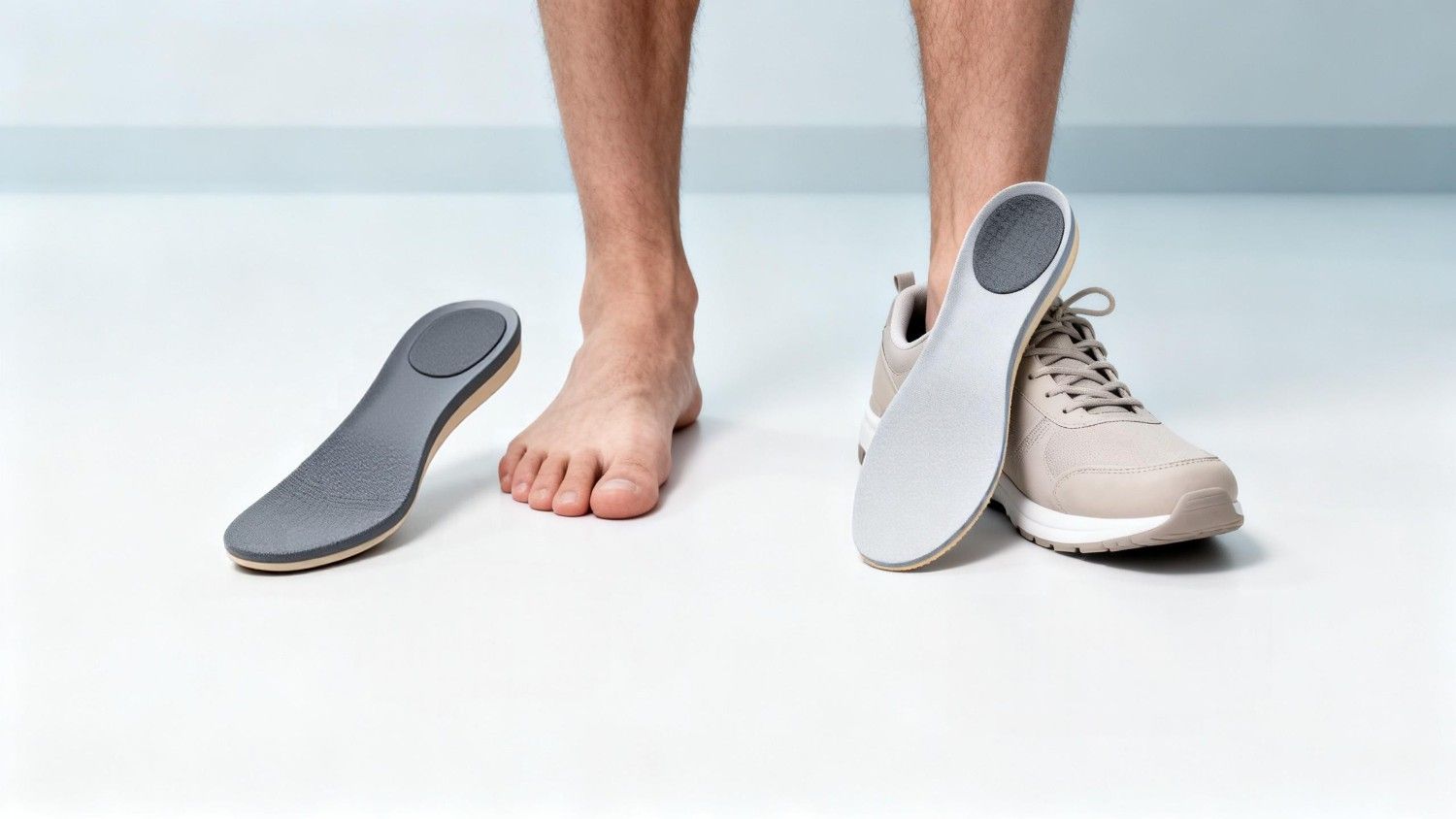
Custom Orthotics vs Insoles for Flat Feet
If you have flat feet and spend time researching support options, you’ve probably run into the same question repeatedly: should you buy regular insoles or invest in custom orthotics? The confusion makes sense because both are designed to improve support, reduce discomfort, and help walking feel more stable. But they are not built the same way, and they do not solve problems in exactly the same manner.
Custom orthotics focus more on personalized structural correction and long-term biomechanical support. Standard insoles, on the other hand, are usually designed for broader comfort, cushioning, and moderate alignment help. Depending on your foot shape, daily activity, pain level, and budget, one may feel more practical than the other.
For some people with mild flat feet, a supportive insole is enough to reduce fatigue during walking and standing. Others dealing with severe instability or chronic pain may eventually need more specialized support. Readers researching best insoles for flat feet are often trying to understand where standard support stops and custom correction begins.
Early Clarity Block
Custom orthotics are designed around your specific foot structure and movement pattern, while standard insoles are mass-produced to provide general support and cushioning for a wider range of users.
That difference affects:
- support feel
- firmness
- pressure distribution
- long-term durability
- overall cost
Neither option is automatically “better” for everyone. The right choice depends more on how severe the flat feet are, how much time you spend standing or walking, and whether the goal is comfort, stability, or medical-level correction.
What Are Custom Orthotics?
Custom orthotics are prescription-style inserts made specifically for your feet. They are usually created using a scan, mold, or physical assessment performed by a podiatrist or foot specialist.
The goal is not simply cushioning. Custom orthotics are primarily designed to:
- control motion
- improve alignment
- redistribute pressure
- reduce strain across joints and soft tissue
For people with flat feet, this often means supporting arch collapse and controlling excessive inward rolling movement during walking.
Custom orthotics are commonly recommended for:
- severe flat feet
- chronic pain
- recurring injuries
- long standing hours with structural instability
- biomechanical issues affecting knees, hips, or posture
They usually feel firmer than standard insoles because the purpose is structural guidance rather than softness.
What Are Standard Insoles?
Standard insoles are pre-made inserts sold in stores or online. They are designed to fit a broad range of foot types and footwear styles.
Some focus mostly on cushioning, while others include moderate arch support or heel stabilization. Higher-quality insoles may combine:
- foam layers
- EVA support shells
- gel cushioning
- semi-rigid arch structures
For many people with mild or moderate flat feet, supportive insoles can significantly improve comfort during daily activities.
They are commonly used for:
- work shoes
- sneakers
- walking shoes
- standing jobs
- general fatigue reduction
People comparing gel vs orthotic insoles are usually trying to understand whether softer comfort-focused support is enough or whether firmer structural control would work better long term.
Structural Differences
The biggest difference between orthotics and standard insoles is how they manage movement under body weight.
Custom orthotics are built specifically around your gait mechanics. They tend to:
- maintain shape under load
- resist excessive compression
- guide foot positioning more aggressively
That firmer structure can help reduce instability during long walking sessions or prolonged standing.
Standard insoles vary much more in design. Softer models compress easily and focus more on comfort, while firmer insoles attempt to balance support with cushioning.
This difference becomes noticeable after several hours on hard floors. A very soft insole may initially feel comfortable but gradually flatten during extended use. Orthotics usually maintain support consistency longer because the materials are designed for structural control rather than immediate softness.
Material and Functional Differences
Orthotics often use:
- rigid composites
- dense EVA
- carbon reinforcement
- medical-grade support materials
These materials prioritize stability and alignment control.
Standard insoles commonly use:
- memory foam
- gel inserts
- softer EVA foam
- PU cushioning layers
This creates a softer feel inside the shoe but may offer less motion control over time.
People comparing soft vs firm insoles often notice that softer models reduce pressure quickly while firmer support tends to improve stability during longer activity periods.
Pressure distribution also behaves differently between the two options.
Orthotics attempt to redirect force across the foot more strategically, while softer insoles mainly absorb impact and reduce surface pressure. One is more corrective in function; the other is often more comfort-oriented.
Intended Use Cases in Real Life
For someone standing 10 hours on hospital floors, warehouse surfaces, or retail environments, the choice often depends on whether the main issue is fatigue or instability.
If the feet mainly feel sore and tired at the end of the day, supportive insoles with balanced cushioning may be enough.
If walking feels uneven, arches collapse heavily, or pain travels into the knees or hips, custom orthotics may provide better structural control.
Athletic use also changes the equation. Running places repeated force through the foot, which can expose instability faster than casual walking. Some runners with flat feet benefit from firmer support systems because softer cushioning alone may not stabilize repeated motion effectively.
Readers exploring insoles for standing all day are often balancing this exact issue between long-term cushioning comfort and support consistency.
Cost and Long-Term Value
One of the biggest differences is price.
Standard insoles usually range from affordable to moderately priced depending on materials and support design. Many need replacement every few months if used heavily.
Custom orthotics are significantly more expensive upfront because they are individually designed. However, they often last much longer due to denser materials and more rigid construction.
That does not automatically make orthotics a better value for everyone.
For mild flat feet, supportive insoles may solve the problem well enough without the higher medical-style investment. For severe structural problems, repeated pain, or long-term instability, orthotics may provide better long-term consistency despite the higher initial cost.
Pros & Cons of Custom Orthotics
Custom orthotics can provide highly targeted support for people with significant flat foot instability. Because they are designed specifically around individual foot structure, they often control inward rolling movement more precisely during walking and standing. This can help reduce strain that spreads into the ankles, knees, hips, or lower back.
The tradeoff is flexibility and comfort adaptation. Some people find custom orthotics feel overly firm at first, especially if they are used to soft cushioning. There is often an adjustment period while the body adapts to the new support pattern.
Another limitation is shoe compatibility. Orthotics can feel bulky inside narrower shoes or casual footwear, which sometimes reduces convenience for daily use.
Pros & Cons of Standard Insoles
Standard insoles are easier to access, easier to replace, and usually more comfortable immediately after putting them into the shoe. Many people with mild or moderate flat feet experience noticeable relief simply by adding balanced arch support and cushioning.
They also work well for people who rotate between multiple shoes throughout the week because pre-made insoles are often easier to move between footwear.
The downside is consistency under repeated load. Softer insoles may flatten faster during long standing hours or heavy walking routines. Some models improve comfort but do not control motion enough for more severe flat foot mechanics.
People researching thick vs thin insoles often notice that softer thicker cushioning can initially feel better while firmer low-profile support may remain more stable throughout the day.
Who Should Choose Custom Orthotics?
Custom orthotics are generally better suited for people dealing with:
- severe flat feet
- chronic instability
- recurring injuries
- alignment-related pain
- heavy inward rolling movement
- long-term biomechanical problems
This is for you if walking feels uneven, pain spreads into multiple joints, or supportive insoles consistently fail to provide lasting stability.
They may also make more sense for people spending years in physically demanding environments where repeated load creates ongoing strain. In those situations, structure and long-term durability often become more important than soft comfort alone.
Who Should Choose Standard Insoles?
Standard insoles usually make more sense for people with:
- mild or moderate flat feet
- general foot fatigue
- occasional soreness
- long standing routines
- comfort-focused support needs
This is for you if your main goal is improving daily comfort during work, walking, or casual activity without needing aggressive structural correction.
Higher-quality insoles can still provide meaningful support, especially when paired with supportive footwear. Many people never need medical-level orthotics once they find the right balance between cushioning and arch support.
Readers comparing memory foam vs orthotic insoles are often deciding between softer comfort-oriented cushioning and firmer long-term structural support.
Long-Term Comparison
Over time, orthotics usually maintain their structure more consistently because the materials resist compression better. This becomes noticeable during repeated standing, walking, or physically demanding activity.
Standard insoles may feel softer initially but often lose responsiveness faster under daily load. Softer foam-based inserts especially can compress unevenly after months of repeated use.
Comfort over time also differs between users. Some people continue preferring softer insoles even if they wear faster because the immediate pressure relief feels more natural. Others prioritize support consistency and eventually prefer firmer structural control.
There is no universal winner here. The better option depends on whether the primary issue is comfort fatigue or biomechanical instability.
Micro Comparison Summary
- Custom orthotics = better for structural correction, alignment control, and severe instability
- Standard insoles = better for accessible comfort, moderate support, and daily fatigue reduction
Orthotics focus more on movement correction. Insoles usually focus more on comfort balance and general support.
FAQ
Are custom orthotics always better for flat feet?
Not necessarily. Many people with mild flat feet do very well with supportive insoles. Orthotics are usually more beneficial when flat feet create ongoing instability, chronic pain, or alignment problems that standard support cannot manage effectively.
Do orthotics last longer than regular insoles?
In most cases, yes. Custom orthotics are built with denser and more durable materials designed for long-term structural use. Standard insoles typically wear down faster, especially softer cushioning models used daily.
Can soft insoles help flat feet?
They can help with pressure relief and comfort, especially during standing or walking. However, extremely soft insoles sometimes lack enough structure to control inward foot movement effectively over long periods.
Are orthotics uncomfortable at first?
They can feel unusual during the adjustment phase because they guide foot movement more aggressively than softer insoles. Many people need several days or weeks to fully adapt to firmer support systems.
Should flat feet use cushioning or firm support?
That depends on severity and activity level. Mild flat feet often respond well to balanced cushioning and moderate support, while severe instability usually benefits from firmer structural control.
Final Verdict
For mild or moderate flat feet, supportive insoles are often enough to improve comfort, reduce fatigue, and make daily walking or standing easier. They are simpler, more affordable, and easier to use across different shoes.
Custom orthotics become more useful when flat feet create larger structural problems that softer support cannot control effectively. In those cases, the added stability and alignment control may justify the higher cost and firmer feel.
The best choice depends less on marketing claims and more on how your feet behave during real daily movement.
If discomfort is mainly pressure and fatigue, supportive insoles may be completely sufficient. If instability, joint strain, or recurring pain continues despite trying quality insoles, orthotics may provide a more targeted solution.